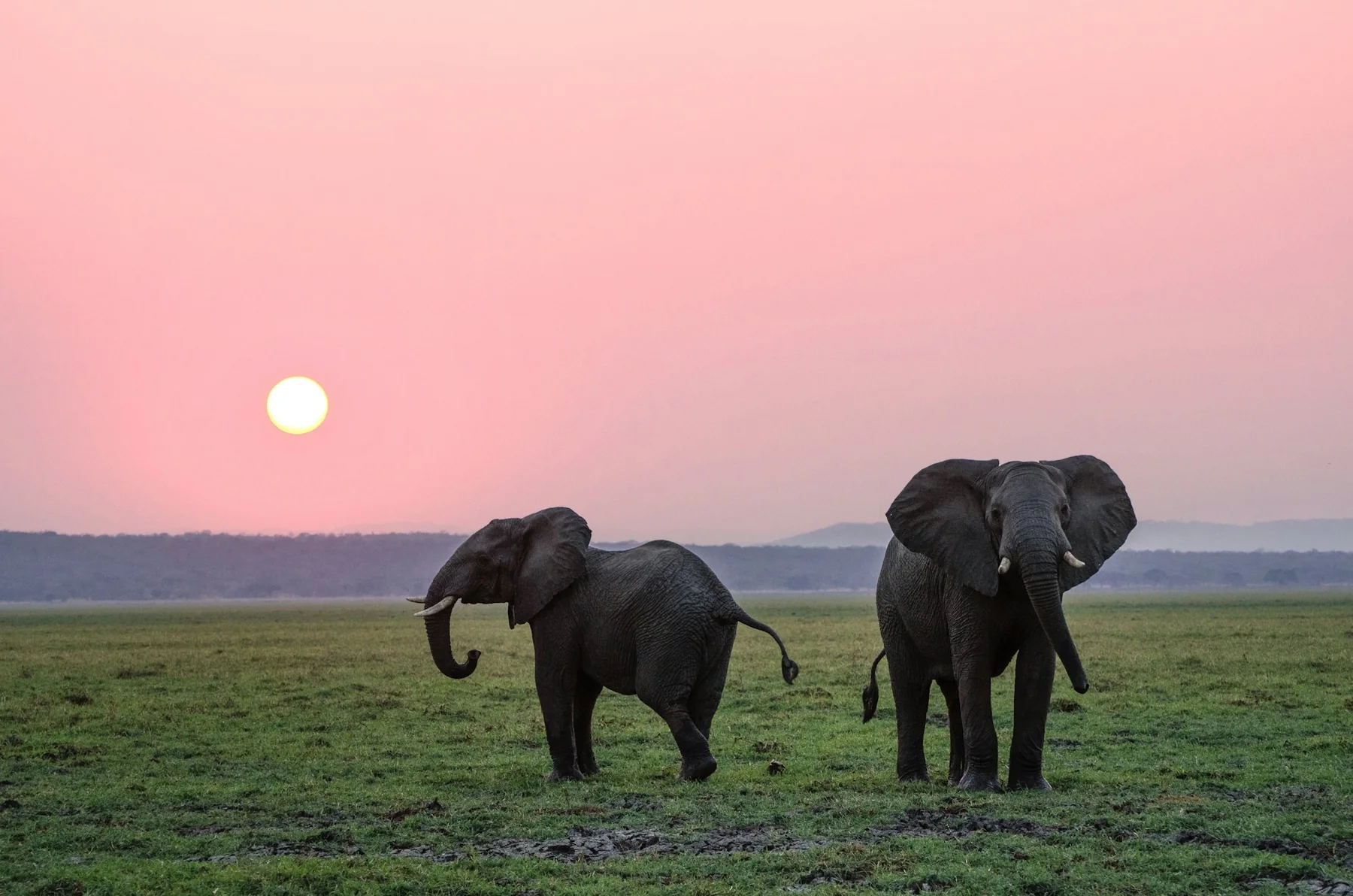
Africa’s safari animals range from lions, elephants and leopards to vast wildebeest herds, mountain gorillas and African wild dogs. This guide covers 25 of the most iconic animals you can see on an African safari, where to find them, the best destinations for sightings and when to travel.
Reviewed by Evance — Safari Specialist · Updated 4 October 2026
15+ years of experience planning tailor-made safaris across East and Southern Africa, with first-hand knowledge of safari camps, lodges and wildlife areas.
What are the most popular safari animals in Africa?
The animals most travelers hope to see include lion, leopard, African elephant, rhinoceros, Cape buffalo, giraffe, cheetah, zebra, wildebeest and hippopotamus. Mountain gorillas, African wild dogs, hyenas, crocodiles and chimpanzees become highlights in destinations where they occur.
African Safari Animals List: Quick Guide
If you only read one section, read this one. It is the short version of everything below.
| Animal | Best countries | Best months |
|---|---|---|
| Lion | Tanzania · Kenya | Jun–Oct |
| Leopard | South Africa (Sabi Sand) | May–Sep |
| Elephant | Botswana · Kenya | Jul–Oct |
| Cape buffalo | Tanzania · Zimbabwe | Jun–Oct |
| Rhino | South Africa · Kenya | Year-round |
| Cheetah | Tanzania (Ndutu) | Jan–Mar |
| Giraffe | Kenya · Tanzania | Year-round |
| Zebra | Tanzania · Namibia | Year-round |
| Wildebeest | Tanzania · Kenya | Depends on month |
| Hippo | Zambia (Luangwa) | Jun–Oct |
| African wild dog | Botswana · Zimbabwe | Jun–Aug |
| Spotted hyena | Tanzania (Ngorongoro) | Year-round |
| Mountain gorilla | Rwanda · Uganda | Jun–Sep, Dec–Feb |
Months indicate the best odds, not a guarantee. Wildlife follows rainfall and grazing, not a calendar.
The Big Five
The term comes from hunting, not tourism — these were the five most dangerous animals to pursue on foot. It has stuck as a checklist, which is both useful and a little reductive. See them, but do not let the list run your safari. More on the group in our Big Five safari guide.
Lion
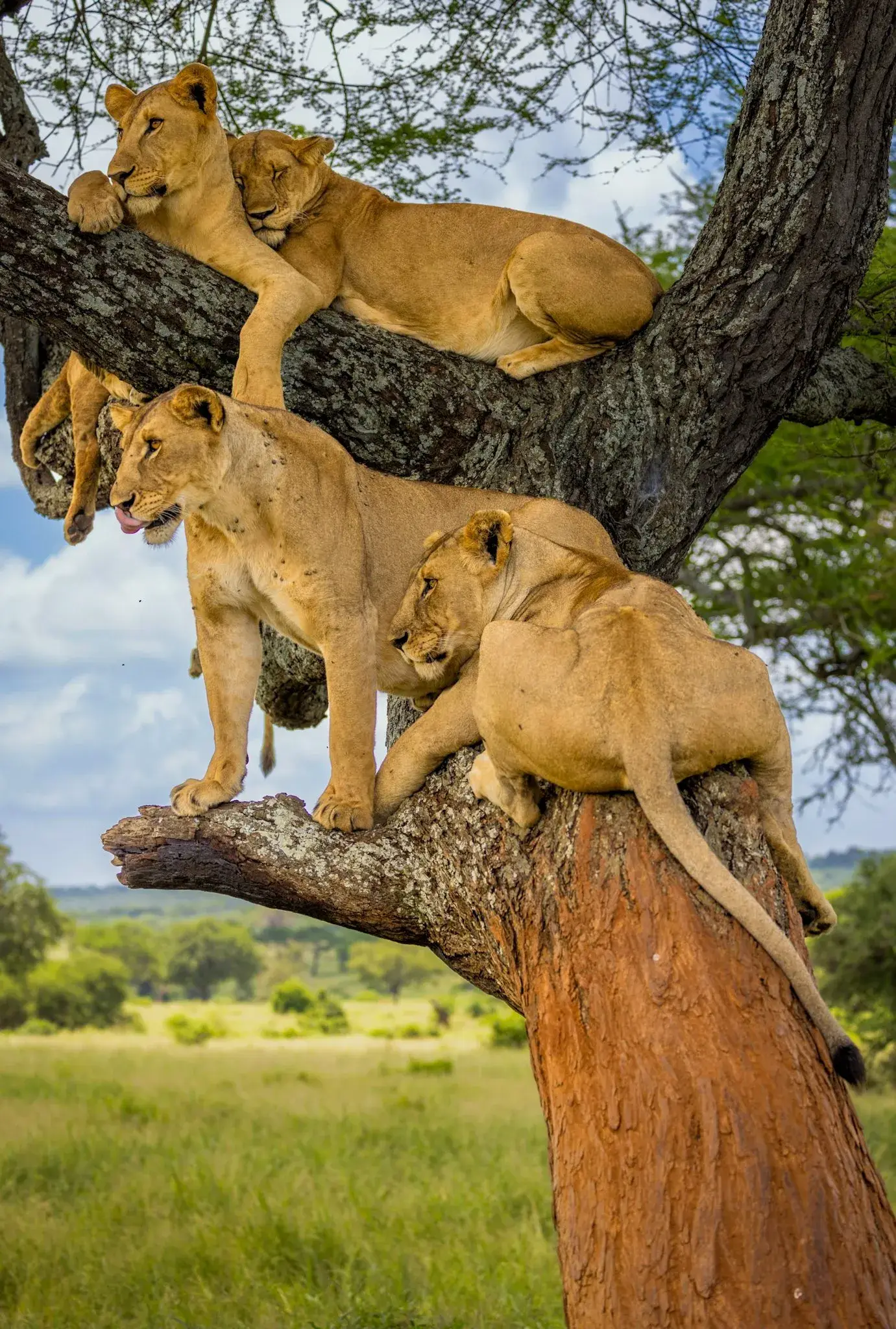
Africa’s only truly social cat, and the animal almost every guest names first.
Key characteristicsMales reach 150–250kg. Prides are built around related females, who do most of the hunting; a male’s roar carries around eight kilometers on a still night.
Habitat & behaviourOpen savannah and grassland where prey herds concentrate. Lions sleep up to twenty hours a day, so midday sightings usually mean a pile of cats in the shade — dawn and dusk are when they work.
Where to see itThe Serengeti and Ngorongoro Crater, the Maasai Mara, Kruger and the Sabi Sand, South Luangwa, and Etosha’s waterholes in the dry season. Our guide to the best places to see lions in Africa ranks them.
Best countriesTanzania, Kenya, South Africa, Zambia
Leopard
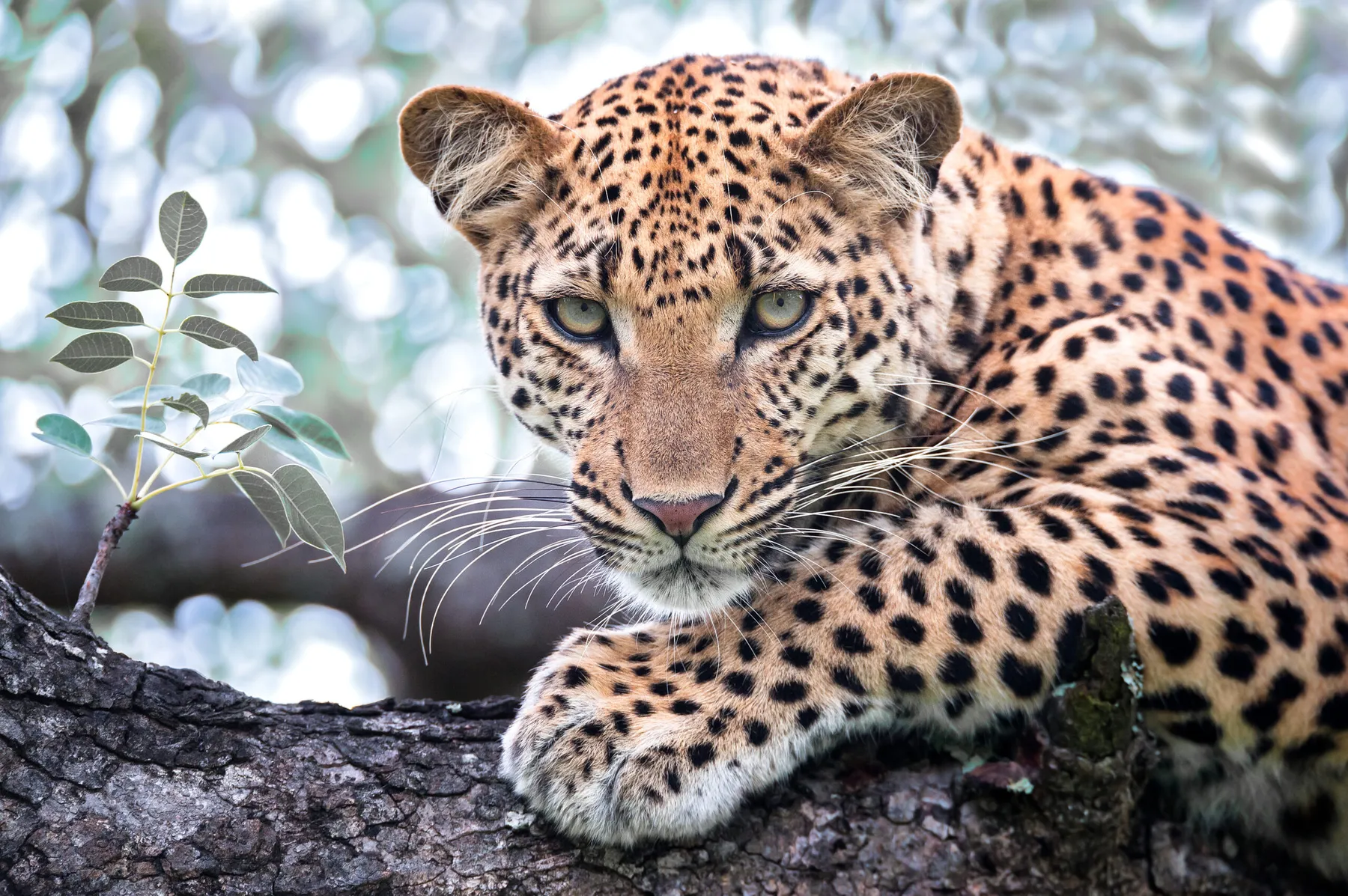
The hardest of the Big Five to find, and the one that rewards patience most.
Key characteristicsSolitary and secretive, and strong enough to haul a kill twice its own weight vertically into a tree to keep it from lions and hyenas.
Habitat & behaviourRiverine forest, rocky kopjes and dense bush. Largely nocturnal — a daytime sighting usually means a cat draped along a branch, which is exactly the photograph everyone wants.
Where to see itThe Sabi Sand is the most reliable leopard country on the continent. Also South Luangwa, the Okavango, and the Seronera valley in the central Serengeti.
Best countriesSouth Africa, Zambia, Botswana, Tanzania
African Elephant
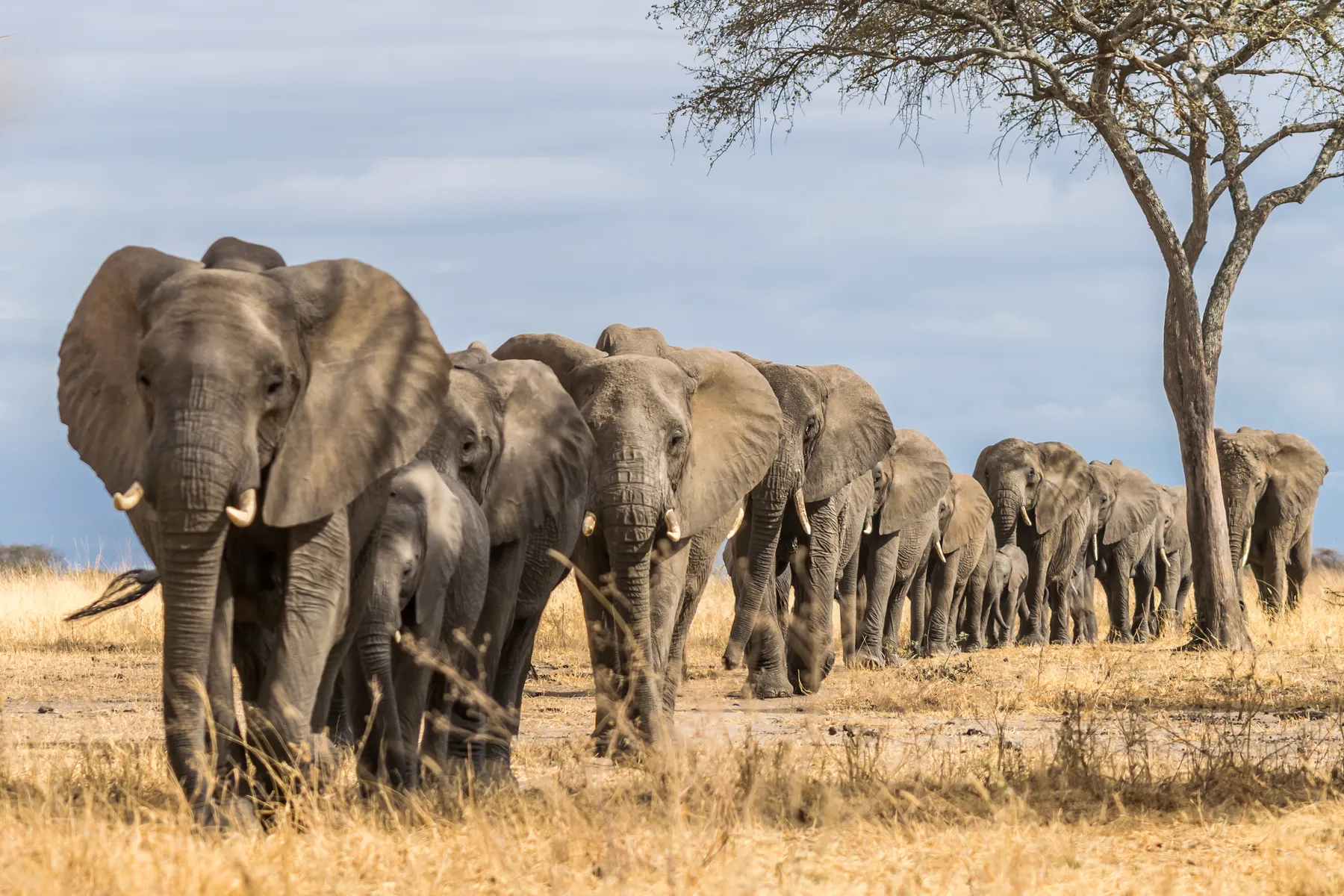
The largest land mammal alive, and the one guests most often describe as moving rather than impressive.
Key characteristicsBulls reach six tonnes. Herds are matriarchal, led by the oldest female, and communicate partly in infrasound below the range of human hearing — you sometimes feel it before you hear anything.
Habitat & behaviourEverything from desert margin to swamp. Water strongly influences elephant movements, particularly during the dry season, so it is usually the first thing a guide reads.
Where to see itAmboseli for big tuskers framed against Kilimanjaro; Chobe is renowned for exceptionally large elephant populations, particularly during the dry season; and Tarangire, when herds crowd the river.
Cape Buffalo
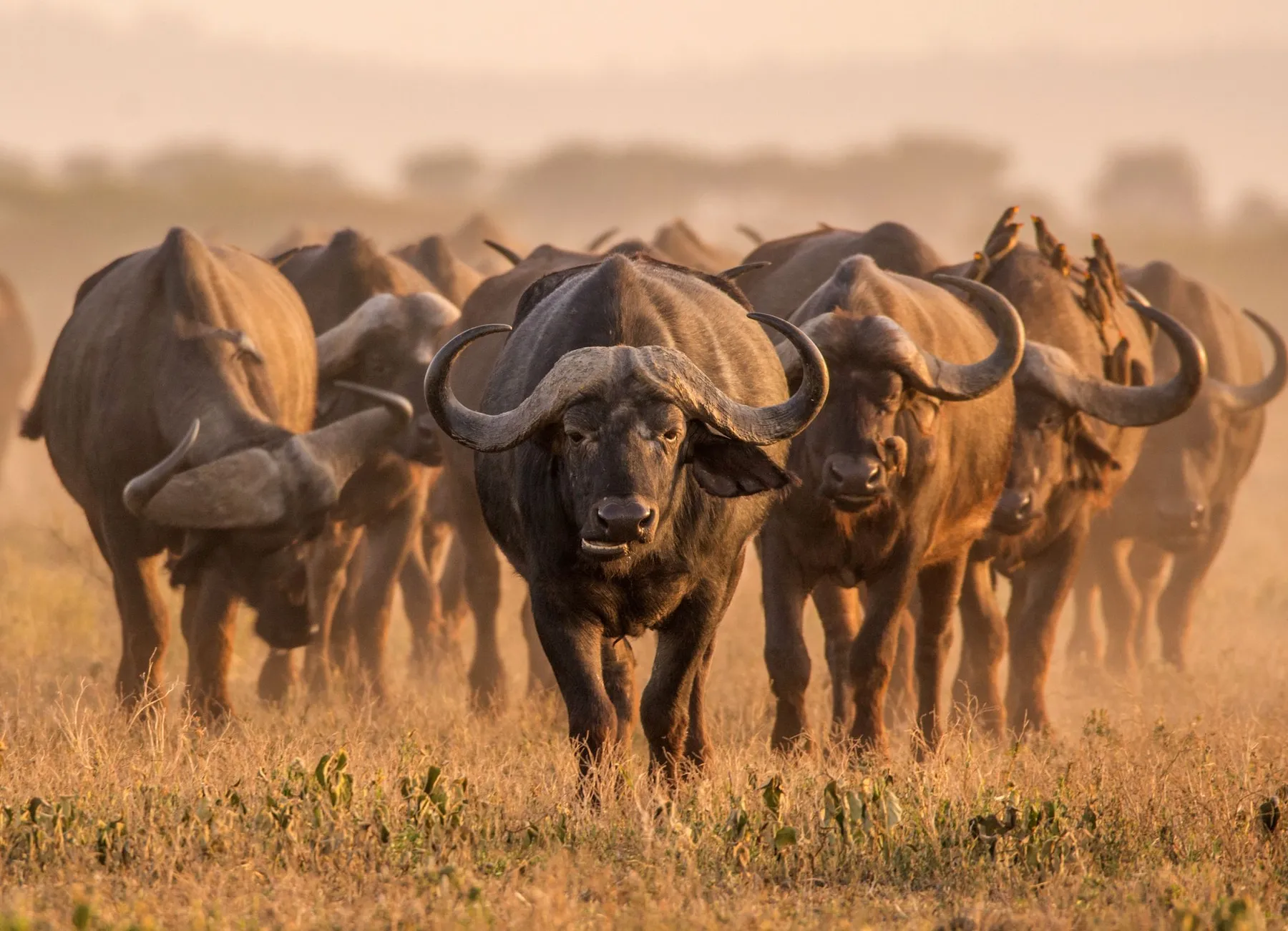
Often overlooked beside Africa’s big cats and elephants, Cape buffalo can be among the most compelling animals to watch, particularly when large herds gather around permanent water.
Key characteristicsHerds run to several hundred. Guides treat the old solitary bulls — known as dagga boys, having left the herd — with particular respect.
Habitat & behaviourGrassland and open woodland, never far from permanent water.
Where to see itThe Serengeti, Mana Pools, South Luangwa and Kruger. Herds are easiest to find in the dry season when they concentrate near rivers.
Best countriesTanzania, Zimbabwe, Zambia, South Africa
Rhino
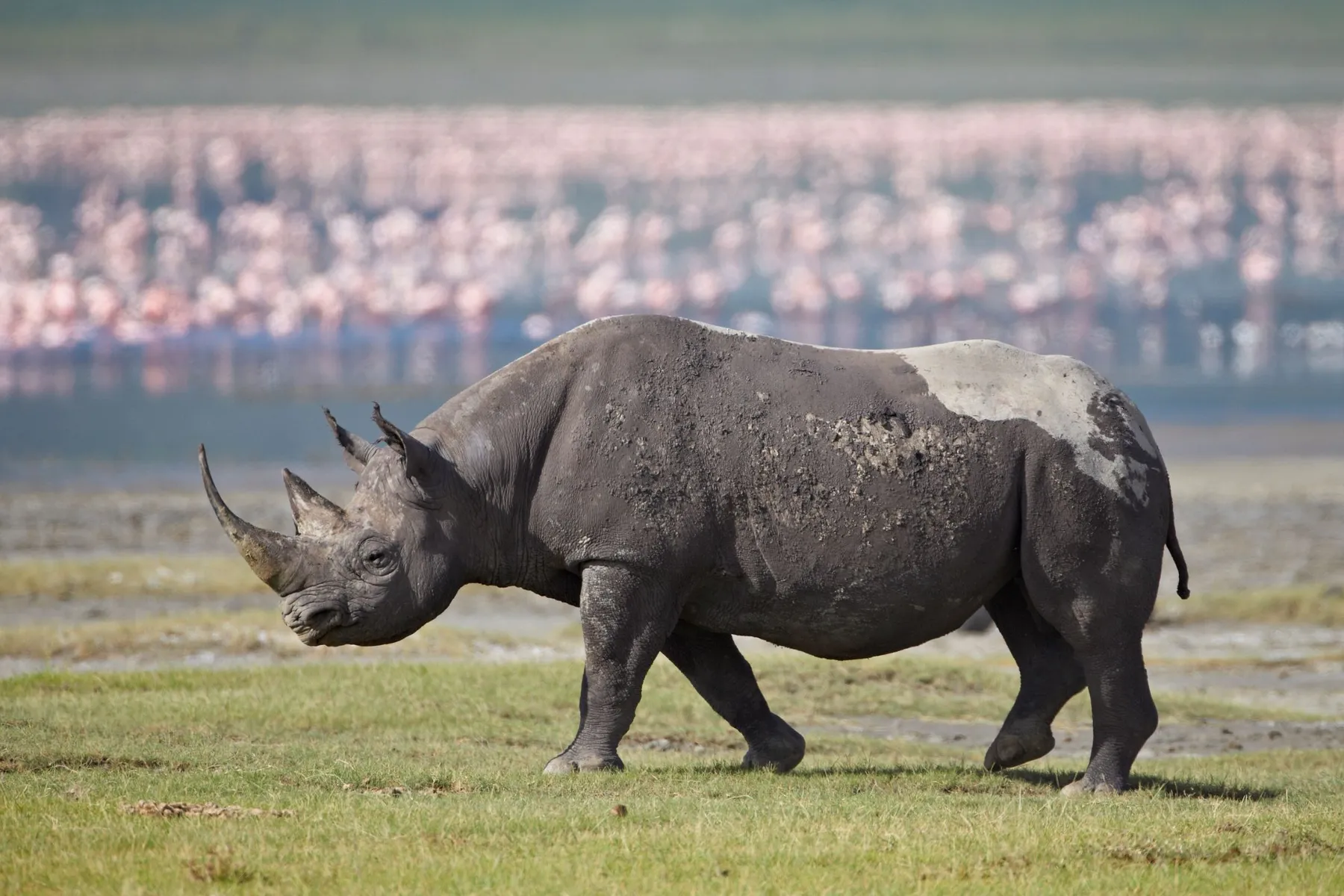
Two species, both under severe pressure, and the one Big Five animal you should not assume you will see.
Key characteristicsWhite rhino graze with a wide, square lip built for cropping grass. Black rhino browse with a hooked lip, are considerably smaller, and are far more short-tempered.
Habitat & behaviourWhite rhino on open grassland; black rhino in thicker bush, which is part of why they are so much harder to find.
Where to see itKruger and the Sabi Sand, Lake Nakuru, Ngorongoro Crater for a small black rhino population, and Etosha’s floodlit waterholes after dark.
Best countriesSouth Africa, Kenya, Namibia, Tanzania
The great herds
The Big Five get the attention, but it is the grazers that make the ecosystem work — and the sheer scale of them is what most people remember.
Wildebeest
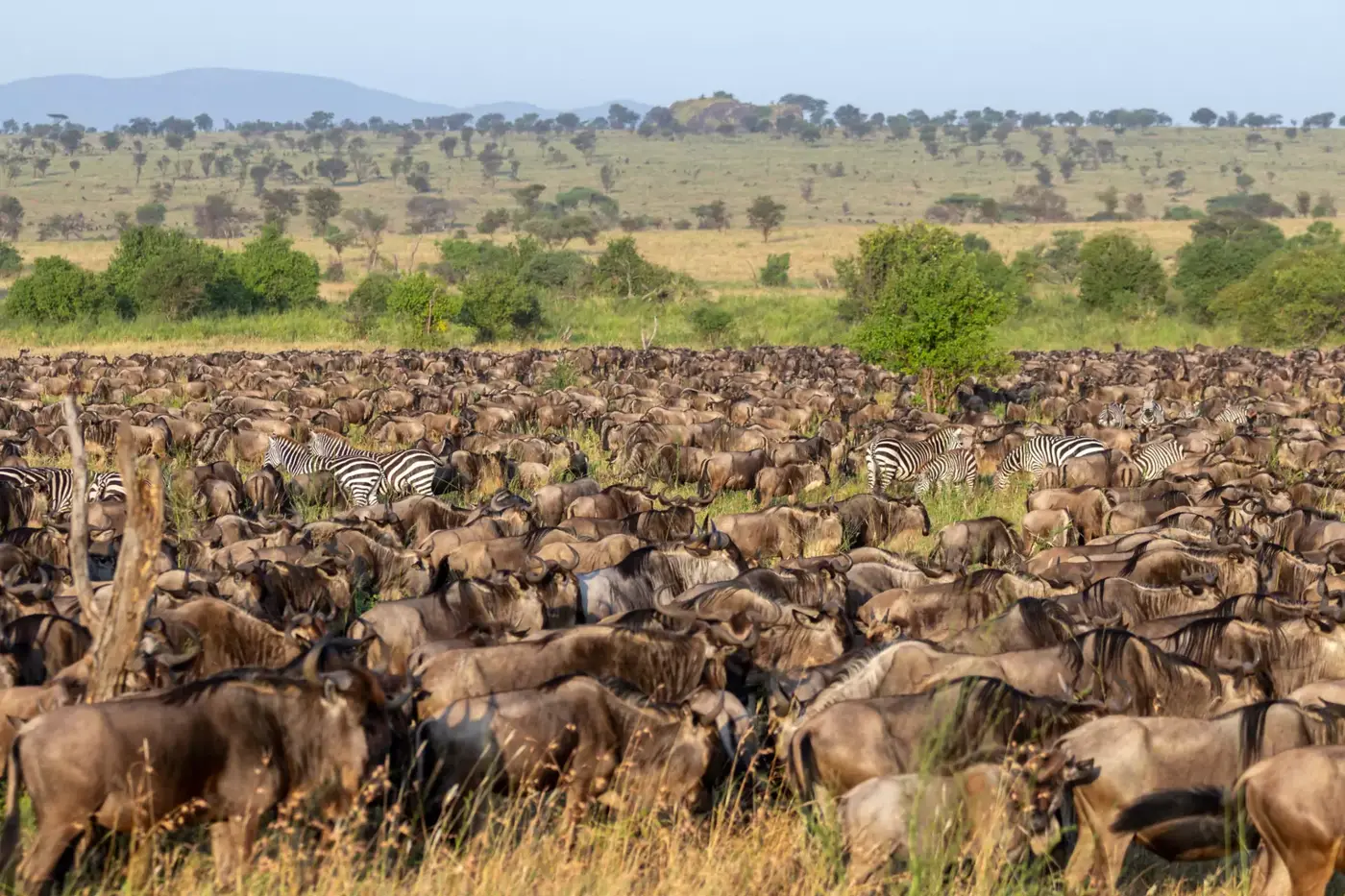
More than 1.2 million of them, and the reason the Serengeti–Mara ecosystem looks the way it does.
Key characteristicsAn individual travels roughly 800 to 1,000km a year. Calves stand within minutes of birth, which they have to — the herd moves and the predators are already there.
Habitat & behaviourShort-grass plains, following rainfall and fresh grazing rather than any fixed route.
Where to see itEntirely dependent on the month. Ndutu and the southern Serengeti from January to March for calving; the northern Serengeti and Maasai Mara from July to October for the river crossings.
The Great Migration month by month · calving season · river crossings
Zebra
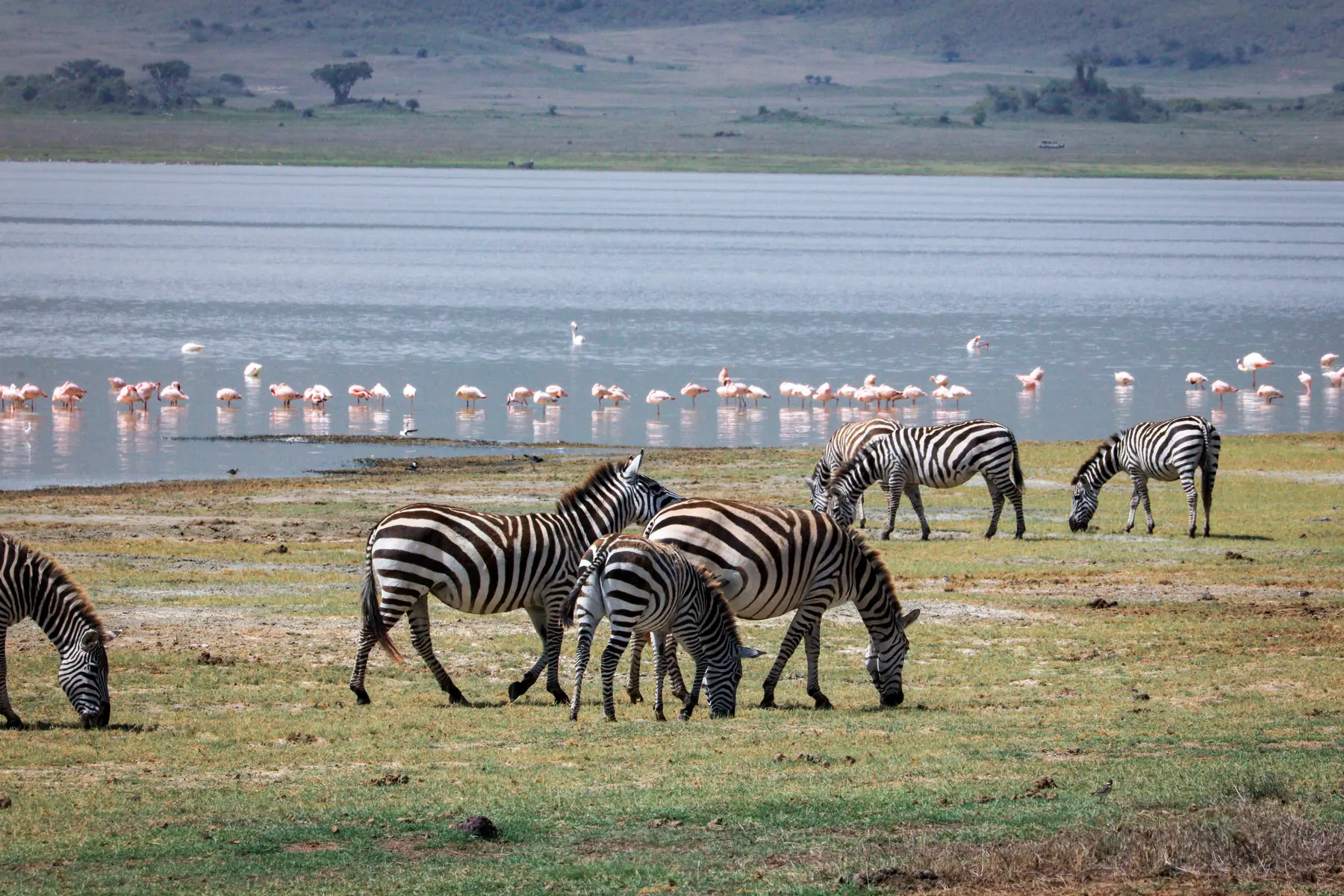
Travels with the wildebeest, eats the grass they cannot, and is considerably more aggressive than it looks.
Key characteristicsPlains zebra are the ones you will see most. Grevy’s zebra — bigger, narrower-striped, with rounded ears — are genuinely rare and largely confined to northern Kenya.
Habitat & behaviourGrassland, very often in mixed herds with wildebeest, which improves the odds for both against predators.
Where to see itAlongside the migration in the Serengeti and Mara, plus Ngorongoro, Etosha and Hwange. Samburu for Grevy’s.
Giraffe
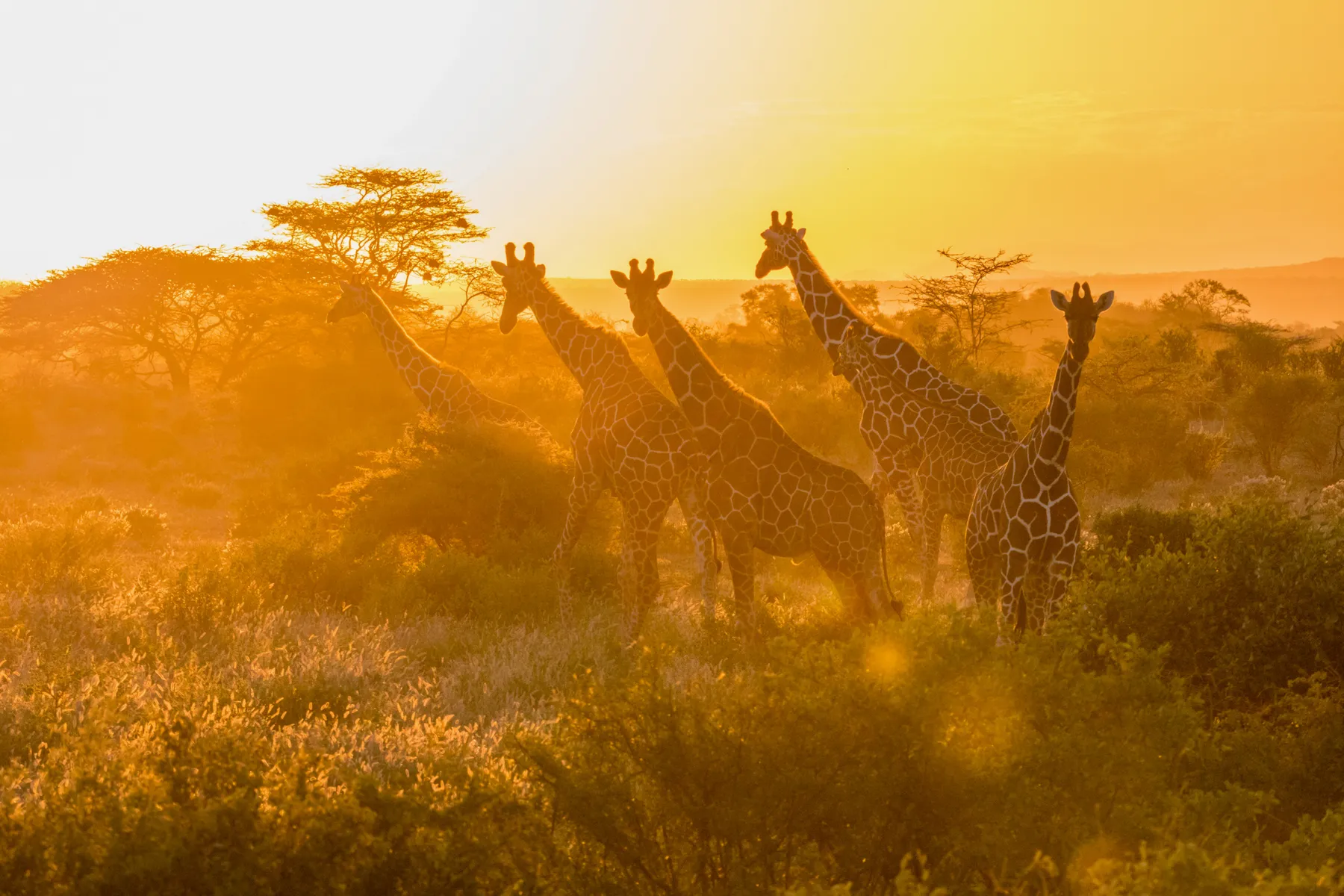
Taller than you expect, quieter than you expect, and quietly in trouble.
Key characteristicsUp to 5.5m. Seven neck vertebrae — the same number as you have. Coat patterns differ enough between populations that you can tell roughly where a giraffe is from by looking at it.
Habitat & behaviourAcacia woodland and savannah, browsing at a height nothing else can reach.
Where to see itSamburu for the reticulated giraffe, the Serengeti and Tarangire for Masai giraffe, Etosha for the Angolan giraffe.
Best countriesKenya, Tanzania, Namibia, South Africa
Predators beyond the Big Five
Two of the three animals below are harder to find than a leopard, and arguably more interesting when you do.
Cheetah
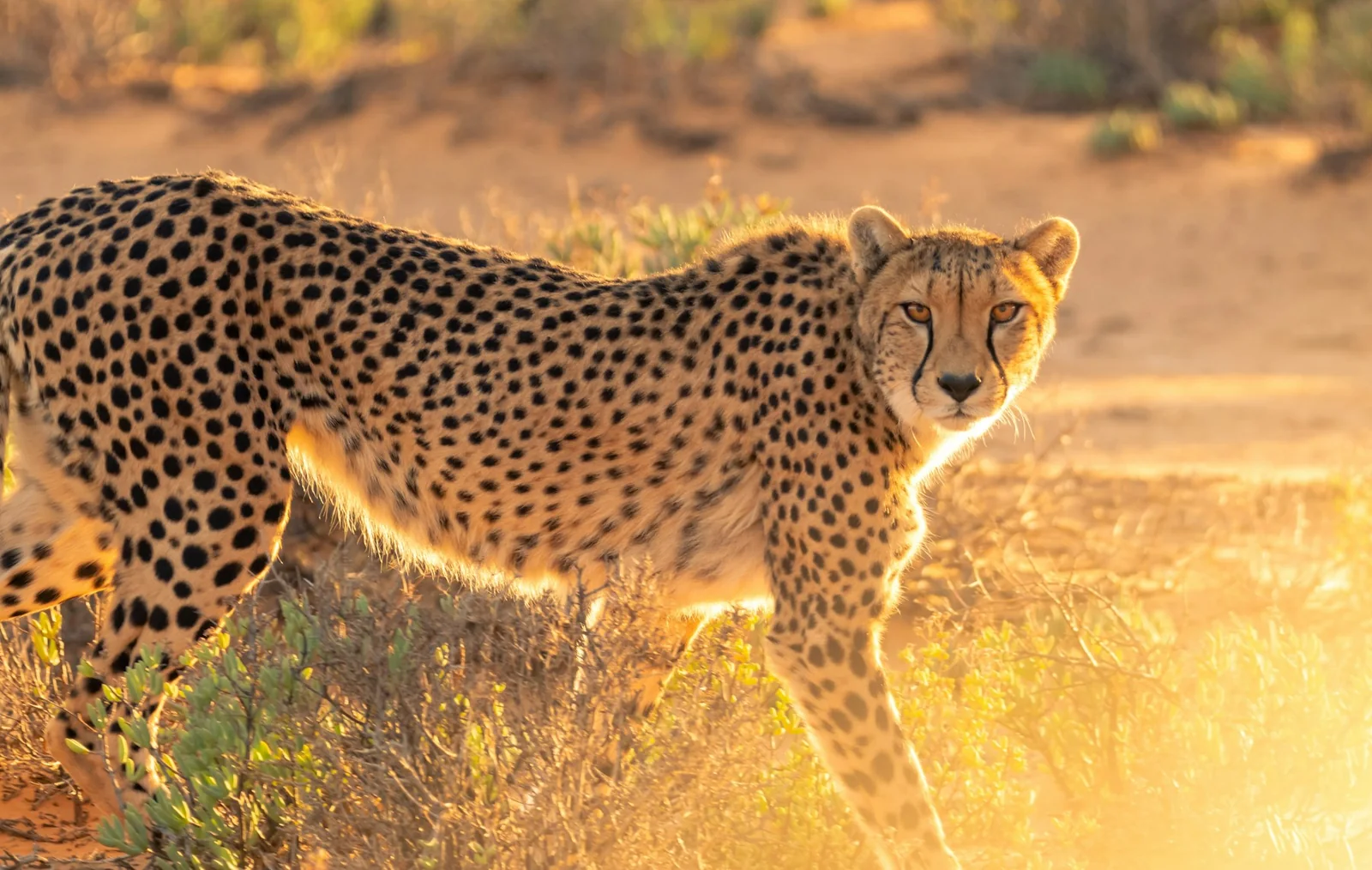
The fastest land animal, and the most fragile predator on the plains.
Key characteristicsNought to 100km/h in roughly three seconds, but only for a few hundred meters. Hunts in daylight specifically to avoid lions and hyenas, and still loses a large share of its kills to them. Confusing the two cats? See cheetah vs leopard.
Habitat & behaviourOpen short-grass plains where it can see distance and use its speed. Mothers raise cubs alone; males sometimes form small coalitions.
Where to see itThe southern Serengeti and Ndutu during calving season, when the plains are short and full of prey. Also the Maasai Mara and the Kalahari.
African Wild Dog
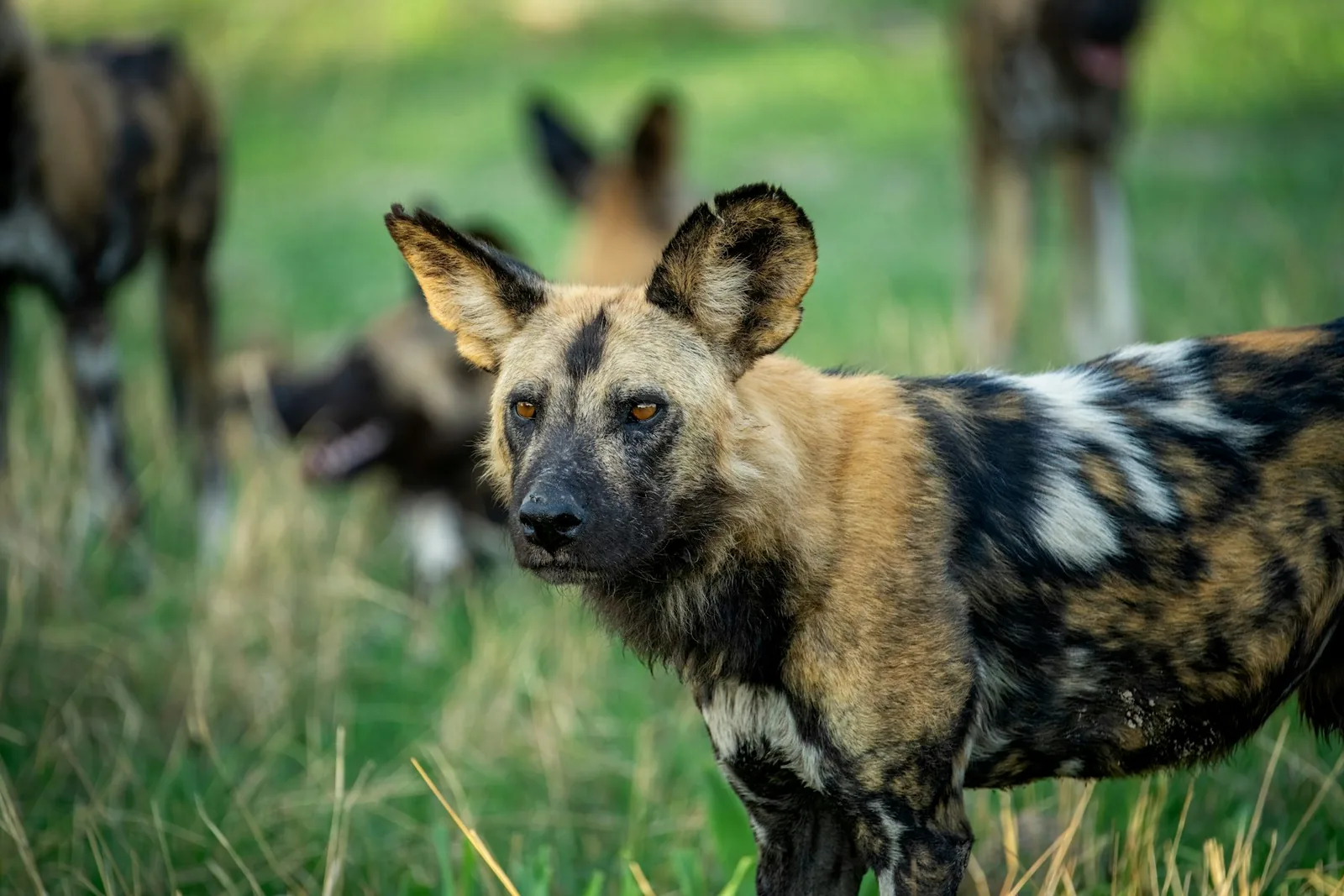
Africa’s most efficient large predator and one of its rarest — only a few thousand remain.
Key characteristicsHunts succeed far more often than a lion’s do, because the pack runs prey down over distance rather than ambushing it. Every dog’s coat pattern is unique, which is how researchers tell them apart.
Habitat & behaviourLarge unfenced wilderness. They range enormous distances, which is exactly why they have disappeared from most of the continent.
Where to see itThe Okavango and Moremi, Mana Pools, Hwange and South Luangwa. Denning season around June to August pins a pack to one place and transforms your odds.
Spotted Hyena
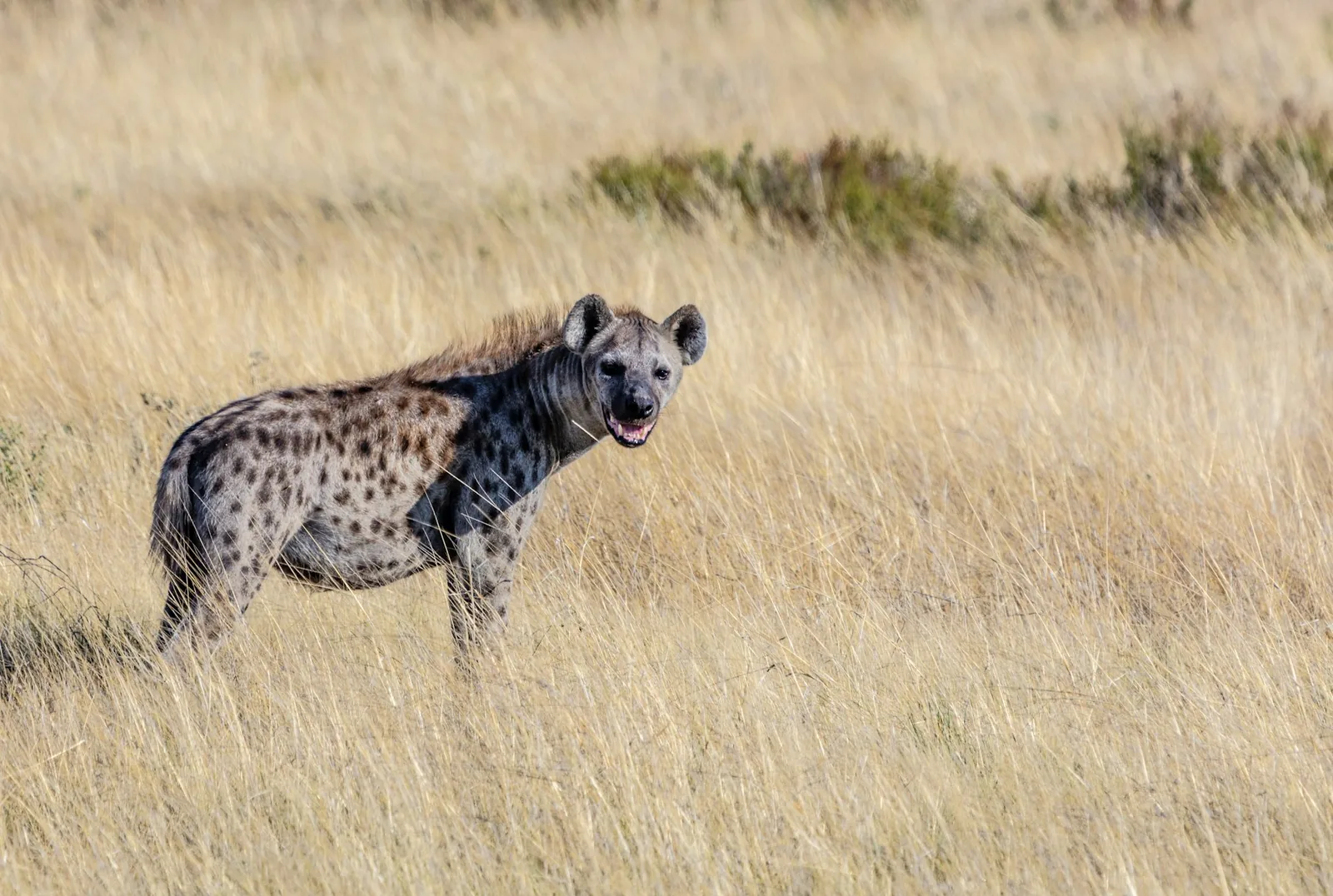
Not the skulking scavenger of the cartoons — a formidable hunter with the strongest bite on the savannah.
Key characteristicsLives in matriarchal clans that can run to eighty animals. Kills the majority of what it eats, and its jaws crush bone that nothing else can process.
Habitat & behaviourSavannah and grassland, denning in burrows and culverts. Active mostly at night, which is when the whooping starts around camp.
Where to see itNgorongoro Crater, where hyenas regularly take kills from lions rather than the other way round. Also the Serengeti, the Mara and Kruger.
Best countriesTanzania, Kenya, South Africa
Rivers and wetlands
Water concentrates everything in the dry season, which is why a camp on a river often out-performs one on the plains.
Hippopotamus
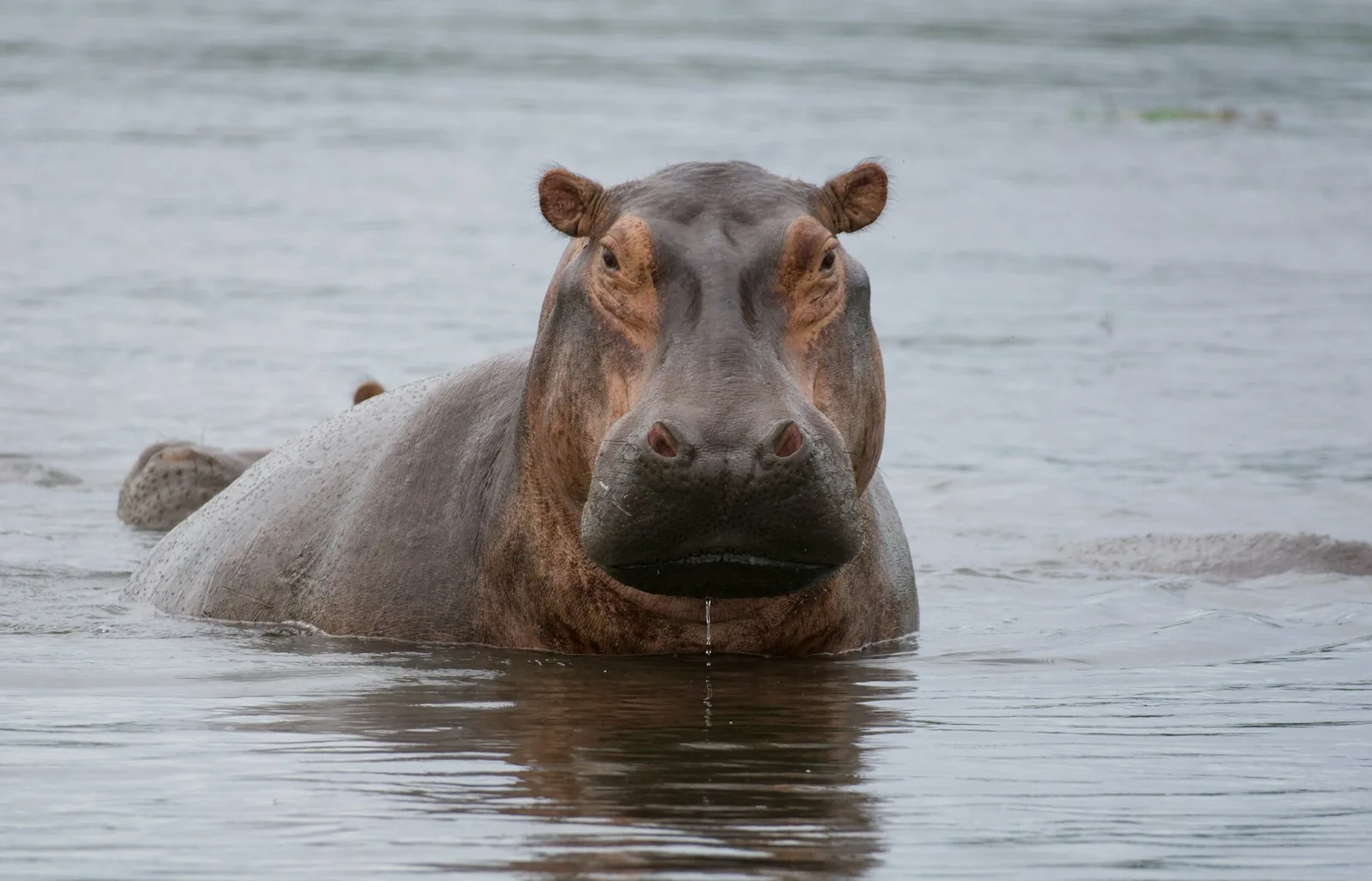
Enormous, territorial and far more agile in water than they look — and treated with genuine caution by every guide who works a river.
Key characteristicsAround 1.5 tonnes. Cannot actually swim — it walks and pushes off along the riverbed. Grazes on land at night, sometimes kilometers from water.
Habitat & behaviourRivers, lakes and channels deep enough to submerge in through the heat of the day.
Where to see itSouth Luangwa is renowned for very high concentrations of hippos along the Luangwa River. Also the Okavango channels, the Mara River and the Serengeti’s hippo pools.
Nile Crocodile
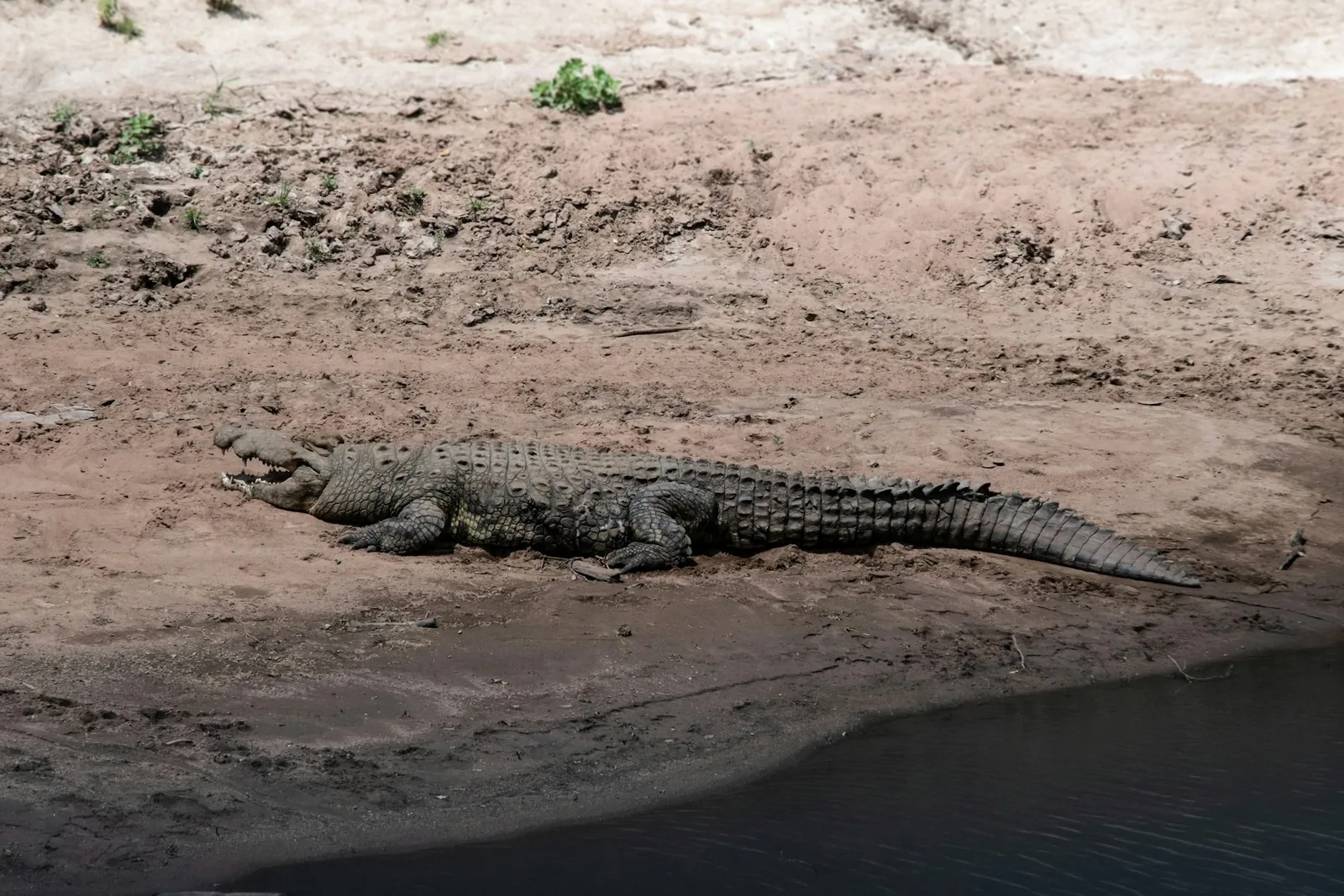
Largely unchanged for a very long time, and the reason a river crossing is as dramatic as it is.
Key characteristicsLarge individuals exceed five meters. Ambush predators that can wait, motionless, for as long as it takes.
Habitat & behaviourRivers, lakes and floodplains across sub-Saharan Africa, basking on sandbanks in the morning to warm up.
Where to see itThe Mara River during the crossing months, the Grumeti, the Luangwa and the Okavango.
Primates
Neither of these is a game-drive animal. Both mean forest, permits and walking — and both are worth building a journey around.
Mountain Gorilla
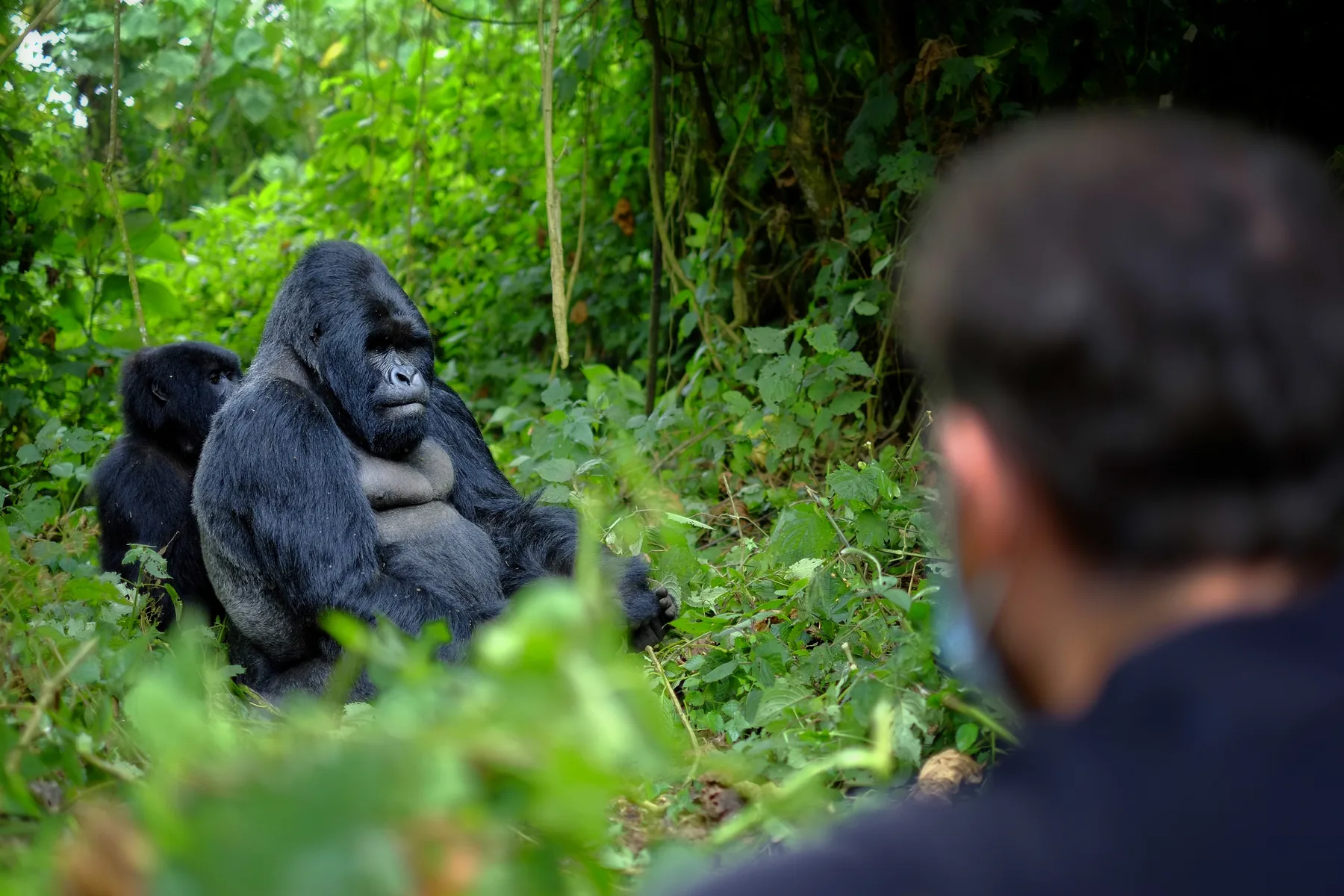
Around a thousand remain, all of them in three countries, and an hour in their company is the single most affecting wildlife encounter in Africa.
Key characteristicsSilverbacks reach 200kg. Habituated families tolerate one strictly limited hour of human company a day, with a minimum distance rule that exists to protect them from our illnesses.
Habitat & behaviourMontane forest between roughly 2,000 and 4,000 meters. Trekking means steep ground, thick vegetation and mud — reasonable fitness matters.
Where to see itVolcanoes National Park in Rwanda and Bwindi Impenetrable Forest in Uganda. Permits are limited and sell out far ahead.
Chimpanzee
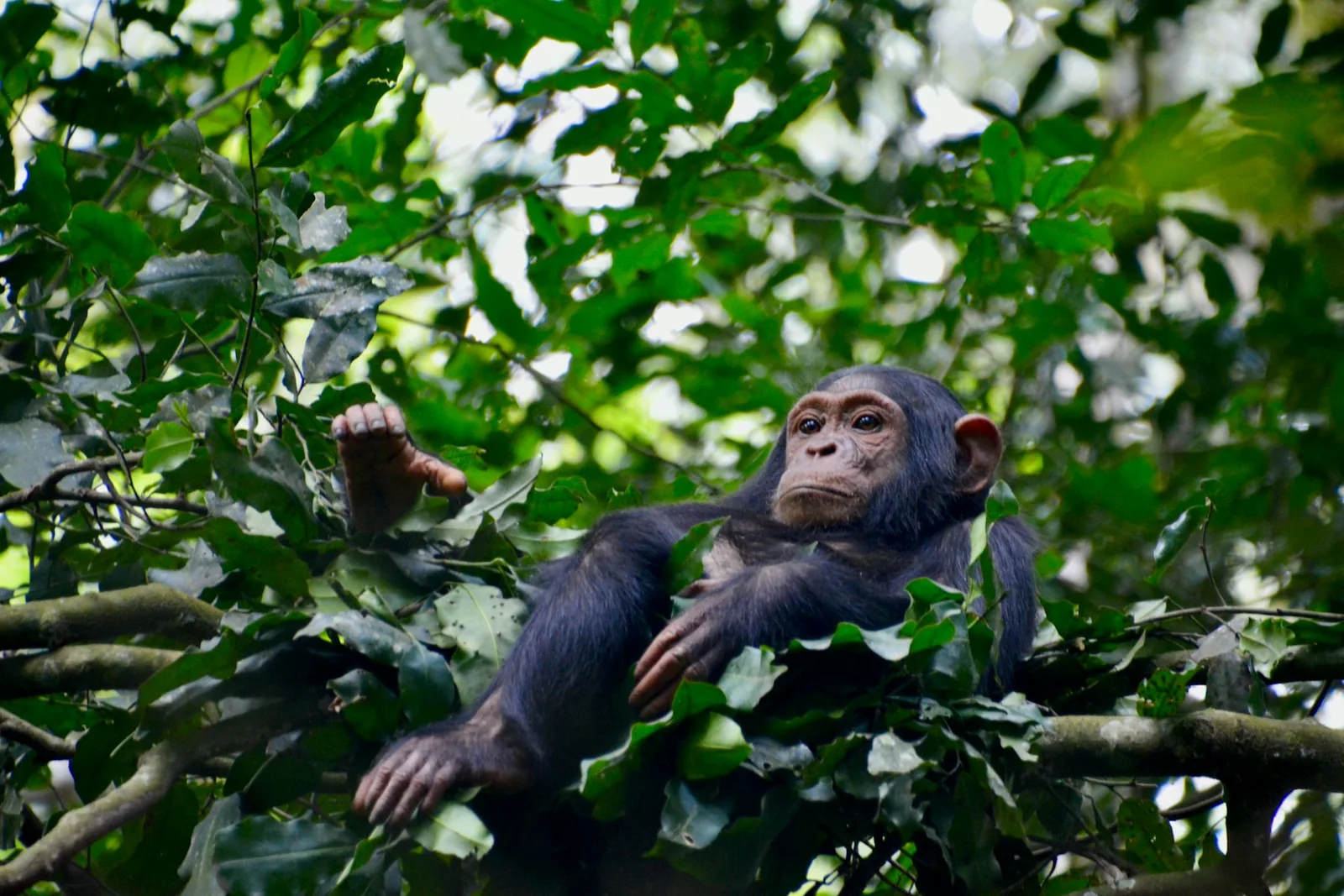
Our closest living relative, and a noisier, faster, more chaotic encounter than gorilla trekking.
Key characteristicsLives in fluid communities that split and regroup through the day. Uses tools, hunts cooperatively, and moves through the canopy far quicker than you can follow on the ground.
Habitat & behaviourTropical forest. Tracking usually means moving fast through dense bush rather than climbing steadily.
Where to see itKibale Forest in Uganda is the most reliable. Also Nyungwe in Rwanda, Mahale and Gombe on Lake Tanganyika in Tanzania.
Ten more worth looking for
These will not make the brochure cover, but a good guide will stop for every one of them — and on a second or third safari they are often what you remember.
Impala
The most common antelope in eastern and southern Africa, and the reason the predators are there at all. Herds of females are held by a single territorial ram who spends the rut exhausting himself. Everywhere from Kruger to the Serengeti.
Greater Kudu
A large, gray, faintly striped antelope with spiralled horns on the bulls that can exceed a metre. Browsers of thick bush, so you usually see them slipping away rather than standing still. Best in Zimbabwe, Namibia and South Africa.
Oryx (Gemsbok)
Built for country that should not support a large antelope at all, with straight rapier horns and a black-and-white face. Can survive extraordinary heat and go without drinking for long periods. Namibia’s dunes and the Kalahari.
Warthog
Underrated. Kneels on calloused wrists to graze, reverses into burrows so its tusks face the entrance, and runs with its tail vertical like an aerial. Common across the savannah.
Olive Baboon
Large, clever, socially complex and entirely unbothered by vehicles. Troops can number over a hundred. Worth watching properly for ten minutes — the politics are the point. Common in Kenya, Tanzania and Uganda.
Serval
A slender, long-legged cat with outsized ears, built to hunt rodents in long grass by sound. Leaps almost vertically to pin prey. Scarce but regularly seen in the Serengeti and the Ngorongoro highlands.
Caracal
A powerful russet cat with black ear tufts, capable of taking a bird out of the air. Largely nocturnal and genuinely difficult to see — a caracal sighting is one your guide will remember. Southern Africa and Kenya’s drier country.
Honey Badger
Small, low-slung and famously indifferent to danger, with skin loose enough to turn and bite whatever has grabbed it. Mostly nocturnal. The Kalahari and northern Botswana give the best odds.
Ostrich
The largest bird alive and the fastest thing on two legs, at around 70km/h. Males turn pink-legged in the breeding season. Open plains in Tanzania, Kenya, Namibia and South Africa.
Flamingo
Lesser and greater flamingos gather in numbers that turn a whole lake pink, feeding on algae that give them their color. Lake Nakuru and Lake Natron are the classic sites, though numbers shift with water levels.
Where to go for which animal
No country has everything. This is how we usually match a wish list to a destination. The full country-by-country breakdown is in safari animals by country.
| Country | Known for | Standout species |
|---|---|---|
| Tanzania | The migration, calving season, big cats at scale | Wildebeest, lion, cheetah, hyena, elephant |
| Kenya | Big cats in the Mara, elephants under Kilimanjaro | Lion, cheetah, elephant, rhino, Grevy’s zebra |
| Botswana | Water-based safari and Africa’s best wild dog country | Elephant, wild dog, leopard, hippo |
| South Africa | The most reliable Big Five, and the best leopards anywhere | Leopard, rhino, lion, buffalo |
| Namibia | Desert-adapted wildlife and floodlit waterholes | Oryx, black rhino, elephant, giraffe |
| Zambia | Walking safaris and the Luangwa’s hippos | Hippo, leopard, wild dog, buffalo |
| Zimbabwe | Mana Pools on foot, and serious elephant country | Wild dog, elephant, buffalo, lion |
| Rwanda | Gorillas, with the shortest journey from the airport | Mountain gorilla, chimpanzee |
| Uganda | Gorillas and chimpanzees in the same trip | Mountain gorilla, chimpanzee |
When to go for wildlife
The broad rule across most of the continent: the dry season concentrates animals around water and thins the vegetation, which makes them easier to find. The green season brings newborns, migrant birds, dramatic light and far fewer vehicles.
Two exceptions worth knowing. Wildebeest calving in the southern Serengeti happens in the green season, January to March, and is among the best wildlife viewing of the year. Gorilla trekking is possible year-round, but the drier months make the climb considerably less punishing.
Our when to go guide sets out the seasons country by country, and the Great Migration calendar tracks the herds month by month.
Common questions
What animals can you see on an African safari?
What you see depends on the destination, but common safari animals include elephants, giraffes, zebras, antelope, buffalo, baboons and often lions. Leopards, cheetahs, rhinos and African wild dogs are less predictable and depend more heavily on the reserve, habitat and time of year. In Rwanda and Uganda, a safari can also include mountain gorillas and chimpanzees.
What animals will I definitely see on an African safari?
Nothing is guaranteed, but on a well-planned week in East or Southern Africa you would be unlucky not to see elephant, giraffe, zebra, buffalo, impala, baboon and lion. Leopard, cheetah, rhino and wild dog are the ones that depend on where you are and how much time you allow.
What are the Big Five animals?
Lion, leopard, African elephant, Cape buffalo and rhinoceros. The term came from hunting — these were considered the five most dangerous animals to pursue on foot — and has since become a checklist for photographic safaris.
What are the top 5 animals to see in Africa?
The Big Five: lion, leopard, African elephant, Cape buffalo and rhino. The Ngorongoro Crater holds all five within a single volcanic caldera; the private Sabi Sand reserves in South Africa are the surest place to see them together; and in Kenya the Maasai Mara gives you big cats, elephant and buffalo, with a Laikipia rhino conservancy to complete the five. See our Big Five safari guide.
Why can’t you wear black on a safari?
You can, but black and dark or navy blue are best avoided wherever tsetse flies occur, because those colors attract them, and black also holds the heat. Khaki, olive green, stone, sand and earth brown blend into the bush and keep animals relaxed around you. See what colors to wear on safari.
Which country is best for a first safari?
Tanzania or Kenya for sheer density and the migration; South Africa for the most reliable Big Five in the shortest time, and the easiest logistics. Botswana is particularly rewarding for travelers seeking lower-density wilderness, water-based safari experiences and exceptional predator viewing.
How close do you actually get to the animals?
Closer than most people expect. Animals in well-visited parks are habituated to vehicles and largely ignore them, so sightings at fifteen or twenty meters are routine. You stay in the vehicle, which is what makes it safe.
Is it better to go in the dry season or the green season?
The dry season is easier — animals concentrate at water and the bush is thin. The green season is more beautiful, much quieter, better value, and better for newborns and birds. Neither is wrong; it depends on what you want.
What are the Big 7 safari animals?
The term is used in two ways. On most safaris it means the Big Five — lion, leopard, elephant, rhino and buffalo — plus cheetah and African wild dog, the two great predators missing from the original list. In South Africa’s Addo Elephant National Park, where the park reaches the coast, the Big 7 instead adds the southern right whale and the great white shark. If an itinerary promises the Big 7, ask which version it means.
What are the top 10 animals to see on safari in Africa?
Our top ten, ranked by how memorable the sighting is rather than how common: lion, leopard, African elephant, rhino, Cape buffalo, cheetah, giraffe, hippo, mountain gorilla, and the wildebeest herds of the Great Migration. Each is covered above, with the parks and months that give you the best chance.