Written and reviewed by Evance & Jennifer, NndeeAfrika’s founders — Tanzanian-born, California-based · Reviewed September 2026 · Entry information checked August 2026 where shown
South Africa is among the most versatile safari destinations in Africa — combining the Big Five in the world-famous private reserves bordering Kruger with the cosmopolitan glamour of Cape Town, the Cape Winelands and the dramatic Garden Route. It is often the first or last stop on our luxury African safaris.
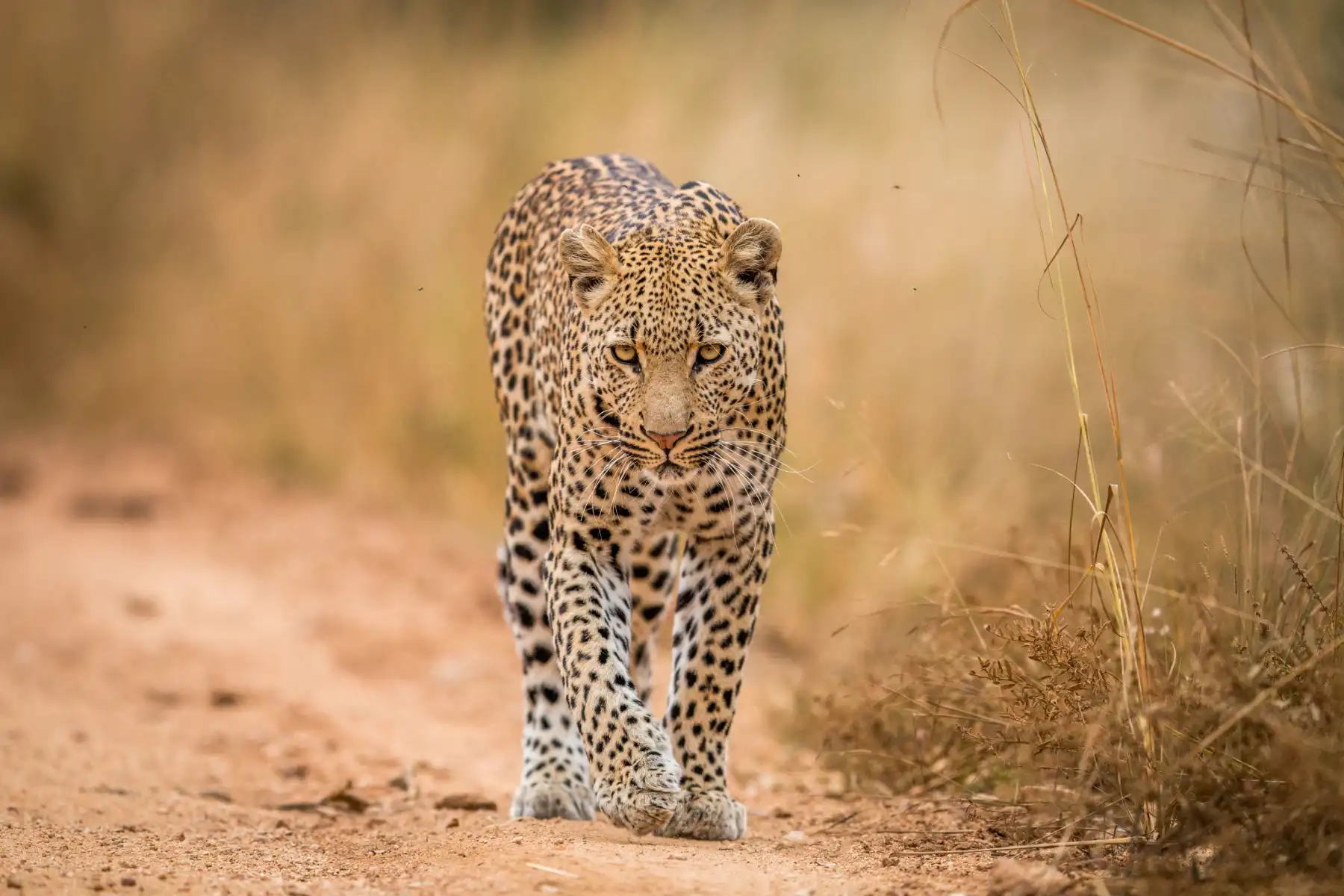
The private reserves of the Sabi Sand are renowned for some of the most reliable leopard sightings in Africa and superb ranger-led game viewing, which makes South Africa great for both first-timers and seasoned safari-goers alike. A number of these lodges can also be taken as sole-use camps and exclusive-use villas. See the shape of it in our 11-day Cape & Kruger itinerary, or add the Indian Ocean with Kruger & Mozambique.
Highlights of South Africa
Sabi Sand & Kruger
Big Five private reserves famed for exceptional leopard sightings.
Explore Sabi Sand & Kruger →The Winelands
Stellenbosch and Franschhoek — historic estates and fine dining.
Explore The Winelands →The Garden Route
A scenic coastal drive of forests, lagoons and whale watching.
Where you’ll stay in South Africa
Where you stay is selected privately around your journey. We recommend each camp, lodge or villa according to its location, season, guiding, privacy and suitability for the people traveling. Your carefully curated selection will be presented within your tailor-made itinerary.
Plan your private safariKnow before you go
The practical details we handle for you — flights, entry, health and money — summarized here so nothing surprises you. Requirements can change, so we confirm everything when you book. Planning a South Africa safari for seniors? Malaria-free reserves and short flights make it the easiest choice; see our guide to safaris for seniors.
Delta and United fly nonstop from Atlanta and Newark to Johannesburg and Cape Town — about 15–16 hours. Sabi Sand lodges are a short scheduled flight from Joburg. O.R. Tambo (JNB) is the regional hub for the Kruger, with onward flights to Skukuza (SZK), Hoedspruit (HDS) and Nelspruit (MQP) in about an hour; Cape Town (CPT) is a two-hour flight from Johannesburg if you prefer to safari first.
US citizens don't need a visa for stays up to 90 days. US passports must remain valid for at least 30 days after the planned departure from South Africa and contain two consecutive completely blank visa pages. Traveling with kids? Document requirements depend on the child, the accompanying adults and their travel documents — many children traveling with both parents need only valid passports, while single-parent or unaccompanied journeys may need consent letters or a birth certificate; see South Africa’s official guidance for children and we confirm your family’s exact list. New from July 2026: all travelers entering or leaving South Africa must also submit a free online SARS Traveler Declaration within 24 hours before the departure of your final direct travel leg — quick to do at sars.gov.za or via the SATMS app, and we guide you through it. International transit passengers who remain within the designated transit area and do not formally enter South Africa are excluded (official SARS guidance). Travelers are not denied entry or departure solely for not having declared beforehand — SARS officials and self-service terminals assist on arrival — but completing it in advance avoids delays. Download our SARS Traveler Declaration guide (PDF).
Complete the SARS declaration ↗The Kruger lowveld carries low, seasonal malaria risk; Madikwe and the Eastern Cape reserves are malaria-free — ideal with young children. A yellow fever certificate is required if you arrive from a country with risk of transmission, including a long layover in Nairobi or Addis Ababa — which catches travelers combining East and Southern Africa. See a travel clinic well before departure.
The rand goes far — cards work everywhere, including safari lodges. Tipping is at your discretion — most guests set aside about $20–25 per person per day for guides and lodge staff.
What to do in South Africa
From Big Five reserves to the Cape — the experiences we rate highest.
Leopards of the Sabi Sand
The world’s most reliable leopard viewing, tracked off-road by ranger-and-tracker teams who have known individual cats for generations.
Sabi Sand, Greater Kruger
Year-round; Jun–Oct driest
Cape Town and the Peninsula
Table Mountain by cable car, penguins at Boulders Beach, and the Cape of Good Hope — then dinner in one of the world’s great food cities.
Cape Town & Peninsula
Nov–Mar
The Winelands by private car
Stellenbosch and Franschhoek tastings arranged around your pace, with lunch in a 300-year-old Cape Dutch manor.
Stellenbosch & Franschhoek
Year-round; harvest Feb–Apr
The Garden Route and whales at Hermanus
June to November, southern right whales calve meters off the cliffs — some of the finest land-based whale watching anywhere.
Hermanus & Garden Route
Jun–Nov for whales
Best time to visit South Africa
Dry winter — the best Big Five game viewing in the reserves.
Cape summer — perfect for Cape Town, beaches and the Winelands.
In the green months rates ease at many of these camps, the plains empty of vehicles and the light turns dramatic. What each season gives, and what it trades, is set out in our Safari Planning Guide.
Planning & cost
Fully tailor-made — priced privately to your camps, season and travel style. No fixed packages.
Fly into Johannesburg (JNB) or Cape Town (CPT). US citizens do not need a visa for stays up to 90 days. US passports must remain valid for at least 30 days after the planned departure from South Africa and contain two consecutive completely blank visa pages. Entry requirements can change, so we reconfirm them before travel. South Africa’s new online ETA currently applies only to a few nationalities (not the USA); we confirm the latest entry rules with your final documents.
Every journey is private and tailor-made — private guides and vehicles where specified, the finest lodges, and a specialist on call throughout.
More planning resources
Money, tipping, connectivity and packing apply to every safari we plan — they live in one place so this page can stay about South Africa.
Continue exploring
Big Five Safari
A Big Five safari — lion, leopard, elephant, buffalo and rhino, Africa’s most sought-after sightings.
Explore → Southern AfricaBotswana
A Botswana safari is Africa’s water wilderness — the Okavango Delta, Chobe and the Kalahari.
Explore → RegionBeaches & Islands
Africa’s beaches and islands — powder-white sand and turquoise water to end your safari.
Explore → RegionSouthern Africa
The desert, the delta and the falls — Botswana, Namibia, Zambia, Zimbabwe and South Africa.
Explore →South Africa FAQs
Let's design your South Africa journey.
A luxury South Africa safari can combine the bush, the Cape and the coast in one journey.
Tell us how you like to travel and start with a complimentary consultation. When you are ready, a $500 USD planning fee covers your personalized itinerary and revisions, and is deducted from your booking deposit when you book.
Inquire now