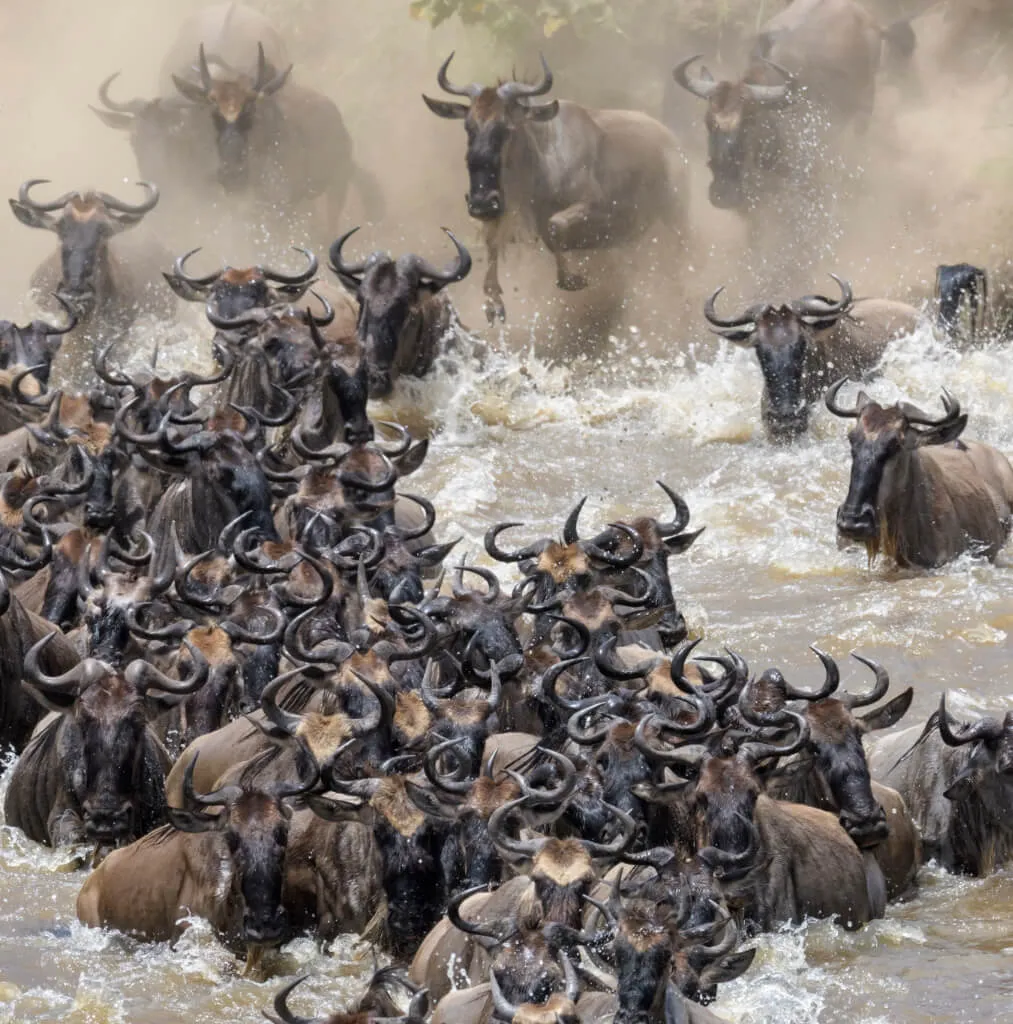
Most people plan a migration safari around the river crossings. Fewer know that the herds’ other great season is quieter, greener, cheaper and in some ways more reliable — the weeks when half a million calves are born on the southern plains.
What calving season actually is
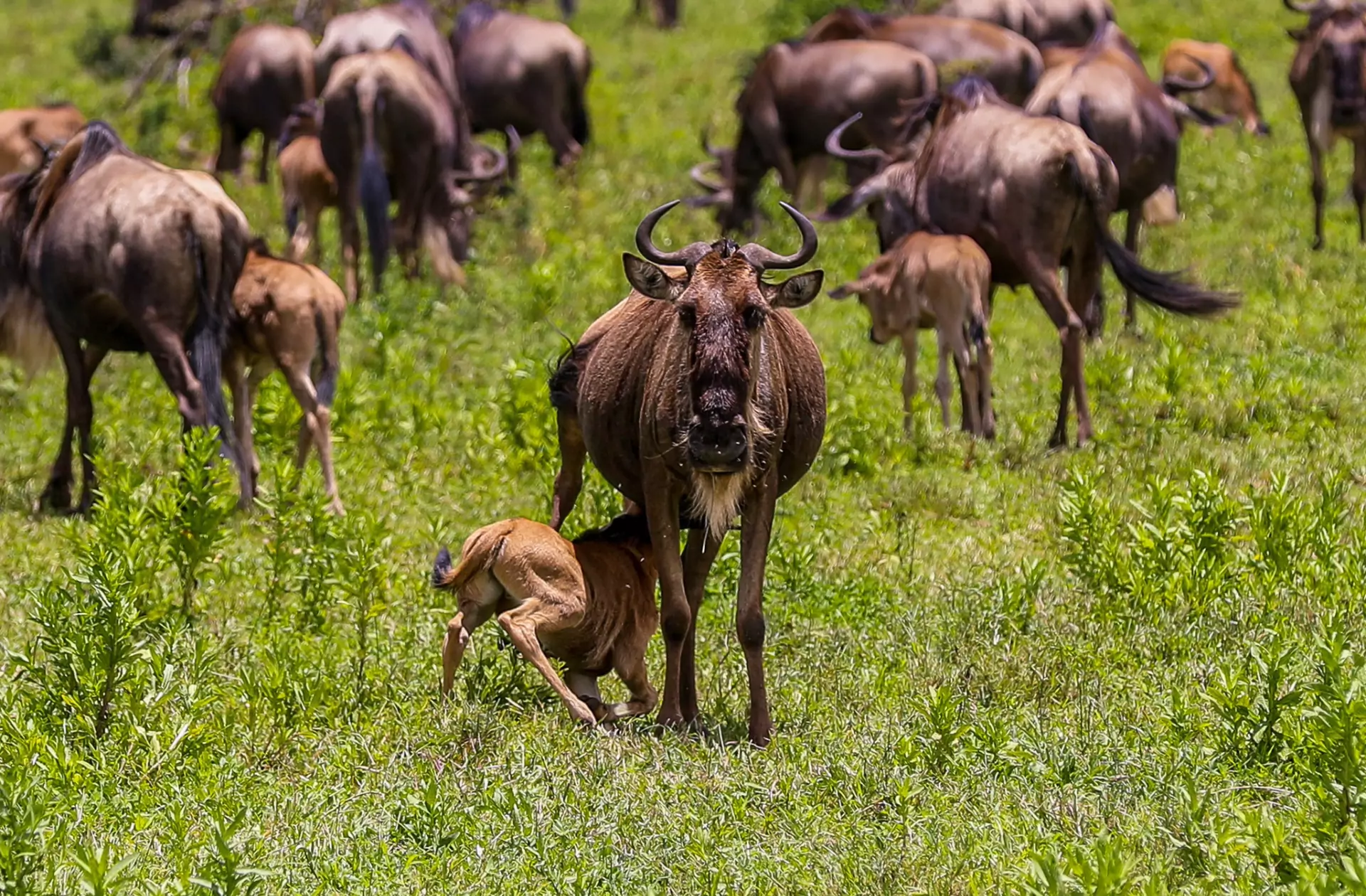
Calving season is the few weeks each year when the wildebeest herds stop moving and give birth. They do it on the short-grass plains of the southern Serengeti and Ndutu, where mineral-rich volcanic soils produce the nutritious grass that pregnant and nursing females need.
Up to half a million calves may be born within a matter of weeks. A newborn wildebeest can stand within minutes of birth — an essential ability in a landscape where the herd may move at any moment and predators are never far away. See our guide to safari animals for the rest of the cast.
When is calving season?
Calving runs across January to March, and usually reaches its height in February. Births occur throughout the wider window rather than on a single date.
January tends to find the herds spreading across the plains, grazing the grass that will fuel calving. February is the most concentrated. By March the last calves are strengthening for the trek north, the camps are quieter and the storm light is at its most dramatic. As always, rainfall shifts the timing — our month-by-month calendar sets out the whole year.
Where it happens: Ndutu and the southern plains
The calving grounds sit across the southern Serengeti and the adjoining short-grass plains of the Ngorongoro Conservation Area, including Ndutu.
One point worth being precise about, because it is often muddled: the migration extends into the conservation area, but not into Ngorongoro Crater itself. The crater is a superb day in its own right, with its own resident wildlife — it is simply not where the calving happens.
What you actually see
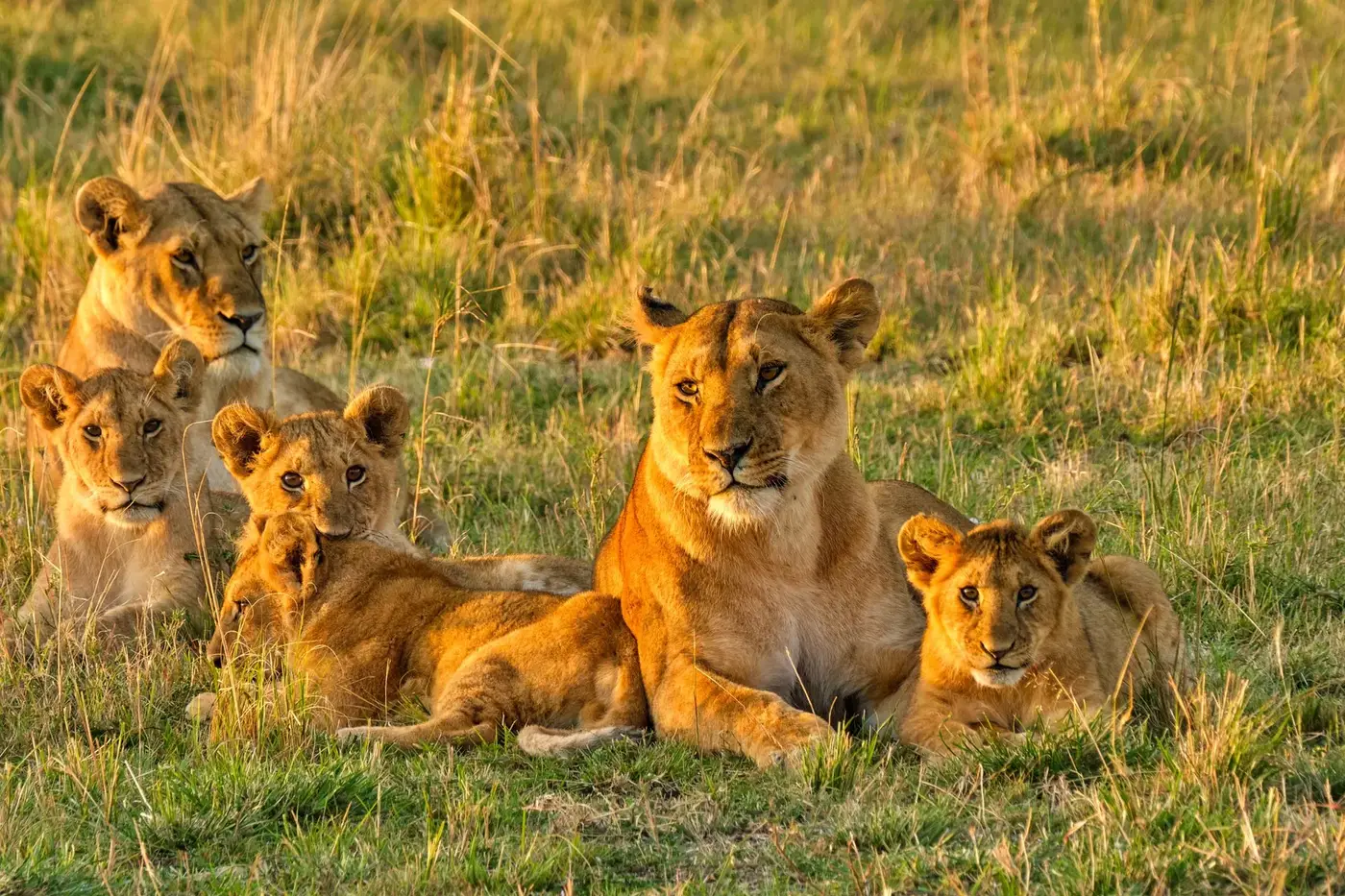
Newborns everywhere, and the predators that follow them. Lions, cheetahs and hyenas work the edges of the herds continuously through these weeks, and the open short-grass country means you watch it happen across long sightlines rather than through bush.
It is raw. Not every traveler wants that, and we say so plainly when we plan. But for anyone drawn to predator behaviour, to newborn wildlife, or to photography, there is no richer few weeks in the Serengeti’s year. January in particular is known for superb cheetah viewing on the open plains.
Calving season or the river crossings?
These are the two headline seasons of the migration and they suit different travelers.
The river-crossing months of July to October deliver the single most famous spectacle in African wildlife — at the busiest, most expensive time of year, with no guarantee you will see a crossing at all. If that is the trade you want, our guide to choosing a northern Serengeti camp covers where to base yourself.
Calving season is the opposite proposition: near-certain wildlife density, green landscapes, fewer vehicles, lower rates, and drama that unfolds daily rather than in one hoped-for moment. It can feel considerably more intimate than the crossing months. Many of our most experienced returning travelers prefer it.
Where to stay for calving season
Accommodation for these weeks means seasonal and mobile camps positioned around Ndutu and the southern plains. They move with the herds, which is precisely the point — a permanent lodge an hour from the action is a poor trade in a season this concentrated.
Camp locations and seasonal opening dates are confirmed for your specific travel dates before anything is booked. We select around where the herds are most likely to be for your window, not around where it is convenient to sell.
Planning a calving season safari
Three to four nights on the calving grounds is a sound minimum, and pairs naturally with the crater and Tarangire on a northern Tanzania route.
This is green season, so expect some rain — usually short afternoon storms rather than washed-out days, and they are what make the light extraordinary. Camps are smaller in number than in August but the good ones still fill, so six to nine months ahead is sensible.