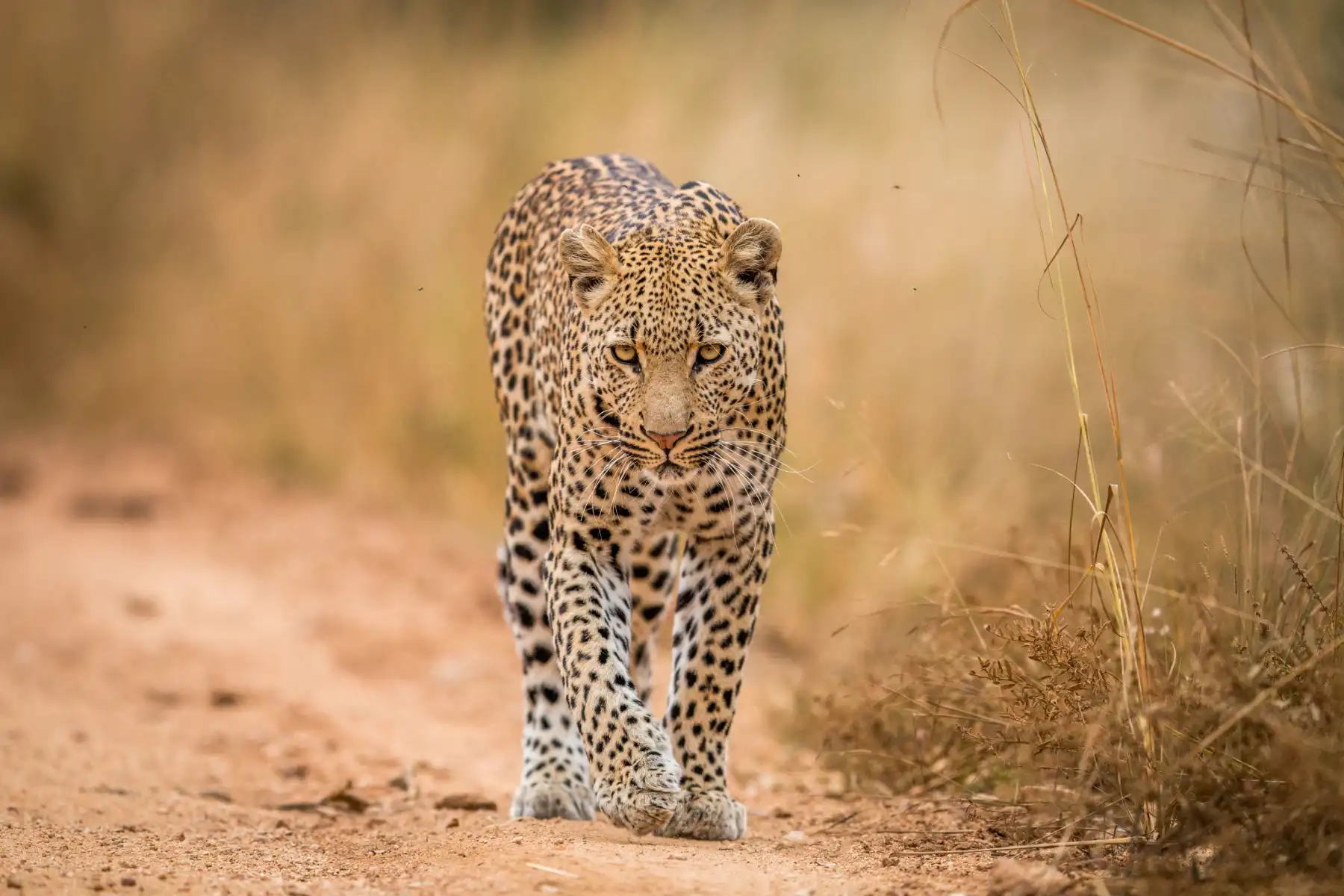
The Sabi Sand is a private reserve sharing an unfenced boundary with Kruger National Park — wildlife flows freely, but vehicle numbers do not. Generations of careful guiding have made its leopards utterly relaxed, and few places on earth watch them better.
This is also the home of the polished South African lodge: superb food, spas, private plunge pools and rangers who have guided the same traversing land for decades. Flights from Johannesburg take about an hour, so it is the easiest world-class safari to reach.
Highlights of Kruger & the Sabi Sand
Leopard, daily
The Sabi Sand’s leopards are habituated to vehicles across generations — sightings most drives.
Off-road traversing
Private-reserve rules allow rangers to follow sightings off-road, day and night.
The full Big Five
Lion, elephant, buffalo and rhino share the reserve with its famous cats.
Cape Town pairing
A two-hour flight links the bush with one of Africa’s most beautiful cities.
Explore Cape Town pairing →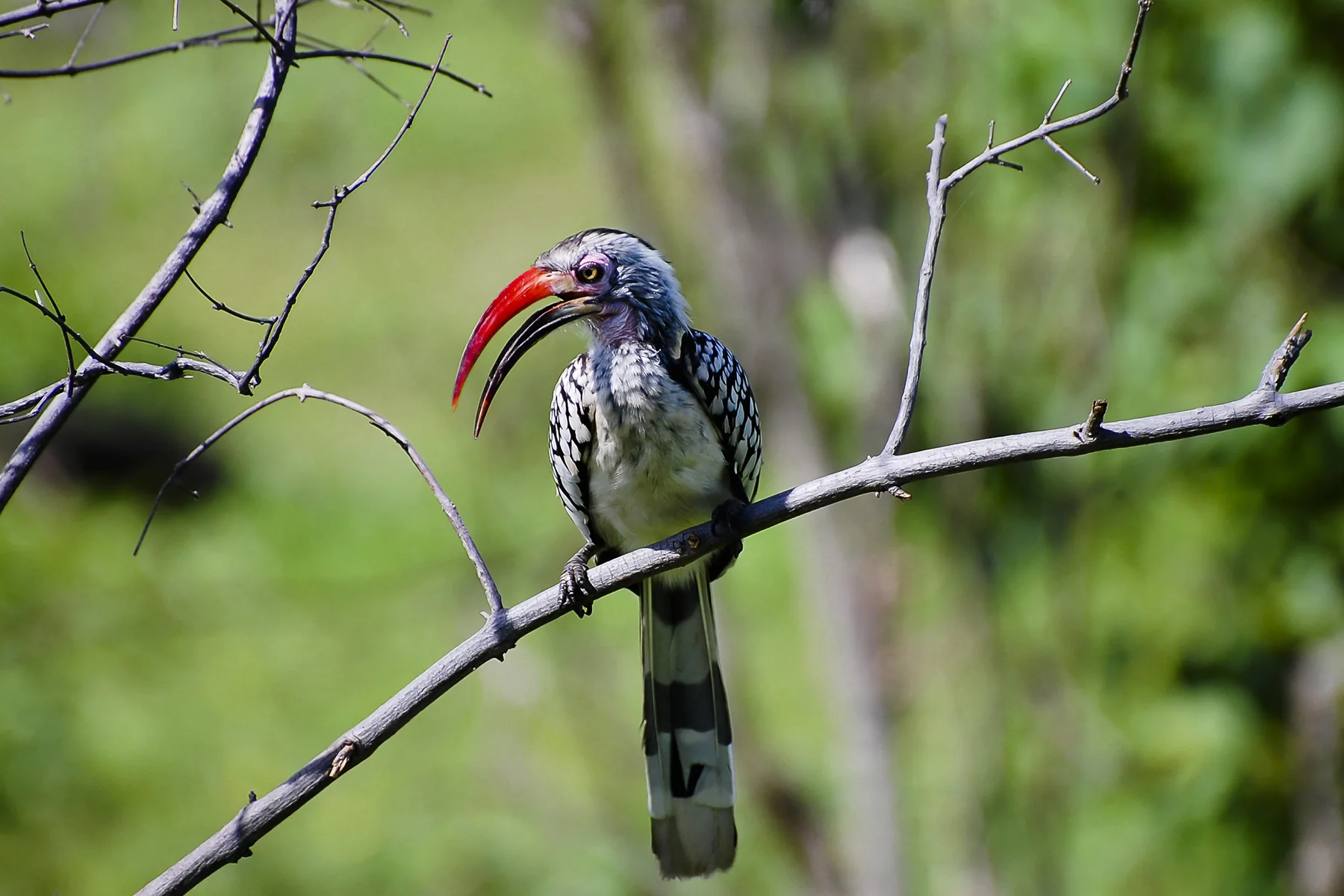
Not everything worth stopping for is large
Best time to visit Kruger and the Sabi Sand
Dry winter — thin bush, animals at waterholes, and no malaria medication needed by many travelers (low season risk). Prime game viewing.
Green summer — newborn antelope, superb birding and lush scenery.
In the green months rates ease at many of these camps, the plains empty of vehicles and the light turns dramatic. What each season gives, and what it trades, is set out in our Safari Planning Guide.
Planning & cost
Fully tailor-made — priced privately to your camps, season and travel style. No fixed packages.
Every journey is privately designed, with private guides and vehicles arranged where specified, the finest lodges, and a specialist on call throughout. At fly-in camps, game drives may be shared unless a private vehicle is reserved.
Practical details,
in one place
Money, health, connectivity and packing work the same way on every safari we plan, so they live in one place rather than on every page.
Continue exploring
South Africa
A South Africa safari pairs Big Five private reserves with Cape Town and the Winelands.
Explore → ExperienceBig Five Safari
A Big Five safari — lion, leopard, elephant, buffalo and rhino, Africa’s most sought-after sightings.
Explore → Southern AfricaBotswana
A Botswana safari is Africa’s water wilderness — the Okavango Delta, Chobe and the Kalahari.
Explore → RegionSouthern Africa
The desert, the delta and the falls — Botswana, Namibia, Zambia, Zimbabwe and South Africa.
Explore →Kruger & the Sabi Sand FAQs
Getting to South Africa — flights, visas and health
Current at the time of writing. We re-confirm every requirement for your exact routing before you travel — and we will tell you what to apply for, and when.
Let's design your Kruger & the Sabi Sand journey.
A Sabi Sand safari offers some of the most reliable big-cat viewing in Africa.
Tell us how you like to travel and start with a complimentary consultation. When you are ready, a $500 USD planning fee covers your personalized itinerary and revisions, and is deducted from your booking deposit when you book.
Inquire now