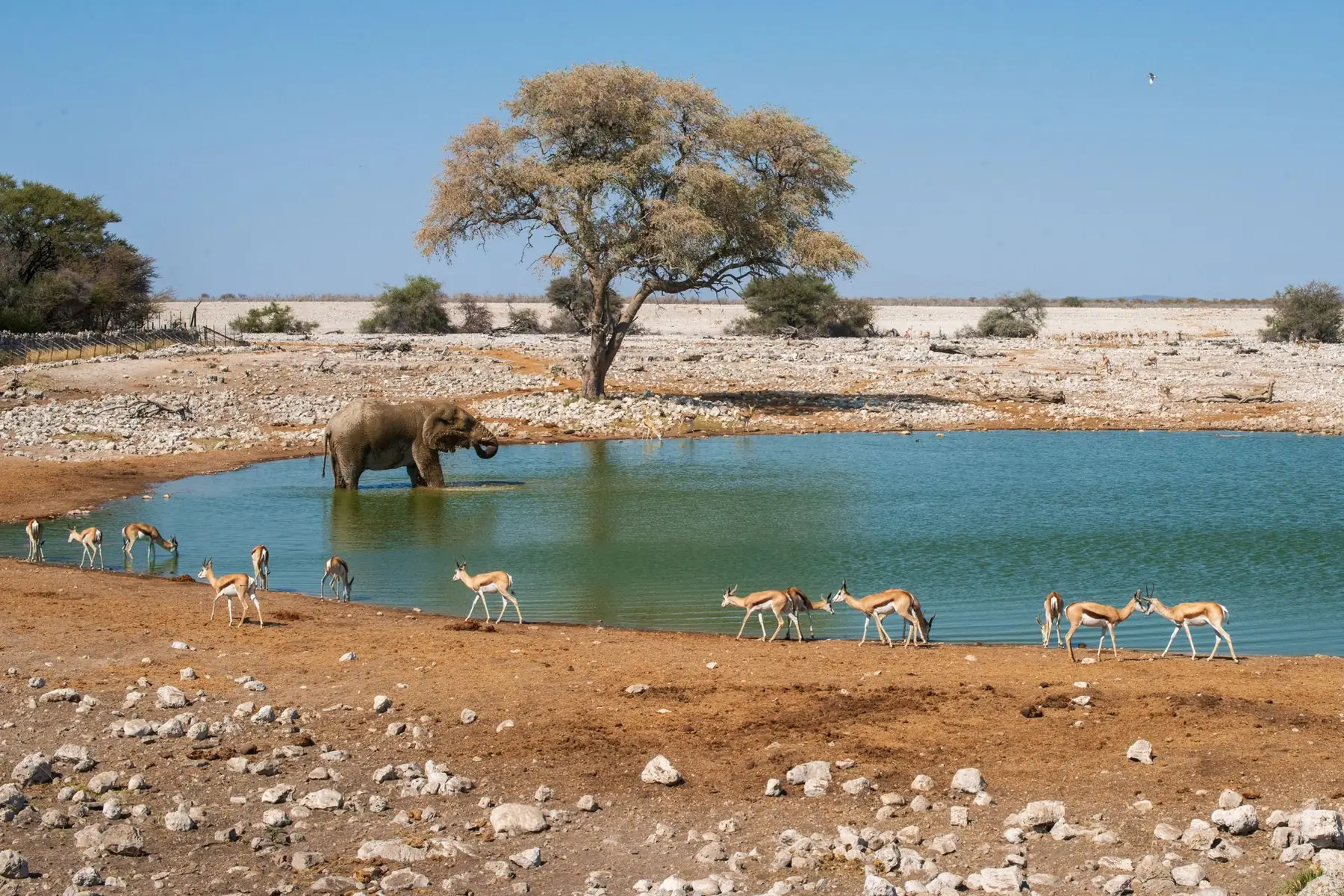
Etosha is built around a salt pan so vast it is visible from space. In the dry season the game viewing inverts: instead of searching, you settle at a waterhole and let elephant, giraffe, zebra and lion come to drink in a slow, constant procession.
Its most magical hours are after dark, at the floodlit waterholes on the pan’s edge — one of the best places in Africa to watch black rhino, which emerge silently from the gloom to drink within meters of the viewing decks.
Etosha is Namibia’s great white place — a salt pan so vast it is visible from space, ringed by waterholes where springbok, oryx, elephant and black rhino queue to drink in the open. Floodlit waterholes at the camps mean the game viewing continues long after dark.
Etosha safari at a glance
| Best time | May–October dry season, when game concentrates at the waterholes; July is typically best for rhino; October is hottest and most intense |
|---|---|
| Signature experience | Floodlit waterholes watched from camp after dark, and the vast white pan itself |
| Wildlife | Elephant, black rhino, lion, giraffe and desert-adapted species; four of the Big Five (no buffalo in Etosha) |
| How many days | Two to three nights, usually within a longer Namibia circuit with Sossusvlei and Damaraland |
| Getting there | Fly to Windhoek, then a light-aircraft or scenic road transfer; we route it with the rest of Namibia |
| What it costs | Private, tailor-made journeys from about $12,000 per person; Namibia is priced below Botswana |
Reviewed by Evance — Safari Specialist · Updated 5 October 2026
Highlights of Etosha National Park
Floodlit waterholes
Black rhino, elephant and lion drinking by night — Etosha’s signature.
The pan itself
A blinding white horizon that turns briefly to a flamingo lake after good rains.
Desert-adapted wildlife
Gemsbok, springbok in their thousands and the pale Etosha elephant.
Private reserves on the border
Ongava and Onguma add off-road guiding and hides, and some reserves offer guided rhino tracking on foot.
Best time to visit Etosha
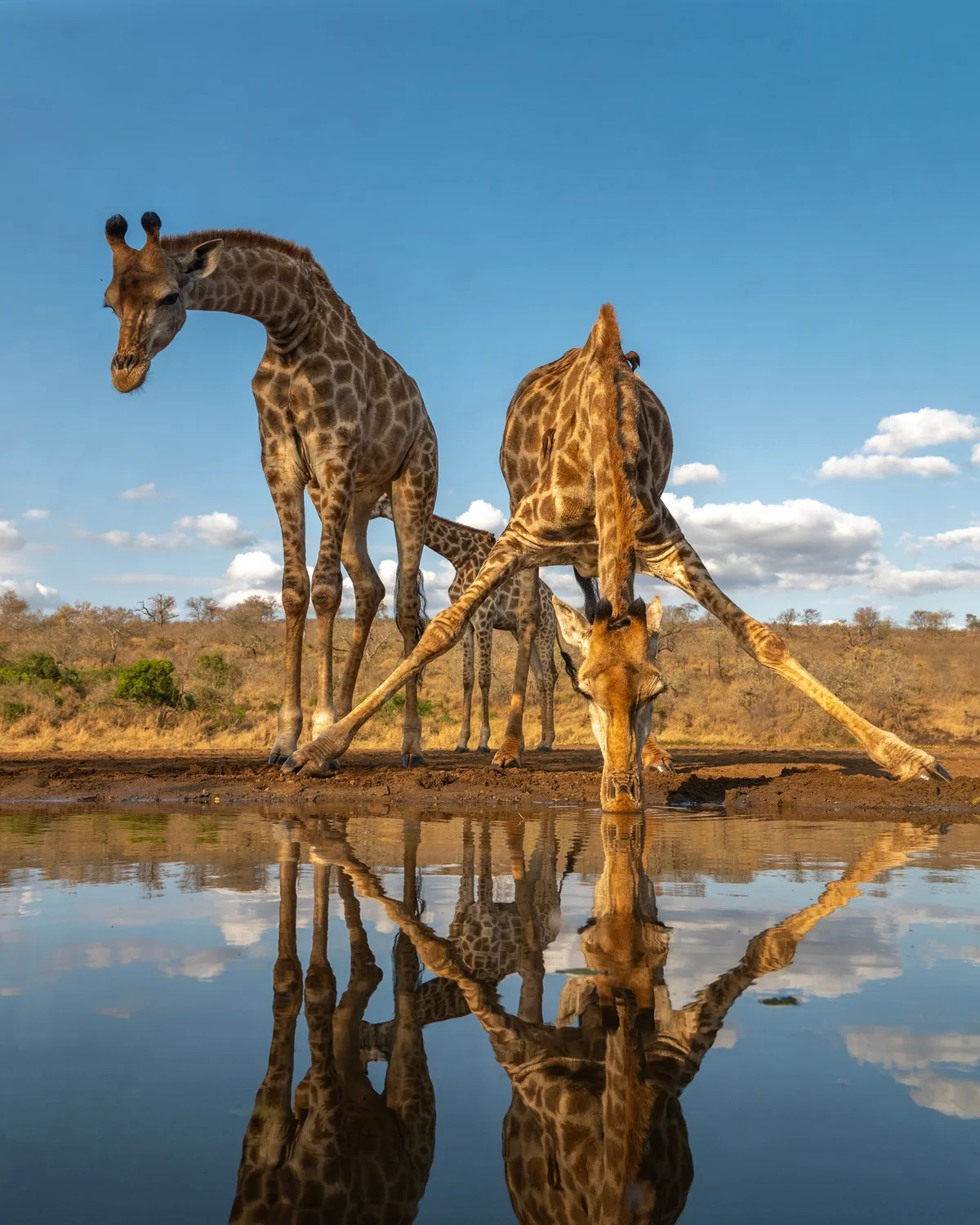
Dry season — the waterhole procession at full strength.
Green season — newborn springbok, migrant birds and dramatic skies.
In the green months rates ease at many of these camps, the plains empty of vehicles and the light turns dramatic. What each season gives, and what it trades, is set out in our Safari Planning Guide.
Planning & cost
Fully tailor-made — priced privately to your camps, season and travel style. No fixed packages.
Every journey is privately designed, with private guides and vehicles arranged where specified, the finest lodges, and a specialist on call throughout. At fly-in camps, game drives may be shared unless a private vehicle is reserved.
Practical details,
in one place
Money, health, connectivity and packing work the same way on every safari we plan, so they live in one place rather than on every page.
Continue exploring
Namibia
A Namibia safari crosses the red dunes of Sossusvlei, Etosha’s waterholes and the Skeleton Coast.
Explore → NamibiaSossusvlei & the Namib
Sossusvlei — some of the tallest dunes on earth, and the ghost trees of Deadvlei.
Explore → ExperienceBig Five Safari
A Big Five safari — lion, leopard, elephant, buffalo and rhino, Africa’s most sought-after sightings.
Explore → RegionSouthern Africa
The desert, the delta and the falls — Botswana, Namibia, Zambia, Zimbabwe and South Africa.
Explore →Etosha National Park FAQs
Getting to Namibia — flights, visas and health
Current at the time of writing. We re-confirm every requirement for your exact routing before you travel — and we will tell you what to apply for, and when.
Let's design your Etosha National Park journey.
Etosha National Park is at its most generous in the dry months, when the waterholes do the work.
Tell us how you like to travel and start with a complimentary consultation. When you are ready, a $500 USD planning fee covers your personalized itinerary and revisions, and is deducted from your booking deposit when you book.
Inquire now