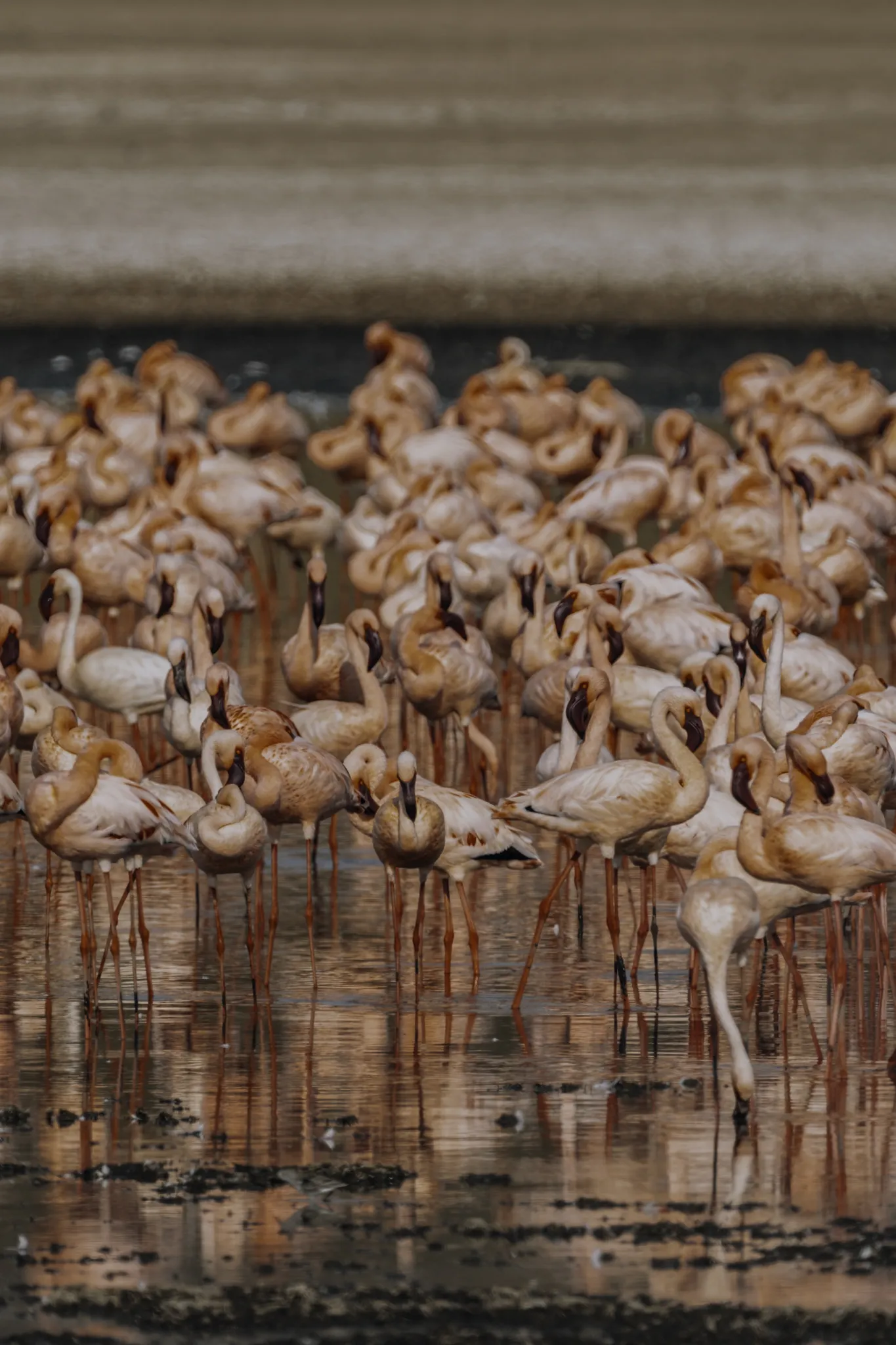
Lake Nakuru is one of Kenya’s conservation success stories: a fenced Rift Valley park that protects one of the country’s most important populations of both black and white rhino, along with Rothschild’s giraffe and tree-climbing lions.
The lake itself is famous for flamingos — their numbers rise and fall with water levels, but on a good day the shallows blaze pink. It slots easily into a road circuit between Nairobi, the lakes and the Mara.
Lake Nakuru packs an extraordinary amount into a compact park: one of Kenya’s most important rhino sanctuaries, tree-climbing lions, Rothschild’s giraffe and — when conditions are right — shorelines turned pink by hundreds of thousands of flamingos. It slots easily between the Mara and Laikipia on any Kenya itinerary.
Highlights of Lake Nakuru National Park
Rhino sanctuary
Among the most reliable places in Kenya to see both black and white rhino.
Flamingos
Great flocks of lesser flamingo feed in the soda shallows when conditions are right.
Rothschild’s giraffe
A stronghold for one of the rarest giraffe subspecies.
Baboon Cliff
A lookout over the whole lake — one of the Rift Valley’s great views.
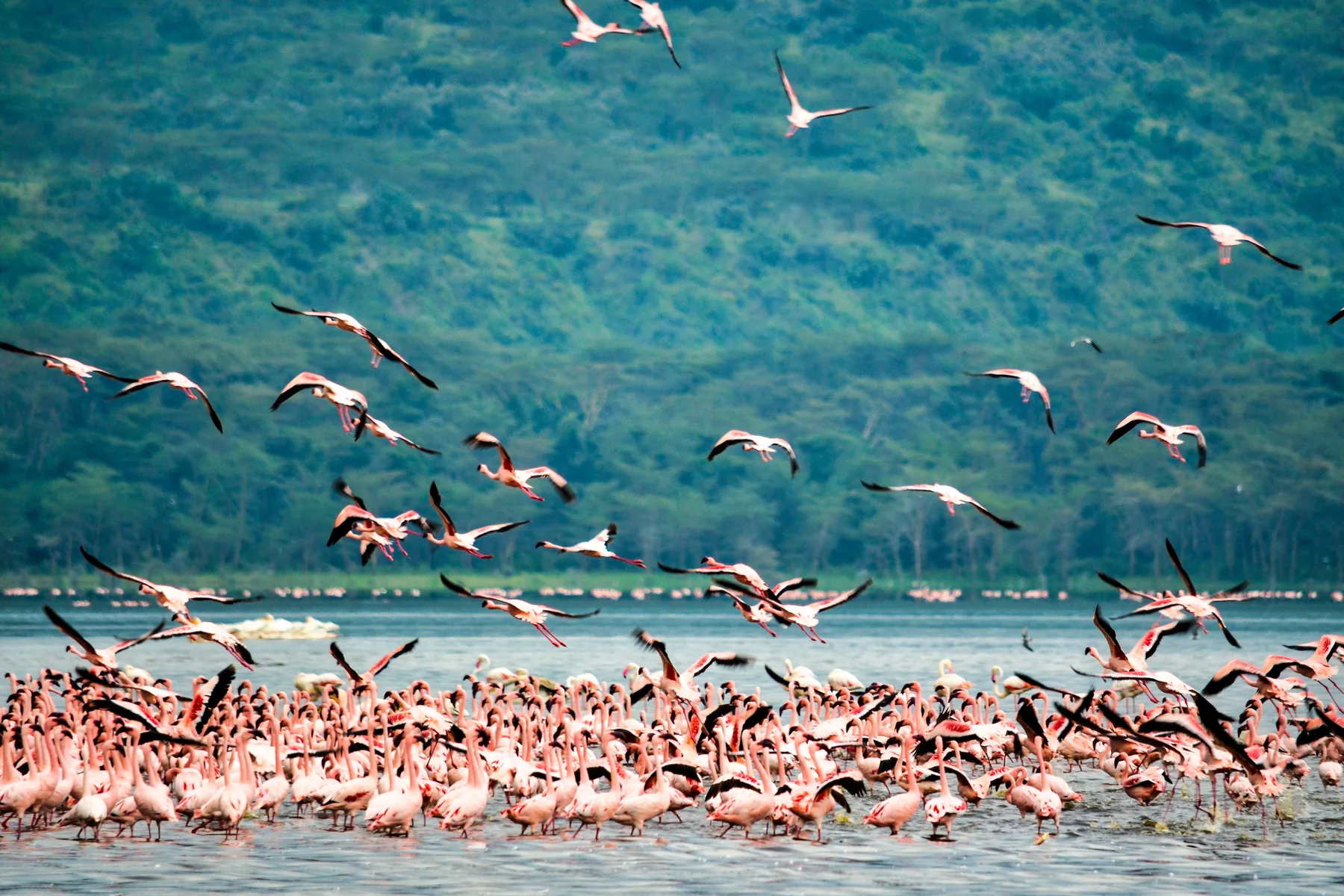
Flamingos on the shallows at Nakuru
Best time to visit Lake Nakuru
Good year-round; drier months give the easiest driving.
Flocks move between Rift lakes with water levels — we check recent sightings before routing you.
In the green months rates ease at many of these camps, the plains empty of vehicles and the light turns dramatic. What each season gives, and what it trades, is set out in our Safari Planning Guide.
Planning & cost
Usually one night en route between Nairobi and the Mara.
Every journey is privately designed, with private guides and vehicles arranged where specified, the finest lodges, and a specialist on call throughout. At fly-in camps, game drives may be shared unless a private vehicle is reserved.
Practical details,
in one place
Money, health, connectivity and packing work the same way on every safari we plan, so they live in one place rather than on every page.
Continue exploring
Kenya
The Maasai Mara, Amboseli, Samburu and the Great Migration.
Explore → KenyaMaasai Mara
The Maasai Mara — big cats, river crossings and some of the finest year-round game viewing in Africa.
Explore → KenyaSamburu National Reserve
Samburu — Kenya’s wild north, with rare species found nowhere else in the country.
Explore → RegionEastern Africa
The Great Migration, the Rift Valley and the gorillas — Tanzania, Kenya, Rwanda and Uganda.
Explore →Lake Nakuru National Park FAQs
Getting to Kenya — flights, visas and health
Current at the time of writing. We re-confirm every requirement for your exact routing before you travel — and we will tell you what to apply for, and when.
Let's design your Lake Nakuru National Park journey.
Lake Nakuru National Park sits close enough to Nairobi to open or close a Kenyan journey.
Tell us how you like to travel and start with a complimentary consultation. When you are ready, a $500 USD planning fee covers your personalized itinerary and revisions, and is deducted from your booking deposit when you book.
Inquire now