Chobe anchors the largest national elephant population on earth — an estimated 120,000 move through northern Botswana, and in the dry season they mass along the Chobe River in herds that stretch to the horizon.
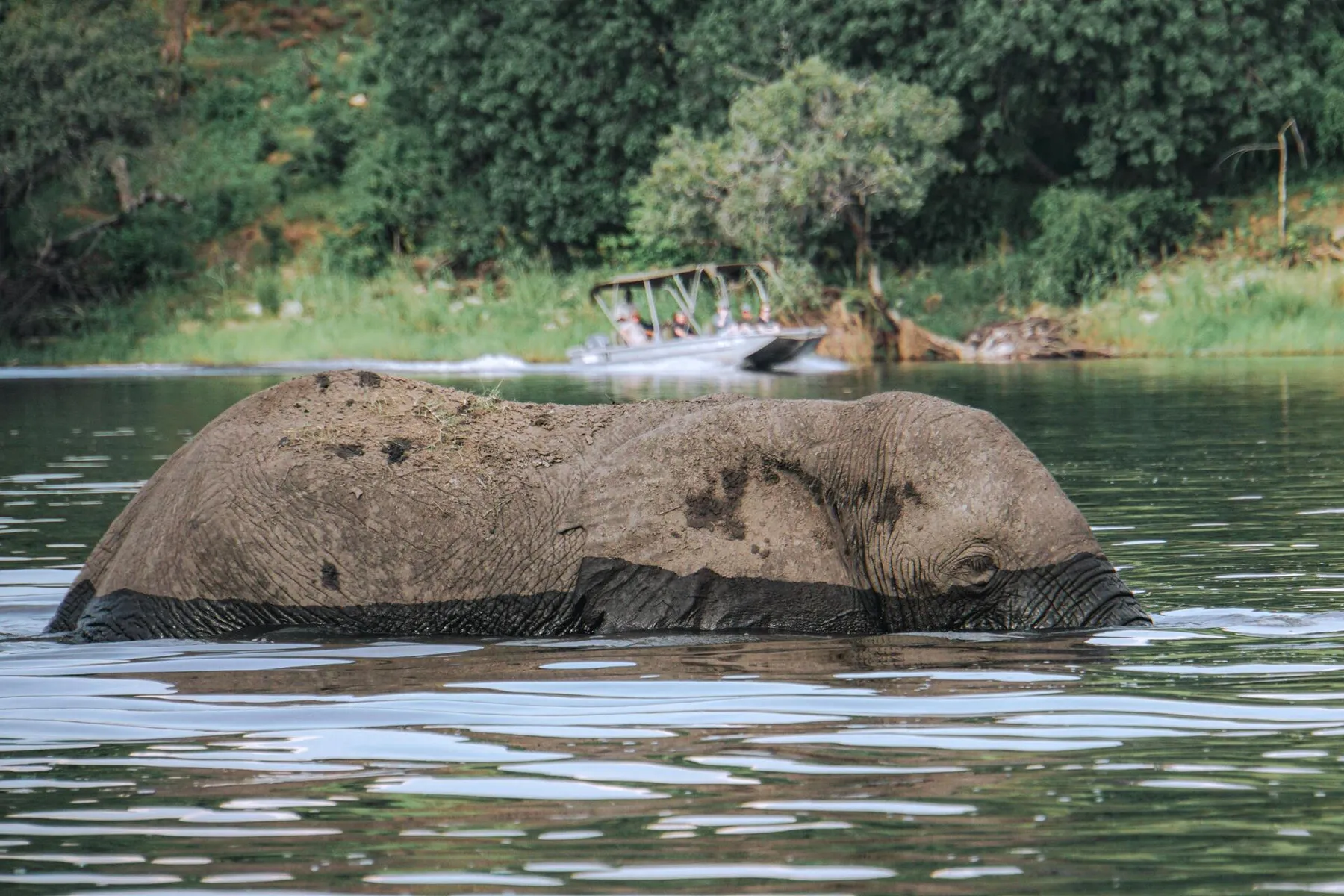
The signature experience is the water: an afternoon cruise or small photographic boat puts you at eye level with swimming elephant, buffalo crossing to the islands and some of Africa’s biggest crocodiles. Victoria Falls is barely 90 minutes away, making the two a natural pair.
Chobe is Botswana at its most abundant: riverfront game drives and sunset boat cruises pass elephant herds hundreds strong, buffalo, hippo and some of Africa’s densest lion prides. It pairs naturally with Victoria Falls, less than two hours away by road, and with the Okavango Delta by light aircraft.
Highlights of Chobe National Park
The river at sunset
Elephant swimming trunk-up between islands as the light turns gold.
Photographic boats
Low, stable craft with swivel seats and camera mounts — built for photographers.
Savuti
Chobe’s wild interior — famous lion clans and the elephant-hunting prides of documentary fame.
Victoria Falls next door
Cross to the Falls by road in about 90 minutes.
Explore Victoria Falls next door →Best time to visit Chobe
Dry season — the river becomes the only water and the herds concentrate.
Green season — zebra migration to Savuti, dramatic skies and low rates.
In the green months rates ease at many of these camps, the plains empty of vehicles and the light turns dramatic. What each season gives, and what it trades, is set out in our Safari Planning Guide.
Planning & cost
Fully tailor-made — priced privately to your camps, season and travel style. No fixed packages.
Every journey is privately designed, with private guides and vehicles arranged where specified, the finest lodges, and a specialist on call throughout. At fly-in camps, game drives may be shared unless a private vehicle is reserved.
Practical details,
in one place
Money, health, connectivity and packing work the same way on every safari we plan, so they live in one place rather than on every page.
Continue exploring
Botswana
A Botswana safari is Africa’s water wilderness — the Okavango Delta, Chobe and the Kalahari.
Explore → ExperienceOkavango Delta
An Okavango Delta safari explores Africa’s great water wilderness by mokoro and 4x4.
Explore → ExperienceVictoria Falls
The largest sheet of falling water on earth — a natural wonder.
Explore → RegionSouthern Africa
The desert, the delta and the falls — Botswana, Namibia, Zambia, Zimbabwe and South Africa.
Explore →Chobe National Park FAQs
Getting to Botswana — flights, visas and health
Current at the time of writing. We re-confirm every requirement for your exact routing before you travel — and we will tell you what to apply for, and when.
Let's design your Chobe National Park journey.
Chobe National Park rewards travelers who give it both a boat and a vehicle.
Tell us how you like to travel and start with a complimentary consultation. When you are ready, a $500 USD planning fee covers your personalized itinerary and revisions, and is deducted from your booking deposit when you book.
Inquire now