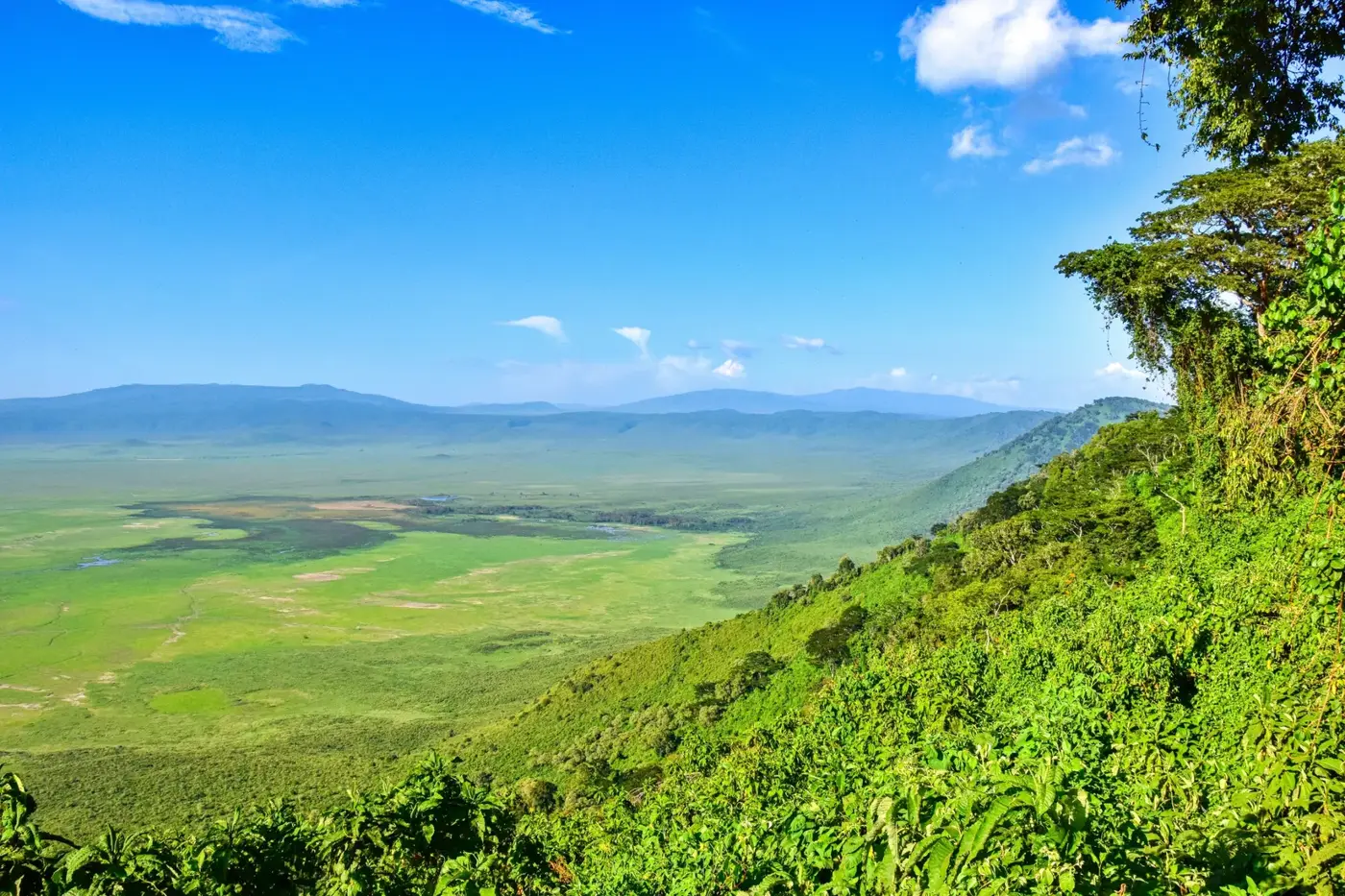
Ngorongoro is a 260-square-kilometer caldera whose floor holds some 25,000 large animals year-round — including one of East Africa’s last reliable populations of black rhino. Lion, elephant, buffalo and huge herds of zebra and wildebeest live inside walls 600 meters high.
The crater rewards an early start: we have you on the floor at first light, hours before the day-trip vehicles arrive, and back at your rim lodge for a late lunch. It pairs naturally with the Serengeti and Tarangire on a classic northern-circuit safari.
Highlights of Ngorongoro Crater
Black rhino
One of the most reliable places in East Africa to see this critically endangered species.
The crater floor at dawn
Lion on the move, hyena clans returning from the night’s hunt, and golden light on the crater walls.
Rim lodges
Sleep 2,300 meters up on the crater rim, with the whole caldera below your veranda.
Maasai highlands
Walk the Empakaai and Olmoti craters with a Maasai guide — few visitors ever do.
Where you’ll stay in Ngorongoro Crater
Where you stay is selected privately around your journey. We recommend each camp, lodge or villa according to its location, season, guiding, privacy and suitability for the people traveling. Your carefully curated selection will be presented within your tailor-made itinerary.
Plan your private safari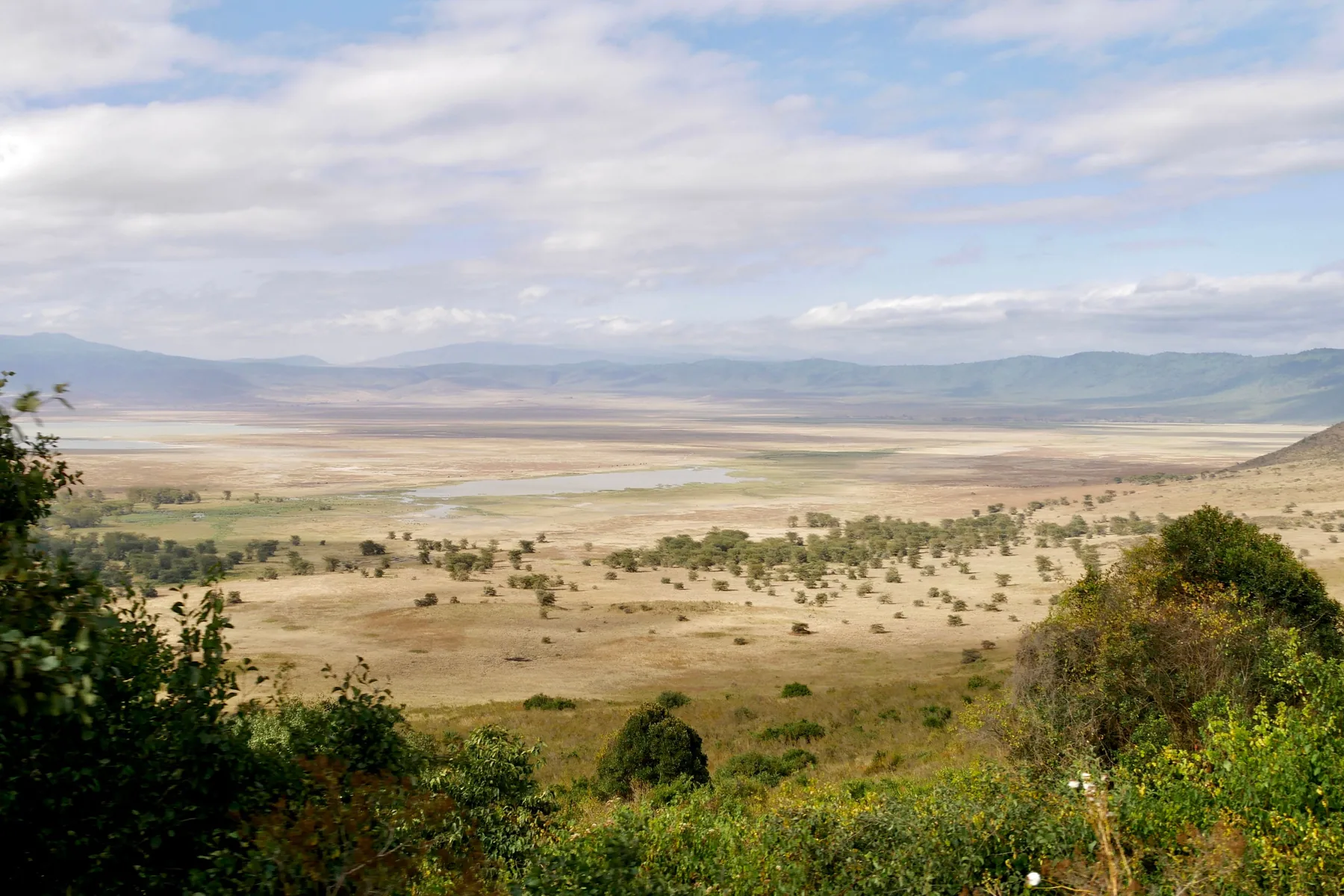
The crater floor, seen from the rim — soda lake, forest and grassland
Best time to visit the Ngorongoro Crater
Dry season — short grass and easy sightings, but the busiest months.
Green season — the crater floor turns emerald and visitor numbers drop. Game viewing stays excellent because the animals never leave.
In the green months rates ease at many of these camps, the plains empty of vehicles and the light turns dramatic. What each season gives, and what it trades, is set out in our Safari Planning Guide.
Planning & cost
Fully tailor-made — priced privately to your camps, season and travel style. No fixed packages.
Every journey is privately designed, with private guides and vehicles arranged where specified, the finest lodges, and a specialist on call throughout. At fly-in camps, game drives may be shared unless a private vehicle is reserved.
Practical details,
in one place
Money, health, connectivity and packing work the same way on every safari we plan, so they live in one place rather than on every page.
Continue exploring
Tanzania
The Serengeti, Ngorongoro Crater, Tarangire and Zanzibar.
Explore → TanzaniaSerengeti National Park
The Serengeti — endless plains, two million wildebeest and some of Africa’s finest big-cat country.
Explore → ExperienceBig Five Safari
A Big Five safari — lion, leopard, elephant, buffalo and rhino, Africa’s most sought-after sightings.
Explore → RegionEastern Africa
The Great Migration, the Rift Valley and the gorillas — Tanzania, Kenya, Rwanda and Uganda.
Explore →Ngorongoro Crater FAQs
Getting to Tanzania — flights, visas and health
Current at the time of writing. We re-confirm every requirement for your exact routing before you travel — and we will tell you what to apply for, and when.
Let's design your Ngorongoro Crater journey.
A Ngorongoro Crater safari is short by design; one full day on the floor is usually enough.
Tell us how you like to travel and start with a complimentary consultation. When you are ready, a $500 USD planning fee covers your personalized itinerary and revisions, and is deducted from your booking deposit when you book.
Inquire now