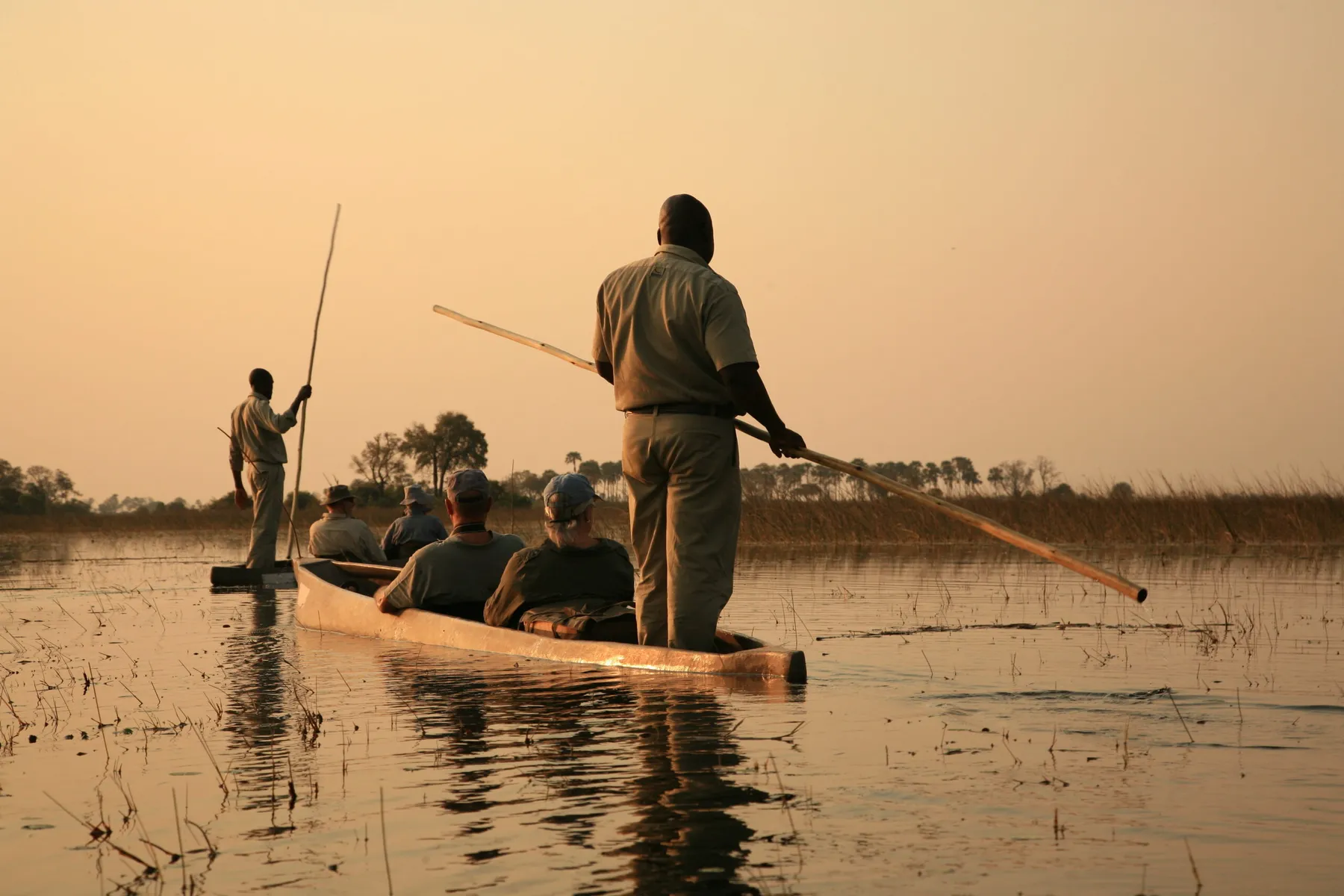
The Okavango Delta is one of Africa’s most extraordinary ecosystems — a vast inland delta where the Okavango River spills into the Kalahari to create a maze of channels, lagoons and palm islands.
A safari here mixes water and land: glide silently by mokoro past elephants, track lion and wild dog on game drives, and stay in some of the most exclusive camps on the continent.
Highlights of Okavango Delta
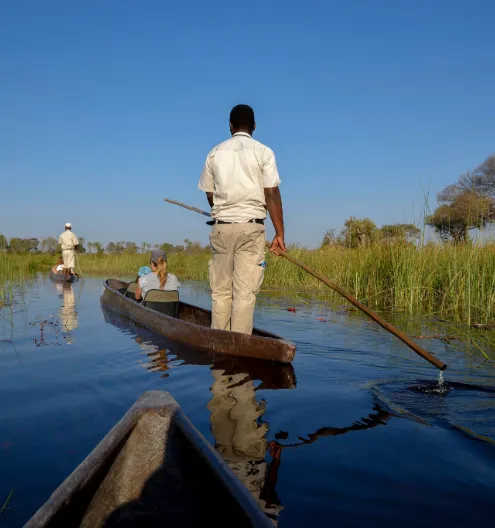
Mokoro safaris
Glide through the channels in a traditional dugout canoe.
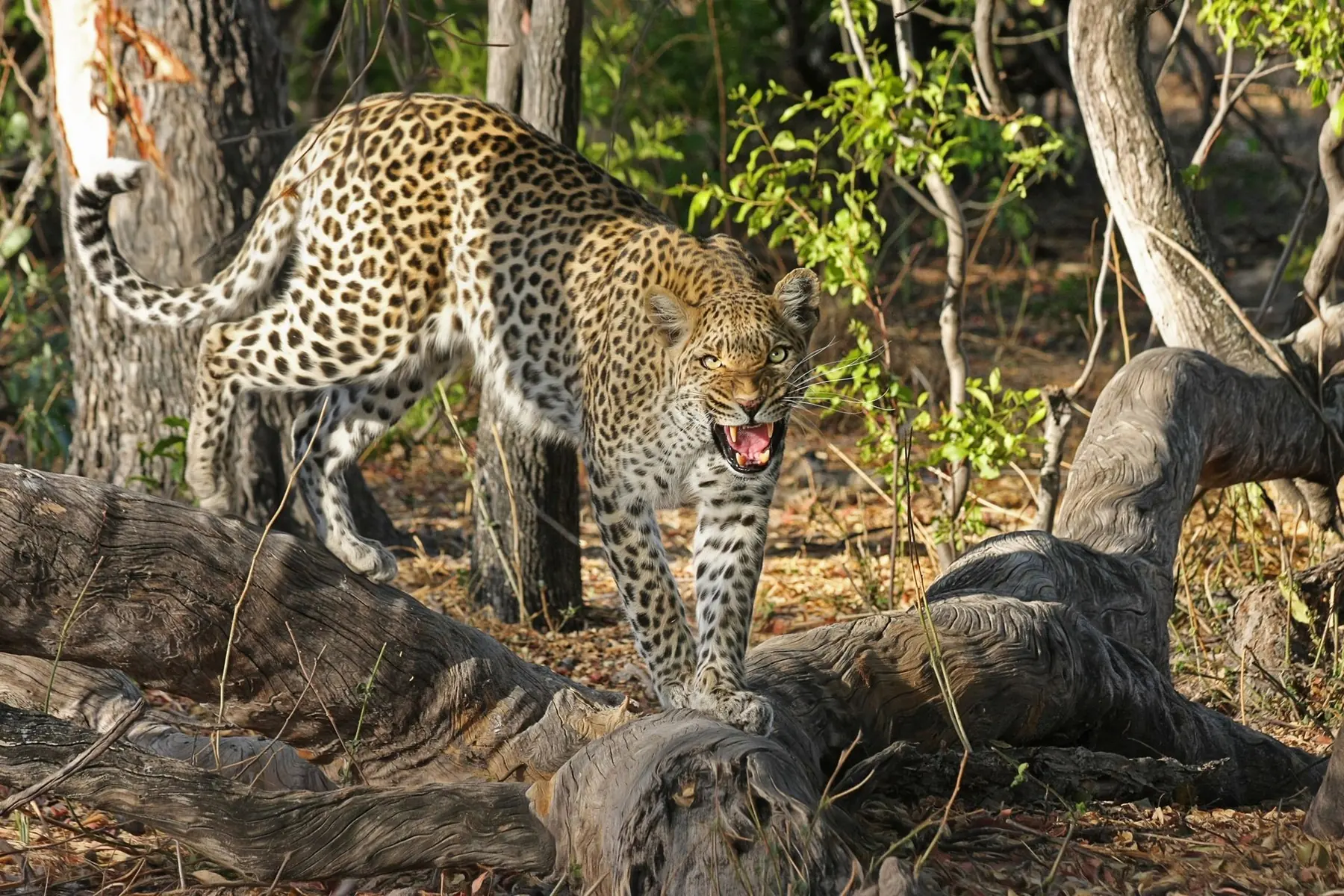
Predator viewing
Exceptional lion, leopard and endangered wild dog.
Water & land game drives
A rare mix of boating and 4x4 wildlife viewing.
Exclusive camps
Intimate, low-density lodges deep in private concessions.
Where to go for the Okavango
The Delta lies in northern Botswana, but it rarely travels alone. These are the countries we pair it with for a complete Southern Africa journey.
Botswana
Home of the Delta itself. Fly straight into the water wilderness for mokoro mornings and predator-rich drives from a handful of exclusive camps.
Explore Botswana → Southern AfricaZimbabwe
Add Victoria Falls and Hwange's elephant herds an easy hop away, the classic bush-and-falls pairing with the Okavango.
Explore Zimbabwe → Southern AfricaZambia
Combine the Delta with walking safaris in South Luangwa and the Zambian side of the falls at Livingstone.
Explore Zambia → Southern AfricaNamibia
Extend into the red dunes of Sossusvlei for a dramatic desert contrast to the Delta's channels and lagoons.
Explore Namibia →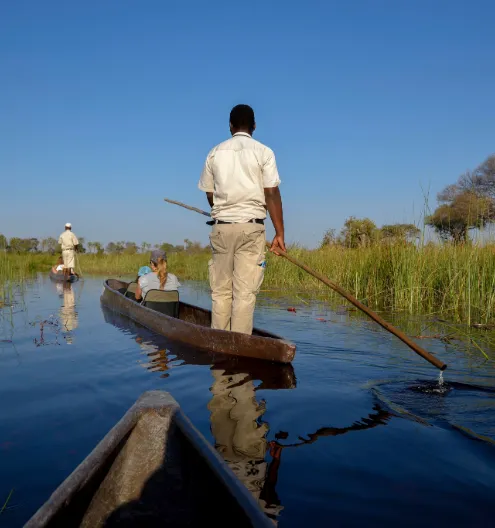
By mokoro through the Delta’s quiet channels
Know before you go
The practical details we handle for you — flights, entry, health and money — summarized here so nothing surprises you. Requirements can change, so we confirm everything when you book. Planning for older travelers? Motorboats are easier to board than a mokoro; see our guide to safaris for seniors.
Fly to Maun via Johannesburg — Newark and Atlanta nonstops take 15–16 hours, then a two-hour connection. Light aircraft hop you between Delta camps in 15–30 minutes.
Botswana is visa-free for US citizens (up to 90 days). Passport valid six months with blank pages.
The Delta is a malaria area — prophylaxis is advised. Camps carry medical kits and evacuation cover is included in our journeys.
Camps are fully inclusive; bring modest US dollars in small bills. Tipping is at your discretion — around $20–25 per guest per day for guides is a common guideline.
Best time to visit the Okavango Delta
Peak flood and dry season — the best wildlife and water levels.
Highest water, ideal for mokoro and boating safaris.
In the green months rates ease at many of these camps, the plains empty of vehicles and the light turns dramatic. What each season gives, and what it trades, is set out in our Safari Planning Guide.
Planning & cost
Fully tailor-made — priced privately to your camps, season and travel style. No fixed packages.
Every journey is privately designed, with private guides and vehicles arranged where specified, the finest lodges, and a specialist on call throughout. At fly-in camps, game drives may be shared unless a private vehicle is reserved.
Practical details,
in one place
Money, health, connectivity and packing work the same way on every safari we plan, so they live in one place rather than on every page.
Continue exploring
Botswana
A Botswana safari is Africa’s water wilderness — the Okavango Delta, Chobe and the Kalahari.
Explore → ExperienceVictoria Falls
The largest sheet of falling water on earth — a natural wonder.
Explore → ExperienceBig Five Safari
A Big Five safari — lion, leopard, elephant, buffalo and rhino, Africa’s most sought-after sightings.
Explore → RegionSouthern Africa
The desert, the delta and the falls — Botswana, Namibia, Zambia, Zimbabwe and South Africa.
Explore →Okavango Delta FAQs
Getting to Botswana — flights, visas and health
Current at the time of writing. We re-confirm every requirement for your exact routing before you travel — and we will tell you what to apply for, and when.
Let's design your Okavango Delta journey.
An Okavango Delta safari changes character entirely with the water levels.
Tell us how you like to travel and start with a complimentary consultation. When you are ready, a $500 USD planning fee covers your personalized itinerary and revisions, and is deducted from your booking deposit when you book.
Inquire now