Written and reviewed by Evance & Jennifer, NndeeAfrika’s founders — Tanzanian-born, California-based · Reviewed 5 October 2026 · Entry information checked August 2026 where shown
Travel update · From 1 October 2026, eligible visitors entering Mainland Tanzania must hold Inbound Travel Insurance. Read the details →
A luxury Tanzania safari is about as good as it gets.
Tanzania holds one of Africa’s greatest concentrations of wildlife. On a private luxury Tanzania safari you follow the Great Migration across the Serengeti, descend into the Ngorongoro Crater for the Big Five, and watch elephants gather beneath the baobabs of Tarangire — then trade the bush for the white sand of Zanzibar.
Every itinerary is private and built from the ground up by our Tanzanian-born specialists, with private guides and vehicles arranged where specified, and the camps best placed for the season you travel. Where you would rather have the camp to yourselves, we build it as an exclusive-use safari. For ready-made shapes, begin with the Serengeti-to-Zanzibar route or all seventeen sample itineraries.
Tanzania safari at a glance
| Best time to go | June–October dry season for peak game viewing and the Mara River crossings; January–February for calving in the southern Serengeti; November and April–May green season for value and fewer vehicles |
|---|---|
| Signature parks | Serengeti, Ngorongoro Crater, Tarangire, Lake Manyara; Zanzibar for the coast; Kilimanjaro (5,895 m) to climb |
| How many days | Seven nights minimum; ten recommended; eleven to twelve built around the migration; fourteen with Zanzibar |
| What it costs | Private, tailor-made journeys from about $12,000 per person; the same camp can differ by around 40% between peak and green season. What a Tanzania safari costs |
| Getting there from the US | Fly into Kilimanjaro (JRO) via Amsterdam, Doha or Istanbul, about 18–20 hours door to door; light aircraft between parks |
| Visa | US citizens: $100 multiple-entry eVisa applied for online; passport valid six months beyond the trip |
| Health | Malaria prophylaxis recommended year-round; yellow fever certificate only if arriving via an endemic country |
| Mandatory inbound insurance | One applicable USD 44 policy, determined by your first point of entry (Mainland rule from 1 October 2026; Zanzibar scheme since 2024). Read the insurance guide |
Where the Great Migration is, month by month
| Months | Where the herds are | What you see |
|---|---|---|
| December–March | Southern Serengeti (Ndutu) | Calving season on the short-grass plains; intense predator action |
| April–June | Central and western Serengeti | Herds move north-west through the Grumeti as the long rains ease |
| July–August | Northern Serengeti | The first dramatic Mara River crossings |
| September–November | Mara and the return south | Crossings continue before the herds turn south with the rains |
Rainfall guides the herds, so exact locations and crossing dates can never be guaranteed. The complete Great Migration guide
Tanzania's iconic parks & islands

Serengeti National Park
Endless plains, the Great Migration and some of the richest big-cat viewing in Africa.
Explore Serengeti National Park →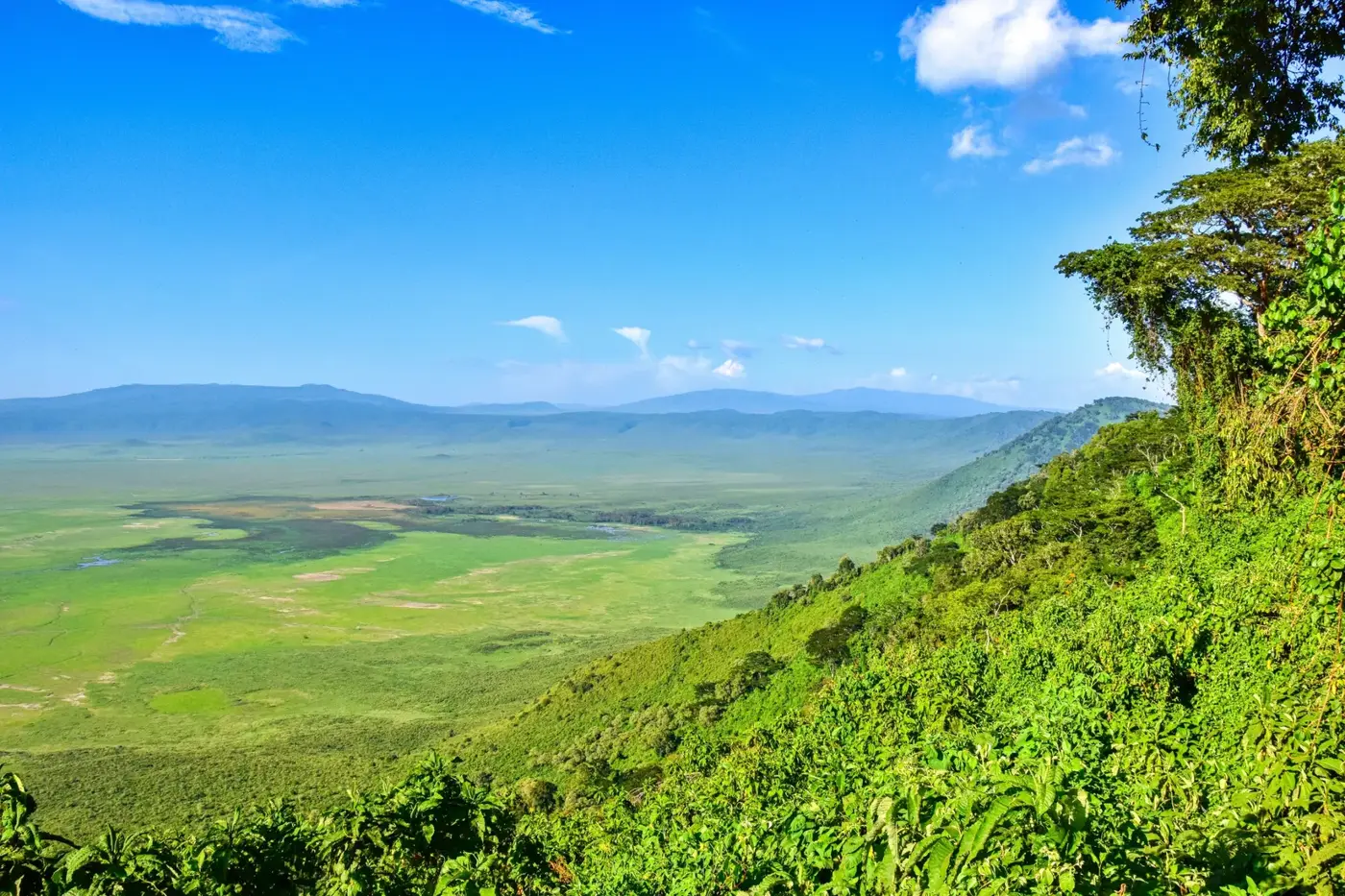
Ngorongoro Crater
A UNESCO World Heritage caldera holding the Big Five within its emerald walls.
Explore Ngorongoro Crater →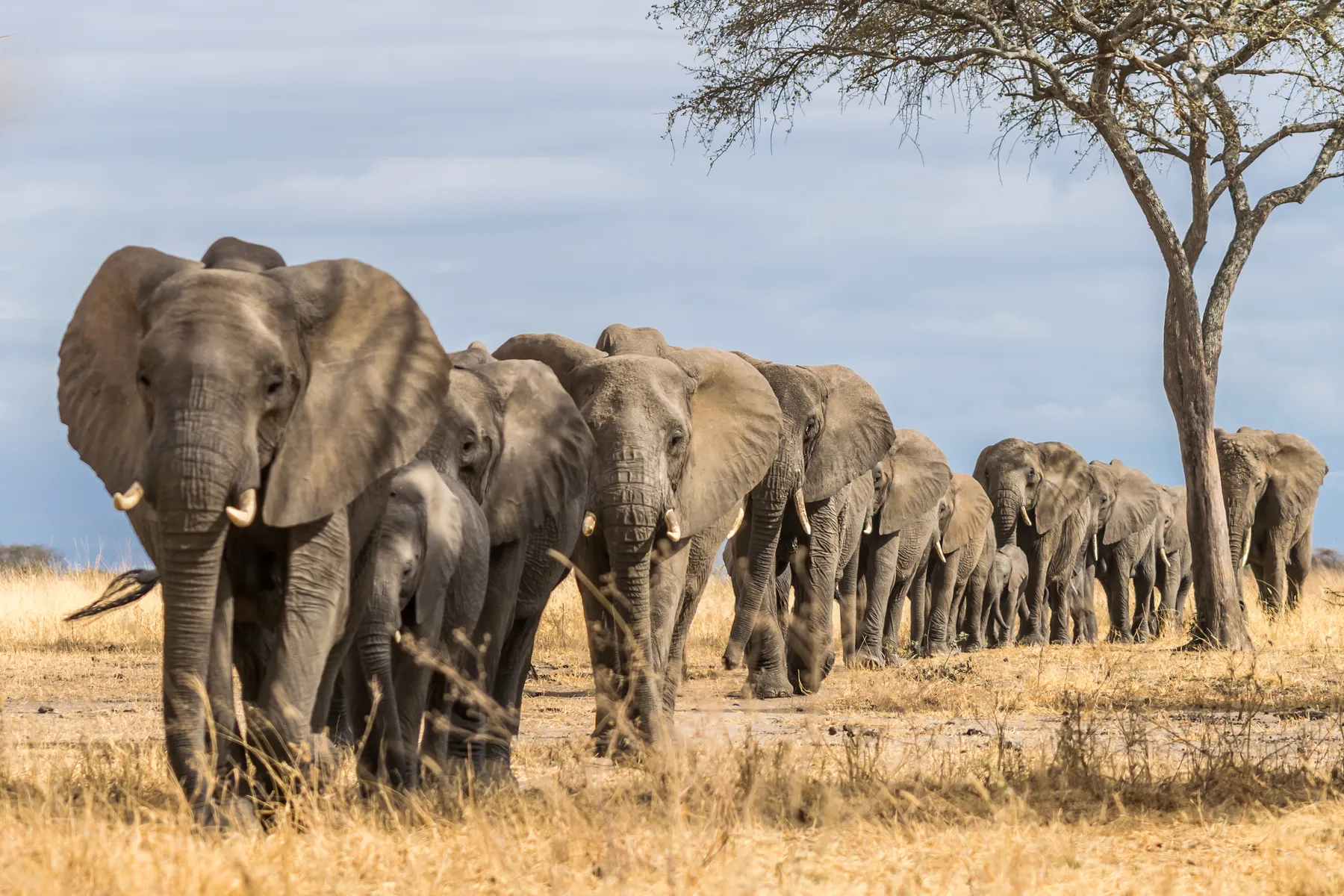
Tarangire National Park
Vast elephant herds and ancient baobabs along the Tarangire River.
Explore Tarangire National Park →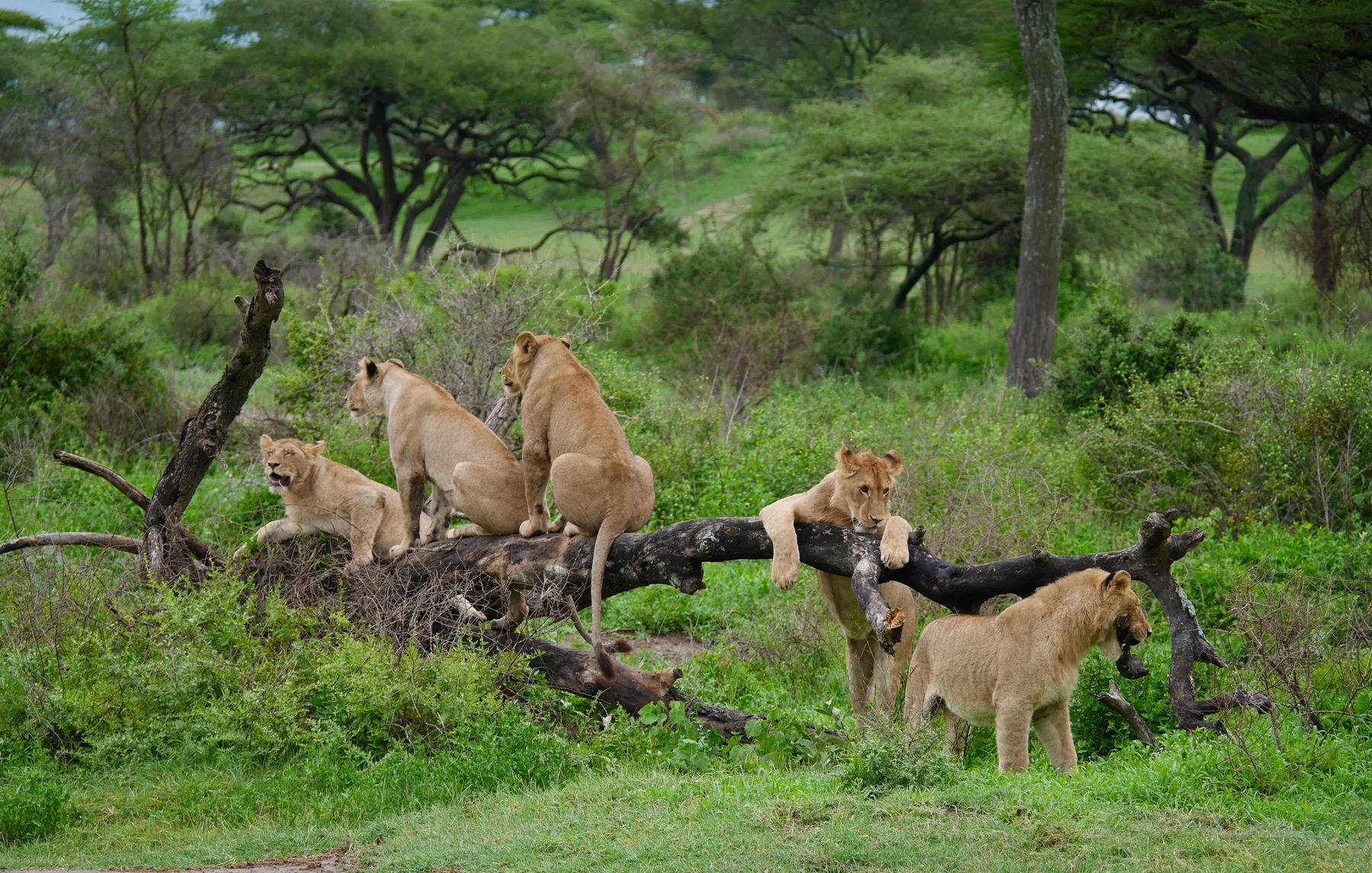
Lake Manyara
Tree-climbing lions, flamingo-pink shallows and dense forest beneath the Rift wall.
Explore Lake Manyara →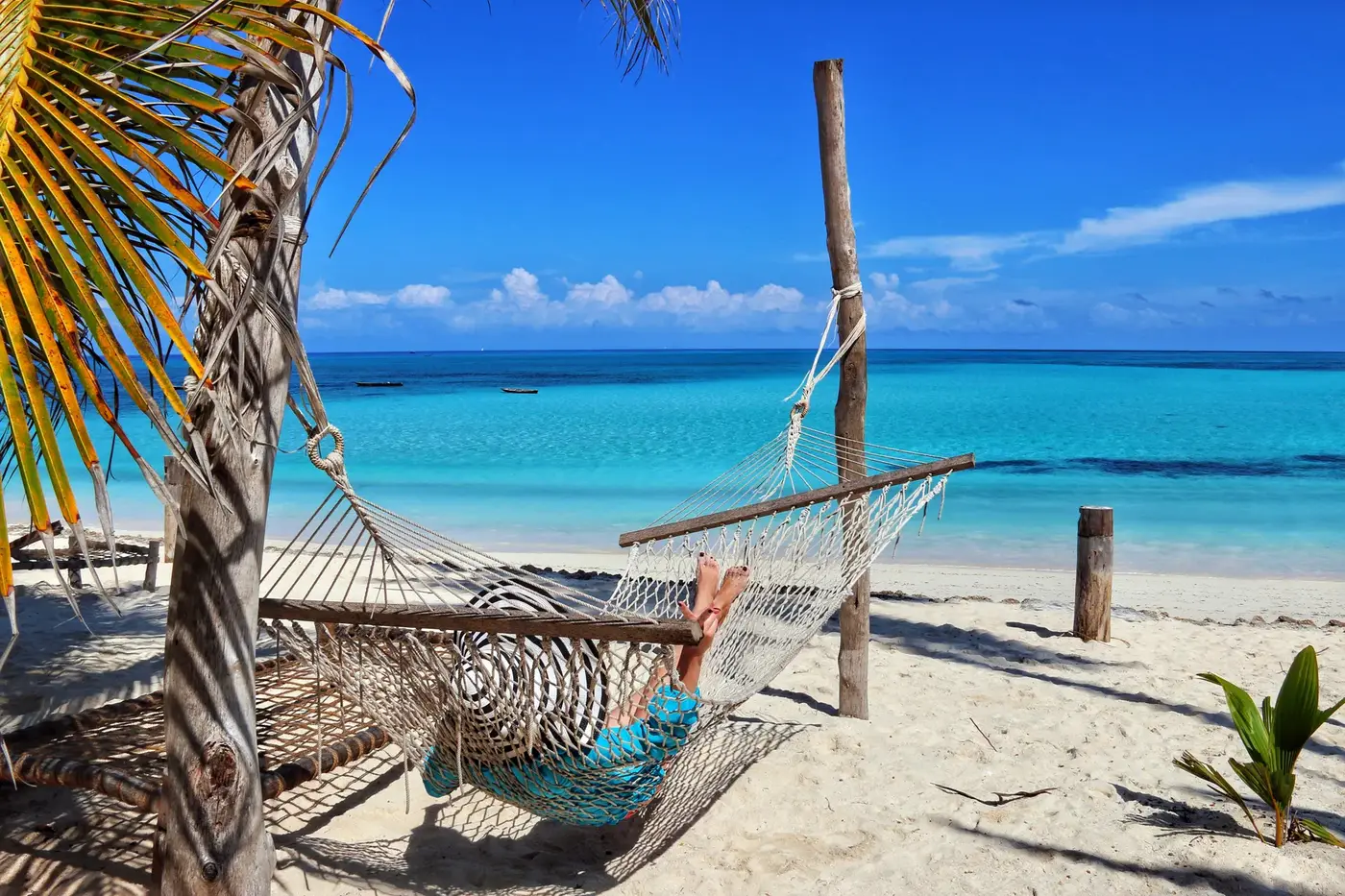
Zanzibar & the coast
Spice islands, Stone Town and powder-white beaches to end your safari.
Explore Zanzibar & the coast →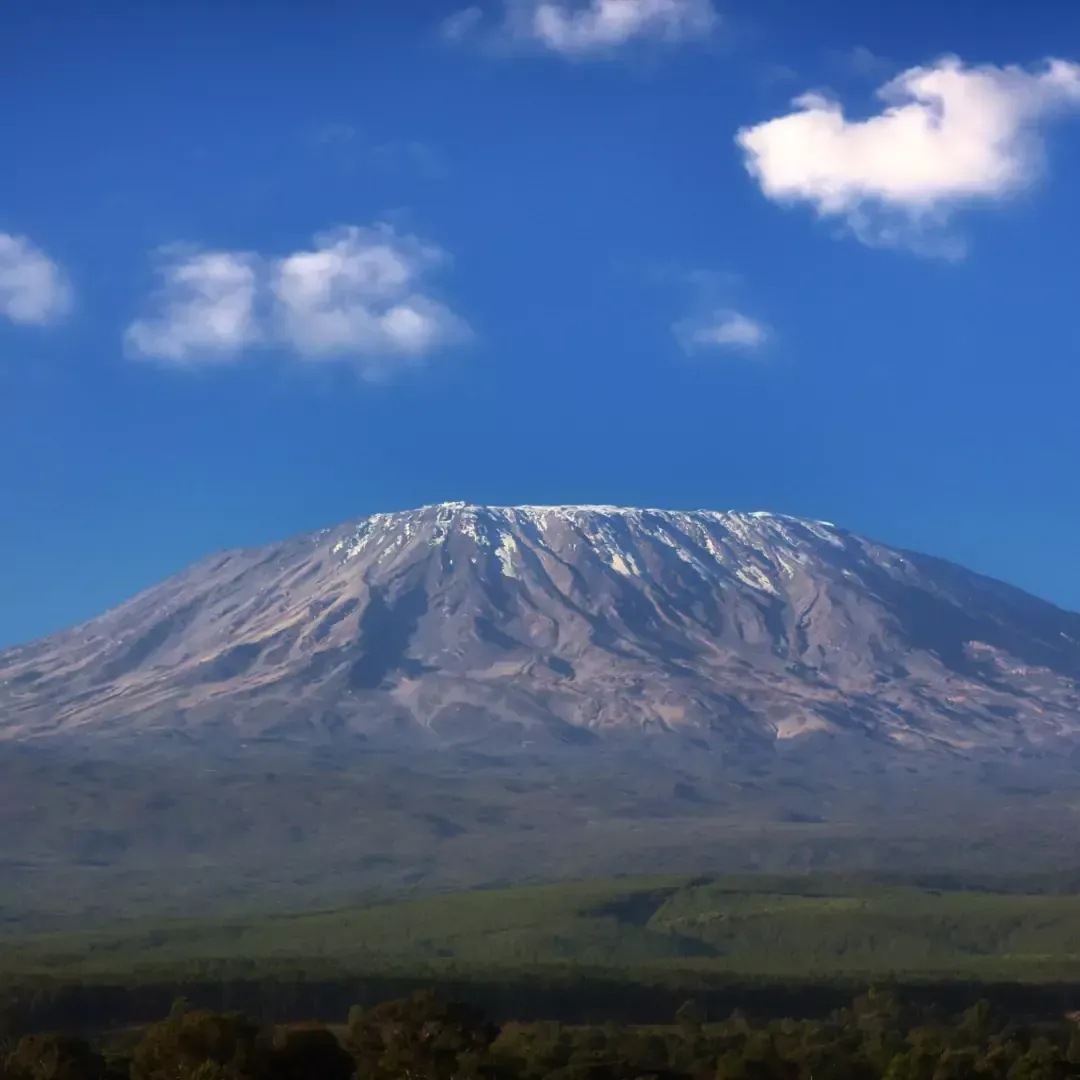
Mount Kilimanjaro
Africa's highest peak at 5,895m — trek the roof of the continent.
Explore Mount Kilimanjaro →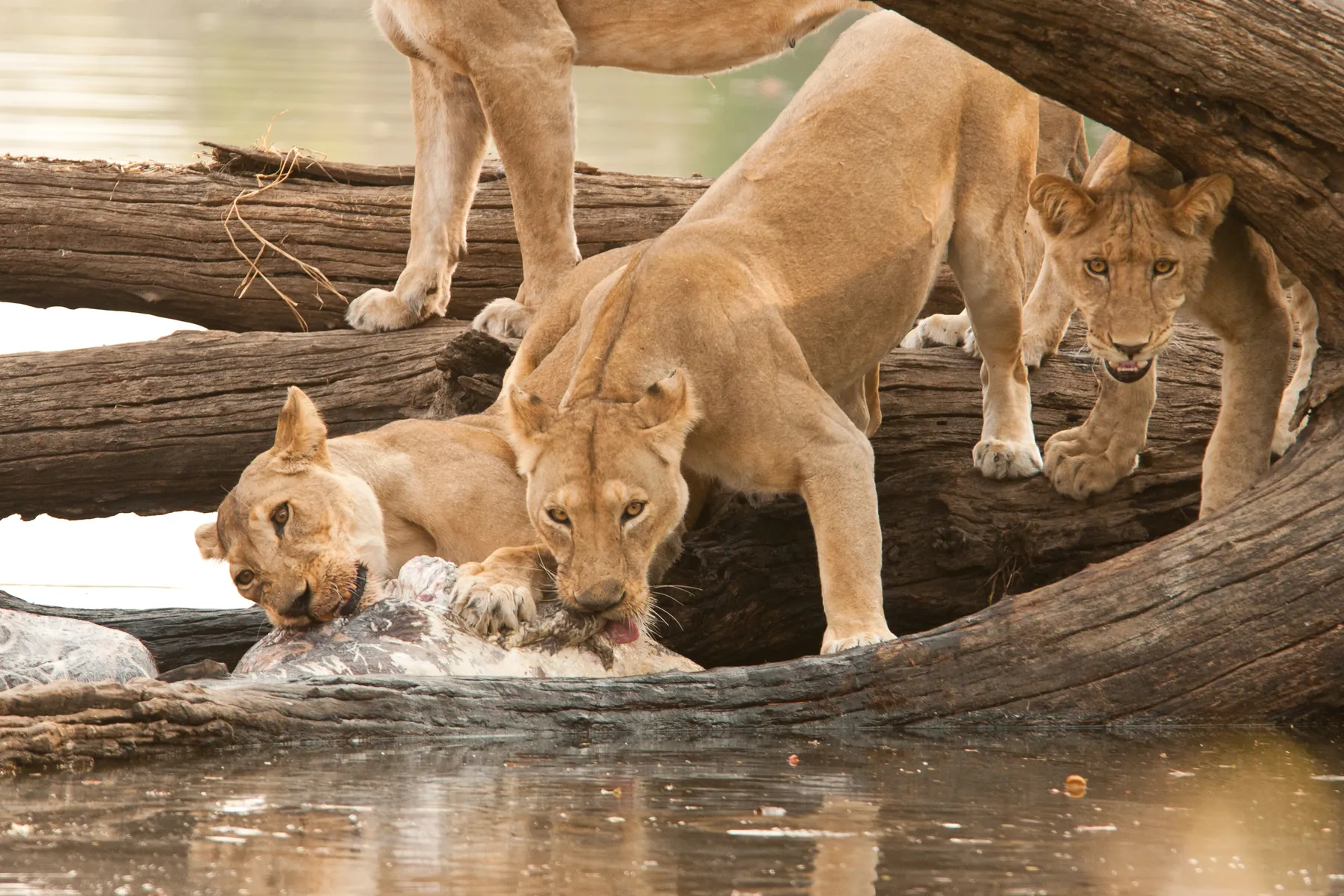
A pride at water — the Serengeti between the herds
Follow the herds, month by month
Over two million wildebeest and zebra move in a year-round circuit through the Serengeti. We place you in the right camp for the right month — this is where they are. Tanzania holds almost every one of the African safari animals travelers hope to see.
The complete Great Migration guide →Calving season on the short-grass plains around Ndutu — intense predator action.
Herds move north-west through the Grumeti as the long rains ease.
The first dramatic Mara River crossings begin in the north.
Crossings continue before the herds turn south again with the rains.
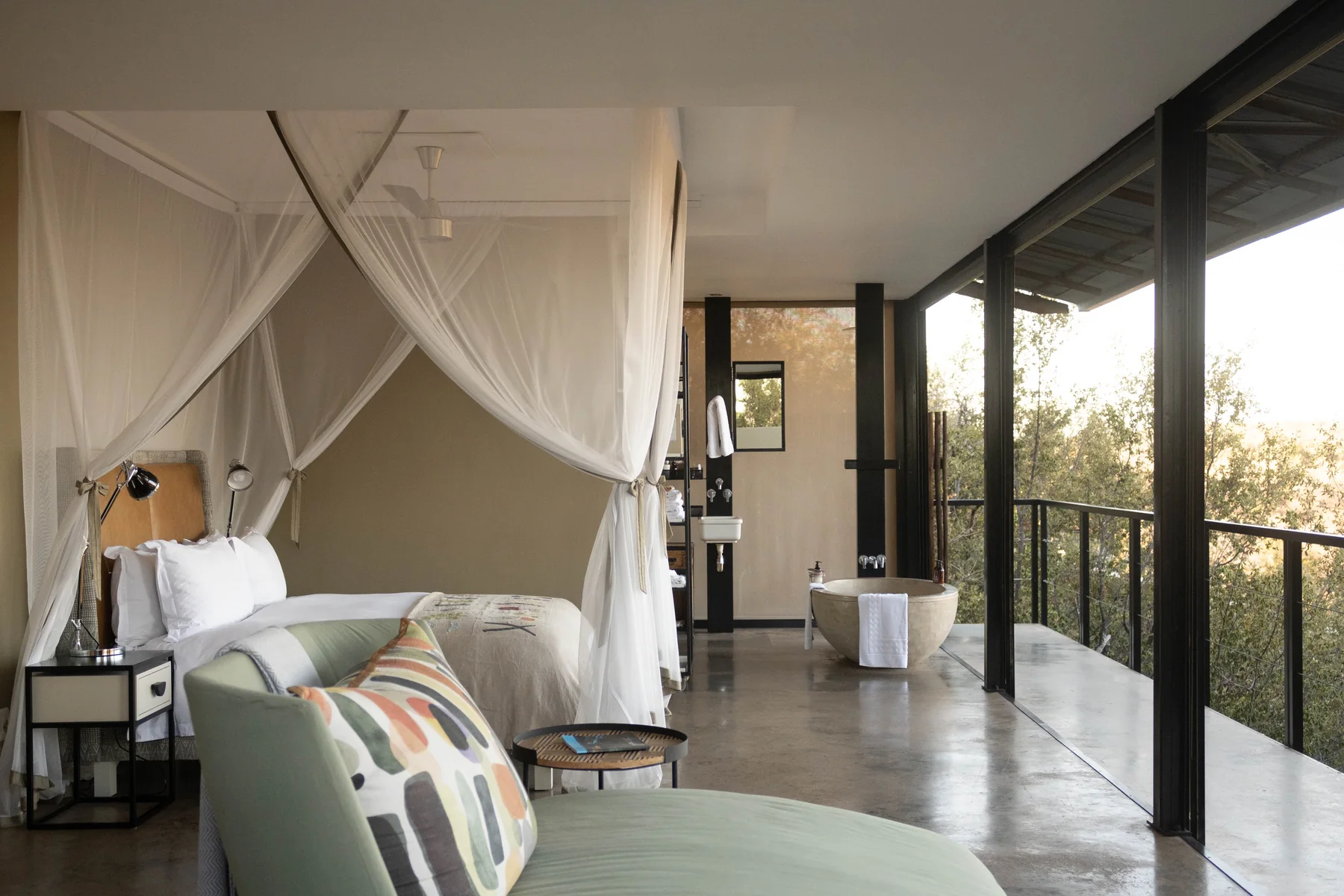
Canvas walls, a proper bed, and nothing between you and the bush but mesh
Where you’ll stay in Tanzania
Where you stay is selected privately around your journey. We recommend each camp, lodge or villa according to its location, season, guiding, privacy and suitability for the people traveling. Your carefully curated selection will be presented within your tailor-made itinerary.
Plan your private safari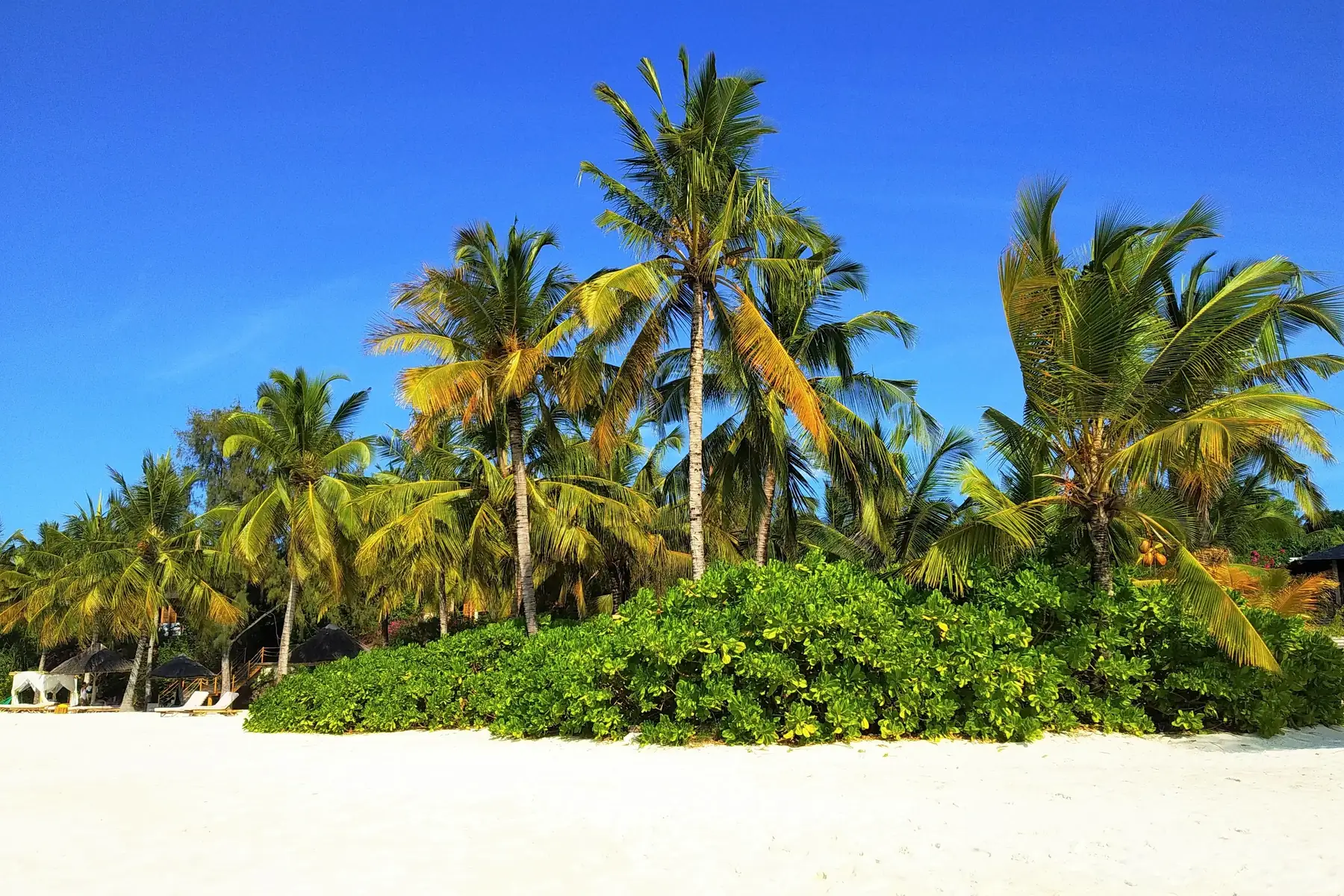
Zanzibar — ninety minutes from the Serengeti by air, and a different world entirely, yet still Tanzania
Best time to visit Tanzania
Timing decides almost everything in Tanzania. Our month-by-month guide to the best time to visit Tanzania breaks down each season, park by park.
Dry season — peak game viewing and the Mara River crossings in the northern Serengeti.
Calving season in the southern Serengeti — dramatic predator action on the short-grass plains.
Green season — lush landscapes, fewer travelers and excellent value.
Planning essentials
Fly into Kilimanjaro International Airport (JRO); light-aircraft transfers connect the parks and Zanzibar (ZNZ).
Tanzania's eVisa, passport rule, malaria advice and Zanzibar insurance are set out in Know before you go below. Packing, connectivity, money and tipping for every safari live in our Safari Planning Guide.
\nPrivate, bespoke Tanzania safaris, priced privately to your trip. Book 10–12 months ahead for peak season.
Know before you go
The practical details we handle for you — flights, entry, health and money — summarized here so nothing surprises you. Requirements can change, so we confirm everything when you book. Planning a Tanzania safari for seniors? Our senior safari guide covers pacing, altitude and fly-in routes.
Fly into Kilimanjaro (JRO) via Amsterdam, Doha or Istanbul — around 18–20 hours door to door. We meet you at arrivals; the Serengeti is a scenic light-aircraft hop from there.
US citizens need a Tanzania visa — $100 multiple-entry, applied for online before travel. Passports need six months' validity beyond your trip.
Apply for the Tanzania eVisa ↗Malaria prophylaxis is recommended year-round. Yellow fever vaccination is only required if you arrive via an endemic country. Tanzania requires one applicable mandatory inbound insurance policy (USD 44), determined by your first point of entry; see our inbound insurance guide.
The shilling is local currency; US dollars are widely accepted at safari camps and lodges for tips and extras (bills printed 2009 or later), and shillings are useful for small purchases in towns. Tipping is entirely at your discretion — most guests set aside about $20–25 per person per day for guides and camp staff.
How many days do you need?
The honest minimum is seven nights on the ground. Fewer than that and you spend a disproportionate share of the trip moving between parks rather than sitting still in them — which is where safaris actually happen.
Seven nights — the short northern circuit
Tarangire, the Ngorongoro Crater and the central Serengeti. Enough for the Big Five and a genuine feel for the country, at one park per two nights. It works, but there is no slack in it if the weather or the herds do something unexpected.
Ten nights — the version we recommend
The same circuit with room to breathe: three nights in the Serengeti instead of two, a slower crater day, and the flexibility to move north if the migration has. This is where most of our Tanzania trips land. See our ten-day Northern Circuit itinerary.
Eleven to twelve nights — built around the migration
If the river crossings are the point, the itinerary has to follow the herds rather than a fixed route, and that needs extra nights in the north. Our eleven-day migration itinerary is timed that way, and there is more on the herds in our Great Migration guide.
Fourteen nights — safari and Zanzibar
Ten on safari, four on the coast. After a week of pre-dawn starts the Indian Ocean stops being an indulgence — and Zanzibar is a 90-minute flight from the Serengeti, not a separate trip.
One rule worth knowing: an extra night in a park you are already in is worth more than an extra park. Two nights in four places is a worse safari than four nights in two.
What a Tanzania safari costs
A private, tailor-made Tanzania safari with us begins at approximately $12,000 per person. That covers camps, guiding, park and conservation fees, internal flights and transfers — not international airfare, visas, insurance or tips.
Where a trip lands above that comes down to four things, in roughly this order of impact.
Season
The same camp can differ by around 40% between the June–October peak and the green season. Nothing else on this list moves the number as much.
Where the camps sit
A camp inside a private concession costs more than one on the park boundary, and it buys something real — fewer vehicles at sightings, and permission to drive off-road and after dark.
Mobile versus permanent
The northern Serengeti camps that move with the herds are more expensive to run and price accordingly. In migration season they are also the surest way to stay genuinely close to the crossings.
Flights and park fees
Light-aircraft hops between parks save half-days of driving and add up quickly. Park and crater fees are fixed and non-negotiable, and they are a larger share of a Tanzania budget than most travelers expect: see the current Tanzania park fees.
Our full breakdown, with ranges by trip type, is in the luxury safari cost guide. We will always tell you plainly where more money makes a real difference and where it does not.
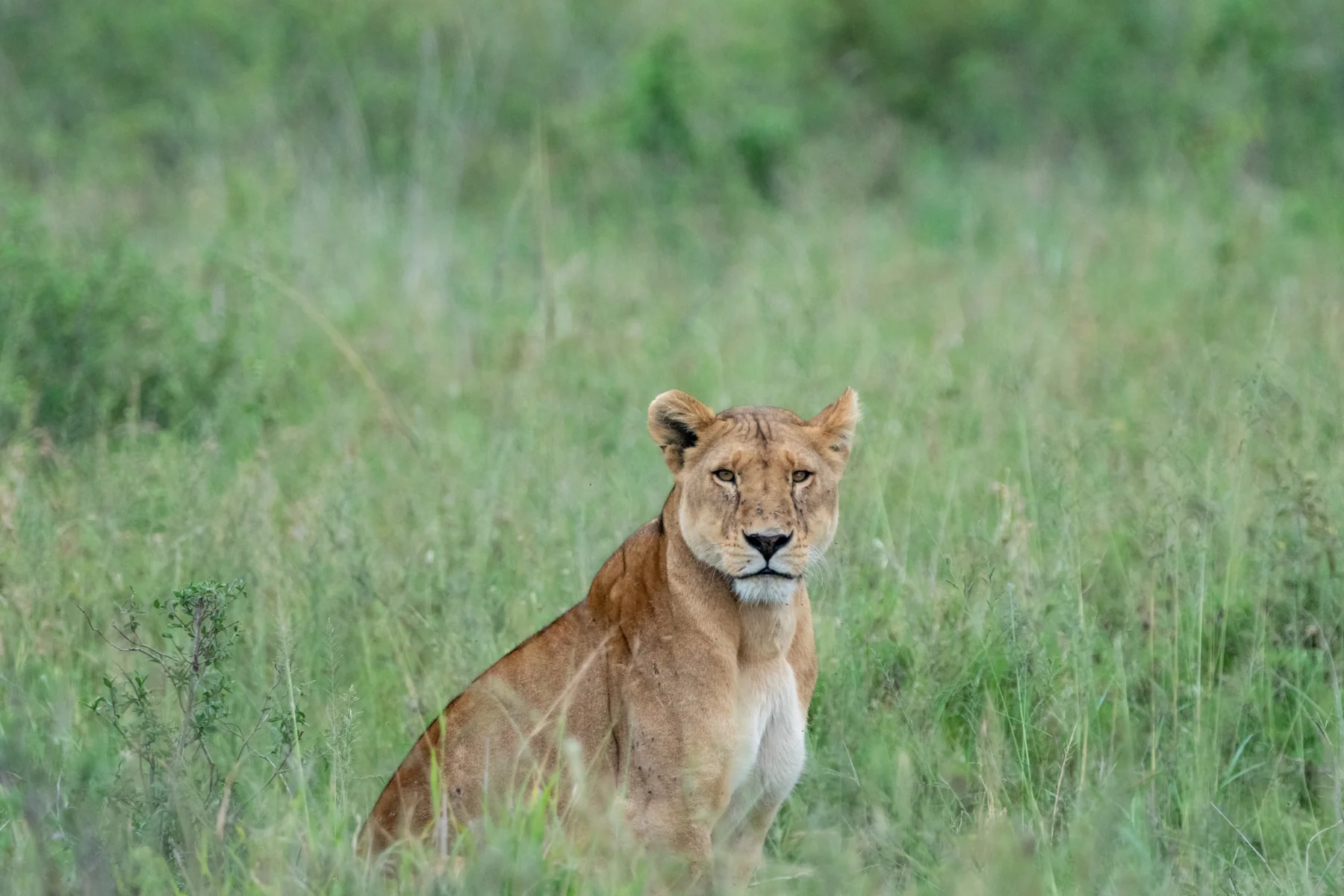
Green season — the southern plains after the rains
Why plan Tanzania with NndeeAfrika
Tanzania is not one destination among many for us. Our co-founder was born and raised in Tanzania, on the slopes of Mount Kilimanjaro, and has spent 15+ years in hospitality and tourism, in hotels and as a luxury African travel advisor. That is the difference between knowing a camp exists and knowing which of its tents faces the crossing. If you are still deciding between countries, start with the region as a whole.
We have stayed in many of the camps we book. Where we have not, we will always tell you plainly.
Every safari is privately designed. Private guides and vehicles are arranged where specified, with your own pace and no fixed departures; at fly-in camps, game drives may be shared unless a private vehicle is reserved. It is the single biggest difference between a good safari and a memorable one, and we set it out clearly in every itinerary we build.
We are a US company, not an overseas booking agent. NndeeAfrika LLC is registered in California as a Seller of Travel, CST 2173450-50, with a payment schedule and cancellation policy set out in writing before you pay anything — read them in our terms and conditions.
You deal with the people who planned your trip. Inquiries reach us directly and we usually reply within one business day. There is no call center. Start with the inquiry form and tell us how you like to travel, or read more about us first.
A day in Arusha
Most Tanzania safaris begin and end here, beneath Mount Meru. A day in Arusha is worth building in — here’s how we’d spend it.
A half-day safari minutes from town — giraffe and colobus monkeys beneath Mount Meru, canoeing on the Momella Lakes and Kilimanjaro views on clear days.
Walk a working estate on the slopes of Mount Meru — from cherry to cup — then lunch among the coffee trees at Arusha Coffee Lodge.
A remarkable social enterprise employing artisans with disabilities — watch glassblowing and beadwork, and take home pieces made from recycled glass.
Africa’s largest art collection under one roof, plus tanzanite, the violet-blue gem mined only near Kilimanjaro.
Browse the central curio markets with a private guide for beadwork, carvings and fabrics — and a feel for everyday Arusha life.
Continue exploring
Kenya safaris & the Maasai Mara
The Mara, Amboseli beneath Kilimanjaro, and the migration's northern stage.
Explore Kenya → Rwanda & UgandaGorilla trekking
Stand meters from mountain gorillas in the forests of the Virungas and Bwindi.
Explore trekking → Sample itineraryTen days, Northern Circuit
Tarangire, the Ngorongoro Crater and the Serengeti at an unhurried pace.
See the itinerary →Sample itineraryEleven days on the migration
Timed to the herds, from the Serengeti through to the Mara River crossings.
See the itinerary →FamiliesTanzania with children
Camps that welcome younger travelers, and guides who know how to hold their attention.
Family safaris →HoneymoonsTanzania for two
Private vehicles, unhurried mornings, and Zanzibar to finish.
Honeymoon safaris → All destinationsPlan your African safari
Combine Tanzania with Southern Africa and beach escapes in a single journey.
Explore luxury African safaris →Tanzania safari FAQs
Let's design your
Tanzania safari.
Our luxury Tanzania safaris are built one at a time, never sold from a shelf.
Tell us how you like to travel and start with a complimentary consultation. When you are ready, a $500 USD planning fee covers your personalized itinerary and revisions, and is deducted from your booking deposit when you book.
Inquire now