Written and reviewed by Evance & Jennifer, NndeeAfrika’s founders — Tanzanian-born, California-based · Reviewed September 2026 · Entry information checked August 2026 where shown
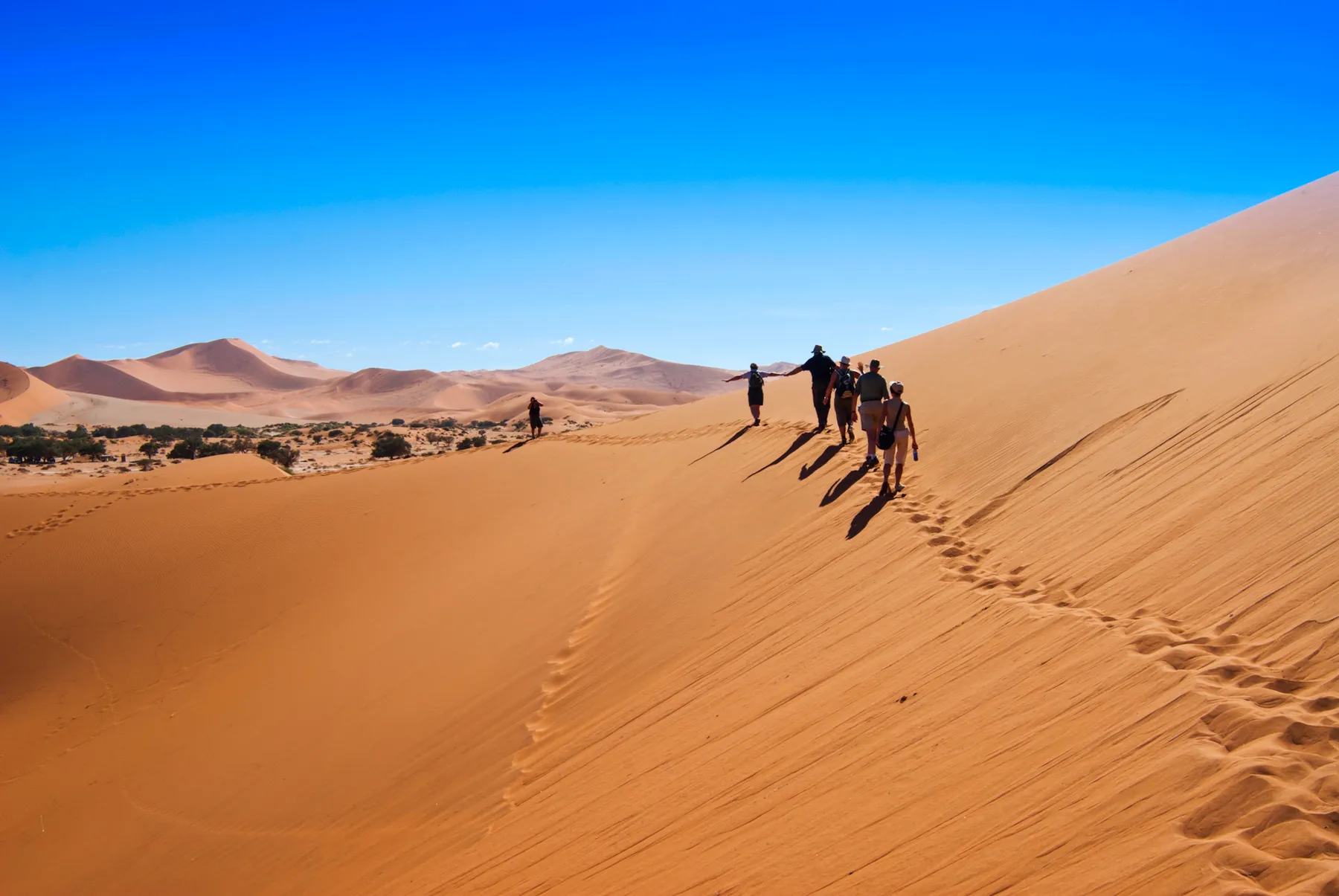
Namibia is Africa’s great desert adventure — a land of towering red dunes, ancient gravel plains and dramatic, empty landscapes that feel like nowhere else on earth. It is also a self-drive and fly-in photographer’s dream. Namibia brings desert scale to luxury African safaris across Southern Africa.
Etosha National Park concentrates wildlife around its waterholes, while Damaraland is home to desert-adapted elephant and black rhino, and the Skeleton Coast is hauntingly beautiful.
Highlights of Namibia
Etosha National Park
Waterhole game viewing around a vast shimmering salt pan.
Explore Etosha National Park →Damaraland
Desert-adapted elephant, black rhino and ancient rock art.
The Skeleton Coast
Shipwrecks, seal colonies and stark Atlantic wilderness.
Where you’ll stay in Namibia
Where you stay is selected privately around your journey. We recommend each camp, lodge or villa according to its location, season, guiding, privacy and suitability for the people traveling. Your carefully curated selection will be presented within your tailor-made itinerary.
Plan your private safariKnow before you go
The practical details we handle for you — flights, entry, health and money — summarized here so nothing surprises you. Requirements can change, so we confirm everything when you book.
Fly to Windhoek via Johannesburg, or via Frankfurt on the direct European service. Most luxury itineraries then use light aircraft between Sossusvlei, Damaraland and Etosha.
Since April 2025, US citizens need a visa — apply online in advance or on arrival in Windhoek (about N$1,600 / US$85). Passports need six months' validity and three blank pages.
Namibia is largely malaria-free; only the far north carries seasonal risk. The dry desert climate is easy on most travelers.
The Namibian dollar is pegged to the South African rand — both are accepted. Cards work in lodges; carry some cash for the road.
What to do in Namibia
A photographer’s country — the oldest desert on earth and the emptiest roads in Africa.
Climb the dunes of Sossusvlei
Big Daddy and Dune 45 at first light, then down into Deadvlei — 900-year-old camelthorn skeletons on white clay under apricot dunes.
Sossusvlei & Deadvlei
Year-round; dawn always
Etosha’s floodlit waterholes
Sit in silence after dinner as black rhino, elephant and lion take turns to drink meters away — Etosha’s great theater.
Etosha
Jun–Oct
Fly the Skeleton Coast
A light-aircraft safari over shipwrecks, seal colonies and dune fields that run straight into the Atlantic — landing for lunch where almost no one has stood.
Skeleton Coast
Year-round by air
Track desert rhino in Damaraland
With Save the Rhino trackers, follow one of Africa’s largest free-roaming populations of black rhino through basalt valleys — conservation you take part in.
Damaraland
Apr–Nov
Best time to visit Namibia
Dry season — best wildlife around Etosha’s waterholes.
Green, photogenic landscapes after the summer rains.
In the green months rates ease at many of these camps, the plains empty of vehicles and the light turns dramatic. What each season gives, and what it trades, is set out in our Safari Planning Guide.
Planning & cost
Fully tailor-made — priced privately to your camps, season and travel style. No fixed packages.
Fly into Windhoek (WDH); explore by fly-in safari or guided self-drive. Since April 2025, US citizens need a Namibia visa — apply online in advance or on arrival in Windhoek (about N$1,600 / US$85).
Every journey is privately designed, with private guides and vehicles arranged where specified, the finest lodges, and a specialist on call throughout. At fly-in camps, game drives may be shared unless a private vehicle is reserved.
Practical details,
in one place
Money, health, connectivity and packing work the same way on every safari we plan, so they live in one place rather than on every page.
Continue exploring
Big Five Safari
A Big Five safari — lion, leopard, elephant, buffalo and rhino, Africa’s most sought-after sightings.
Explore → Southern AfricaBotswana
A Botswana safari is Africa’s water wilderness — the Okavango Delta, Chobe and the Kalahari.
Explore → Southern AfricaSouth Africa
A South Africa safari pairs Big Five private reserves with Cape Town and the Winelands.
Explore → RegionSouthern Africa
The desert, the delta and the falls — Botswana, Namibia, Zambia, Zimbabwe and South Africa.
Explore →Namibia FAQs
Getting to Namibia — flights, visas and health
Current at the time of writing. We re-confirm every requirement for your exact routing before you travel — and we will tell you what to apply for, and when.
Let's design your Namibia journey.
A Namibia safari is a landscape journey first, with the wildlife arriving as the reward.
Tell us how you like to travel and start with a complimentary consultation. When you are ready, a $500 USD planning fee covers your personalized itinerary and revisions, and is deducted from your booking deposit when you book.
Inquire now