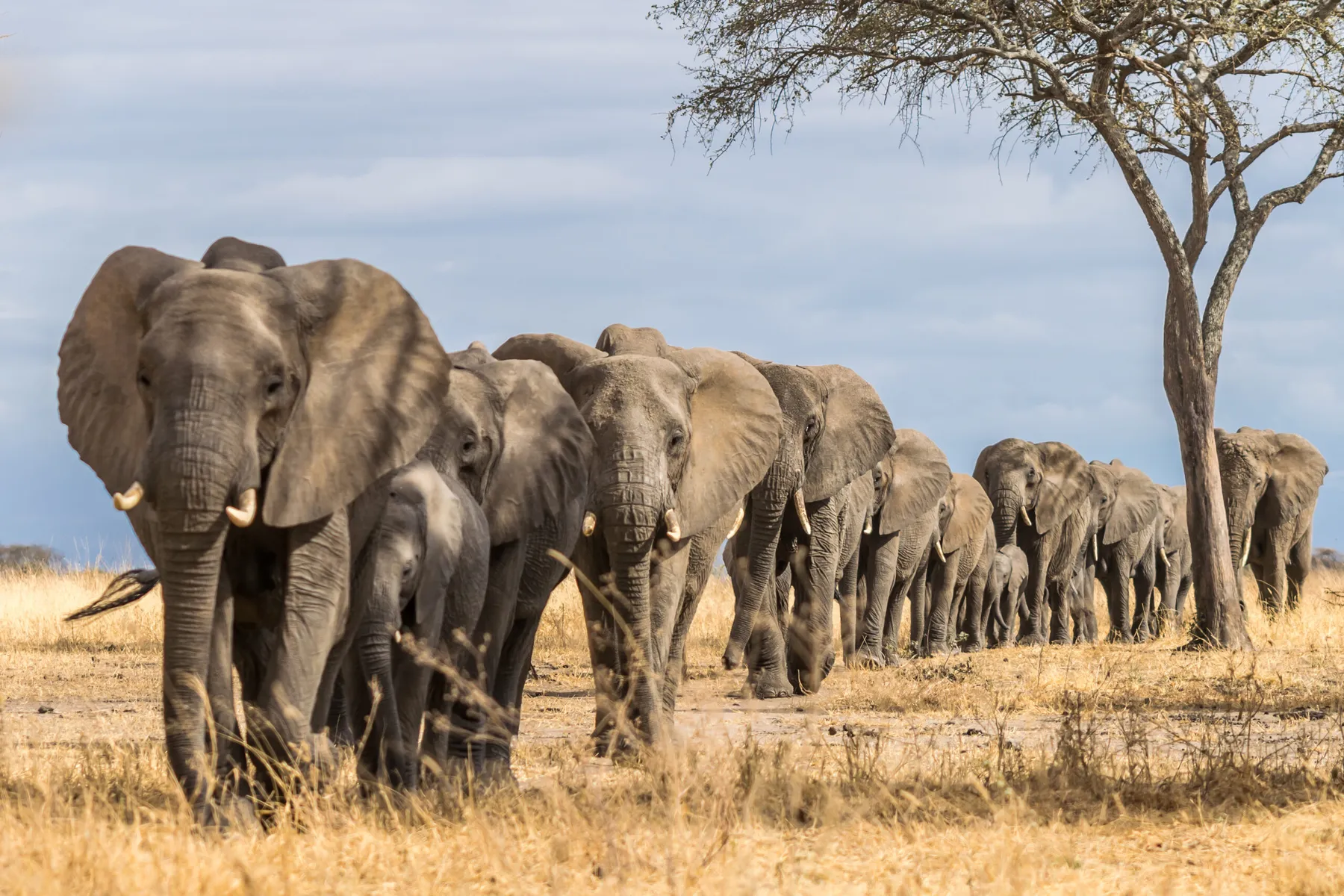
The African bush elephant is the largest land animal alive: bulls stand up to 13 feet at the shoulder and weigh up to 7 tons, eating around 300lbs of vegetation a day. Their tusks are elongated teeth; their trunk — with over 40,000 muscles — is strong enough to push over a tree and precise enough to pick up a single seed pod.
Elephant society is matriarchal: herds of related females and calves follow the memory of the oldest cow to water and food across decades-old routes, while adult bulls range alone or in loose bachelor groups. They mourn their dead, recognize themselves and communicate through rumbles too low for humans to hear — watching a breeding herd at a waterhole is among safari’s most moving hours.
Highlights of the African elephant
The largest land animal
Bulls stand up to 13ft at the shoulder and weigh up to 7 tons, eating around 300lbs of vegetation a day.
The matriarch’s memory
Herds of related females follow the oldest cow’s mental map of water and food, learned over a lifetime.
A trunk like no other
40,000+ muscles — snorkel, arm, trumpet and greeting in one; precise enough to pick up a single seed pod.
Emotional intelligence
Elephants mourn their dead, recognize themselves, and communicate in rumbles below human hearing.
Ecosystem engineers
They open woodland, dig waterholes and spread seeds — whole landscapes depend on them.
Where to see them
Chobe sits at the heart of Africa’s largest elephant population; Tarangire and Amboseli offer huge herds and famous tuskers.
Explore Where to see them →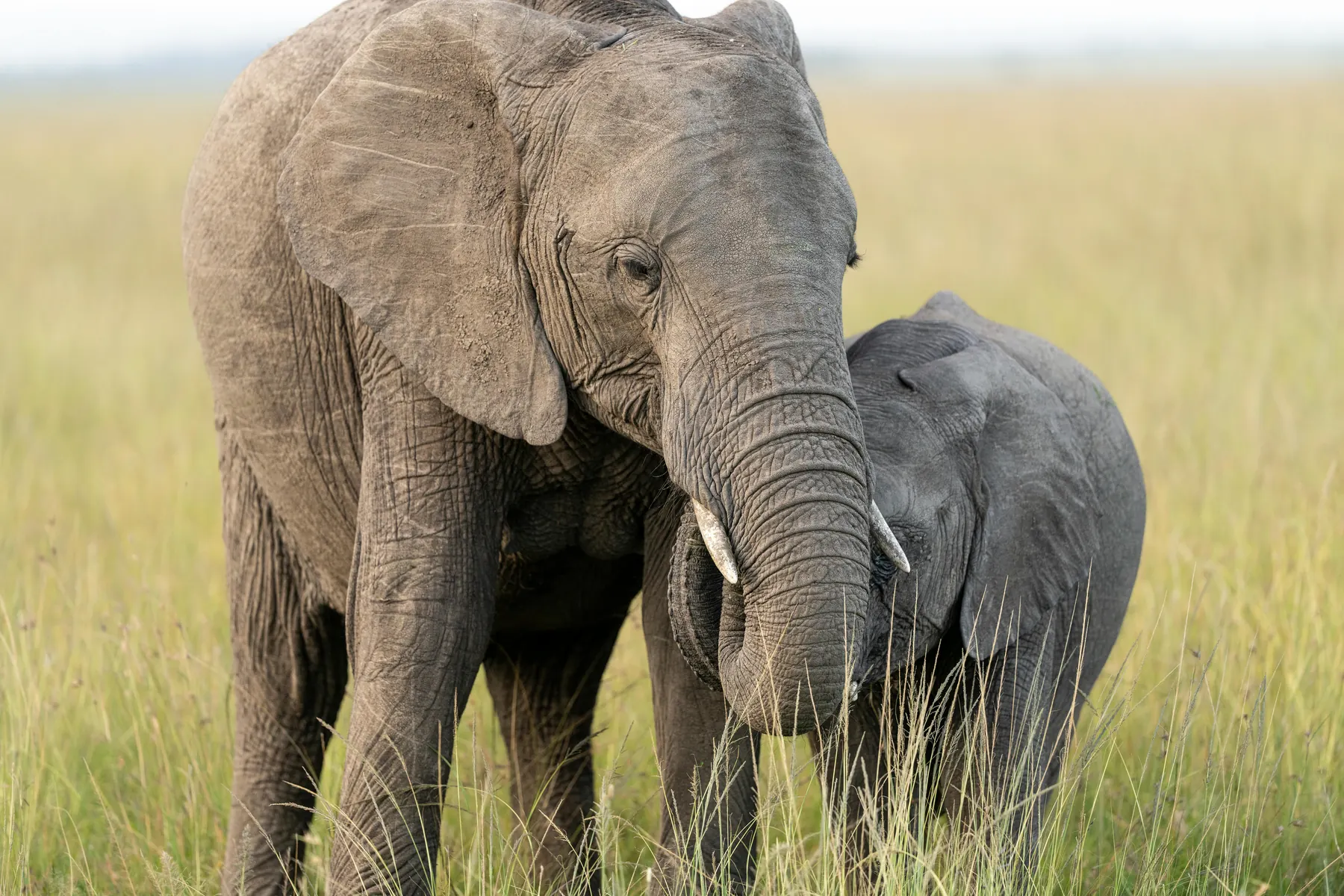
A cow and her calf — elephant herds are led by females, and the matriarch is the one who remembers the way
Best time to see African elephants
Dry season — hundreds gather along the Chobe and Tarangire rivers.
Amboseli’s big tuskers against Kilimanjaro — the classic photograph.
In the green months rates ease at many of these camps, the plains empty of vehicles and the light turns dramatic. What each season gives, and what it trades, is set out in our Safari Planning Guide.
Planning & cost
Fully tailor-made — priced privately to your camps, season and travel style. No fixed packages.
Every journey is privately designed, with private guides and vehicles arranged where specified, the finest lodges, and a specialist on call throughout. At fly-in camps, game drives may be shared unless a private vehicle is reserved.
Where and when to see elephants
Africa has two elephant species: the savanna elephant of the open plains and woodlands, which is the one you see on safari, and the smaller forest elephant of the Central and West African rainforests. Since 2021 the IUCN Red List has classed the savanna elephant as Endangered and the forest elephant as Critically Endangered.
The dry season, roughly June to October in East and Southern Africa, is when elephants gather most visibly around the remaining water. Botswana holds the largest elephant population of any country, and the Chobe riverfront fills with herds coming down to drink and swim in the afternoons. Tarangire is the East African equivalent, with big dry-season herds along the Tarangire River, and Amboseli puts elephant families in front of Kilimanjaro.
Herds are led by the oldest female, the matriarch, and are made up of related females and their young; males leave in their teens and live alone or in loose bachelor groups. In Amboseli the same families have been studied continuously since 1972, one reason the elephants there are so relaxed around vehicles.
Practical details,
in one place
Money, health, connectivity and packing work the same way on every safari we plan, so they live in one place rather than on every page.
Continue exploring
Big Five Safari
A Big Five safari — lion, leopard, elephant, buffalo and rhino, Africa’s most sought-after sightings.
Explore → BotswanaChobe National Park
Chobe — one of the greatest elephant gatherings on earth, seen from the water.
Explore → TanzaniaTarangire National Park
Tarangire — elephant herds by the hundred under ancient baobabs.
Explore →The African Elephant FAQs
Let's design your African Elephant journey.
A private African elephant safari can be shaped around the herds, the season and the light.
Tell us how you like to travel and start with a complimentary consultation. When you are ready, a $500 USD planning fee covers your personalized itinerary and revisions, and is deducted from your booking deposit when you book.
Inquire now