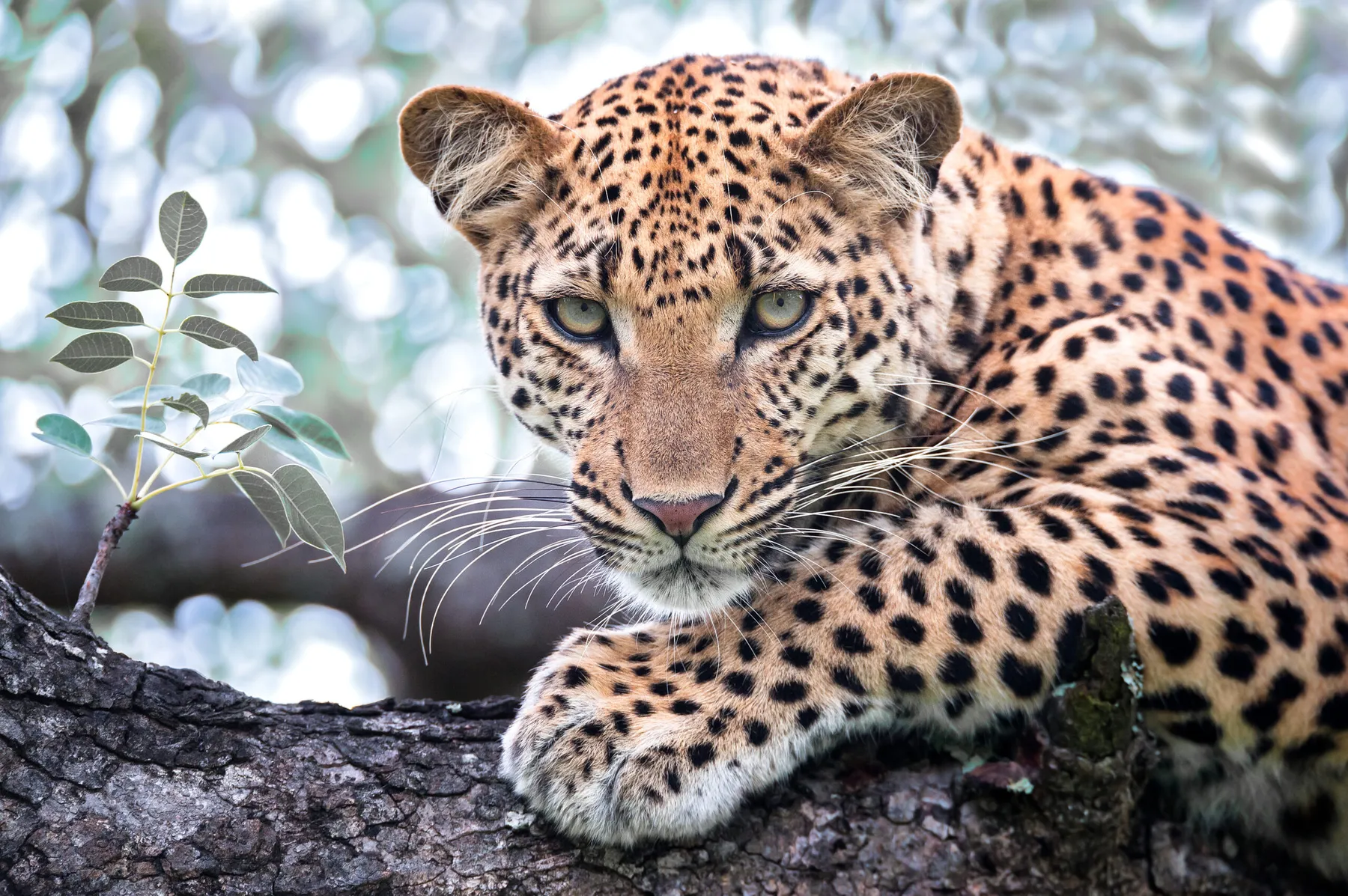
The leopard is the Big Five’s solitary perfectionist: a supremely adaptable ambush hunter weighing 60–200lbs (30–90kg), strong enough to haul prey heavier than itself vertically up a tree, away from lions and hyenas.
Leopards are mostly nocturnal and intensely territorial, each animal patrolling a range it marks and defends alone. That elusiveness is exactly what makes a sighting special — and why destinations with off-road driving and expert trackers deliver the world’s best leopard viewing.
Highlights of the leopard
Size & build
60–200lbs of compact muscle — strong enough to hoist prey heavier than itself vertically up a tree.
Solitary by nature
Leopards live, hunt and patrol alone, marking territory with scent and rasping calls — only mothers keep company, with cubs.
Ambush hunter
Stalks to within a few yards before an explosive pounce — mostly nocturnal, with impala and bushbuck favorite prey.
Rosette camouflage
Golden coat scattered with dark rosettes — near-invisible in dappled light, which is why sightings feel earned.
Master of habitats
From riverine forest to rocky kopjes and semi-desert — the most adaptable big cat on earth.
Where to see them
The Sabi Sand is often called the leopard capital of the world; South Luangwa and the Serengeti’s river lines follow close behind.
Explore Where to see them →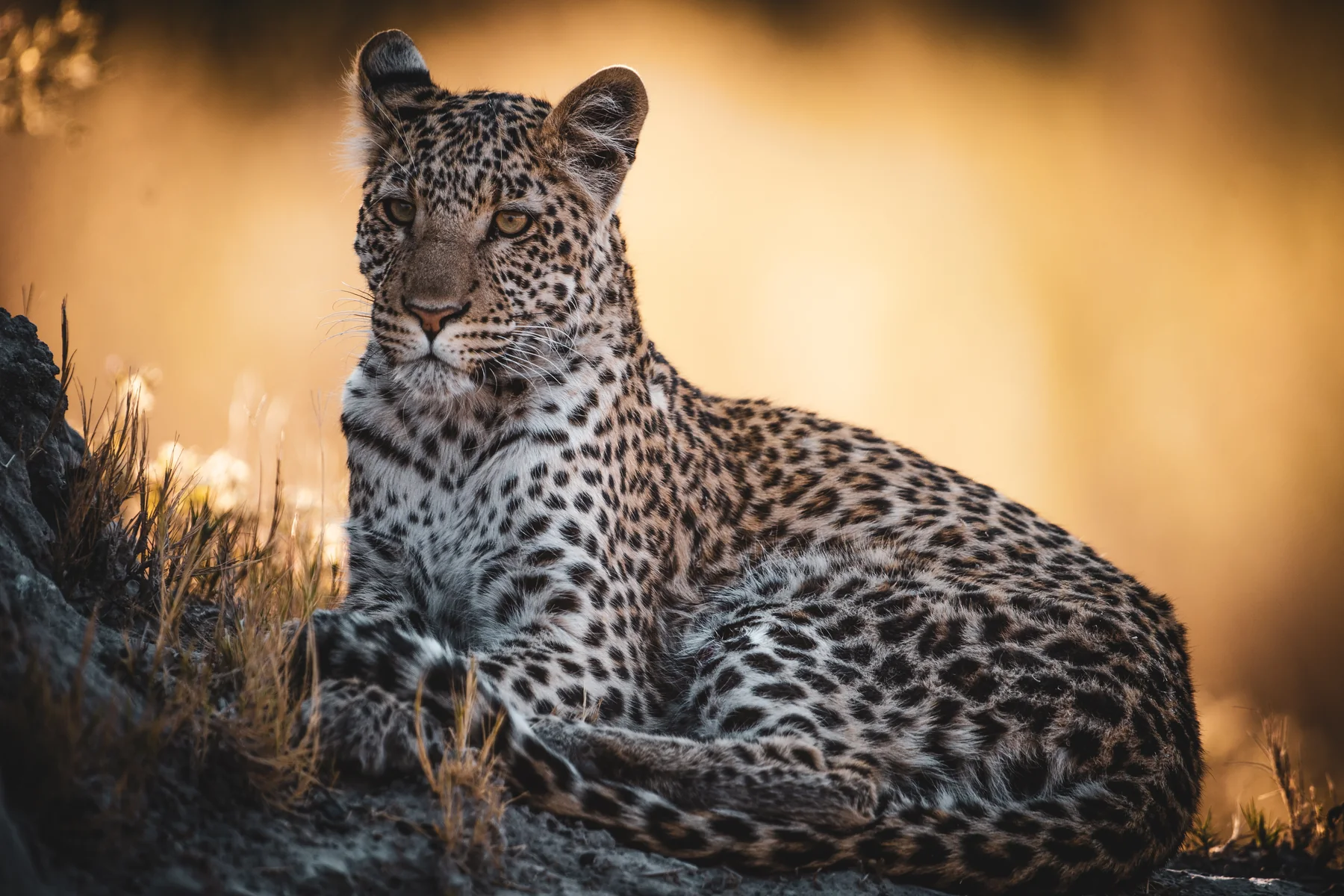
On the ground at dusk — when leopards stop being invisible
Best time to see leopards
Dry season — thinner vegetation makes the most camouflaged cat easier to spot.
In the Sabi Sand and South Luangwa, habituated leopards are seen reliably in every month.
In the green months rates ease at many of these camps, the plains empty of vehicles and the light turns dramatic. What each season gives, and what it trades, is set out in our Safari Planning Guide.
Planning & cost
Fully tailor-made — priced privately to your camps, season and travel style. No fixed packages.
Every journey is privately designed, with private guides and vehicles arranged where specified, the finest lodges, and a specialist on call throughout. At fly-in camps, game drives may be shared unless a private vehicle is reserved.
Finding a leopard: what actually works
Leopards range more widely across Africa than any other big cat, from rainforest to semi-desert, yet they are the Big Five animal many travelers miss. They are solitary, hunt mostly at night, and spend the heat of the day stretched along a branch or tucked into thick cover. Seeing one well is less about luck than about choosing the right ground and the right guide.
Three things change the odds. The first is habituation: in reserves where leopards have grown up around vehicles, such as the Sabi Sand beside Kruger, a resting leopard often ignores you entirely. The second is the rules: private reserves and conservancies allow off-road driving and night drives, so a guide can follow tracks off the road and stay with a leopard after dark, when it becomes active. The third is trees: in the Serengeti’s Seronera Valley, guides scan the sausage trees and acacias along the rivers, where leopards lie up and often cache their kills out of reach of lions and hyenas.
Give a leopard-focused trip at least three nights in one place. In Zambia’s South Luangwa, night drives regularly find leopards on the move. If a leopard is your priority, tell us early, because it shapes which reserve, which camp and which guide we choose.
Practical details,
in one place
Money, health, connectivity and packing work the same way on every safari we plan, so they live in one place rather than on every page.
Continue exploring
Big Five Safari
A Big Five safari — lion, leopard, elephant, buffalo and rhino, Africa’s most sought-after sightings.
Explore → South AfricaKruger & the Sabi Sand
Kruger & Sabi Sand — arguably the world’s finest leopard viewing, in some of Africa’s most polished lodges.
Explore → ZambiaSouth Luangwa National Park
South Luangwa — the birthplace of the walking safari and one of Africa’s finest places for leopards.
Explore →The Leopard FAQs
Let's design your Leopard journey.
Tell us how you like to travel and start with a complimentary consultation. When you are ready, a $500 USD planning fee covers your personalized itinerary and revisions, and is deducted from your booking deposit when you book.
Inquire now