Private journeys timed around calving season, the moving herds and the river-crossing months. More on the other animals you will meet in our safari animals guide.
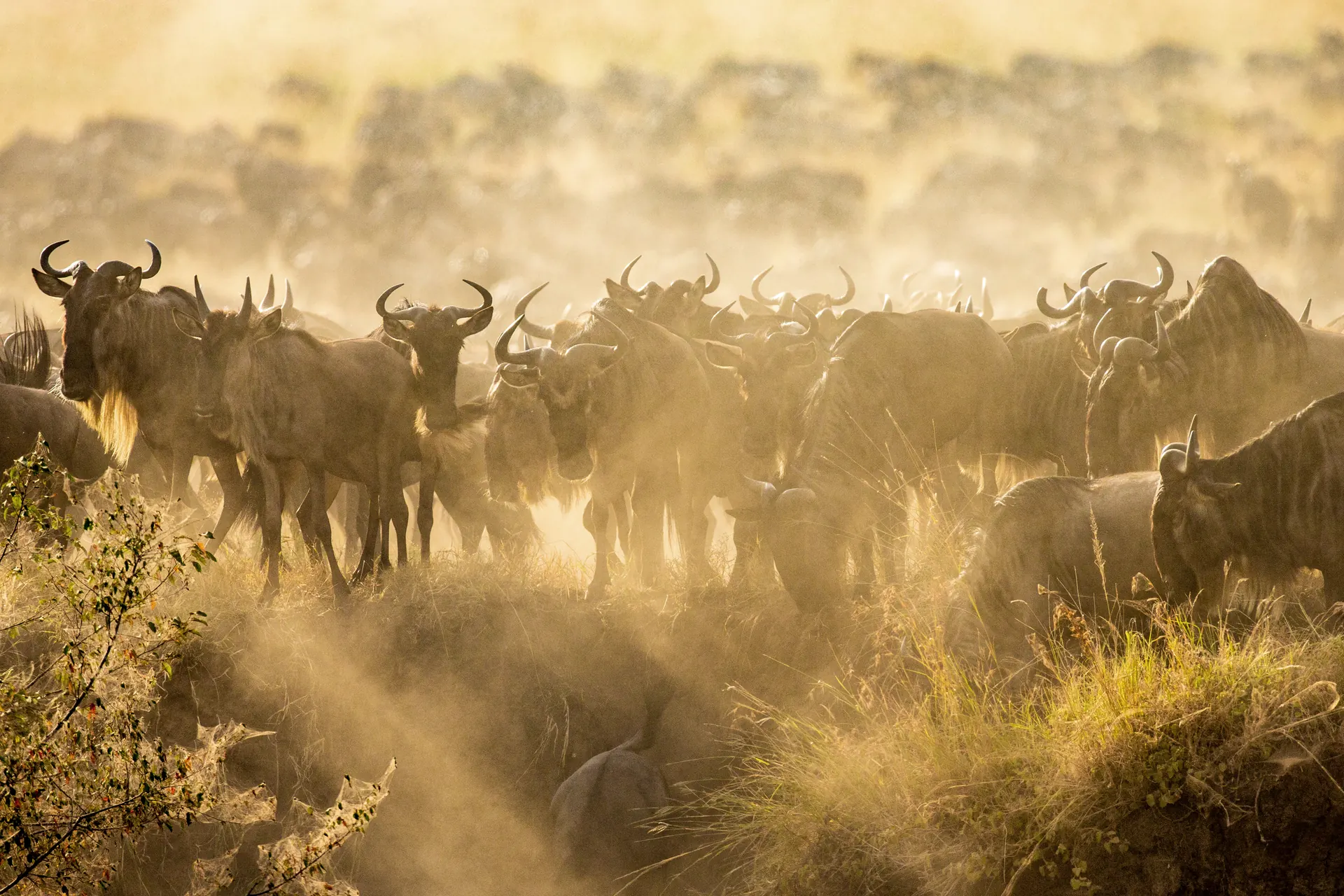
The Great Migration in Africa is not a single event or one dramatic river crossing. It is a continuous, year-round movement through the Serengeti–Mara ecosystem, shaped by rainfall, fresh grazing and the instinct to survive. More than 1.2 million wildebeest travel alongside hundreds of thousands of zebra and gazelles, creating one of the greatest wildlife spectacles on Earth.
For travelers researching a Great Migration Africa safari, the most important decision is not simply when to travel. It is choosing the right region for the season, allowing enough time, and understanding that the herds follow nature rather than a fixed calendar.
This guide explains how the migration works, where the herds are usually found throughout the year, and how to plan a beautifully paced safari without relying on promises that no responsible safari specialist can make.
What Is the Great Wildebeest Migration?
The Great Wildebeest Migration is the annual movement of vast herds between Tanzania’s Serengeti and Kenya’s Maasai Mara. Wildebeest form the largest part of the migration, accompanied by zebra, Thomson’s and Grant’s gazelles, eland and other grazing animals.
The journey is often shown as a neat clockwise circle, but the reality is far more complex. Herds may move forward, double back, spread across a wide area, divide into smaller groups or remain in one place while grazing and water are plentiful. Some animals take different routes through the central, western or eastern Serengeti before joining larger concentrations again.
An individual wildebeest may travel approximately 800 to 1,000 kilometers during the cycle. Along the way, the herds give birth, graze, mate and cross rivers while lions, cheetahs, leopards, hyenas and crocodiles follow the abundance of prey.
It is this constant relationship between weather, landscape, herbivores and predators that makes the migration much more than a seasonal wildlife event. It is the Serengeti–Mara ecosystem in motion.
Why Do the Wildebeest Migrate?
The migration is driven principally by rain, water and the growth of new grass. When rain falls, fresh grazing follows. As one area dries or is depleted, the herds begin searching for the next productive landscape.
The short-grass plains of the southern Serengeti are especially important. Their mineral-rich volcanic soils produce nutritious grass that supports pregnant wildebeest and nursing mothers during the calving season. As the long rains end and these southern plains begin to dry, many herds move toward the central Serengeti and Western Corridor before continuing north.
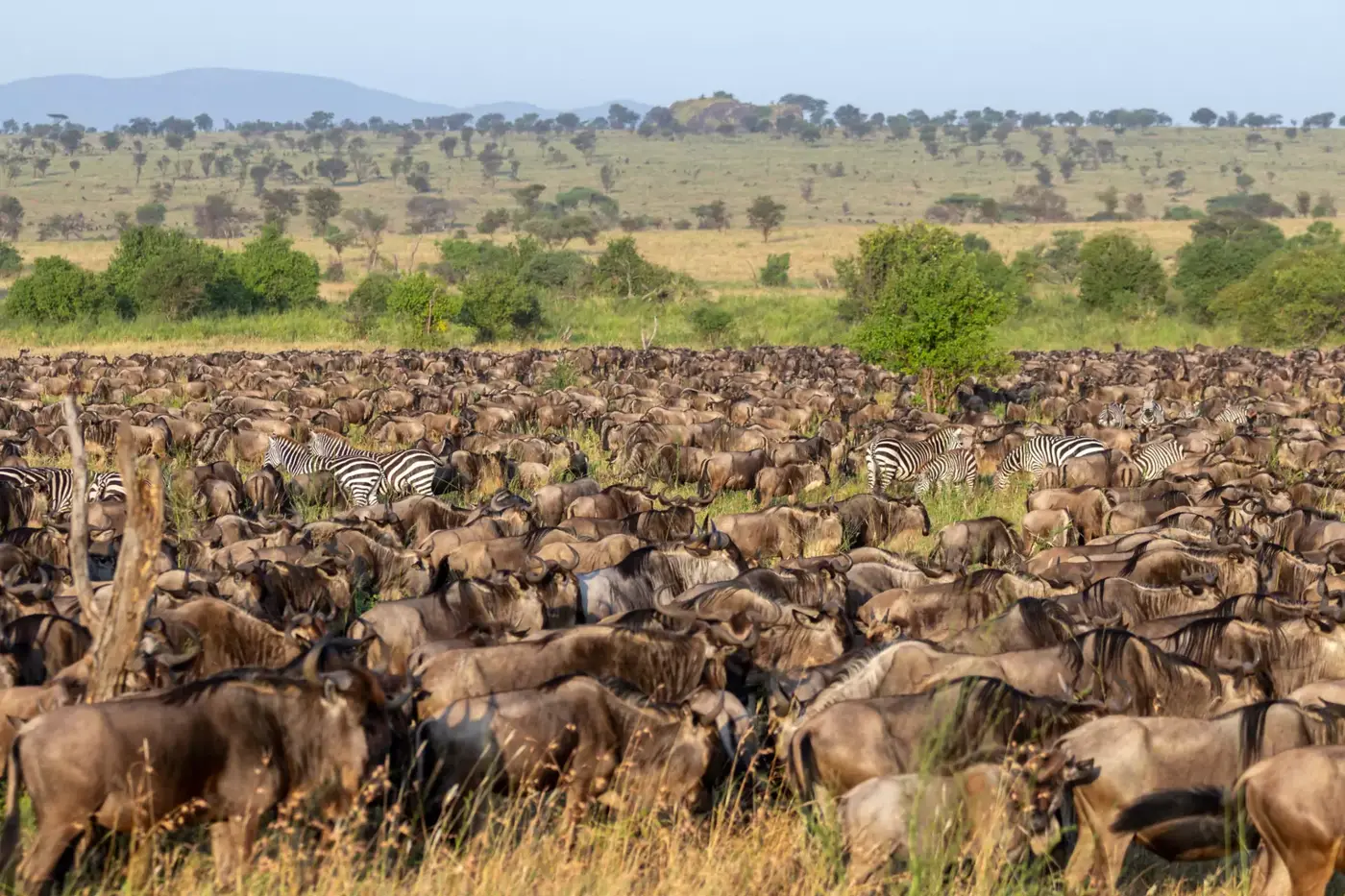
Zebra and wildebeest also use the grasslands differently. Zebra can feed on taller, coarser grass, while wildebeest favor the shorter new growth that follows. Smaller grazers then feed closer to the ground. Together, they make remarkably efficient use of the plains.
Rainfall has become increasingly variable, so traditional migration dates should always be treated as informed guidance rather than a timetable.
The herds on the open plains
When & where
Where Is the Great Migration Month by Month?
Use this calendar as a guide to typical seasonal movements. Rainfall and grazing conditions influence the herds’ location, and timing varies each year. Accommodation should be selected around your travel dates and likely viewing areas.
Choose Your Travel Month
January · Green seasonJanuary: Ndutu & the southern plains
Primary region
Ndutu & the southern plains
What you may see
The herds typically spread across the short-grass plains, grazing the mineral-rich grasses that will fuel calving. Big skies, green land and superb cheetah viewing.
Where to stay
Seasonal camps in the Ndutu area and southern plains, selected around your travel dates and likely herd locations.
Wildlife movements and river crossings follow the rains and cannot be guaranteed. We position you where the herds are most likely for your dates.
February · Calving seasonFebruary: The calving grounds, southern Serengeti
Primary region
The calving grounds, southern Serengeti
What you may see
Calving is at its most concentrated, with hundreds of thousands of calves born across the season and the predators that follow them. Raw, memorable game viewing.
Where to stay
Seasonal camps around Ndutu and the southern plains, selected for access to likely calving areas.
Wildlife movements and river crossings follow the rains and cannot be guaranteed. We position you where the herds are most likely for your dates.
The last weeks on the calving grounds as calves strengthen for the trek. Quieter camps, dramatic storm light, and predators still working the edges of the herds.
Where to stay
Camps in the southern Serengeti, with locations and seasonal opening dates confirmed before booking.
Wildlife movements and river crossings follow the rains and cannot be guaranteed. We position you where the herds are most likely for your dates.
April · The columns formApril: Central Serengeti · Seronera
Primary region
Central Serengeti · Seronera
What you may see
As the long rains develop, the herds commonly move north-west through the central Serengeti, often in long columns. Fewer visitors, green landscapes and a quieter safari experience.
Where to stay
Accommodation in the central Serengeti, selected according to travel dates and likely herd movements.
Wildlife movements and river crossings follow the rains and cannot be guaranteed. We position you where the herds are most likely for your dates.
July · Arrival in the northJuly: Kogatende · northern Serengeti
Primary region
Kogatende · northern Serengeti
What you may see
The herds usually reach the Mara River and the season’s best-known spectacle begins. Crossings may happen from this point, but no crossing date, time or location can be guaranteed.
Where to stay
Camps in the Kogatende area, with journey times to crossing locations depending on the camp and viewing conditions.
Wildlife movements and river crossings follow the rains and cannot be guaranteed. We position you where the herds are most likely for your dates.
August · Peak crossingsAugust: The Mara River & Maasai Mara
Primary region
The Mara River & Maasai Mara
What you may see
August is traditionally one of the busiest periods for migration viewing on both sides of the Mara River, although herd locations and crossings remain unpredictable. For the widest choice of well-positioned camps, planning 12 months or more ahead is advisable.
Where to stay
Accommodation in the northern Serengeti or Maasai Mara, selected for access to likely viewing areas.
Wildlife movements and river crossings follow the rains and cannot be guaranteed. We position you where the herds are most likely for your dates.
This map shows the typical annual movement of the Great Migration through Tanzania’s Serengeti and Kenya’s Maasai Mara. Actual herd locations vary each year according to rainfall, water and grazing conditions. August
Planning Your Safari Around the Migration Seasons
There is wildlife throughout the Serengeti and Maasai Mara in every season. The following guide describes the herds’ usual pattern, but actual locations can change from week to week.
Season 01
January to March: Calving in the Southern Serengeti
From January through March, the main herds are generally found across the southern Serengeti and adjoining short-grass plains of the Ngorongoro Conservation Area, including Ndutu. The migration extends into the conservation area, but not into Ngorongoro Crater.
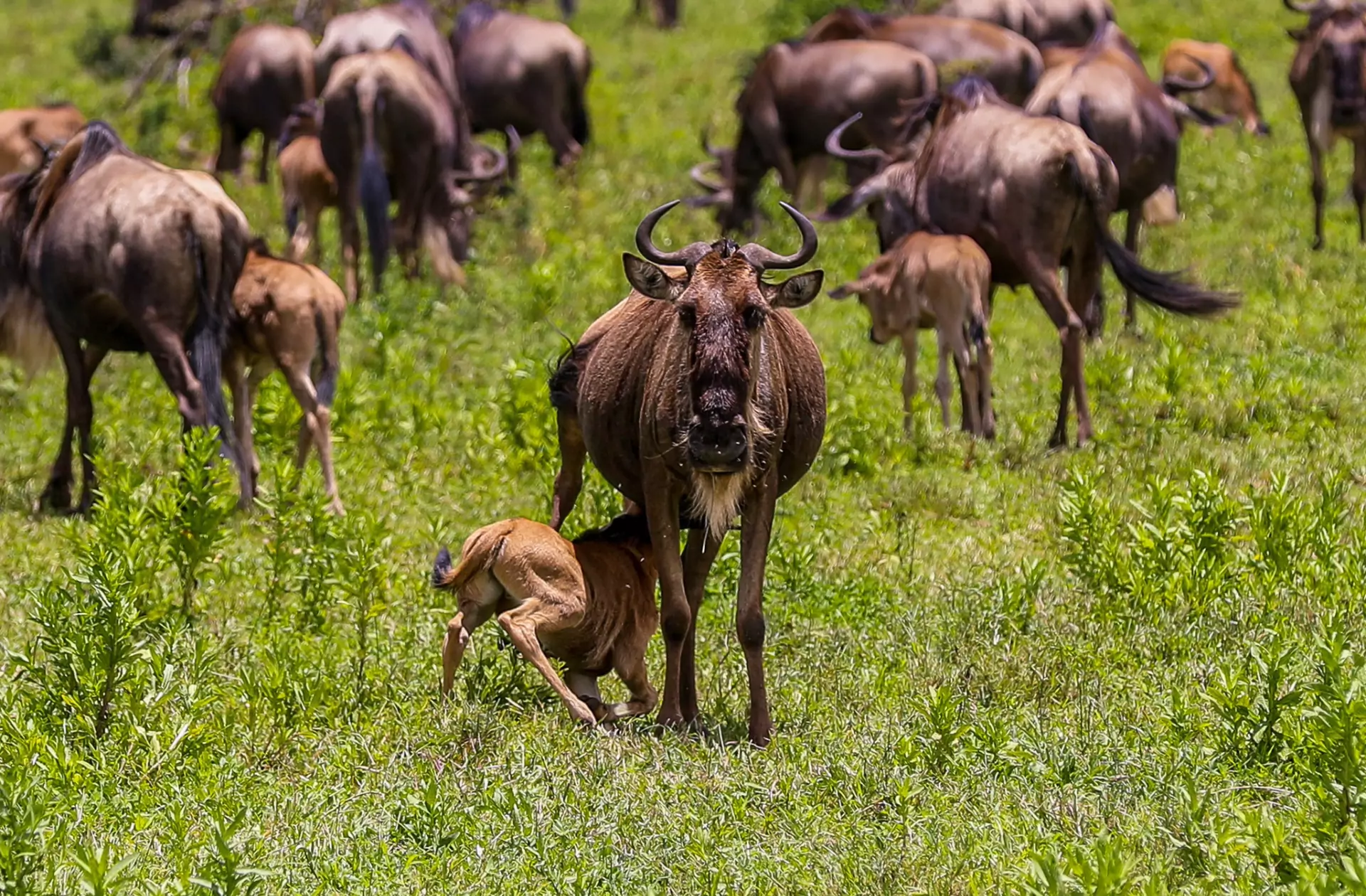
Calving usually reaches its height in February, although births occur throughout the wider January-to-March period. Up to half a million calves may be born within a matter of weeks. Newborn wildebeest can stand within minutes, an essential ability in a landscape where the herd may move and predators are always nearby.
This is one of the most rewarding seasons for travelers interested in newborn wildlife, predator interaction and photography. Lions, cheetahs and hyenas are active around the herds, while the plains are often green and expansive after the rains.
Calving season can also feel more intimate than the famous river-crossing months. It is an excellent choice for travelers who value wildlife depth and atmosphere more than one headline moment. Our guide to wildebeest calving season in Ndutu covers those weeks in detail.
Calving season · the southern Serengeti
Season 02
April to May: Central Serengeti and the Western Movement
As the southern grasslands begin to dry, the migration starts moving north and west. The precise departure can occur from late April into early June, depending on rainfall.
During this period, the herds are often fragmented rather than traveling as one enormous group. Long columns may pass through the central Serengeti toward the Western Corridor, while other groups take routes through Seronera, Lobo or the eastern side of the ecosystem.
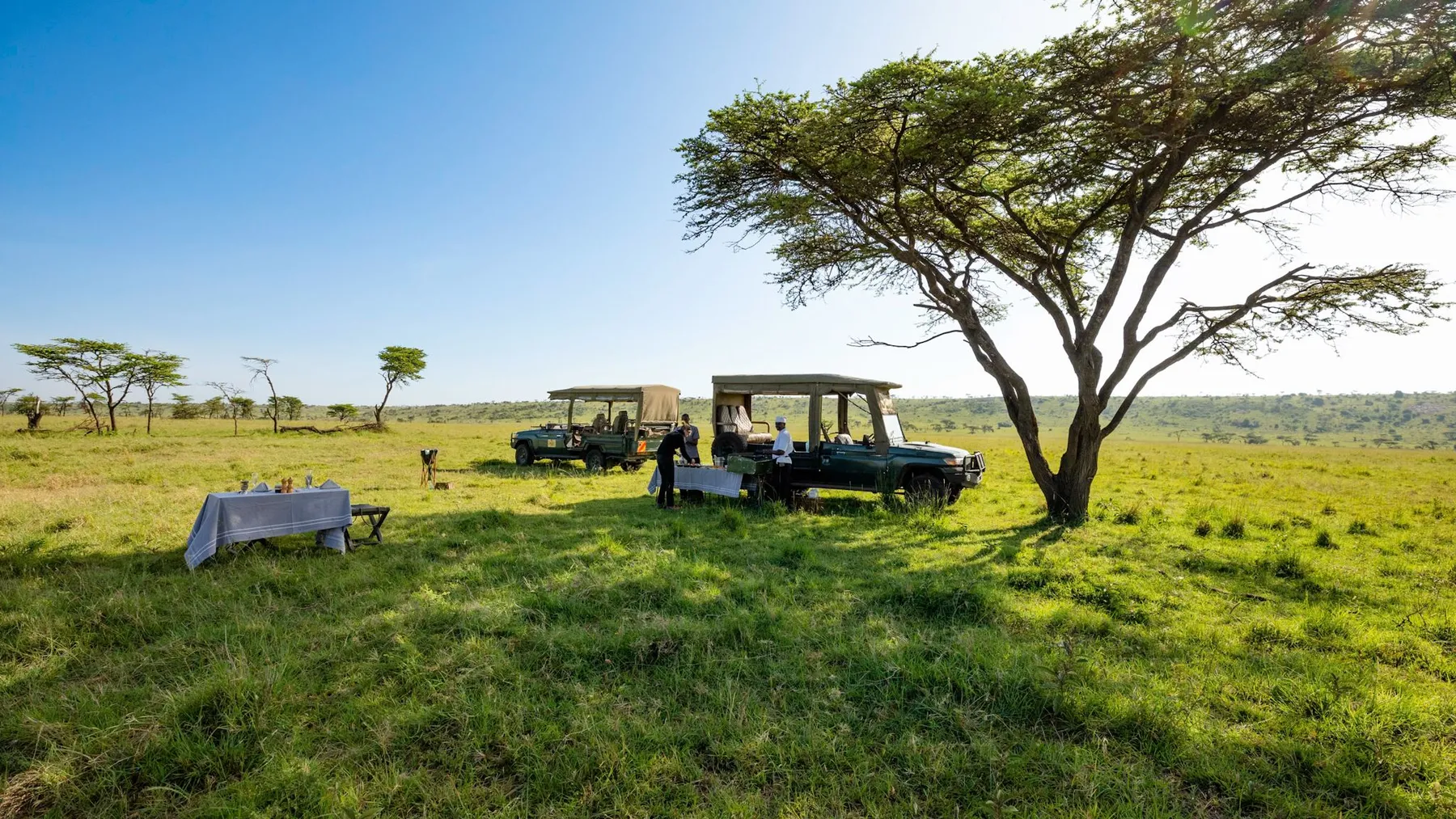
April and May can offer striking green scenery, fewer vehicles and excellent value. Full-day game drives with a thoughtfully prepared picnic allow guides the freedom to search widely for moving herds. The central Serengeti is also known for resident big cats, so the safari remains rewarding even when the migration is dispersed.
Travelers should be comfortable with the possibility of seasonal rain. In return, they may experience dramatic skies, vivid landscapes and a quieter Serengeti.
Season 03
June to July: The Western Corridor and Grumeti
By June, many splinter herds begin gathering in the Western Corridor. Here, the migration encounters the Grumeti River before continuing toward the northern Serengeti.
Grumeti crossings are different from the steep, crowded scenes often associated with the Mara River. The timing varies, and the herds can gather near the water before deciding whether to cross. Crocodiles are present, but a crossing should never be promised. For the Mara crossings themselves, see our guide to when and where the Mara River crossings happen.
The wider western Serengeti deserves attention beyond the river. Its woodlands, open plains and riverine habitats support lions, leopards, elephants and abundant resident game. This makes it possible to build a complete safari rather than waiting for a single moment at the water.
Late June and July also mark the gradual transition toward northern Serengeti migration season. Selecting a camp with the right seasonal location becomes increasingly important.
Season 04
August to October: Northern Serengeti and the Mara River
From approximately July or August through October, substantial herds are usually found across the northern Serengeti and Kenya’s Maasai Mara. This is the season most closely associated with dramatic Mara River crossings.
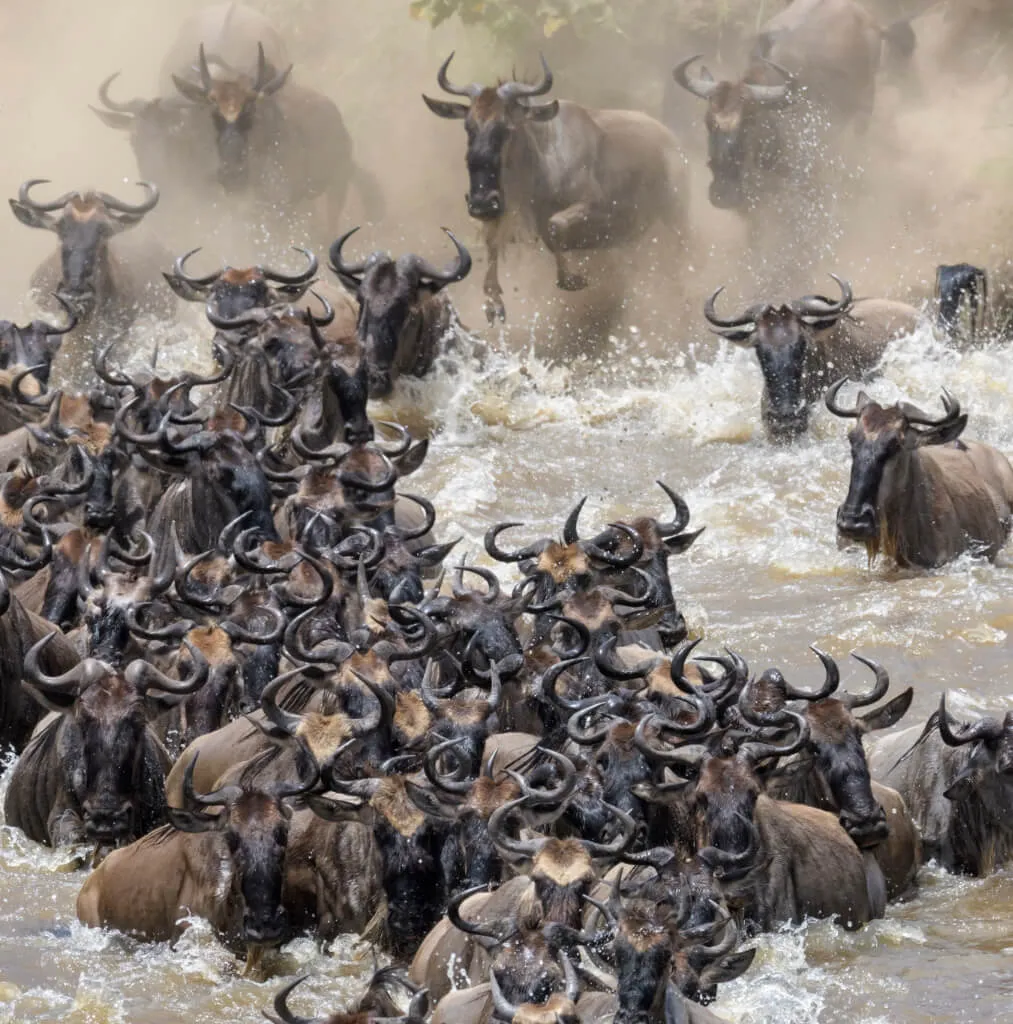
The river has numerous recognized crossing areas rather than one dependable location. Wildebeest may gather along a bank for hours or days, cross suddenly, retreat at the last moment or move to another section of the river. They may also cross back and forth between Tanzania and Kenya as grazing and water conditions change.
In a drier year, some herds can reach the Mara River in early July. In a wetter year, major concentrations may arrive later, sometimes in August. Even at the height of the season, not every animal enters Kenya; significant numbers can remain in the northern Serengeti.
August and September are popular and camps often fill well in advance. For the best choice of accommodation and private guiding, planning 12 to 18 months ahead is sensible. October may provide a quieter atmosphere while still offering excellent northern wildlife and possible migration activity.
Watch: a Mara River crossing
A Mara River crossing
Season 05
November to December: The Return South
As the short rains begin, the herds gradually turn south. Their return is rarely a single, orderly procession. Some travel through Lobo and the eastern Serengeti, while others move through the central or western regions at different speeds.
By late November and December, parts of the migration may reach the central and southern Serengeti, drawn toward renewed short-grass grazing. If rain falls in an unexpected area, the herds can pause, change direction or return temporarily to where conditions are better.
This transitional period can offer impressive moving columns, fresh landscapes and fewer visitors than peak river-crossing season. It is particularly suited to flexible travelers who appreciate the wider safari experience and are willing to follow the guidance of expert local teams.
When Is the Best Time to See the Great Migration?
There is no single best month for everyone. The right season depends on the experience you value most.
Travel interestUsually best periodRecommended region
Newborn calves and predator activityJanuary–MarchNdutu and southern Serengeti
Green landscapes and fewer visitorsApril–MayCentral and western Serengeti
Moving columns and possible Grumeti crossingsJune–JulyWestern Corridor and Grumeti
Possible Mara River crossingsJuly–OctoberNorthern Serengeti and Maasai Mara
Quieter northern migration viewingOctoberNorthern Serengeti, Maasai Mara and Lobo
Southbound herds and short-rain sceneryNovember–DecemberNorthern, central and eastern Serengeti
If a river crossing is your priority, spending several nights in the northern migration region gives you a better opportunity than a rushed visit. It still does not create a guarantee. If your priority is newborn animals, predator action and luminous green plains, February and early March can be equally — if not more — compelling.
No. Mara River crossings are completely natural and cannot be scheduled or guaranteed.
A herd may approach the river and wait for days. It may cross before your vehicle reaches the area, move to a different crossing point or turn away altogether. Water levels, grazing, weather, pressure from other animals and perceived danger can all influence the decision.
A responsible Great Migration safari therefore focuses on creating the strongest possible conditions:
Stay in the correct region for the season.
Allow at least three or four nights in a key migration area.
Use an experienced guide with current local knowledge.
Consider a private vehicle for greater flexibility.
Avoid building the entire safari around one crossing.
The finest migration journeys leave room for nature to lead. A crossing can be extraordinary, but so can watching thousands of animals move across open plains, seeing a cheetah scan a herd, or hearing wildebeest around camp after dark.
Choosing Your Base in the Northern Serengeti
The best base depends on the specific camp’s location, your travel dates and access to likely viewing areas. Driving times can change with road conditions, available river crossings and herd movements.
Compare individual camps rather than choosing solely by area name. A split stay may suit some itineraries, but it is not essential for every migration safari. Allow enough time for wildlife viewing and consider whether changing camps adds value to your journey. Our guide to choosing between Kogatende and Lamai explains what to compare.
“The finest migration journeys leave room for nature to lead.”
Evance & Jenny · NndeeAfrika founders
Tanzania or Kenya for the Great Migration?
Both countries offer exceptional migration experiences, but they provide different perspectives. For a fuller comparison, read our Kenya vs Tanzania safari guide.
The Great Migration in Tanzania
Tanzania hosts the migration through much of its annual cycle. The Serengeti offers the southern calving plains, central migration routes, Western Corridor, Grumeti River and northern Mara River region.
A Tanzania Great Migration safari provides the greatest seasonal variety and combines naturally with Ngorongoro Crater, Tarangire, Lake Manyara or a Zanzibar beach retreat. Travelers can also connect distant Serengeti regions by light aircraft, reducing long drives and creating a more elegant itinerary.
The Great Migration in Kenya
Kenya’s Maasai Mara is most strongly associated with the northern migration months, generally from July into October. The reserve and neighboring conservancies also support superb resident wildlife, particularly big cats.
Kenya can combine easily with Nairobi, Laikipia, Lewa or the Indian Ocean coast. For travelers seeking both the Serengeti and Maasai Mara, a carefully planned cross-border itinerary offers contrasting landscapes and safari styles — but it should include enough nights in each location to justify the additional travel.
The best choice is not automatically the country with the most famous photograph. It is the destination and camp position that best match your dates, interests and preferred pace.
Mobile Camps or Permanent Luxury Lodges?
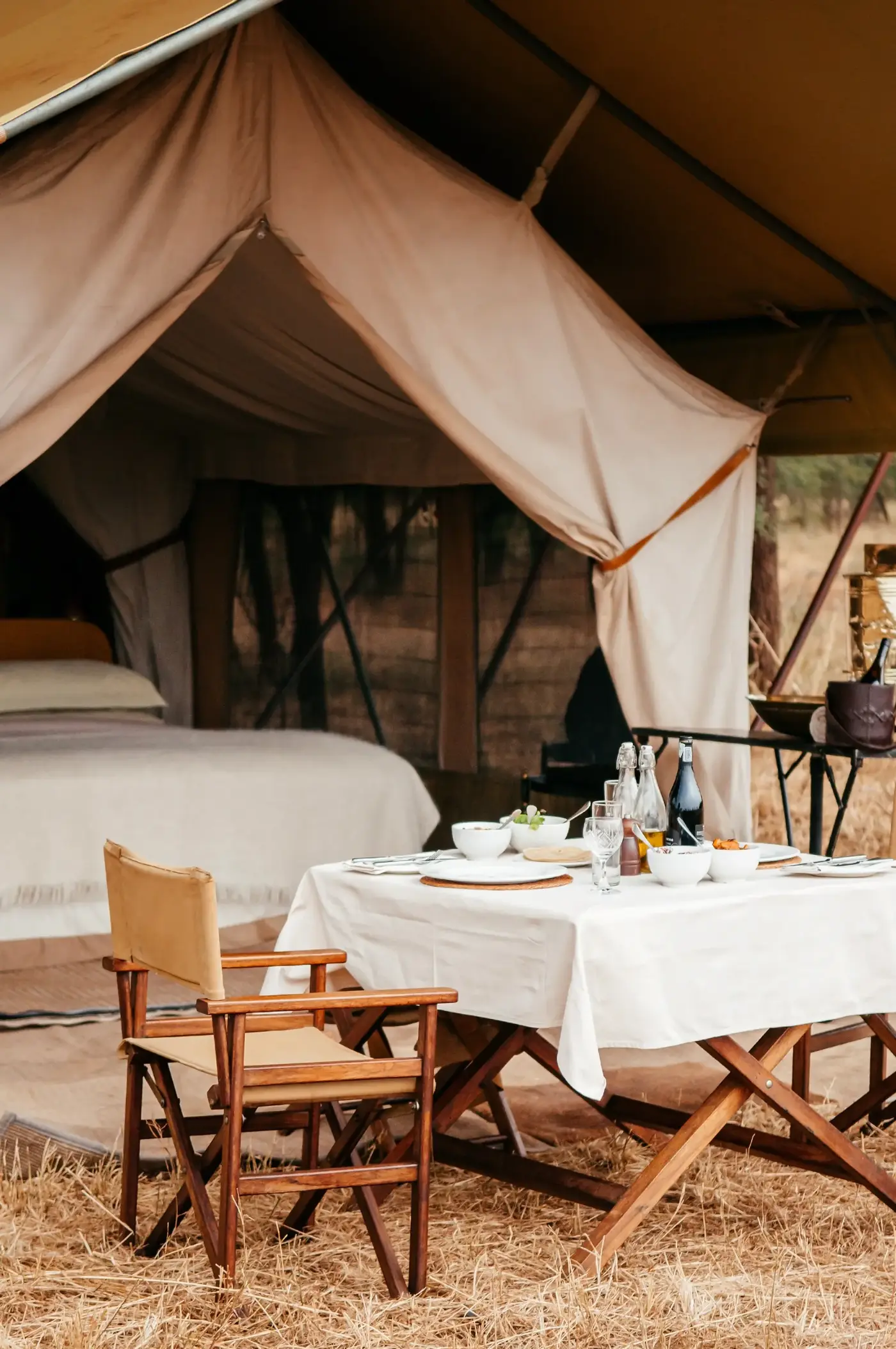
Mobile migration camps relocate between designated seasonal sites. Other camps remain in one location but operate for only part of the year. Confirm each camp’s location and opening dates for your intended stay.
Mobile camps relocate between designated seasonal sites to remain close to likely herd movements. They offer an immersive tented experience and often provide excellent access to key migration areas. Their charm lies in intimacy, atmosphere and connection to the landscape rather than extensive resort-style facilities.
Permanent camps and lodges remain in one location throughout the year. They may offer larger suites, swimming pools, wellness facilities and a broader range of amenities. A well-positioned permanent property can also provide outstanding resident wildlife even when the main herds have moved elsewhere.
For many travelers, the ideal itinerary combines both: a strategically positioned migration camp for wildlife access and a permanent luxury lodge for space, privacy and time to slow down.
A private tented camp at dusk
How Many Days Do You Need?
For a meaningful migration experience, plan at least three or four nights in the region where the herds are expected. Four nights provide three full safari days and improve flexibility when herd locations change.
A complete northern Tanzania safari generally works beautifully over seven to ten nights, depending on the number of regions included. A Tanzania and Kenya combination usually requires additional time so that international border logistics do not overpower the safari itself.
Private flying can make longer itineraries more comfortable, especially when combining the southern, western or northern Serengeti with other destinations. The aim should be fewer, better-chosen stops rather than changing camps every night or two.
Planning the Migration for Different Travelers
Couples and Honeymooners
Choose intimate camps, private dining, secluded suites and an itinerary with time to enjoy the property between game drives. A safari-and-beach combination can balance the excitement of the migration with a restorative coastal stay.
Families
Look for family accommodation, flexible meal times, guides who engage younger travelers and age-appropriate activities. Calving season can be fascinating for children, although families should understand that predator encounters may sometimes be graphic.
Photographers
A private vehicle provides greater control over positioning, departure times and time spent at a sighting. Consider vehicle configuration, charging facilities, luggage allowances on light aircraft and the direction of seasonal light when selecting a camp.
Travelers Seeking Privacy
Avoid assuming that peak season automatically produces the best safari. Calving season, the green months and October can offer extraordinary wildlife with a different rhythm. Carefully selected private concessions or quieter camp locations can further reduce vehicle density, although the busiest river-crossing points may still attract multiple vehicles.
How to Plan a Great Migration Safari
A well-designed migration safari begins with the traveler — not a standard route. Your dates, preferred level of privacy, wildlife priorities, comfort expectations and tolerance for changing camps should determine the itinerary.
At NndeeAfrika, we recommend focusing on five principles:
1
Match the region to the season. Camp location matters more than a famous name.
2
Stay long enough. Several nights provide flexibility and a more relaxed experience.
3
Keep expectations honest. The migration can be anticipated but never controlled.
4
Protect the quality of the whole journey. Resident wildlife, guiding, scenery, service and pacing matter even when the herds change direction.
5
Plan early for peak periods. The most desirable camps, family suites and private vehicles are limited.
This approach creates a safari that remains exceptional whether you witness a dramatic river crossing, a vast herd on the open plains or an unexpectedly quiet moment far from other vehicles.
Bush breakfast · Maasai Mara
Frequently Asked Questions
Is the Great Migration a year-round experience?
+
Yes. The herds remain within the wider Serengeti–Mara ecosystem throughout the year. What changes is their probable location and behavior.
What is the best month for the Great Migration in Tanzania?
+
February is excellent for calving in the southern Serengeti. June and July are associated with the Western Corridor and northward movement. From July or August through October, the northern Serengeti may offer Mara River activity. The best month depends on the experience you want.
When are the Mara River crossings?
+
Crossings are most commonly associated with July through October, with August and September traditionally considered peak months. Exact dates and locations cannot be predicted.
When is the Serengeti calving season?
+
Calving generally occurs from January through March, with the greatest concentration of births usually in February on the southern short-grass plains.
How far in advance should I book?
+
For July through September, booking 12 to 18 months ahead provides a better selection of well-positioned camps, private vehicles and family accommodation. Other seasons may offer more flexibility, but early planning is still recommended for small, exclusive properties.
Can I combine the migration with other destinations?
+
Yes. Popular combinations include Ngorongoro Crater, gorilla trekking in Rwanda or Uganda, and beach stays in Zanzibar, Seychelles or the Kenyan coast. The combination should be planned around sensible flight connections and enough time in each destination.
Begin Your Great Migration Journey
For travelers planning a Great Migration Africa safari, the experience is not defined by one river, one month or one photograph. Its true wonder lies in the movement of an entire ecosystem: new life on the southern plains, immense columns traveling north, predators following the herds and the first rains drawing everything south once more.
NndeeAfrika designs private, tailor-made migration safaris around the season, current local knowledge and the way you prefer to travel. From an intimate mobile camp beneath the Serengeti sky to a refined lodge overlooking a wildlife-rich landscape, every element is selected for location, guiding, privacy and a natural sense of pace.
Speak with a NndeeAfrika safari specialist to begin planning your private Great Migration journey through Tanzania, Kenya or both.
Private Great Migration journeys from approximately $12,000 per person
Final investment depends on season, camps and routing — every journey is quoted privately as one bespoke figure.