Almost every safari promises lions. The honest position is that some reserves put you among them within hours, and others can leave you with three days of tracks and a story about the one that crossed the road at dusk. The difference is density, terrain and how the reserve is run.
The short answer
If seeing lions is the priority, go to Ngorongoro Crater, the Serengeti, or a private conservancy bordering the Maasai Mara. All three combine very high lion density with open country, which is the combination that matters. For big prides with almost no other vehicles, Ruaha in southern Tanzania is the specialist’s answer.
| Place | Country | Why it stands out |
|---|---|---|
| Ngorongoro Crater | Tanzania | Highest density anywhere; nowhere to hide |
| Serengeti | Tanzania | Big prides, and predators following the migration |
| Maasai Mara conservancies | Kenya | Superb density plus off-road and night drives |
| Ruaha | Tanzania | Very large prides, almost no vehicles |
| Sabi Sand & Kruger | South Africa | Reliable, habituated, excellent guiding |
| South Luangwa | Zambia | Strong prides and legal night drives |
| Okavango & Duba | Botswana | Lions that hunt buffalo in water |
| Hwange | Zimbabwe | Waterhole viewing in the dry season |
| Etosha | Namibia | Floodlit waterholes after dark |
| Kalahari | Botswana | Black-maned desert lions |
The ten best places to see lions

1. Ngorongoro Crater, Tanzania
Ngorongoro holds one of the densest lion populations on earth, inside a collapsed caldera roughly twenty kilometers across with walls the animals rarely leave. The result is a closed system where the prides are known, the prey cannot disperse, and there is almost nowhere for a lion to be that you cannot see it.
A morning on the crater floor very rarely ends without lions. The trade is vehicle numbers — it is popular, and at a good sighting you will not be alone. Go early, and stay out while others go back for lunch.
2. The Serengeti, Tanzania
The Serengeti carries big, well-established prides across an enormous area, and the Seronera valley in the center is reliable year-round because the river holds prey when the plains dry out.
When the migration is in the region the predator activity is extraordinary — lions do not follow the herds so much as wait on the routes they use. See the migration calendar for where the herds are in your month.
3. The Maasai Mara conservancies, Kenya
The Mara ecosystem has some of the highest lion density in Africa. What makes the private conservancies on its borders better than the reserve itself is not more lions — it is the rules.
Conservancies cap vehicle numbers, and many permit off-road driving and night drives that the national reserve does not. You see the same cats, doing more, with fewer vehicles around them. For lion viewing specifically, that is the single biggest upgrade available in East Africa.
4. Ruaha, Tanzania
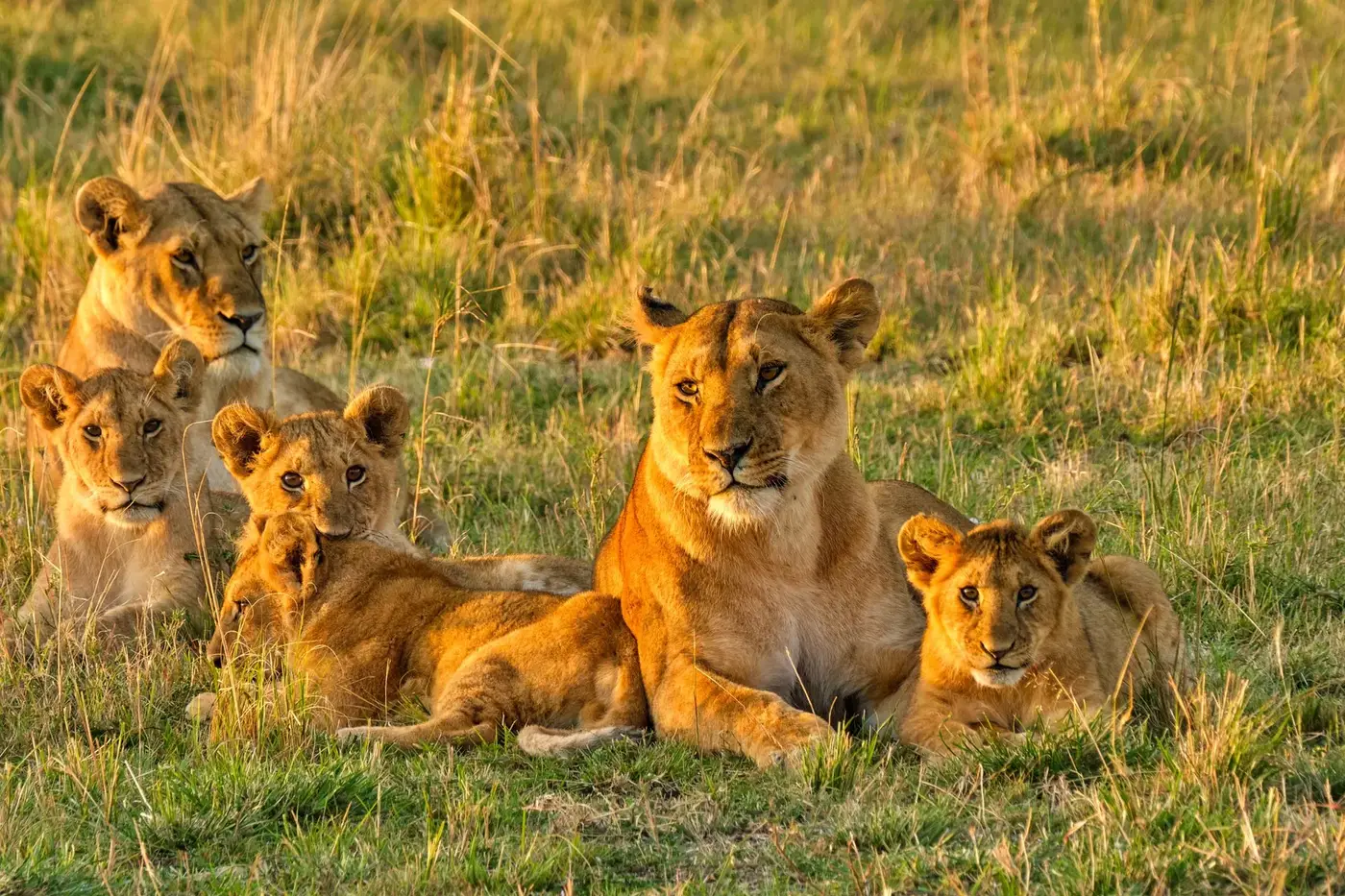
Ruaha is the answer for travelers who have done the classic circuit and want something wilder. It holds a significant share of Africa’s remaining lions, in prides that can run to twenty or more animals.
It is remote, it takes a flight to reach, and you will go long stretches without seeing another vehicle. For a second or third safari, it is the most rewarding lion country in the country.
5. Sabi Sand and Kruger, South Africa
The Sabi Sand is the most dependable Big Five viewing on the continent, and lions are the least of its difficulties — generations of habituated cats, expert guiding, off-road access and night drives.
It is also the easiest to reach with limited time: fly into Johannesburg, connect to the bush, and be watching lions the same afternoon.
6. South Luangwa, Zambia
South Luangwa combines strong prides with legal night drives, which is when lions do most of what makes them interesting.
It is also the home of the walking safari, and tracking lion on foot with an armed guide is a completely different experience from watching them from a vehicle.
7. The Okavango Delta, Botswana
The Okavango produces the most unusual lion behaviour in Africa. In the Duba Plains area, prides have specialized in hunting buffalo, and they will wade and swim through channels to do it.
These are among the largest lions on the continent, simply because of what they eat. Seeing one cross deep water is not something the savannah reserves offer.
8. Hwange, Zimbabwe
Hwange has little permanent surface water, so in the dry season everything concentrates at pumped waterholes — and the lions know it. Sitting at a waterhole hide through the afternoon is a very productive way to spend a day.
9. Etosha, Namibia
Etosha offers something almost nowhere else does: floodlit waterholes at the rest camps, where you can sit after dark and watch lions come down to drink. In the dry season the pan edge concentrates game to an almost artificial degree.
10. The Kalahari, Botswana
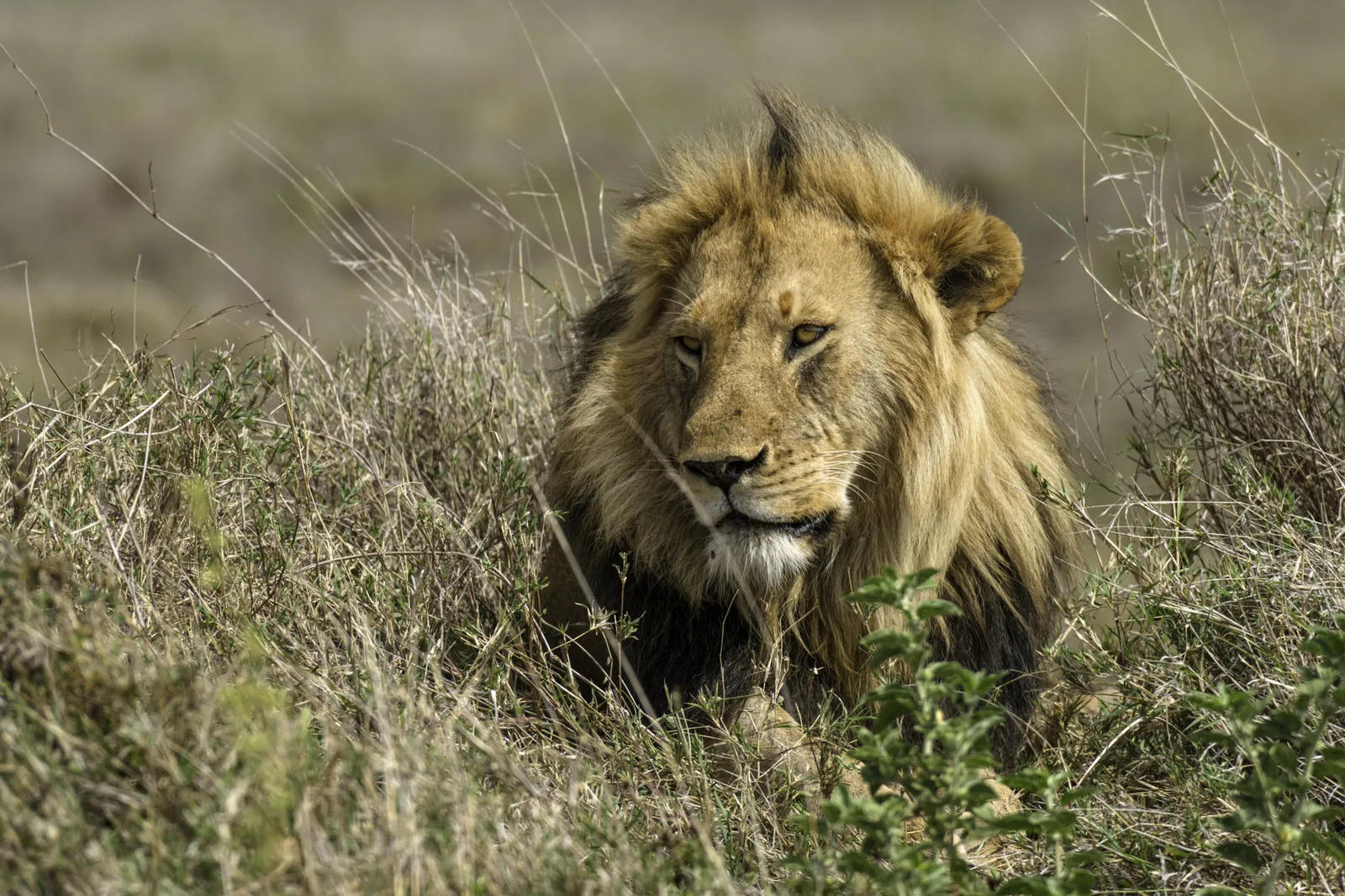
The Kalahari’s lions are famous for their dark, almost black manes, and for surviving in country that should not support them at all. Densities are far lower than the Mara or the crater, so this is a place to go for the character of the sighting rather than the number of them.
Lions that do unusual things
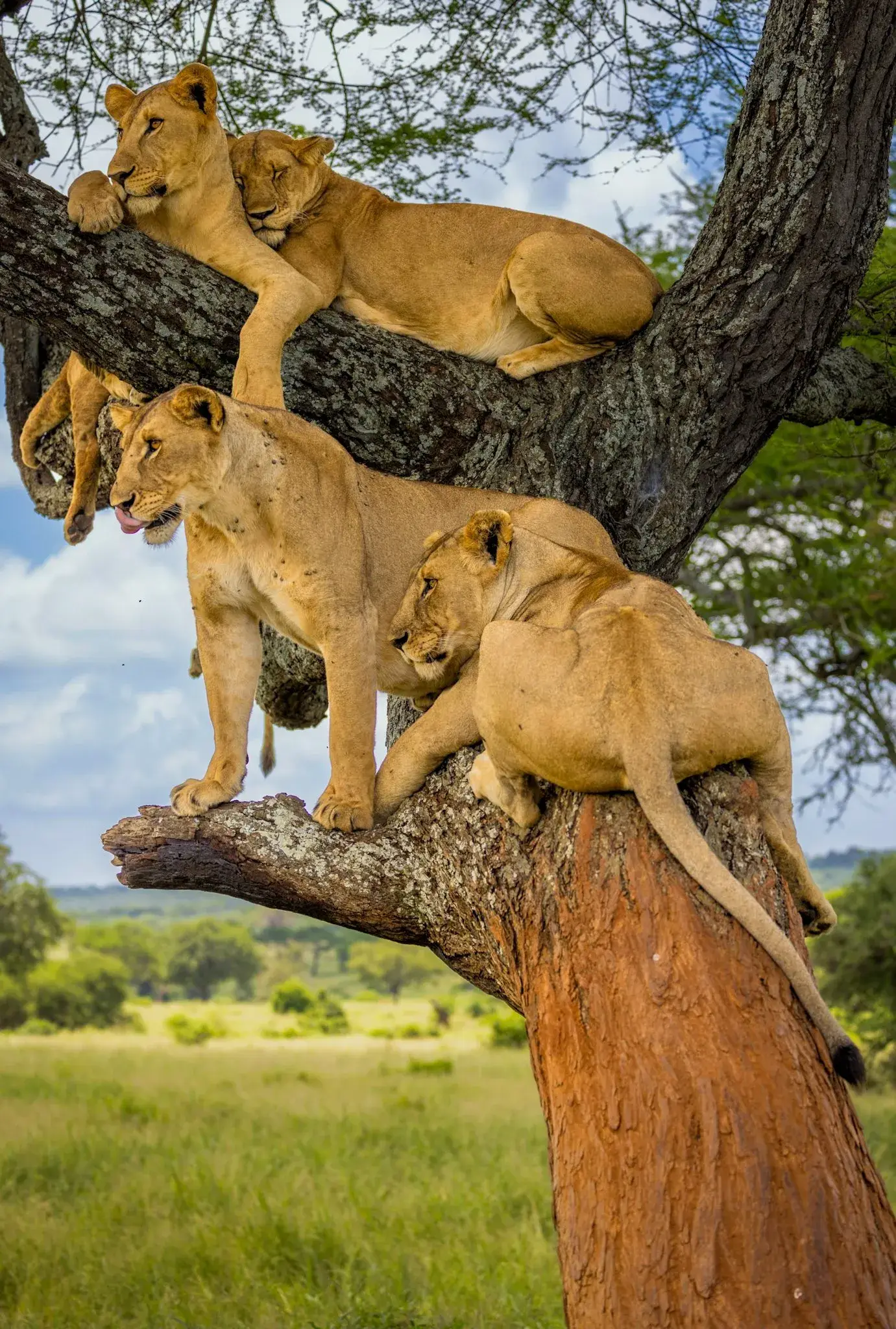
Tree-climbing lions. Most lions climb badly and rarely. In a few places they do it habitually — Lake Manyara in Tanzania and the Ishasha sector of Queen Elizabeth in Uganda are the two names that come up. Nobody is certain why; the usual explanations are flies, heat and a better view. It is not guaranteed anywhere, but those are the places to ask.
Black-maned Kalahari lions. Desert lions carry noticeably darker manes and range over enormous distances between meals. Fewer sightings, but a more striking animal when you find one.
Buffalo-hunting, swimming lions. In parts of the Okavango, prides have built their entire strategy around buffalo and will swim channels in pursuit. These are unusually large, unusually confident lions.
When to go
Lions are resident everywhere on this list, so there is no closed season — but the dry season is easier. Grass is short, leaves are thin, and animals concentrate at whatever water remains. In most of these places that means roughly June to October.
Two refinements. In the Serengeti and the Mara, lion activity rises sharply when the migration is in the area, because the prey does. And in the southern Serengeti during calving season, January to March, the plains are short-grass and full of newborns — superb predator viewing in what is technically the green season.
Our when to go guide covers the seasons country by country.
What actually improves your odds
Beyond choosing the right place, four things make a measurable difference.
Night drives. Lions do most of their hunting after dark. Reserves that allow night driving — the Mara conservancies, South Luangwa, the Sabi Sand — show you a different animal from the one sleeping under a bush at noon.
Off-road access. A lion two hundred meters off the track is a distant shape in a national park and a proper sighting in a conservancy. This single rule difference changes more than most travelers expect.
The guide. Lion viewing is tracking, not luck. A guide who knows the individual prides, where they denned last week and which direction they moved at dawn is worth more than any amount of equipment.
Enough nights. Three nights in one area beats one night in three. Prides move, and a guide needs a day or two to get onto them.
Common questions
Where is the best place in Africa to see lions?
Ngorongoro Crater in Tanzania has the highest density and the most enclosed terrain, so sightings there are close to certain. The Serengeti and the private conservancies bordering the Maasai Mara are the other two places where lions are near-guaranteed on a multi-day stay.
What is the best month to see lions?
The dry season, broadly June to October, when grass is short and animals concentrate at water. In the southern Serengeti, January to March is also outstanding because calving season brings enormous numbers of vulnerable prey onto short-grass plains.
Are lion sightings guaranteed on safari?
No, and be wary of anyone who says otherwise. In the best reserves over three or four nights they are highly likely, but wild animals move. What a good planner controls is the area, the season, the access rules and the number of nights.
Where can I see tree-climbing lions?
Lake Manyara in Tanzania and the Ishasha sector of Queen Elizabeth National Park in Uganda are the two areas best known for it. The behaviour is local rather than species-wide, and it is never guaranteed.
Is a private conservancy better than a national reserve for lions?
Usually, yes. Conservancies limit vehicle numbers and many allow off-road driving and night drives that national parks prohibit. You see the same lions, closer, doing more, with fewer vehicles present.
For what lions are actually like — prides, hunting, territory and the rest — see our guide to lion characteristics and behaviour, or the wider safari animals guide.