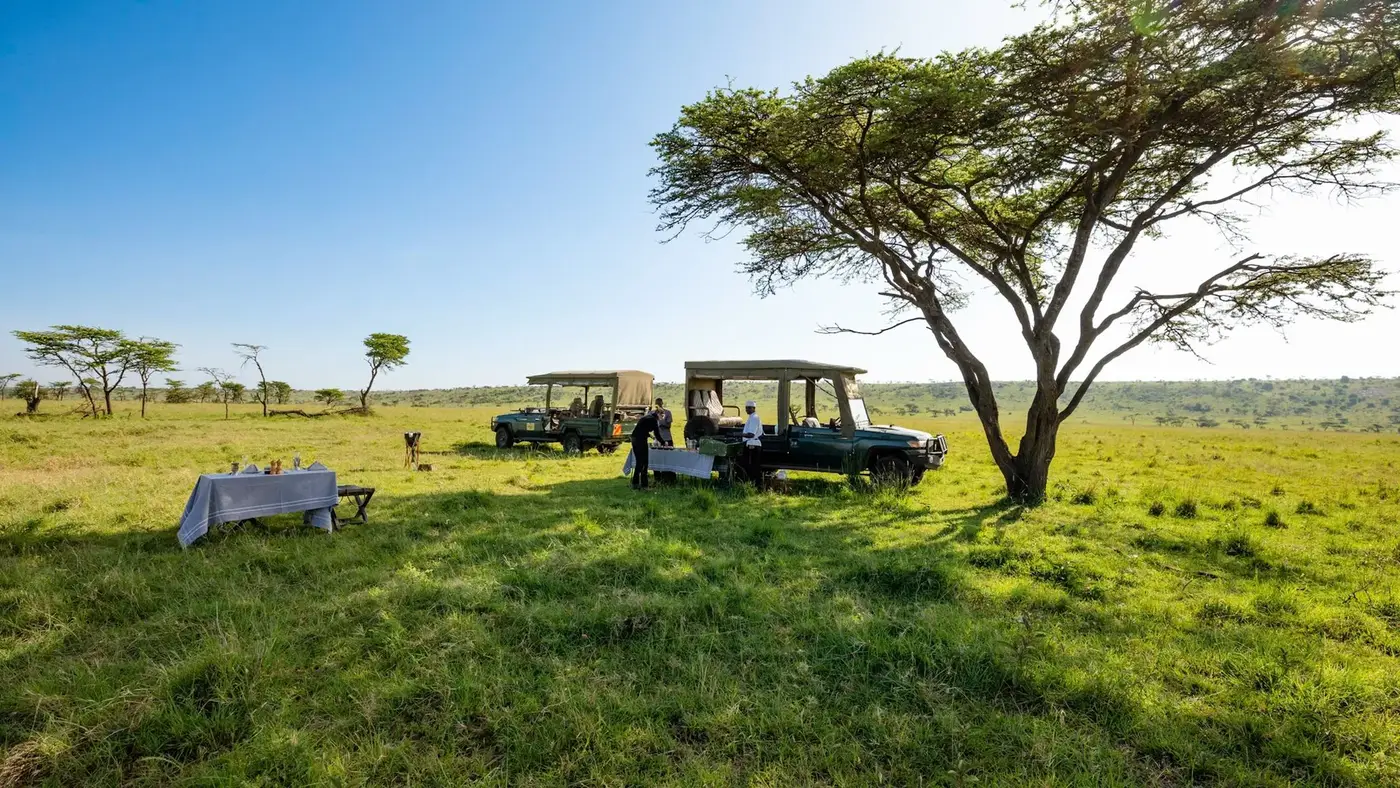
A private conservancy is wildlife land owned or leased from local communities and run by a handful of camps, with strict caps on beds and vehicles. The game viewing matches the famous national parks next door — the animals do not read boundaries — but you share a sighting with one or two vehicles instead of twenty.
Conservancies also unlock what parks forbid: off-road driving to sit with a leopard, night drives for the nocturnal shift, and walking safaris with your guide. And because your nightly rate pays lease fees directly to landowning families, a conservancy safari is conservation working exactly as it should. Kenya pioneered the model around the Maasai Mara; Tanzania’s private concessions, Botswana’s Delta concessions and South Africa’s private reserves follow the same logic.
Highlights of Private Conservancies
Exclusive traversing
Vehicle caps mean sightings are yours — often literally alone with the animals.
Off-road & night drives
Follow the action off the track and meet the nocturnal cast after dark.
Walking safaris
Cross the land on foot with armed professional guides — forbidden in most parks.
Community ownership
Lease fees flow to local families, so wildlife is worth more alive than lost.
Where the conservancy model shines
Every safari country does private land differently. These are the four we rate highest — and how each one works.
Kenya
The pioneer. Naboisho, Olare Motorogi and Mara North border the Maasai Mara with a fraction of its vehicles; Lewa and the Laikipia conservancies add rhino and wild frontier country further north.
Explore Kenya → Eastern AfricaTanzania
Private concessions like Grumeti flank the Serengeti — migration country traversed only by a handful of camps, with walking and off-road driving.
Explore Tanzania → Southern AfricaBotswana
The entire Okavango Delta is carved into vast private concessions — the conservancy idea at its grandest scale, explored by 4x4, boat and mokoro.
Explore Botswana → Southern AfricaSouth Africa
The Sabi Sand and its neighbors share an unfenced border with Kruger — decades of careful private guiding produce what many consider the best leopard viewing on earth.
Explore South Africa →Where you’ll stay in the conservancies
Where you stay is selected privately around your journey. We recommend each camp, lodge or villa according to its location, season, guiding, privacy and suitability for the people traveling. Your carefully curated selection will be presented within your tailor-made itinerary.
Plan your private safari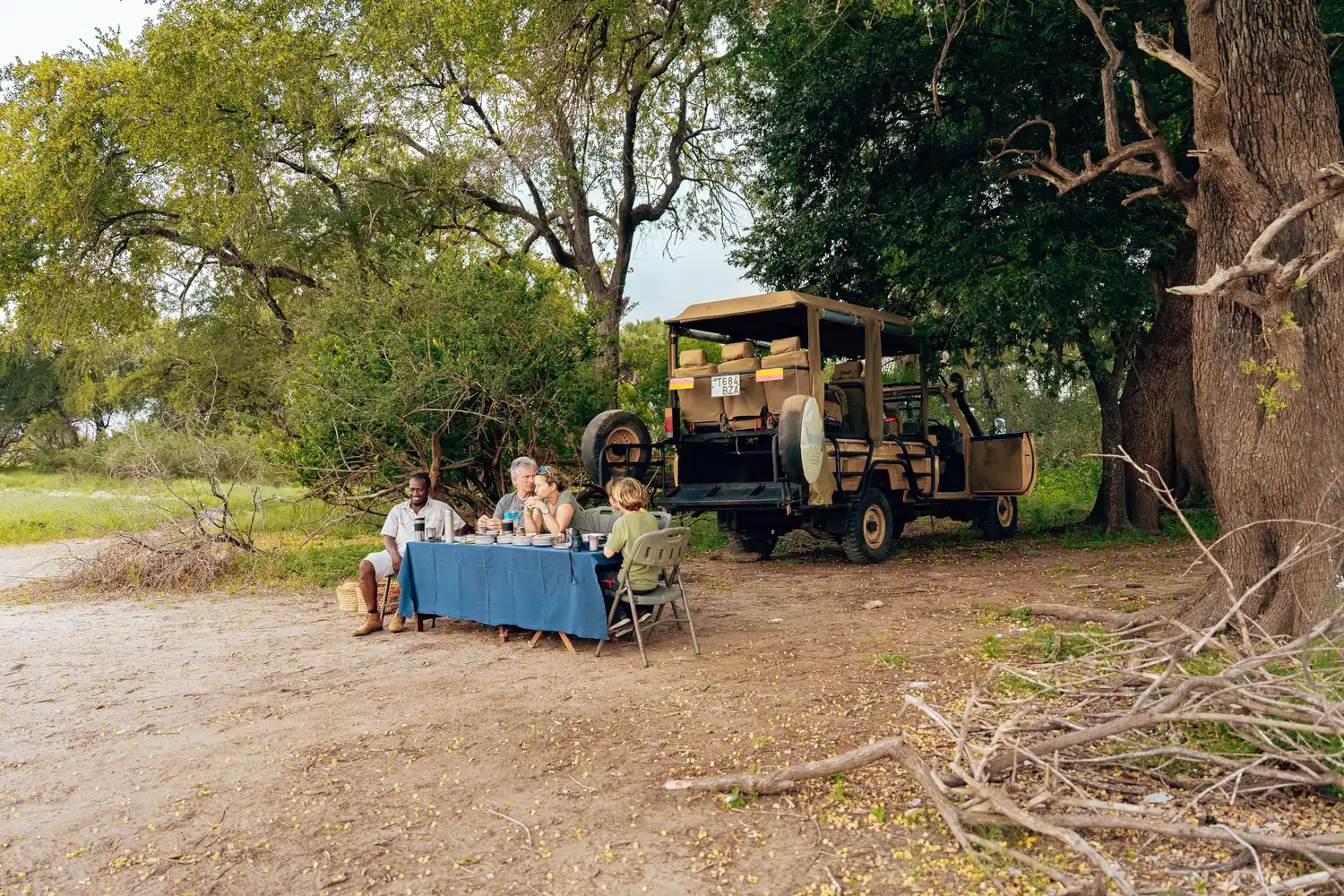
Breakfast where the morning drive ended
Best time to visit a private conservancy
Dry season across most conservancy country — peak viewing and walking weather.
Green season — newborn wildlife, dramatic light and better rates on private land.
In the green months rates ease at many of these camps, the plains empty of vehicles and the light turns dramatic. What each season gives, and what it trades, is set out in our Safari Planning Guide.
Planning & cost
Fully tailor-made — priced privately to your camps, season and travel style. No fixed packages.
Every journey is privately designed, with private guides and vehicles arranged where specified, the finest lodges, and a specialist on call throughout. At fly-in camps, game drives may be shared unless a private vehicle is reserved.
Practical details,
in one place
Money, health, connectivity and packing work the same way on every safari we plan, so they live in one place rather than on every page.
Continue exploring
Maasai Mara
The Maasai Mara — big cats, river crossings and some of the finest year-round game viewing in Africa.
Explore → ExperienceOkavango Delta
An Okavango Delta safari explores Africa’s great water wilderness by mokoro and 4x4.
Explore → South AfricaKruger & the Sabi Sand
Kruger & Sabi Sand — arguably the world’s finest leopard viewing, in some of Africa’s most polished lodges.
Explore →Private Conservancies FAQs
Getting to Kenya — flights, visas and health
Current at the time of writing. We re-confirm every requirement for your exact routing before you travel — and we will tell you what to apply for, and when.
Let's design your Private Conservancies journey.
The private conservancies of Africa buy you a freedom the national parks cannot.
Tell us how you like to travel and start with a complimentary consultation. When you are ready, a $500 USD planning fee covers your personalized itinerary and revisions, and is deducted from your booking deposit when you book.
Inquire now