Lake Manyara packs remarkable variety into a small space: a soda lake flushed pink with flamingos, a lush groundwater forest alive with blue monkeys and hornbills, and open floodplains where elephant graze against the 600-meter wall of the Great Rift Valley.
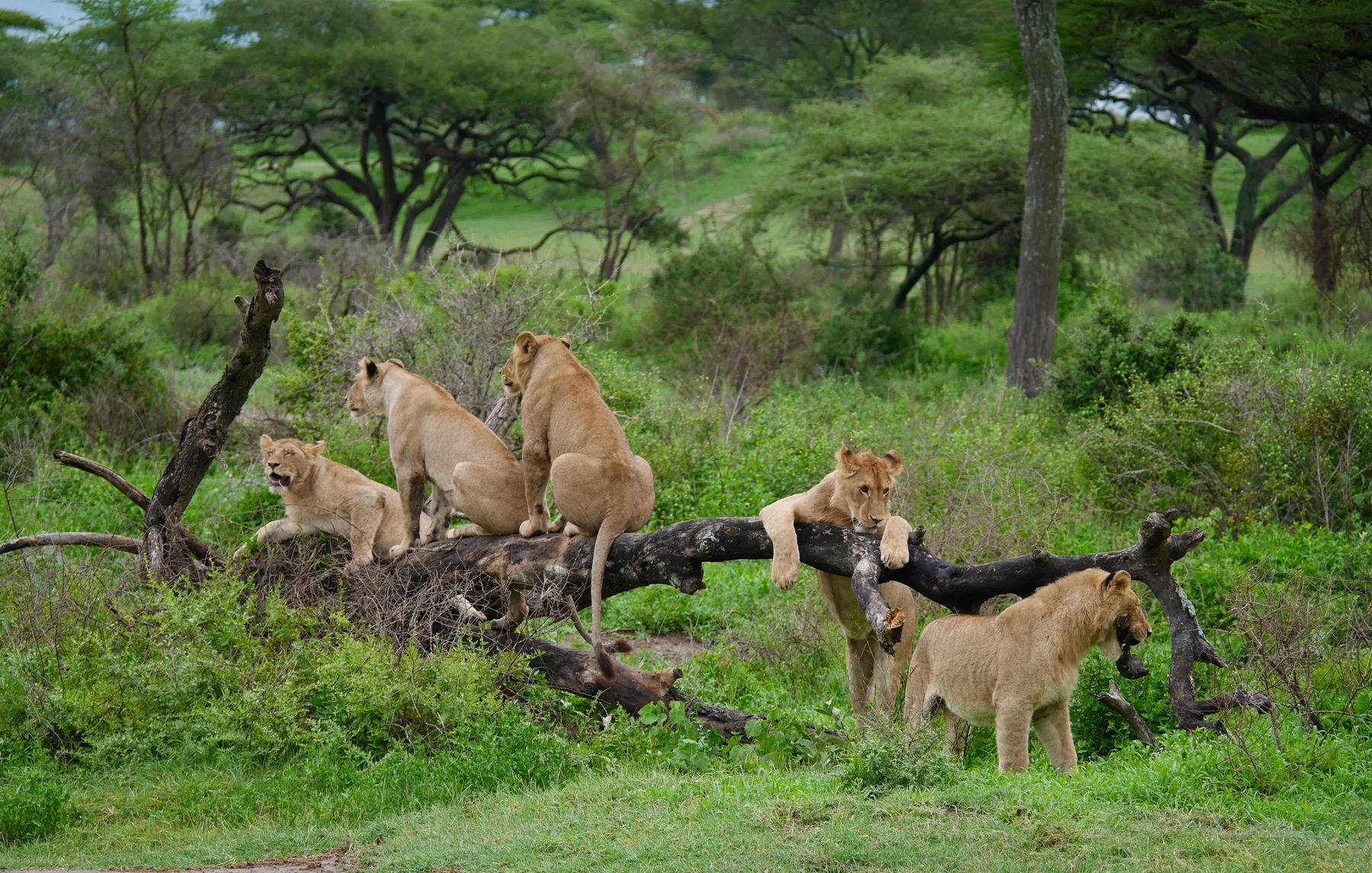
It is famous for lions that lounge in acacia branches — a behavior seen in only a couple of places in Africa. Most guests visit as a half-day en route between Tarangire and Ngorongoro, which is exactly how we recommend it.
Manyara works beautifully as the first stop of a northern-circuit safari: the groundwater forest, the flamingo-pink shallows and the Rift Valley wall compress remarkable variety into a small park, and its famous tree-climbing lions remain one of Tanzania’s strangest and most photogenic sights.
Highlights of Lake Manyara National Park
Tree-climbing lions
Manyara’s prides famously rest in the branches of acacia and mahogany.
Flamingos on the soda lake
In the right season the shoreline turns pink with tens of thousands of birds.
The groundwater forest
A jungle-green canopy of figs and mahogany — utterly unlike the plains.
The treetop walkway
East Africa’s longest canopy walk, strung through the forest.
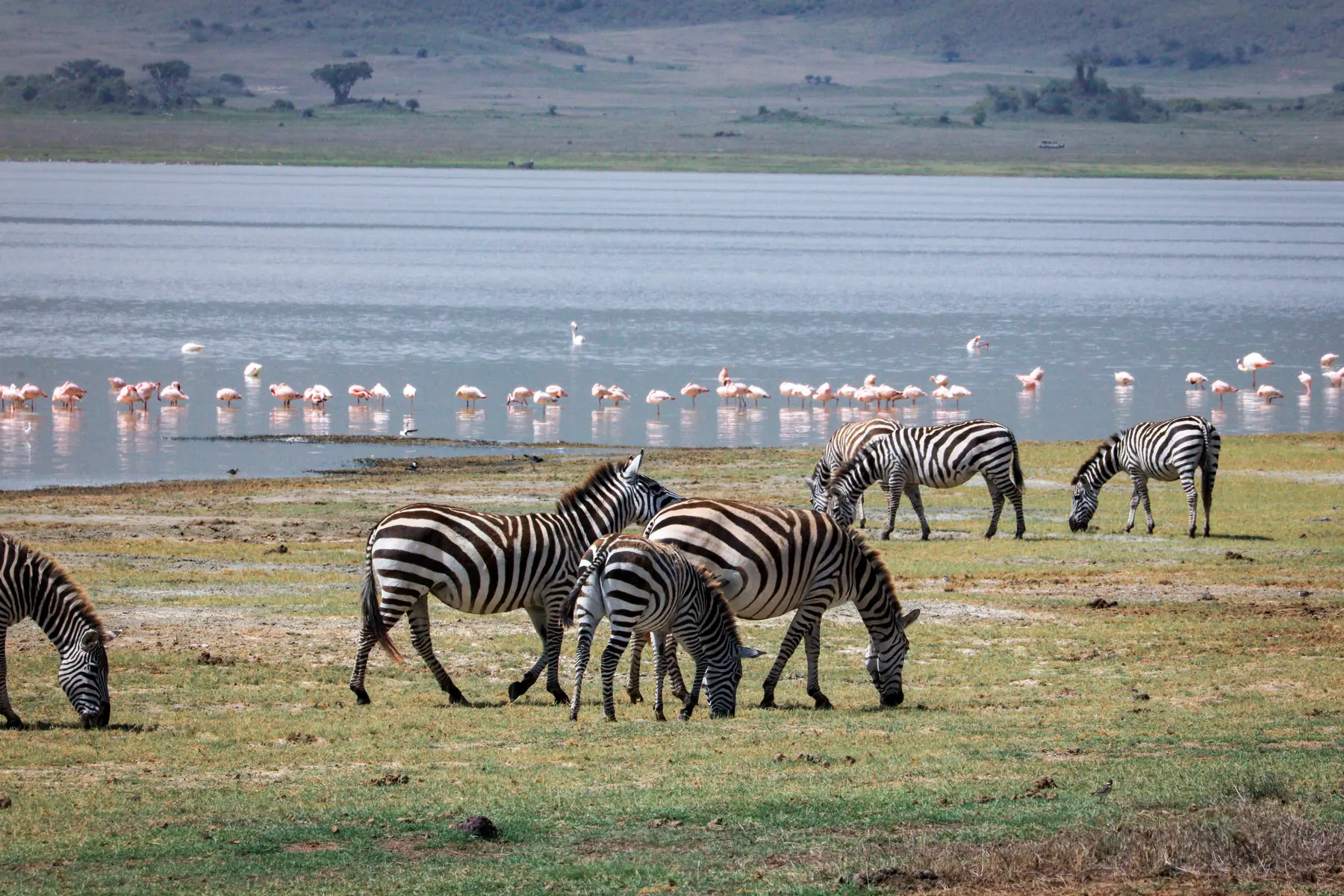
Zebra on the lake shore, flamingos beyond
Best time to visit Lake Manyara
Dry season — easy game viewing on the floodplains.
Green season — the forest at its most lush and waterbirds at their peak.
In the green months rates ease at many of these camps, the plains empty of vehicles and the light turns dramatic. What each season gives, and what it trades, is set out in our Safari Planning Guide.
Planning & cost
Usually a half-day stop within a northern circuit safari.
Every journey is privately designed, with private guides and vehicles arranged where specified, the finest lodges, and a specialist on call throughout. At fly-in camps, game drives may be shared unless a private vehicle is reserved.
Practical details,
in one place
Money, health, connectivity and packing work the same way on every safari we plan, so they live in one place rather than on every page.
Continue exploring
Tanzania
The Serengeti, Ngorongoro Crater, Tarangire and Zanzibar.
Explore → TanzaniaTarangire National Park
Tarangire — elephant herds by the hundred under ancient baobabs.
Explore → TanzaniaNgorongoro Crater
The Ngorongoro Crater — the Big Five inside a collapsed volcano, some of the densest game viewing in Africa.
Explore → RegionEastern Africa
The Great Migration, the Rift Valley and the gorillas — Tanzania, Kenya, Rwanda and Uganda.
Explore →Lake Manyara National Park FAQs
Getting to Tanzania — flights, visas and health
Current at the time of writing. We re-confirm every requirement for your exact routing before you travel — and we will tell you what to apply for, and when.
Let's design your Lake Manyara National Park journey.
Lake Manyara National Park is small, easily added, and often the gentlest opening to a northern circuit.
Tell us how you like to travel and start with a complimentary consultation. When you are ready, a $500 USD planning fee covers your personalized itinerary and revisions, and is deducted from your booking deposit when you book.
Inquire now