Tanzania and South Africa are the two countries American travelers most often weigh against each other for a first safari, and they are genuinely different trips. One is scale: the Serengeti, the Ngorongoro Crater and the Great Migration, finished on Zanzibar. The other is polish and ease: the Sabi Sand’s leopards beside Kruger, then Cape Town and the Winelands, with nonstop flights from the US and malaria-free options. We plan both every month; here is how we talk them through on a first call.
The short answer
Choose Tanzania if wildlife on the grandest scale is the point: the Migration, calving season, the crater, and the Serengeti-to-Zanzibar finish in one country. Choose South Africa if you want the easiest logistics from the US (nonstop flights, no visa, short internal hops), the most reliable Big Five and leopard sightings in the shortest time, malaria-free options for young children, and a city-and-wine finish. Honeymooners split evenly; families with children under eight lean South Africa; travelers with ten nights or more and one shot at Africa lean Tanzania.
Tanzania vs South Africa, side by side
| Tanzania | South Africa | |
|---|---|---|
| Signature wildlife | The Great Migration (in Tanzania most of the year), calving season January–March, the Ngorongoro Crater’s Big Five in one morning | The Big Five reliably in the Sabi Sand and Kruger private reserves; Africa’s most dependable leopard viewing |
| Style of safari | Vast national parks and mobile camps; distances and light-aircraft hops are part of the experience | Private reserves with off-road traversing, polished lodges, spas and plunge pools; an hour’s flight from Johannesburg |
| Flights from the US | One connection via Amsterdam, Doha, Addis Ababa or Istanbul to Kilimanjaro; 17–20 hours from the East Coast | Nonstop from Atlanta and Newark to Johannesburg and from Newark, Washington and Atlanta to Cape Town, about 15–16 hours |
| Entry for US citizens | US$ 100 multiple-entry eVisa; mandatory USD 44 inbound insurance policy determined by first point of entry | Visa-free for up to 90 days; free online SARS Traveler Declaration before flying (from July 2026) |
| Malaria | Prophylaxis recommended year-round across the northern circuit | Kruger and Sabi Sand are malaria areas with low winter risk; parts of South Africa are malaria-free |
| Best months | June–October dry season; January–February calving; green season November–May for value | May–September for the bush; November–March for Cape Town; the two can be combined in one trip |
| The finish | Zanzibar, a ninety-minute flight from the Serengeti | Cape Town, the Winelands and the Garden Route, two hours from the Sabi Sand |
| Cost | Wide range and the best entry point; significant fixed park fees (about US$ 1,250 per adult on a ten-night circuit) | Comparable per night, helped by a favorable exchange rate and short internal flights; private-reserve conservation levies instead of park fees |
| Families | Excellent from about age six, with private vehicles; malaria planning required | The easiest first safari for young children: malaria-free reserves, short flights, family villas |
| Honeymoons | The dream pairing of migration plains and spice-island beaches | Romance with variety: bush, wine country and one of the world’s great cities, with little jet lag |
Wildlife: spectacle versus certainty
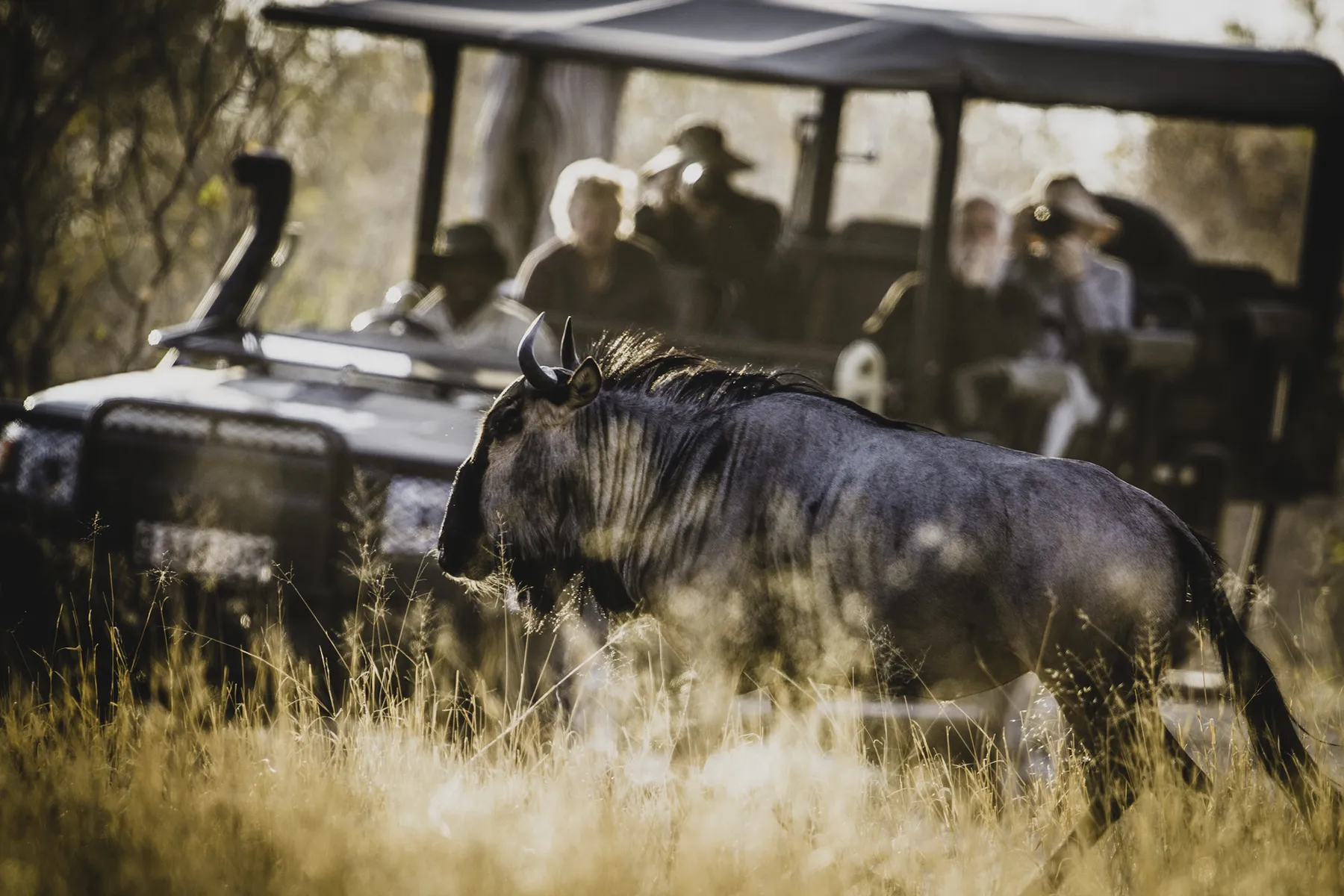
Tanzania is safari at maximum scale. Two million wildebeest and zebra circle the Serengeti all year, calving on the southern plains in January and February and crossing the Mara River between July and October; the Ngorongoro Crater holds the Big Five inside one caldera; Tarangire adds elephant herds and baobabs. Sightings come thick and fast, which is why East Africa is the classic first safari. The trade-off is company in peak season and the distances between areas, which light aircraft solve.
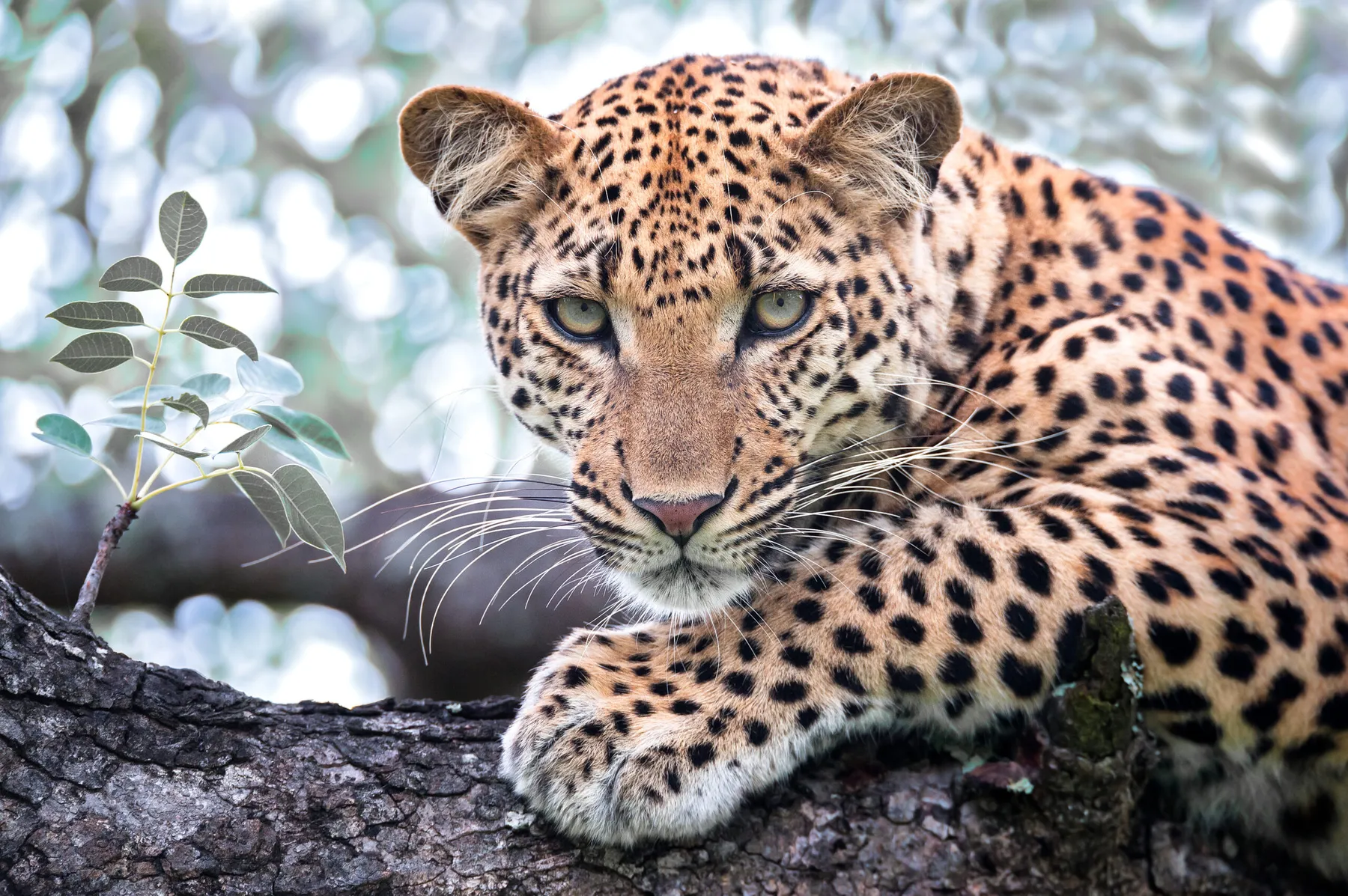
South Africa trades spectacle for certainty. The Sabi Sand shares an unfenced boundary with Kruger, so wildlife flows freely while vehicle numbers do not; generations of careful guiding have made its leopards utterly relaxed, and rangers may follow sightings off-road and after dark. Three or four nights there give most travelers all five of the Big Five. There is no migration, and the reserves are smaller, but the quality of each sighting is remarkable. Where to see the Big Five · The Great Migration
Getting there from the US, visas and health
South Africa is the easier journey: Delta and United fly nonstop from Atlanta and Newark to Johannesburg (about 15 hours), and Newark, Washington Dulles and Atlanta to Cape Town; US citizens need no visa for stays up to 90 days, only the free online SARS Traveler Declaration introduced in July 2026. Tanzania means one connection, typically through Amsterdam, Doha, Addis Ababa or Istanbul, into Kilimanjaro; a US$ 100 multiple-entry eVisa applied for online; malaria prophylaxis year-round; and, since 1 October 2026, one applicable mandatory inbound insurance policy (USD 44) determined by your first point of entry. Neither is difficult, and we handle all of it, but the South African route is a shorter day. Flights from the USA · Tanzania’s insurance rule
Cost
Per night the two are closer than most people expect. Our private, tailor-made journeys begin at approximately $12,000 per person in either country. Tanzania carries significant fixed government fees, about US$ 1,250 per adult on a peak-season northern circuit, and more light-aircraft legs; South Africa’s private reserves charge conservation levies instead of park fees, the exchange rate works in a US traveler’s favor, and internal flights are short. Where South Africa can cost more is the lodge tier: the Sabi Sand’s most famous properties are among the most expensive in Africa. What a Tanzania safari costs · How safari costs are built
Who should choose which
Choose Tanzania if
You have ten nights or more; you want the Migration, calving season or the crater; you picture canvas, campfires and endless plains; you want to finish on Zanzibar without a long flight; you are happy to take malaria tablets.
Choose South Africa if
You have a week; you want nonstop flights and no visa; you are traveling with children under eight or prefer a malaria-free option; leopards and reliable Big Five sightings matter more than herds; you want fine dining, wine and a great city as part of the trip.
Or do both
With two weeks, the Serengeti followed by the Sabi Sand and Cape Town is one of the finest itineraries in Africa; the connection runs through Nairobi or Johannesburg. Tanzania safaris · South Africa safaris · Kenya or Tanzania? · Botswana or East Africa?
Tanzania vs South Africa questions
Is Tanzania or South Africa better for a first safari?
Both work. South Africa is the easier first safari from the US: nonstop flights, no visa, reliable Big Five sightings in a few nights and malaria-free options. Tanzania is the bigger spectacle: the Great Migration, the Ngorongoro Crater and Zanzibar, best with ten nights or more.
Is Tanzania or South Africa safer for tourists?
Both are long-established safari destinations where the reserves are remote and professionally run. South Africa calls for ordinary big-city precautions in Johannesburg and Cape Town, which we minimize with private transfers; Tanzania’s northern circuit is far from the areas that generate advisories. Check the current US State Department advisory for each before booking; we do the same for every itinerary.
Which is cheaper, Tanzania or South Africa?
Per night they are broadly comparable. Tanzania adds about US$ 1,250 per adult in fixed park and crater fees on a ten-night circuit and more light-aircraft flights; South Africa benefits from a favorable exchange rate and short flights but its top Sabi Sand lodges are among the most expensive in Africa. Our private journeys begin at approximately $12,000 per person in either.
Tanzania or South Africa for a honeymoon?
Tanzania if you want the Serengeti and Zanzibar in one country with a ninety-minute flight between them. South Africa if you want malaria-free reserves, Cape Town and the Winelands, and the shortest jet lag from the US East Coast.
Written and reviewed by Evance & Jennifer · Published 5 October 2026