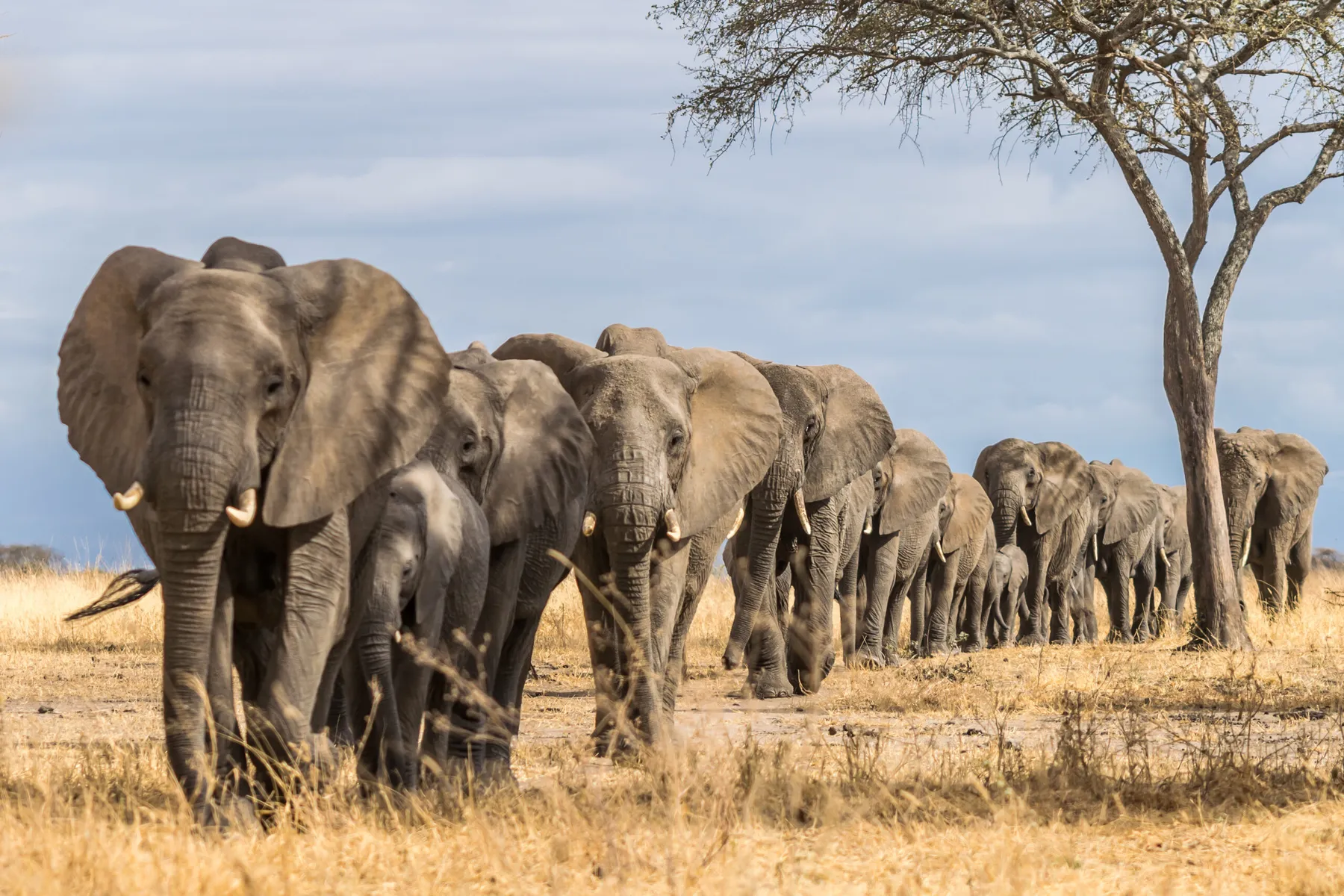
The finest luxury African safaris are not defined by marble bathrooms, thread counts or how many countries can be fitted into two weeks. They are defined by time, privacy, access and the people who bring the journey to life. A thoughtful safari places you in the right landscape for the season, with a guide who understands what matters to you, and a route that feels effortless rather than hurried.
For one traveler, that may mean following the Great Migration safari across the Serengeti with a private vehicle. For another, it may be drifting through the Okavango Delta by mokoro, meeting mountain gorillas in Rwanda, walking through South Luangwa, or taking an exclusive-use villa for three generations of a family. The right journey begins with the experience you want—not with a fashionable lodge name.
This luxury African safari guide explains the decisions that shape an exceptional trip: where to go, when to travel, how long to stay, what genuine privacy means, what a private safari costs and how to plan without turning the journey into a checklist. It sits alongside our complete African safari planning guide.
What Makes an African Safari Truly Luxurious?
Beautiful camps and attentive service matter, but genuine safari luxury is more practical and personal than decoration. It gives you freedom over your time, access to exceptional wilderness and confidence that every connection has been considered.
Privacy and an unhurried pace
A private vehicle allows a family to return to camp when a child is tired, a photographer to wait quietly for the right light, or a couple to spend an entire morning with one leopard instead of moving on with a group. Fewer lodge changes also create space to settle into the rhythm of the bush. Three or four nights in the right area will usually reveal more than a rushed sequence of one- and two-night stays.
Guiding and access
The guide is often the most important person in the journey. The best guides do more than identify wildlife: they read tracks, weather, animal behavior and the interests of their guests. Private conservancies and concessions may also allow activities that are restricted in national parks, including night drives, guided walks and carefully managed off-road viewing. The value lies in what the location and guide make possible.
Seamless routing
Luxury should remove friction. Well-timed light-aircraft flights can replace long road transfers; airport assistance can protect a tight connection; and a carefully designed sequence prevents the trip from feeling like a series of check-ins. The finest itinerary is not necessarily the most complicated—it is the one in which every movement makes sense.
A journey shaped around you
There is no universal “best” safari. A first-time visitor seeking the Big Five needs different advice from a return guest who wants walking, rare species or a remote mobile camp. Honeymooners, solo travelers and multigenerational families also require different pacing, accommodation and levels of privacy. Tailor-made planning begins with those differences.
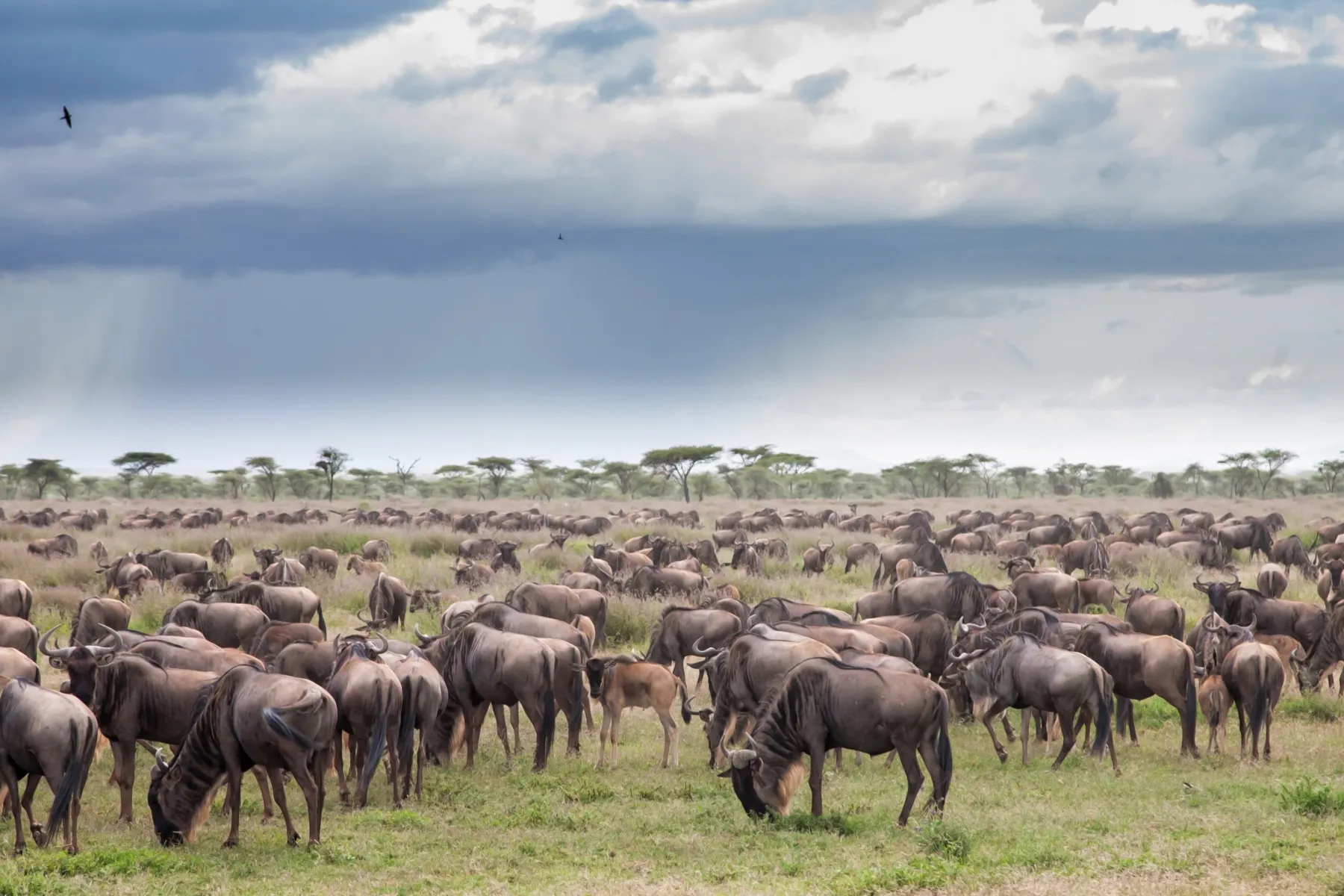
The Great Migration is a year-round movement; the strongest region changes with the herds.
The Best Luxury Safari Destinations in Africa
Africa’s safari regions are not interchangeable. Wildlife, landscape, seasonality, access and camp style vary enormously. Choose the destination that fits the experience you want and the month you can travel. Our African safari destinations hub covers each country in more depth.
| Region | Signature experiences | Particularly well suited to |
|---|---|---|
| Tanzania | Serengeti, Great Migration, Ngorongoro Crater, Tarangire and Zanzibar | First safaris, wildlife-focused trips, families and honeymoons |
| Kenya | Maasai Mara, private conservancies, Amboseli, Laikipia and Samburu | Classic safaris, varied landscapes, culture and family travel |
| Botswana | Okavango Delta, private concessions, Chobe and the Kalahari | Privacy, water-based activities, fly-in safaris and return guests |
| South Africa | Sabi Sand, Kruger, Cape Town and the Winelands | Big Five, easy logistics, families and multigenerational journeys |
| Rwanda & Uganda | Mountain gorillas, chimpanzees, rainforest and savannah combinations | Primates, active travelers and meaningful short extensions |
| Zambia & Zimbabwe | Walking safaris, major rivers, remote parks and Victoria Falls | Experienced safari-goers, adventure and low-density wilderness |
| Namibia | Sossusvlei, desert-adapted wildlife, Etosha and dramatic fly-in routes | Landscape, photography, design, solitude and road or air journeys |
| Indian Ocean | Zanzibar, Seychelles, Mauritius and Mozambique | Honeymoons, families and a restful finish after safari |
Tanzania and Kenya: classic East Africa
Tanzania and Kenya offer the broad savannahs and wildlife drama many travelers imagine when they think of safari. Tanzania combines the Serengeti, Ngorongoro Crater and Tarangire with easy access to Zanzibar. Kenya pairs the Maasai Mara with private conservancies, Mount Kilimanjaro views in Amboseli and distinctive northern landscapes in Laikipia and Samburu. Both can be exceptional; the better choice depends on the month, preferred pace and whether privacy or variety carries more weight. Our luxury Tanzania safaris set out the northern circuit in detail.
Botswana and Southern Africa: space, water and private reserves
Botswana is known for small camps, light-aircraft connections and low-density wilderness. In the Okavango Delta, game drives may be combined with mokoro excursions and boat activities, depending on water levels and camp location. South Africa offers outstanding private-reserve guiding alongside Cape Town and the Winelands, while Zambia and Zimbabwe reward travelers who want walking, rivers, remote parks and fewer vehicles. Namibia replaces green savannah with desert scale, sculptural landscapes and remarkable silence.
Rwanda and Uganda: primates and forest
A gorilla trek is physically different from a conventional safari and emotionally unlike almost any other wildlife experience. Rwanda offers polished logistics and relatively short road transfers from Kigali to Volcanoes National Park. Uganda can create a broader journey through forests and savannah parks. Both work beautifully as a focused trip or as an extension to Tanzania or Kenya when flight connections and pacing are handled carefully.
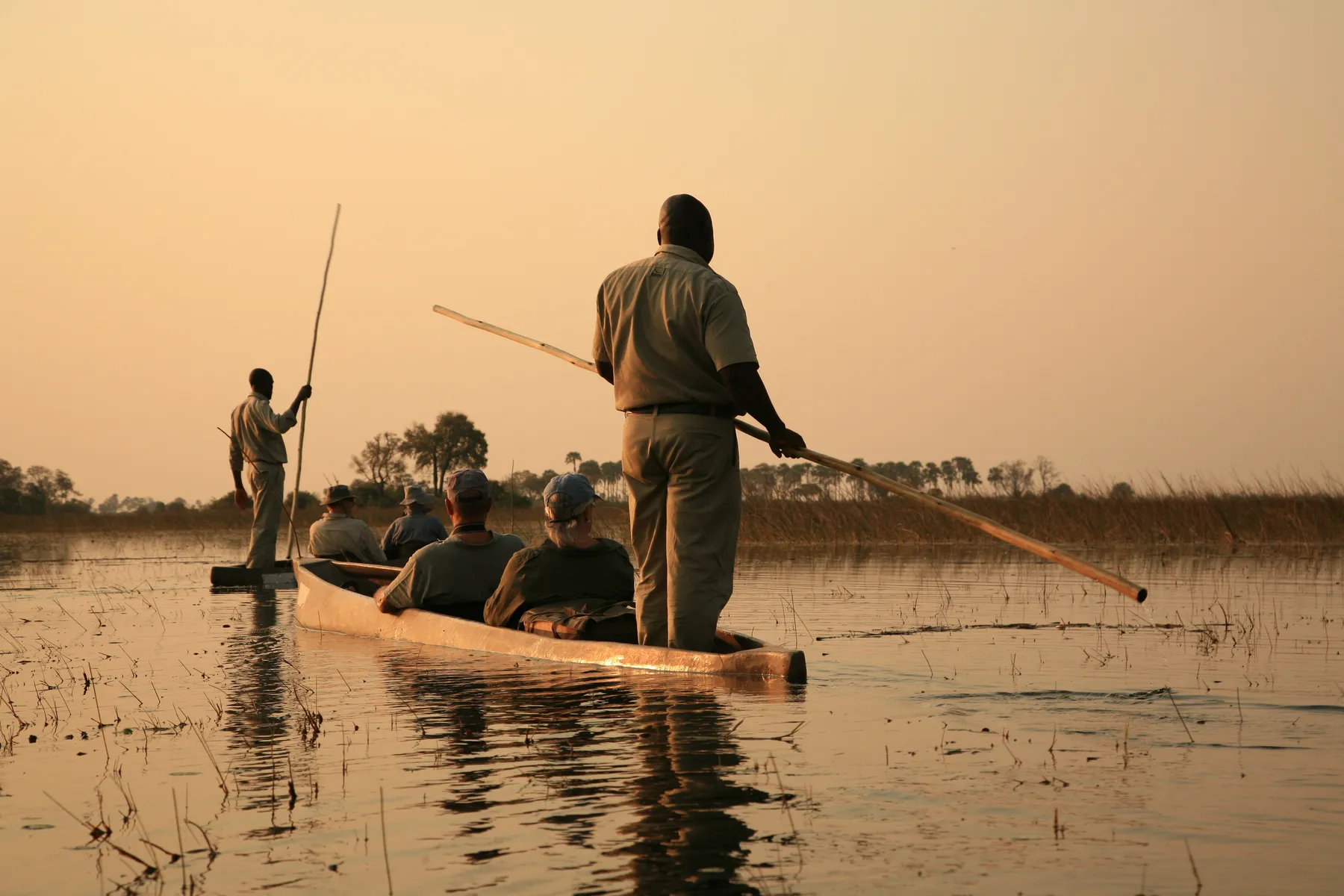
Okavango water levels shift through the year, which changes what a camp can offer.
When Is the Best Time for a Luxury African Safari?
There is no single best month for the whole continent. The right season depends on the destination, wildlife priority and kind of atmosphere you prefer. Peak dry season often brings concentrated game viewing and strong availability pressure; green season can offer dramatic skies, newborn animals, migratory birds and a quieter experience.
- East Africa: June to October is broadly dry and popular for wildlife viewing. The Great Migration is a year-round movement, and the best location changes with the herds. River crossings are never guaranteed.
- Southern Africa: May to October is broadly the dry season in many safari regions. Botswana’s flood cycle has its own timing, so camp selection should account for both wildlife and water-based activities.
- Gorilla trekking: Rwanda and Uganda operate throughout the year. Drier periods can make trails easier, while wetter months bring lush forest and fewer visitors.
- Indian Ocean: Beach conditions vary between Zanzibar, Seychelles, Mauritius and Mozambique. The safari month should be matched to the island rather than treating every coast as interchangeable.
Seasonal labels are useful starting points, not guarantees. Rain patterns shift, wildlife moves naturally and a destination can feel completely different from one region to another. A specialist should match your exact dates to the strongest areas—not simply recommend a country in general.
How Long Should a Luxury Safari Be?
For most first journeys, eight to twelve safari nights provide enough time to experience two or three contrasting regions without rushing. A multi-country journey, gorilla extension or beach finish often works better over ten to fourteen nights. The goal is not to collect destinations but to create a satisfying rhythm.
- Allow at least three nights in most major wildlife areas; four is better when a seasonal event is the main reason for traveling.
- Avoid changing camps every one or two nights unless the route genuinely requires it.
- Use light-aircraft transfers when they save meaningful time, but do not schedule so many flights that every day becomes a travel day.
- Add three to five beach nights if you want to decompress after safari; honeymooners often prefer longer.
The finest itinerary is not necessarily the most complicated — it is the one in which every movement makes sense.
NndeeAfrika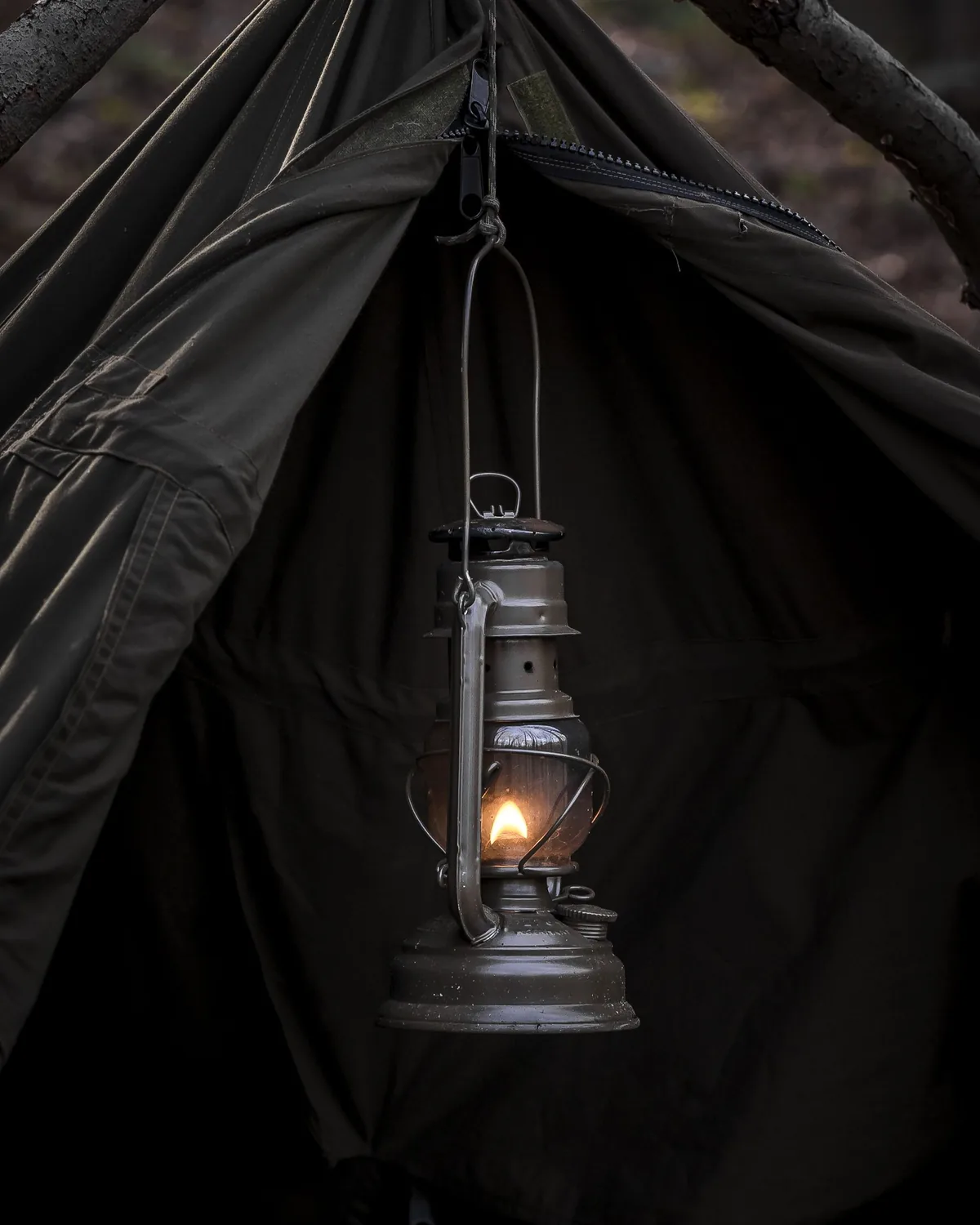
Canvas keeps you close to the sounds of the bush without giving up comfort.
Choosing the Right Safari Accommodation
Luxury safari accommodation ranges from intimate canvas camps to architectural lodges and fully staffed private homes. The best choice depends on location and experience, not on which property has the longest amenity list.
Tented camps
Canvas keeps you close to the sounds and movement of the wilderness while still offering proper beds, private bathrooms, fine dining and thoughtful service. Seasonal mobile camps can move into the strongest wildlife areas at the right time of year.
Permanent lodges
Lodges often provide larger shared spaces, pools, spas and more substantial architecture. They may suit longer stays, families or travelers who want a broader range of facilities.
Private villas and exclusive-use camps
A private home can include a dedicated guide, vehicle, chef and host. It is often the simplest and most comfortable arrangement for multigenerational families, celebrations and guests who value complete privacy.
City and beach hotels
Cape Town, Kigali, Nairobi and the Indian Ocean should be treated as part of the journey, not as an afterthought. The right hotel, room category and transfer plan can change how smoothly the safari begins or ends.
Private Safari or Shared Game Drives?
“Private safari” can describe a privately designed itinerary without guaranteeing a private vehicle at every lodge. In East Africa, a dedicated guide and vehicle are commonly arranged for the road-safari portion. In Southern African camps, scheduled game drives are often shared with other guests unless a private vehicle is booked separately.
Ask for the arrangement to be written clearly into the proposal. A private vehicle is especially valuable for photographers, families with young children, guests with limited mobility and anyone who wants complete control over departure times and the length of a sighting.
Experiences Beyond the Game Drive
Game drives remain central to many safaris, but a well-designed journey can reveal the landscape in several different ways. The activities available depend on the reserve, season, safety conditions and age restrictions.
- Guided walking safaris with trained guides and trackers
- Mokoro excursions, boat safaris and canoeing in suitable waterways
- Hot-air balloon flights over selected regions of the Serengeti or Maasai Mara
- Scenic helicopter flights over the Okavango Delta, deserts or major waterfalls
- Photographic hides and privately guided photography
- Conservation experiences and respectful community visits
- Bush breakfasts, private dinners, sundowners and sleep-outs beneath the stars
- Wellness, spa treatments and unstructured time at camp
The strongest itinerary mixes activity with stillness. A dawn drive can be remarkable, but so can an unplanned afternoon watching elephants from your deck. Luxury includes the freedom not to fill every hour.
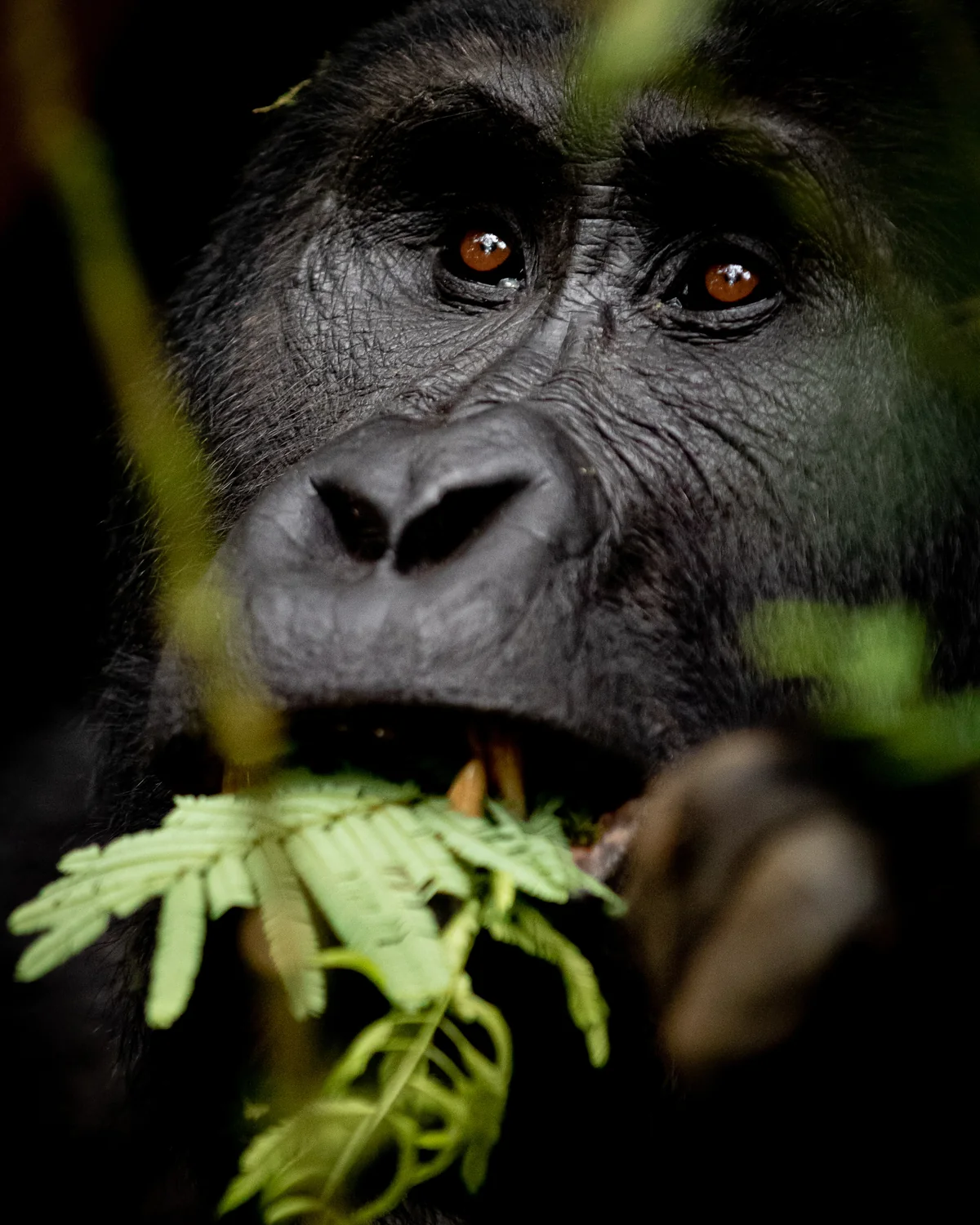
Gorilla permits are limited and dated, so they are usually the first fixed point in a route.
Luxury Safaris for Families, Couples and Private Groups
Families and multigenerational travel
A family safari should be paced around the youngest and oldest travelers. Short flights, family suites, fenced pools where appropriate, flexible meals and guides who genuinely enjoy teaching children make a significant difference. Private villas are particularly effective when different generations need different daily rhythms. We cover this in more depth under luxury family safaris in Africa.
Honeymoons and anniversaries
Small camps, private decks, candlelit dinners and a beach finish make safari naturally romantic. The journey should still be designed around wildlife and seasonality; romantic extras are most meaningful when the underlying route is strong. If this is your reason for traveling, start with our guide to planning a safari honeymoon.
Solo travelers and private groups
Solo travel can be warm and social at intimate camps, while private guiding adds continuity and confidence. Groups celebrating a milestone may prefer exclusive-use accommodation so meals, activities and special moments unfold privately. Our page on ultra-luxury and exclusive-use safaris explains how taking a camp or villa for your party works.
How Much Does a Luxury African Safari Cost?
Most private NndeeAfrika journeys begin at approximately $12,000 per person, based on two guests sharing. A peak-season migration safari, private villa, helicopter component or multi-country itinerary can cost considerably more. Every journey is priced to the dates, camps, routing, party size and level of privacy requested.
The largest cost drivers are usually:
- Season and availability, particularly during migration crossings, festive dates and school breaks
- The location and exclusivity of the camp or concession
- Private vehicles, guides, villas, charters and specialist access
- Internal flights and the number of regions included
- Length of stay and room configuration, especially for families
- Gorilla permits, balloon flights, helicopters and other premium experiences
A transparent proposal should state what is included and excluded. Typical inclusions may cover accommodation, most meals, house drinks at many camps, scheduled activities, park and conservation fees, internal flights, road transfers and airport assistance. International flights, visas, insurance, premium beverages, gratuities and personal expenses are commonly separate unless listed otherwise.
How to Plan a Luxury African Safari
The most reliable planning process begins with your month and priorities, not with a preselected package.
- Choose the month or date window you can genuinely travel.
- Name the experiences that matter most: migration, big cats, gorillas, elephants, walking, privacy, culture, photography or beach.
- Define who is traveling, ages, room requirements, mobility needs and preferred pace.
- Select the destination and regions that are strongest for those dates.
- Decide where private guiding, private vehicles or exclusive-use accommodation are worth the investment.
- Build the route with realistic flight and transfer times and enough nights in each place.
- Confirm exact room categories, inclusions, luggage limits, cancellation terms and insurance requirements before paying a deposit.
- Book early enough to choose the right camps rather than building the route around what remains.
For peak-season travel, gorilla permits, migration camps and exclusive-use villas, planning twelve months or more ahead gives the best choice. Shoulder and green seasons may allow shorter lead times, but early planning still improves routing and room selection. When you reach the packing stage, our guide to what to pack for an African safari covers the essentials.
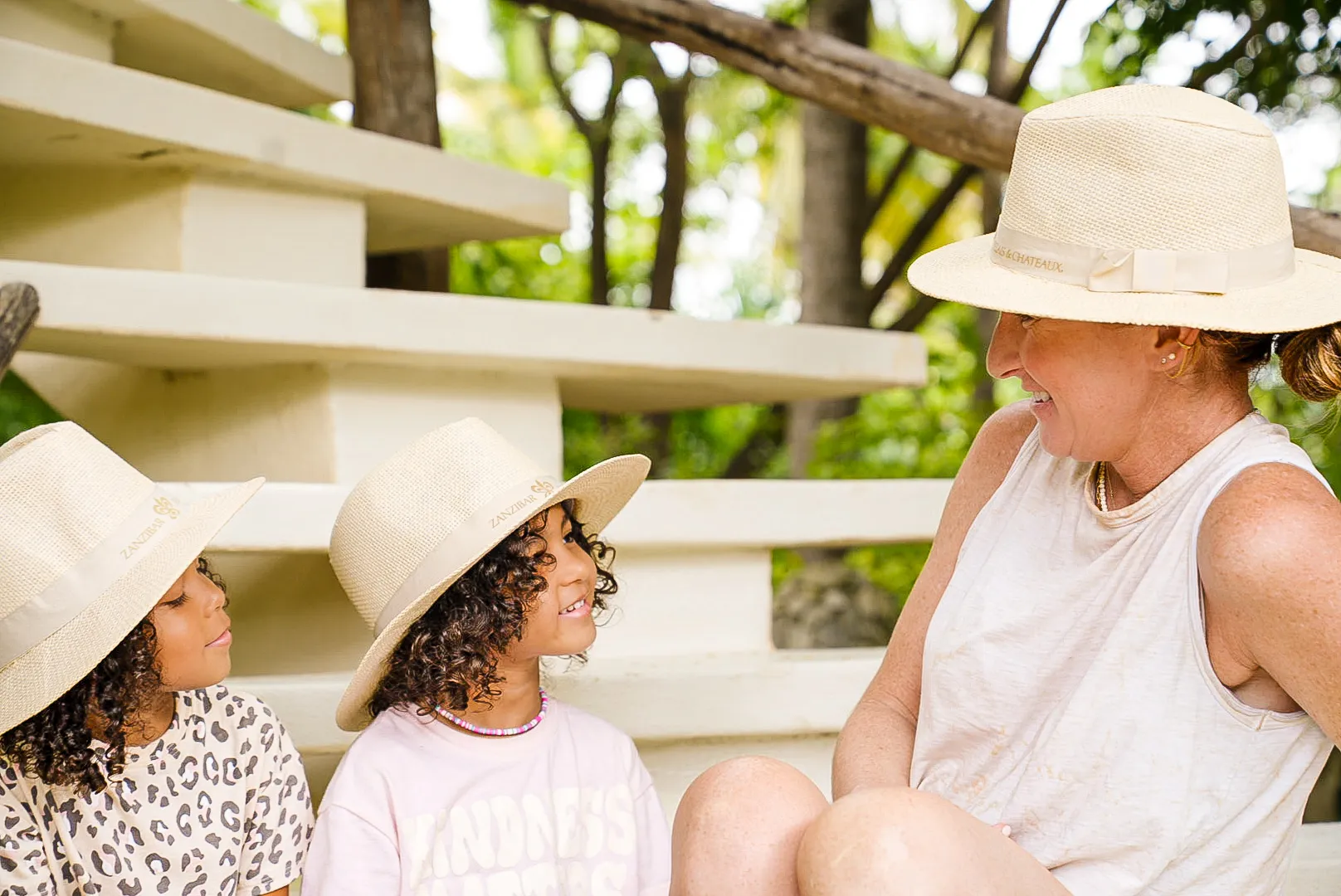
Ages, pace and room configuration shape a family route more than budget does.
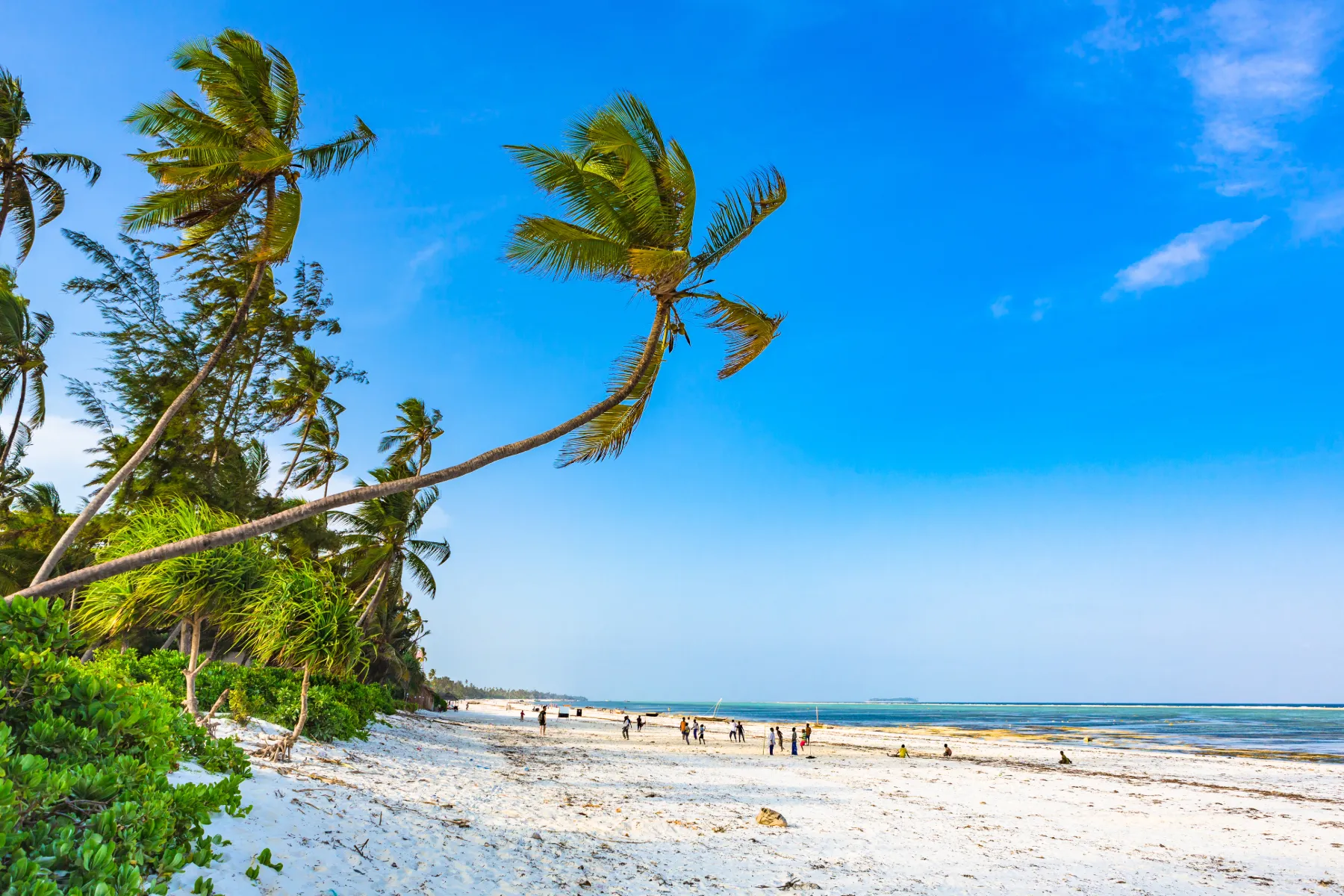
A beach finish is priced separately and is usually worth three to five nights.
Responsible Luxury and Meaningful Travel
A luxury safari depends on healthy landscapes, thriving wildlife and communities that benefit from tourism. Ask how camps manage water and energy, employ and train locally, support conservation, and handle cultural visits. Avoid experiences that stage or exploit wildlife. Responsible travel should be visible in how a journey operates, not added as a marketing paragraph at the end.
Through NndeeAfrika’s work with Two Hands One Heart TZ, part of every journey contributes to community projects in education and clean water in Tanzania. The purpose is simple: the places travelers come to see should remain healthy for the people who live there.
Why Plan with NndeeAfrika?
NndeeAfrika is African-rooted and California-based. Every itinerary is handled by its founders: Evance, a Tanzanian-born safari expert with 15+ years of guiding and planning experience on the ground, and Jenny, a California-based travel planner who brings US-based planning and support to the journey.
The company designs private, tailor-made safaris across East and Southern Africa and the Indian Ocean, supported by trusted local teams and a direct line while guests travel. The result is personal planning before departure and practical knowledge on the ground—without being handed from one call center to another.
Luxury African Safari Questions
A few more answers sit on our luxury African safari questions page.
What is the best country for a first luxury African safari?
Tanzania, Kenya and South Africa are all strong first-safari choices. Tanzania offers the Serengeti, Ngorongoro and easy Zanzibar extensions; Kenya combines classic wildlife with private conservancies; South Africa offers excellent Big Five viewing with Cape Town and straightforward logistics. The best choice depends on your month, travel party and preferred pace.
When is the best time to go?
There is no single best month across Africa. June to October is broadly popular for dry-season wildlife viewing in East and Southern Africa, but green seasons can offer fewer visitors, dramatic landscapes and excellent wildlife. Your exact destination should be selected around your dates.
How much does a private luxury safari cost?
Most private NndeeAfrika journeys begin at approximately $12,000 per person, based on two guests sharing. Final pricing depends on season, camps, internal flights, duration, room configuration and the level of private access requested.
Are luxury African safaris completely private?
The itinerary can be privately designed while some lodge activities remain shared. Private vehicles and guides should be confirmed explicitly, especially at Southern African camps where scheduled drives are commonly shared unless a private vehicle is reserved.
Can children go on a luxury safari?
Yes. The destination, lodge and pace must suit the children's ages. Family suites, private vehicles, flexible meals, shorter transfers and guides who engage young travelers are more important than simply choosing the most expensive camp.
How far ahead should I book?
Plan twelve months or more ahead for peak migration season, festive dates, gorilla permits, private villas and the most sought-after camps. Green-season journeys may be possible with less notice.
Can I combine safari with a beach vacation?
Yes. Tanzania and Kenya pair naturally with Zanzibar, while Southern Africa can combine well with Mozambique, Mauritius or the Seychelles depending on flight schedules and season.
What should I pack?
Pack light, neutral-colored layers in a soft-sided bag suitable for bush aircraft. Include a warm layer for early drives, sun protection, comfortable closed shoes and binoculars. Exact luggage limits vary by airline and route and should be confirmed before departure.
Begin Planning Your Luxury African Safari
As this luxury African safari guide shows, the best journeys feel effortless because the difficult decisions were made carefully before departure. Start with when you can travel, who is coming and what you most want to experience. From there, the right country, camps, routing and level of privacy become much clearer.
NndeeAfrika creates private, tailor-made journeys across Africa and the Indian Ocean, personally designed by its founders and supported from the first conversation to the flight home. Share your dates and ideas, and we will begin shaping a journey around you.
Plan your private safari