Most of Africa’s wild places survive because travel pays for them. A safari can be one of the most effective conservation choices you make, or a trip that quietly does harm. The difference lies in where you stay, how wildlife and people are treated, and what you choose to do.
In short
Yes, a well-chosen African safari is ethical, and often actively good. Park fees, conservancy fees and camp nights pay rangers, fund anti-poaching patrols, lease land from communities that would otherwise farm or fence it, and give wildlife an economic reason to exist. By contrast, what makes a safari unethical is usually a specific choice: a captive-animal encounter, a crowded or harassed sighting, or a staged cultural stop where little money reaches the hosts.
Where the money from a safari goes
- Park and conservancy fees. First, daily fees of about $70 to $100 or more per person fund national parks directly, through ranger salaries, anti-poaching units and habitat management. In private conservancies, the fees also lease the land from its community owners.
- Local jobs. In addition, a single safari camp typically employs 40 to 100 people, from guides and trackers to chefs and housekeepers, most from surrounding villages.
- Conservation levies. Many camps add a per-night levy for named projects such as rhino protection, predator research or reforestation, and publish where it goes.
- Community projects. Schools, clinics, clean water and scholarships funded by lodges and their foundations.
Our conservation and impact page sets out each channel in more detail.
How to choose responsible camps
Luxury and responsibility are not in tension; the best camps in Africa lead on both. Before a camp earns a place on our list, we ask four questions:
- Who owns the land? For this reason, we favor camps in community-owned conservancies and private reserves where lease payments reach the people who live alongside the wildlife. Our guide to private conservancies explains how they work.
- Who works there? Also, we look for camps that hire and train locally, from trainee guides to camp managers.
- How is wildlife treated? Strict sighting etiquette, no baiting or touching, and respectful vehicle limits.
- What is the footprint? Meanwhile, solar power, borehole water, plastic-free operations and light-touch builds are increasingly the norm at the camps we love.
What to avoid
- Captive-wildlife encounters. Lion cub petting, walking with captive lions and elephant rides. We never book them.
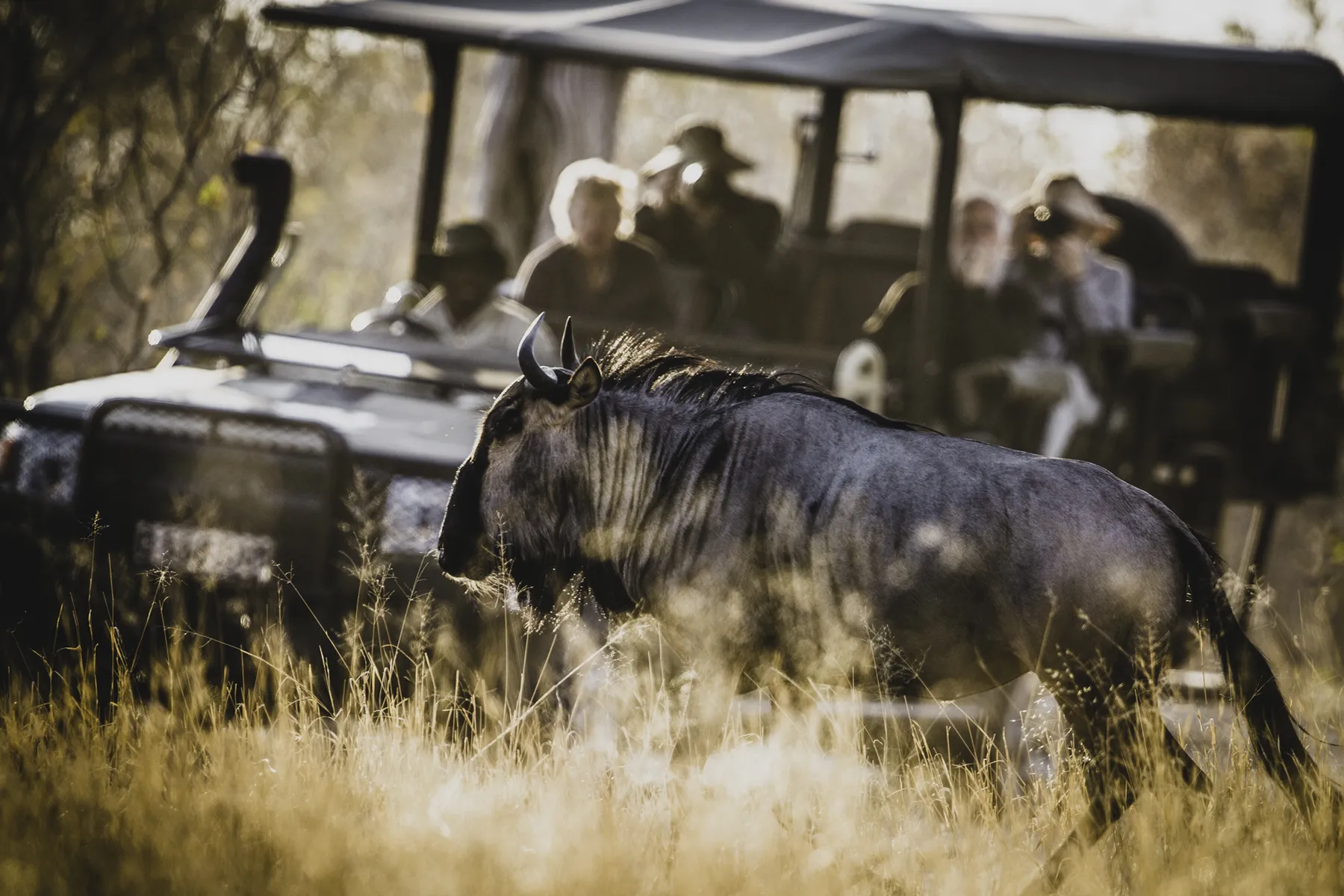
- Crowding or pressuring animals. In particular, a good guide never crowds or chases wildlife for a photograph, and the best sightings come to the patient.
- Sharing rhino locations. Turn off location tagging before you post rhino photographs, and never share where a rhino was seen.
- Staged cultural stops. Big buses, performances on demand and photographs taken without asking, where little of the money reaches the family hosting you.
Visiting communities the right way
Similarly, a cultural visit can be one of the most memorable parts of a safari, or it can feel like a ticket to a show. We visit only communities that genuinely want to host, on days that suit them; keep groups small; agree the fee in advance and pay it to the community directly; and ask before every photograph. Our people and culture page introduces the Maasai, Hadzabe and Datoga of northern Tanzania.
Close to home, our founder Jennifer runs Two Hands One Heart TZ, a non-profit working with the Meserani Chini community near Arusha on education and clean water. Guests starting their safari from Arusha are welcome to visit; it is a genuine connection, never a show.
Your own footprint
Long-haul flights are the largest part of any safari’s footprint, so the most useful thing you can do is make the trip count: stay longer in fewer camps, which also means fewer light-aircraft flights and transfers and more of your spending staying in one ecosystem. Buy crafts at community workshops, tip guides and camp staff fairly, and tell us if you want your itinerary weighted toward community-owned conservancies or specific conservation projects.
Ethical safari questions
Is an African safari ethical?
A well-chosen safari is. Tourism pays for most of Africa’s parks and conservancies: park and conservancy fees fund rangers, anti-poaching work and habitat, camps employ local people, and in community conservancies the fees lease land from the families who own it. However, the ethics depend on where you stay and how wildlife and people are treated.
Are lion cub petting and walking with lions ethical?
We do not consider them ethical, and we never book captive-wildlife encounters such as lion petting or elephant rides. Instead, seeing animals living wild, from a respectful distance, is the safari.
Is it ethical to visit a Maasai village?
It can be, when the visit is arranged the right way. We visit only communities that genuinely want to host, keep groups small, agree the fee in advance and pay it to the community directly, and always ask before taking a photograph.
Do safaris actually help conservation?
Yes, when the money reaches the right places. For example, park and conservancy fees pay for rangers and habitat, many camps add a per-night conservation levy for named projects, and a single camp typically employs 40 to 100 people, most from nearby villages.
How can I make my safari more sustainable?
Stay longer in fewer camps, so there are fewer flights and transfers; choose camps in community-owned conservancies; buy crafts from community workshops; tip guides and camp staff fairly; and never ask a guide to crowd an animal for a photograph.
Written and reviewed by NndeeAfrika · Published 22 October 2026