Kenya is where safari began and still the most compact way to see Africa’s big cats; South Africa is the most polished and the easiest to reach from the United States. They suit different travelers more than different budgets. Here is the comparison we give on a first call, with the facts that actually decide it.
The short answer
Choose Kenya for the densest big-cat viewing, the July–October river crossings in the Maasai Mara, and the freedoms of private conservancies (off-road and night drives, walking), all within an hour’s flight of Nairobi and a short hop from the Indian Ocean. Choose South Africa for nonstop flights and no visa, the most reliable leopard and Big Five sightings in the Sabi Sand, malaria-free options for young children, and Cape Town and the Winelands as the second half of the trip. Kenya is the wilder week; South Africa is the smoother one.
Kenya vs South Africa, side by side
| Kenya | South Africa | |
|---|---|---|
| Signature wildlife | Big cats year-round in the Maasai Mara and its conservancies; the Migration’s river crossings July–October; elephants beneath Kilimanjaro at Amboseli; rhino in Laikipia and Lake Nakuru | The Big Five reliably in the Sabi Sand and Kruger private reserves; the most dependable leopard viewing in Africa |
| Travel pace | Compact: Nairobi to the Mara in under an hour by light aircraft; camps close together | Johannesburg to the Sabi Sand in about an hour; Cape Town two hours further |
| Flights from the US | Nonstop New York JFK to Nairobi (about 14 hours) or one stop via Europe or the Gulf | Nonstop Atlanta and Newark to Johannesburg; Newark, Washington and Atlanta to Cape Town; 15–16 hours |
| Entry for US citizens | Electronic travel authorisation (eTA) applied for online | Visa-free up to 90 days; free online SARS Traveler Declaration before flying |
| Malaria | Prophylaxis advised across the safari regions | Kruger and Sabi Sand are malaria areas with low winter risk; parts of South Africa are malaria-free |
| Best months | July–October for the crossings; January–February warm, dry and green; November and April–May for value | May–September for the bush; November–March for Cape Town |
| The finish | Diani or Lamu on the Kenyan coast, or the Seychelles via Nairobi | Cape Town, the Winelands and the Garden Route |
| Cost | Broadly comparable per night; conservancy fees replace park fees on private land | Comparable, helped by the exchange rate and short internal flights; top Sabi Sand lodges sit at the expensive end |
| Families | Excellent from about age six; conservancies allow flexible private activities | The easiest first safari for young children: malaria-free reserves and short flights |
| Honeymoons | Mara conservancies then the Seychelles or the coast | Bush, wine country and a great city, with the shortest jet lag from the East Coast |
Wildlife: density versus reliability
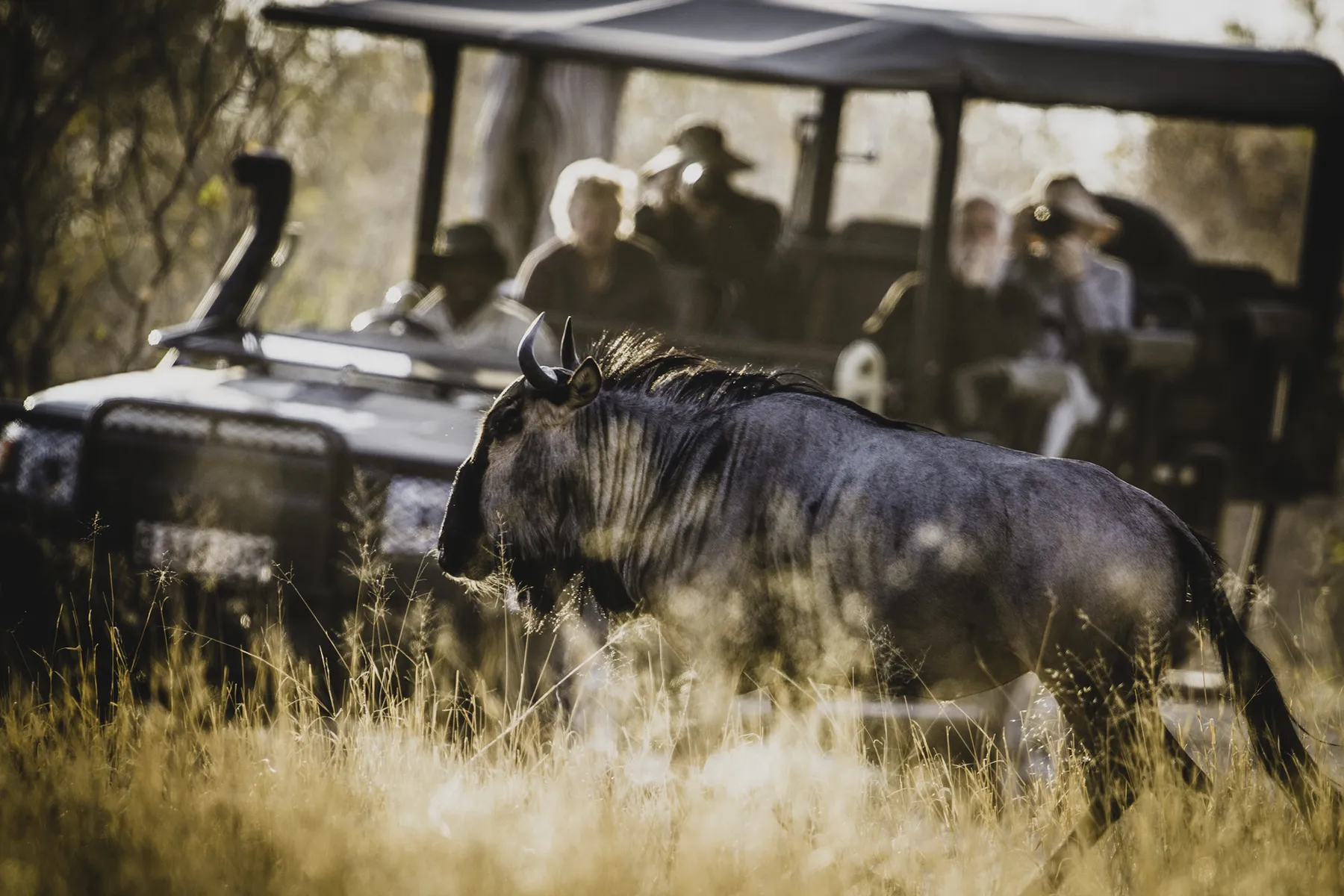
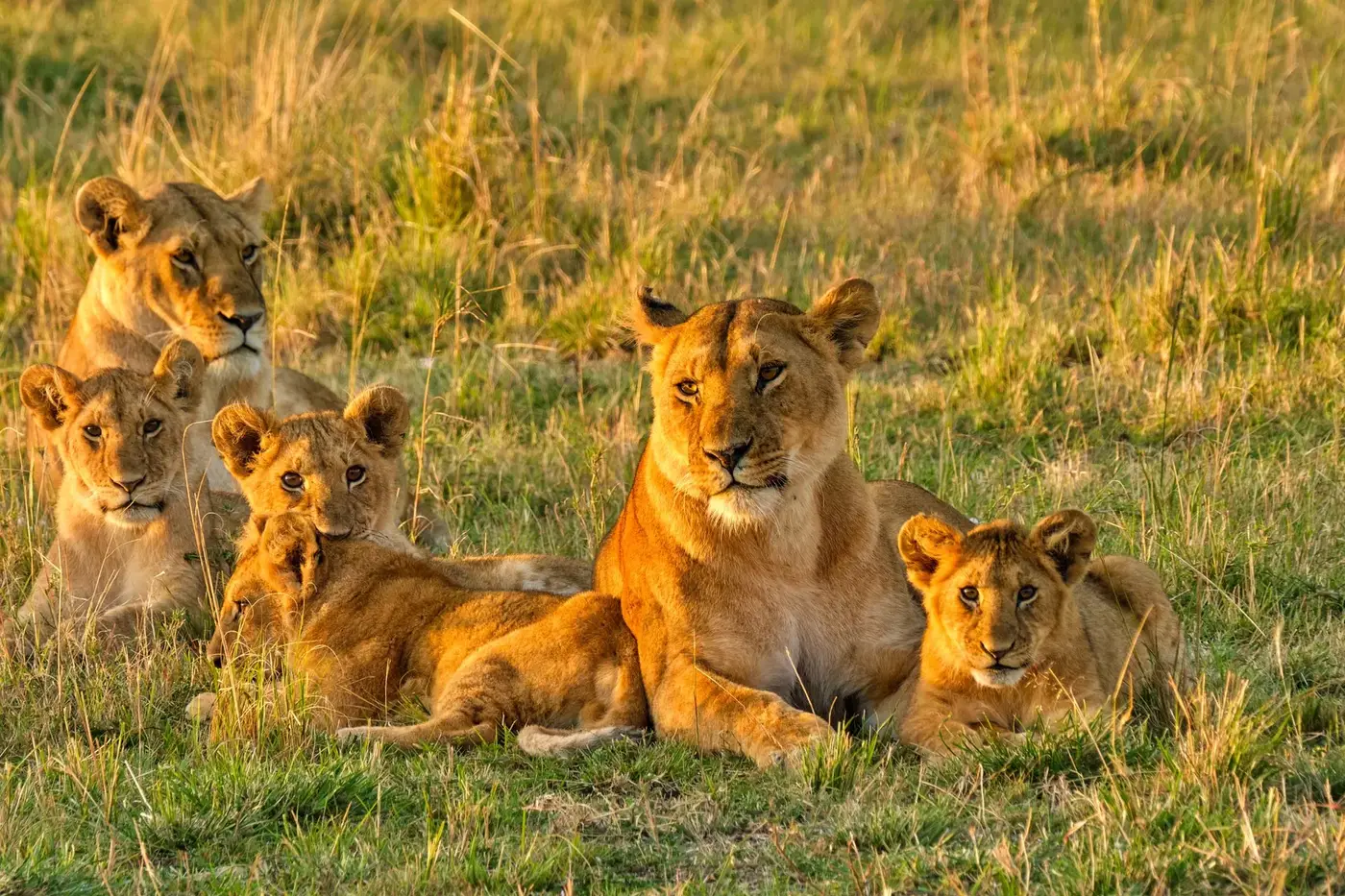
The Maasai Mara and the private conservancies around it hold Africa’s densest big-cat populations, and from July to October the Migration arrives and the wildebeest brave the crocodile-filled Mara River. The conservancies are the quiet advantage: the same wildlife with a fraction of the vehicles, plus off-road driving, night drives and walking that the national reserve does not allow. Amboseli adds elephants under Kilimanjaro; Laikipia and Lake Nakuru add rhino, which completes the Big Five on a Kenyan route.
South Africa’s Sabi Sand shares an unfenced boundary with Kruger, so animals move freely while vehicle numbers stay low, and its leopards are the most relaxed and best-watched anywhere. Three or four nights there give most travelers the full Big Five. The reserves are smaller and there is no migration, but each sighting is close, unhurried and expertly guided. The Maasai Mara · Kruger and the Sabi Sand
Getting there from the US, visas and health
Kenya has the only nonstop between the US and East Africa, Kenya Airways from New York JFK to Nairobi in about 14 hours; from elsewhere it is one connection via Amsterdam, Paris, Doha or Addis Ababa. US citizens apply online for Kenya’s electronic travel authorisation. South Africa has nonstops from Atlanta, Newark and Washington and no visa requirement for US passport holders; the only paperwork is the free SARS Traveler Declaration. Both countries’ safari regions are malaria areas; South Africa alone offers malaria-free Big Five reserves for travelers who prefer to avoid prophylaxis. Flights from the USA · Safari vaccinations and health
Cost
Per night the two are broadly comparable, and our private, tailor-made journeys begin at approximately $12,000 per person in either. Kenya’s private conservancies charge conservancy fees in place of park fees; South Africa benefits from a favorable exchange rate and short flights, while its most famous Sabi Sand lodges are among the most expensive in Africa. Season moves both by around 40% between peak and green months. How safari costs are built
Who should choose which
Choose Kenya if
Big cats and the Migration are the point; you want night drives and walking; you are a photographer; you have a week and want the most wildlife per day; you are happy to take malaria tablets.
Choose South Africa if
You want nonstop flights and no visa; you are traveling with children under eight or prefer a malaria-free option; leopards and polished lodges appeal more than herds; you want wine, food and Cape Town in the same trip.
Related comparisons
Kenya or Tanzania? · Tanzania or South Africa? · Botswana or East Africa? · Kenya safaris · South Africa safaris
Kenya vs South Africa questions
Is Kenya or South Africa better for a first safari?
South Africa is the easier first safari from the US: nonstop flights, no visa, reliable Big Five sightings in three or four nights and malaria-free options. Kenya gives more wildlife per day, the Migration from July to October and the freedoms of private conservancies, and suits travelers who want the wilder week.
Is a safari cheaper in Kenya or South Africa?
Per night they are broadly comparable. Kenya’s conservancies charge conservancy fees instead of park fees; South Africa benefits from a favorable exchange rate and short internal flights, though its top Sabi Sand lodges are among the most expensive in Africa. Our private journeys begin at approximately $12,000 per person in either.
Is Kenya or South Africa safer for tourists?
Both are long-established destinations whose safari areas are remote and professionally run. Advisories for Kenya concern specific border and coastal counties, not the Mara, Laikipia or Amboseli; South Africa calls for ordinary big-city precautions in Johannesburg and Cape Town. Read the current US State Department advisory for each before booking; we do the same for every itinerary.
Can you see the Big Five in Kenya?
Yes. Lion, leopard, elephant and buffalo are reliable in the Maasai Mara and its conservancies; rhino is the one that decides the route, and pairing the Mara with Laikipia or Lake Nakuru completes all five.
Written and reviewed by Evance & Jennifer · Published 5 October 2026