
Amboseli delivers the most iconic photograph in Africa: elephant crossing a dusty lakebed with Kilimanjaro’s snow behind them. The park’s springs, fed by the mountain’s meltwater, keep its swamps green year-round — which is why its elephants include some of the last great tuskers on earth.
It is compact, close to Nairobi, and pairs beautifully with the Mara. Early mornings and evenings bring the clearest views of the mountain; the middle of the day belongs to the swamps and a long lunch.
Amboseli’s magic is a combination few parks can match: big-tusked elephants crossing dusty plains beneath the snows of Kilimanjaro, at their clearest at dawn and dusk. The park’s swamps keep wildlife close year-round, and its Maasai community conservancies add culture and quiet to any Kenya safari.
Highlights of Amboseli National Park
Big tuskers
Amboseli’s elephants are the most studied in the world and include rare 100-pounder bulls.
Kilimanjaro views
Africa’s highest mountain fills the southern horizon at dawn and dusk.
Observation Hill
A short climb for a panorama of the swamps, the lakebed and the mountain.
Maasai country
Community visits with the people who have shared this land with wildlife for centuries.
Where you’ll stay in Amboseli National Park
Where you stay is selected privately around your journey. We recommend each camp, lodge or villa according to its location, season, guiding, privacy and suitability for the people traveling. Your carefully curated selection will be presented within your tailor-made itinerary.
Plan your private safari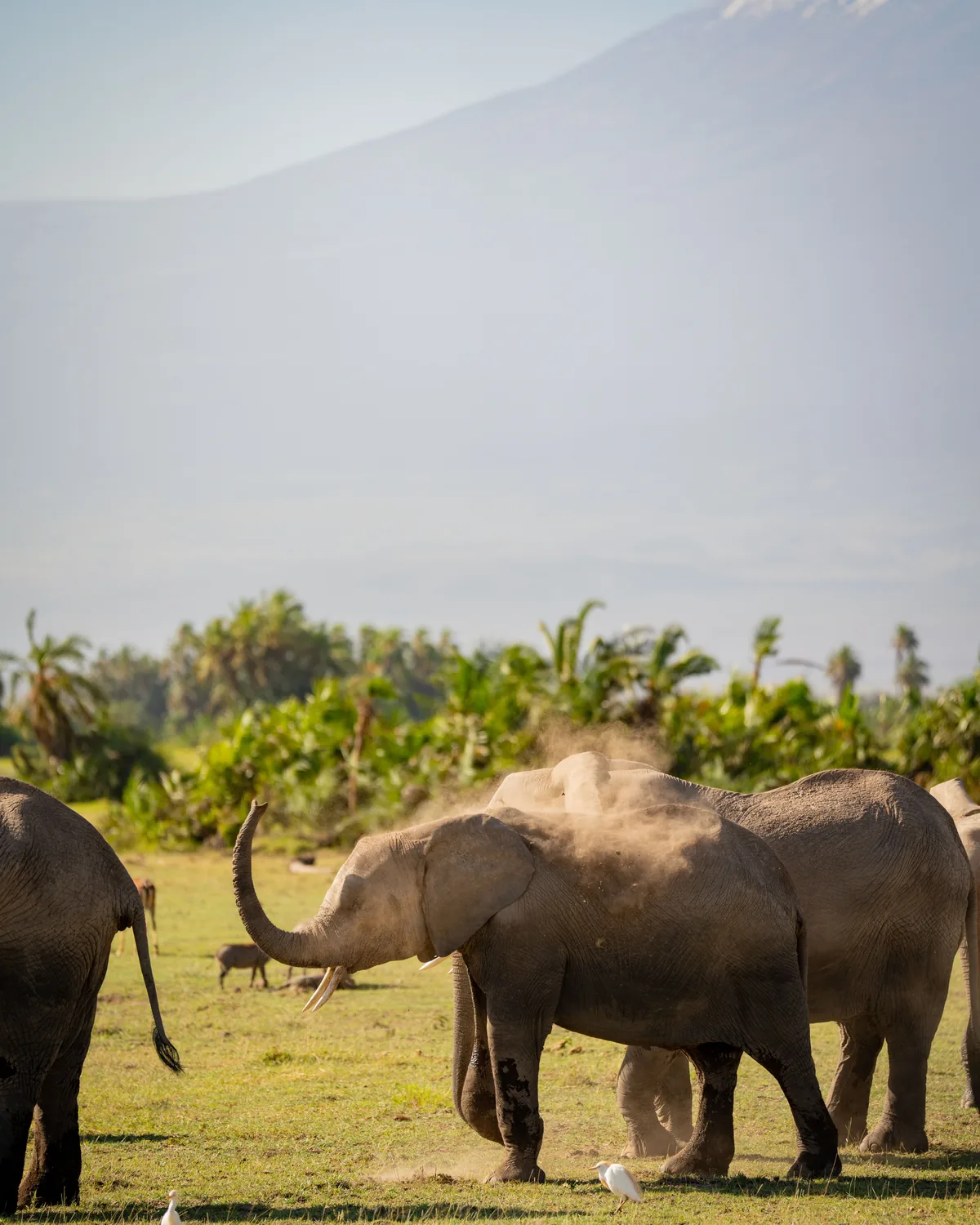
Best time to visit Amboseli
Dry season — wildlife packs the swamps and dust makes for dramatic light.
A second dry window with clear mountain mornings.
In the green months rates ease at many of these camps, the plains empty of vehicles and the light turns dramatic. What each season gives, and what it trades, is set out in our Safari Planning Guide.
Planning & cost
Fully tailor-made — priced privately to your camps, season and travel style. No fixed packages.
Every journey is privately designed, with private guides and vehicles arranged where specified, the finest lodges, and a specialist on call throughout. At fly-in camps, game drives may be shared unless a private vehicle is reserved.
Practical details,
in one place
Money, health, connectivity and packing work the same way on every safari we plan, so they live in one place rather than on every page.
Continue exploring
Kenya
The Maasai Mara, Amboseli, Samburu and the Great Migration.
Explore → KenyaMaasai Mara
The Maasai Mara — big cats, river crossings and some of the finest year-round game viewing in Africa.
Explore → ExperienceBig Five Safari
A Big Five safari — lion, leopard, elephant, buffalo and rhino, Africa’s most sought-after sightings.
Explore → RegionEastern Africa
The Great Migration, the Rift Valley and the gorillas — Tanzania, Kenya, Rwanda and Uganda.
Explore →Amboseli National Park FAQs
Getting to Kenya — flights, visas and health
Current at the time of writing. We re-confirm every requirement for your exact routing before you travel — and we will tell you what to apply for, and when.
Let's design your Amboseli National Park journey.
An Amboseli safari works best when the timing, the camp and the pace are chosen together.
Tell us how you like to travel and start with a complimentary consultation. When you are ready, a $500 USD planning fee covers your personalized itinerary and revisions, and is deducted from your booking deposit when you book.
Inquire now