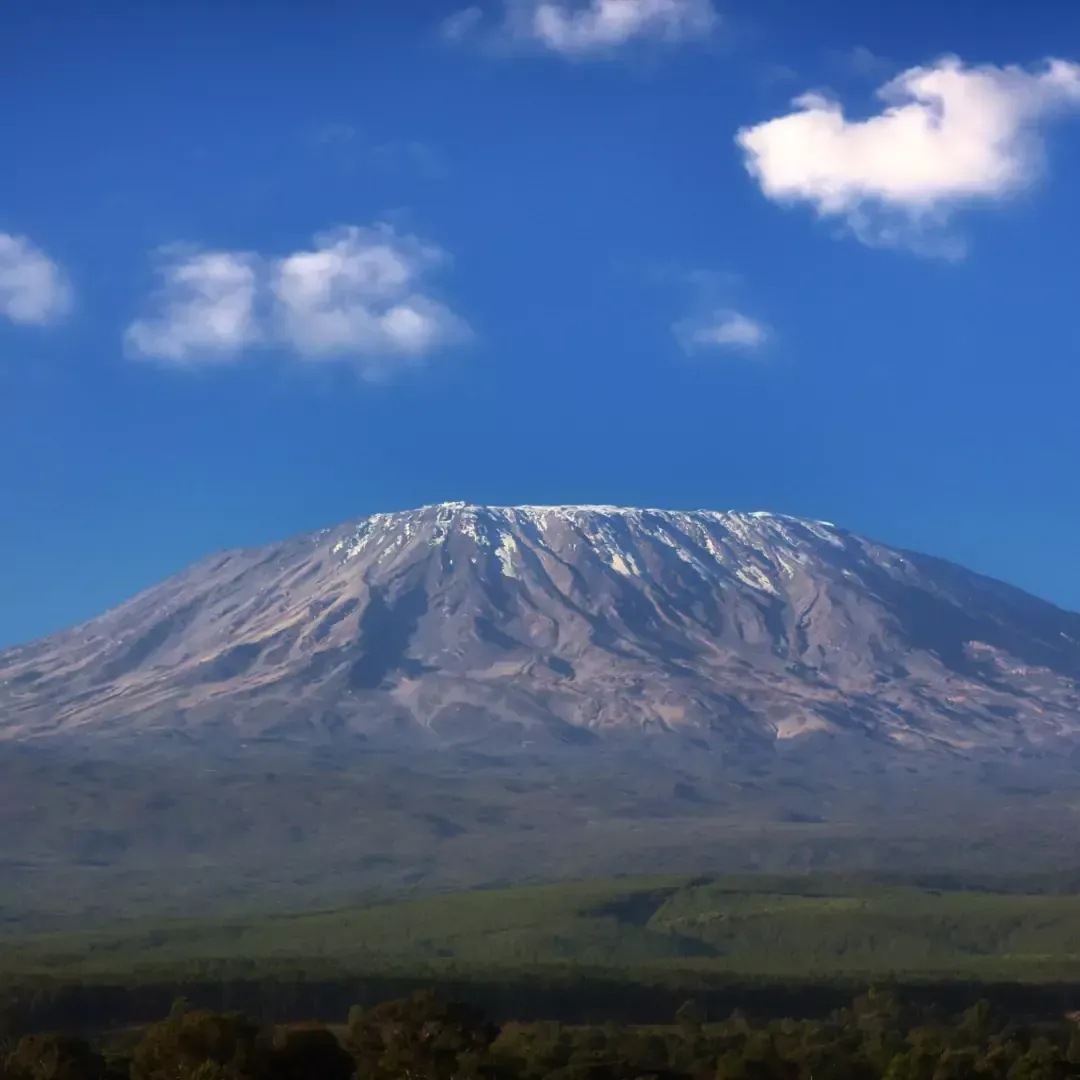
Mount Kilimanjaro is the highest mountain in Africa at 5,895m and the tallest free-standing mountain on earth — and reaching its summit is one of the world’s great non-technical climbs.
We arrange private, fully supported treks on the most scenic and successful routes, with expert guides, quality equipment and the right number of days to acclimatize.
Highlights of Kilimanjaro Trekking
Lemosho — 8 days
The most scenic route and our default recommendation — gentle profile, superb acclimatization and the highest success rates.
Machame — 7 days
The popular “Whisky” route — beautiful and varied, a little steeper; best for fit climbers.
Rongai — 7 days
The quieter northern route — drier and more gradual, a strong choice in the shoulder months.
Northern Circuit — 9 days
The longest, highest-success route, circling the mountain — ideal for older climbers and anyone prioritizing acclimatization.
Where to climb, and what to add
Kilimanjaro rises in northern Tanzania, a short drive from the Serengeti and a short flight from the coast. Here is how we build the trip around it.
Tanzania
The mountain itself, plus the Serengeti and Ngorongoro on the same side of the country. Summit first, then safari to recover.
Explore Tanzania → Eastern AfricaKenya
Fly in via Nairobi and add the Maasai Mara, or acclimatize on Mount Kenya before you take on Kilimanjaro.
Explore Kenya → Beaches & IslandsZanzibar
The perfect reward, swapping boots for barefoot on Zanzibar's white sand once you are safely back down.
Explore Zanzibar →Know before you go
The practical details we handle for you — flights, entry, health and money — summarized here so nothing surprises you. Requirements can change, so we confirm everything when you book.
Fly to Kilimanjaro International (JRO) via Amsterdam, Doha or Istanbul — about 17–20 hours total. The mountain is under an hour's drive from Arusha.
Tanzania requires US citizens to apply for a $100 multiple-entry e-visa online before travel. Passport valid six months.
Apply for the Tanzania eVisa ↗Altitude is the main consideration — our longer routes build in acclimatization days, and guides carry oxygen and pulse oximeters. Consult your doctor about altitude medication and standard vaccinations.
Trek crews are tipped at the end of the climb — a guideline is $250–350 total per climber, shared across guides, cooks and porters. At your discretion.
Best time for a Kilimanjaro trek
Warmer, quieter and often clear — excellent climbing.
The long dry season — the most popular trekking window.
In the green months rates ease at many of these camps, the plains empty of vehicles and the light turns dramatic. What each season gives, and what it trades, is set out in our Safari Planning Guide.
Planning & cost
Fully tailor-made — priced privately to your camps, season and travel style. No fixed packages.
Every journey is privately designed, with private guides and vehicles arranged where specified, the finest lodges, and a specialist on call throughout. At fly-in camps, game drives may be shared unless a private vehicle is reserved.
Practical details,
in one place
Money, health, connectivity and packing work the same way on every safari we plan, so they live in one place rather than on every page.
Continue exploring
Mount Kilimanjaro
Mount Kilimanjaro — Africa’s highest peak, a snow-capped volcano rising alone from the plains.
Explore → Eastern AfricaTanzania
The Serengeti, Ngorongoro Crater, Tarangire and Zanzibar.
Explore → Beaches & IslandsZanzibar
A Zanzibar vacation layers spice-island history, Stone Town and dreamy Indian Ocean beaches.
Explore → RegionEastern Africa
The Great Migration, the Rift Valley and the gorillas — Tanzania, Kenya, Rwanda and Uganda.
Explore →Kilimanjaro Trekking FAQs
Getting to Tanzania — flights, visas and health
Current at the time of writing. We re-confirm every requirement for your exact routing before you travel — and we will tell you what to apply for, and when.
Let's design your Kilimanjaro Trekking journey.
Kilimanjaro trekking is as much about acclimatization and route choice as it is about fitness.
Tell us how you like to travel and start with a complimentary consultation. When you are ready, a $500 USD planning fee covers your personalized itinerary and revisions, and is deducted from your booking deposit when you book.
Inquire now