Ask ten safari experts which is better — the Serengeti or the Masai Mara — and you will start ten long conversations. They are two halves of a single ecosystem: the same plains, the same river, the same wildebeest. Yet a week in each feels remarkably different. Here is the comparison we give our own clients, park by park.
The short answer
Choose the Masai Mara if you have a week or less, want the highest density of big cats per hour and the July to October river crossings, and can stay in a private conservancy to escape the crowds. Choose the Serengeti for wilderness on a far larger scale, the January to March calving season and the northern crossings at Kogatende and Lamai with fewer vehicles. With ten nights or more the honest answer is both: the two parks connect through Nairobi and Kilimanjaro in a day, which is exactly what our Kenya and Tanzania circuit does.
| Masai Mara | Serengeti | |
|---|---|---|
| Getting there | 45 to 60 minutes by light aircraft from Nairobi. | Fly to Kilimanjaro, then one to two hours by light aircraft from Arusha. |
| Scale | A compact reserve ringed by private conservancies; short drives between sightings. | Nearly ten times larger; long, empty horizons and longer drives. |
| Migration | River crossings roughly July to October. | Herds present most of the year: calving January to March in the south, crossings July to October in the north. |
| Off-road and night drives | In the private conservancies, not inside the reserve. | Not inside the national park; available in some adjoining private concessions. |
| Crowds | Busy at the crossings in August and September; conservancies cap vehicles. | Fewer vehicles per sighting, especially on the Lamai side. |
| Best months | July to October; January to February. | June to October; January to March. |
Park guides: Maasai Mara and Serengeti. For the wider country decision read Kenya vs Tanzania, and for the northern crossings see Kogatende or Lamai. When you are ready, request your complimentary consultation.
Scale: an ocean vs a jewel
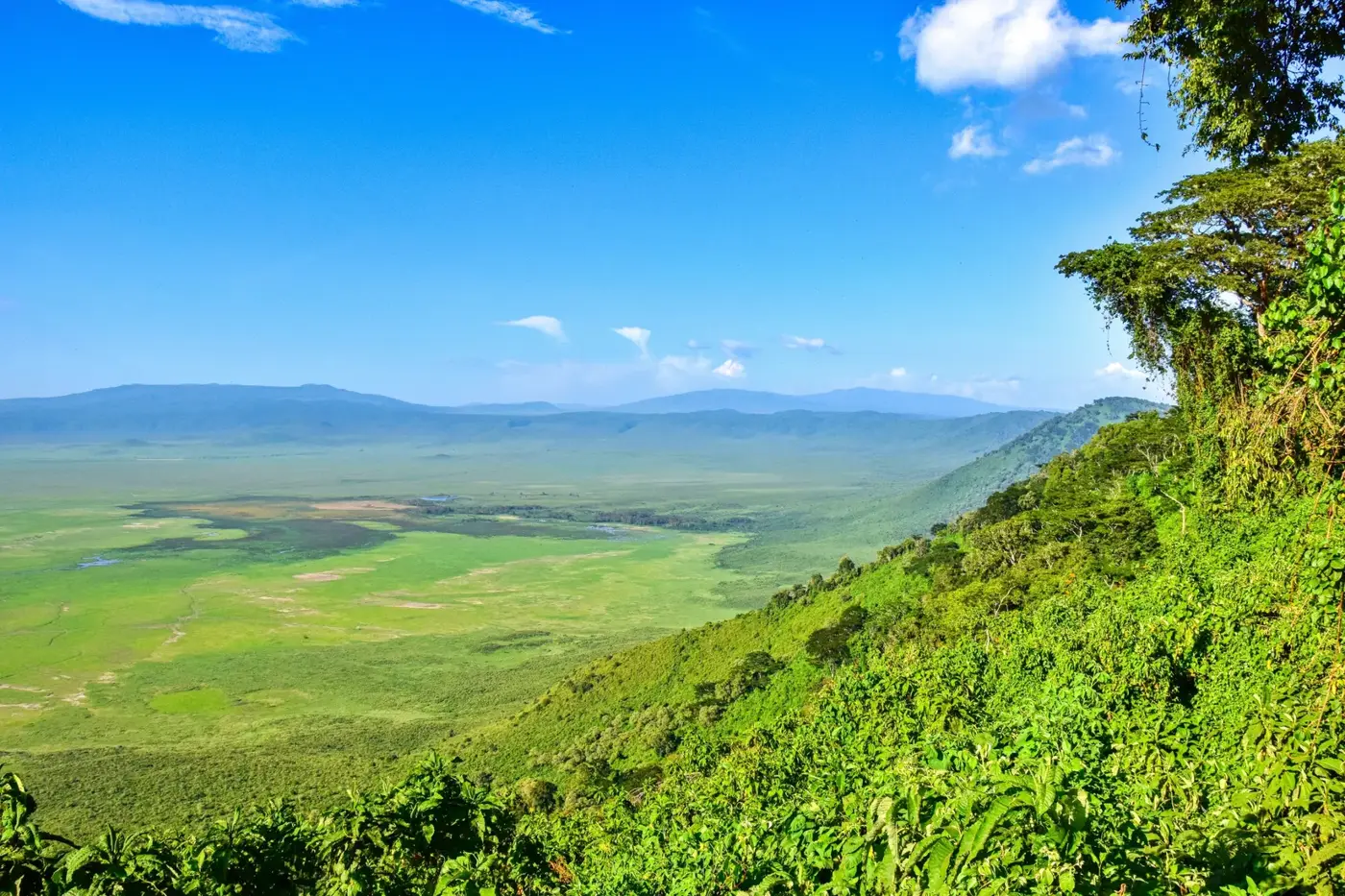
The Serengeti is nearly ten times the size of the Mara — 14,750 square kilometers of grassland where you can drive an hour and see no one. The Mara packs its drama into a fraction of that space, which means shorter drives between sightings and an almost guaranteed density of big cats. Choose the Serengeti for wilderness on an epic scale; the Mara for intensity per hour.
The migration & the crossings
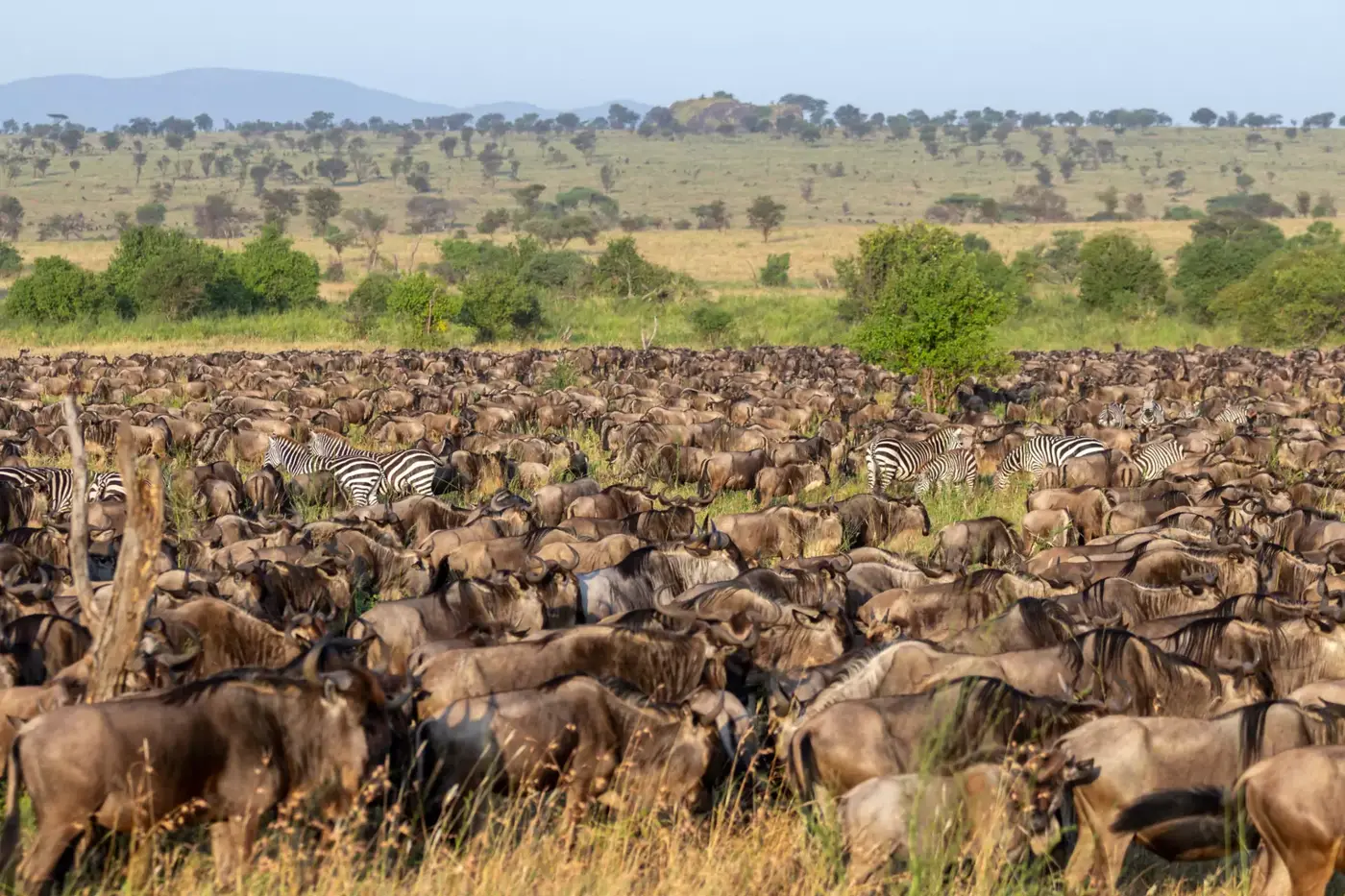
The herds spend roughly ten months of their annual loop on the Serengeti side — calving in the south (Dec–Mar), pushing west and north (Apr–Jul), then crossing the Mara River in the far north (Jul–Oct). The Mara hosts the spectacle for its dramatic peak months, roughly August to October. If your dates are fixed, the migration calendar — not the park — should decide for you. For the crossings in detail, read Mara River Crossings: When and Where to See Them.
- —Dec–Mar — southern Serengeti: calving season, predators in force
- —Apr–Jun — central & western Serengeti: the columns on the move
- —Jul–Oct — northern Serengeti & the Mara: river-crossing season
- —Nov — the short rains: herds trek back south through the east
Big cats
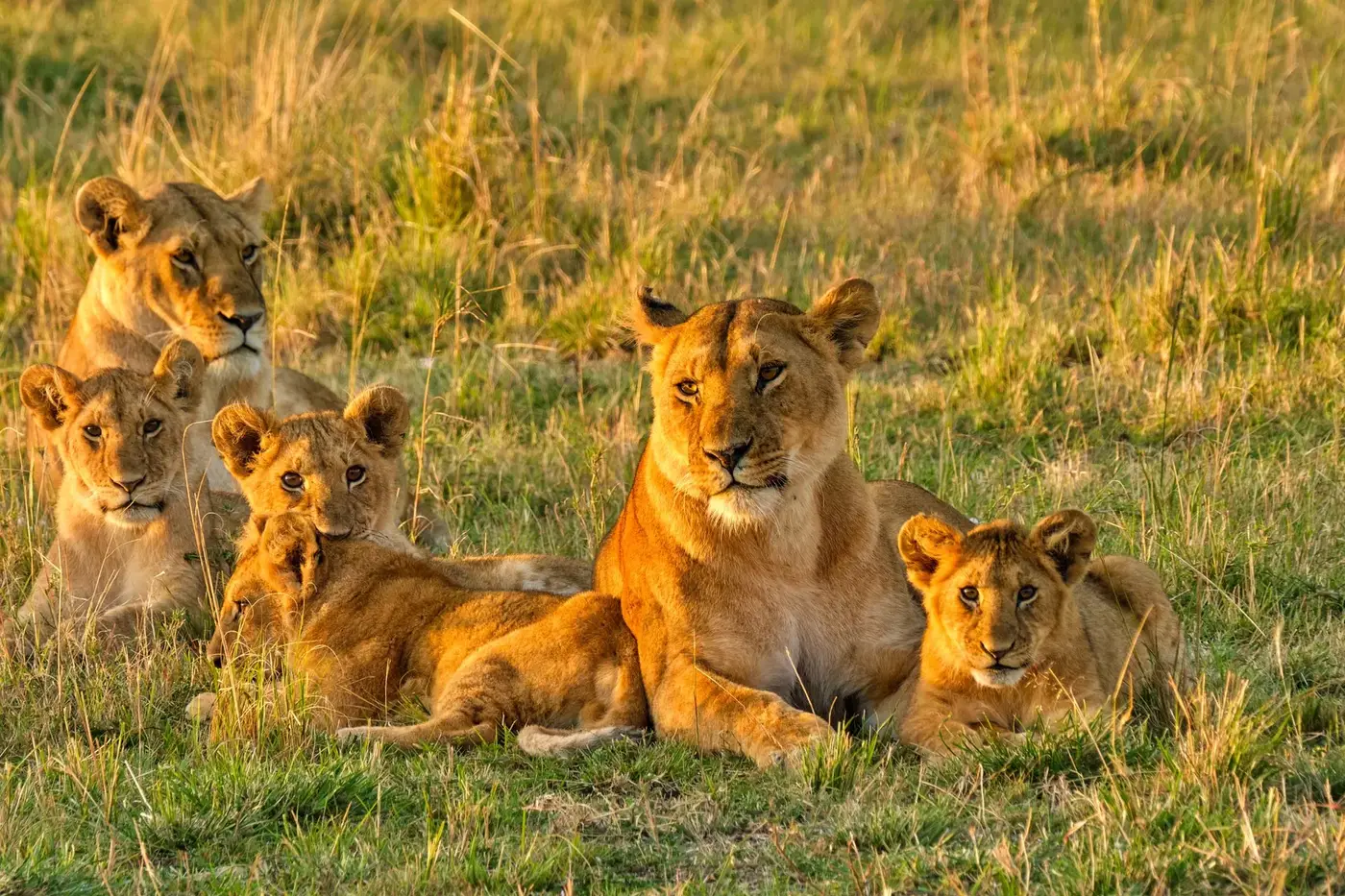
The Mara’s cat viewing is arguably the most reliable on the continent — lion prides habituated over decades, leopards along every river line, cheetah hunting on open ground. The Serengeti matches it with sheer numbers (an estimated 3,000 lions) spread over vaster country: sightings can take longer to find, and are more often yours alone when you do.
Crowds — and the conservancy answer
Peak-season crowding around headline sightings is the Mara’s known weakness, and the national reserve can feel busy in August. The answer is the private conservancies on its borders — Naboisho, Olare Motorogi, Mara North — with strict vehicle limits, night drives and walking. The Serengeti’s scale disperses its visitors naturally; only Seronera and the crossing points ever feel trafficked.
Cost & logistics
The Mara is the easier logistical trip — a 45-minute flight from Nairobi and shorter internal hops — and often a touch more affordable. The Serengeti usually means a Kilimanjaro arrival and longer light-aircraft legs, at slightly higher cost, in exchange for a wilder, bigger journey that pairs naturally with the Ngorongoro Crater and Zanzibar.
The honest verdict
First safari with limited time: the Mara, from a private conservancy, delivers the most Africa per day. A longer journey, a wilder feel, or calving season: the Serengeti. And the finest answer of all is the one the border suggests — combine them, Mara conservancy plus northern Serengeti, in a single crossing-season route.