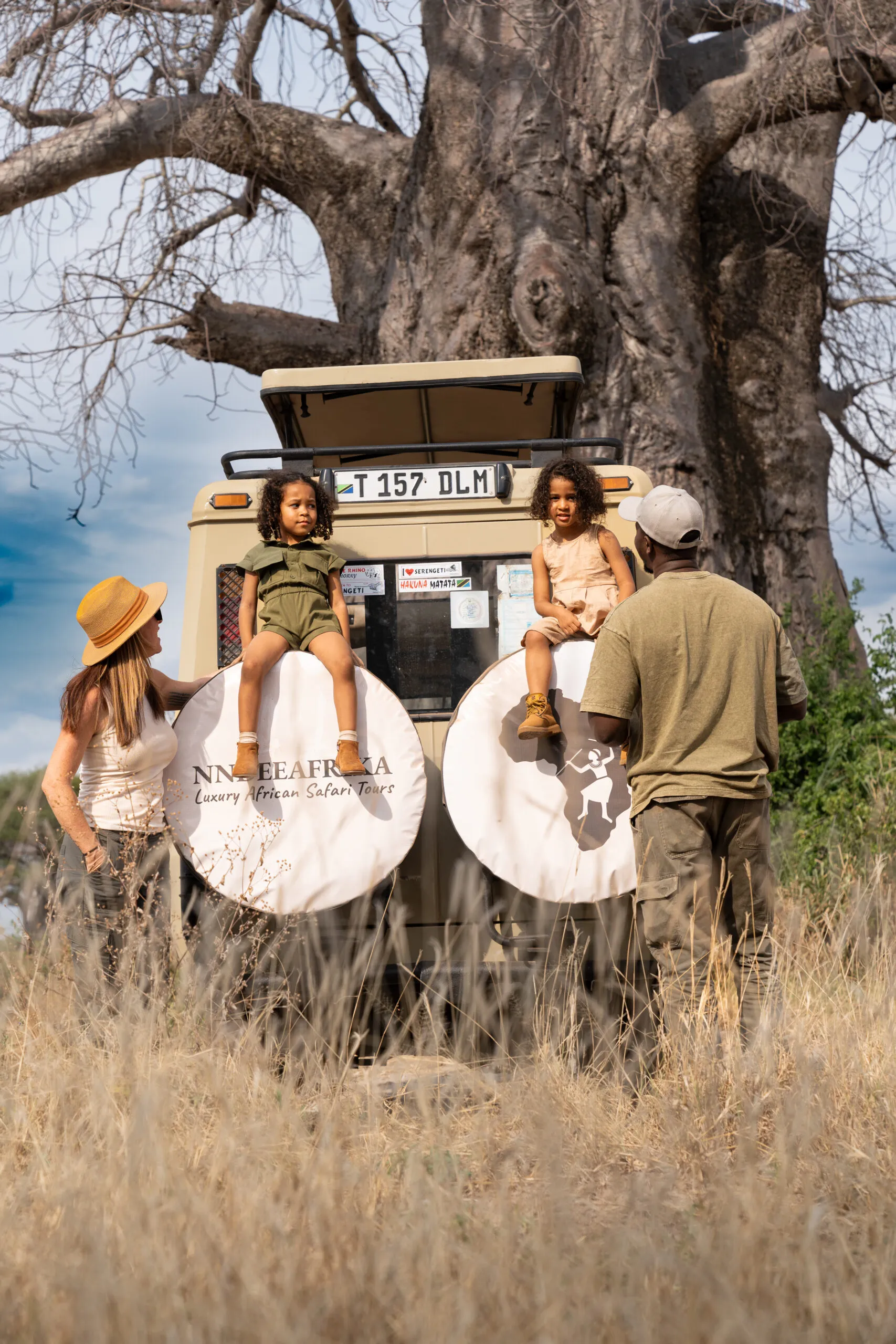
Yes, you can take a toddler on safari. We are asked this more than almost any other family question, usually by parents who have already been told a flat no. The accurate answer has conditions attached: a private vehicle, a route where malaria does not dictate the plan, and camps that will have a two-year-old in the first place. Meet those three and a safari with toddlers is not only possible but, for the parents, one of the gentlest versions of the trip. This is the honest guide, written by two parents who safari with their own children.
Can you take a 2-year-old on safari?
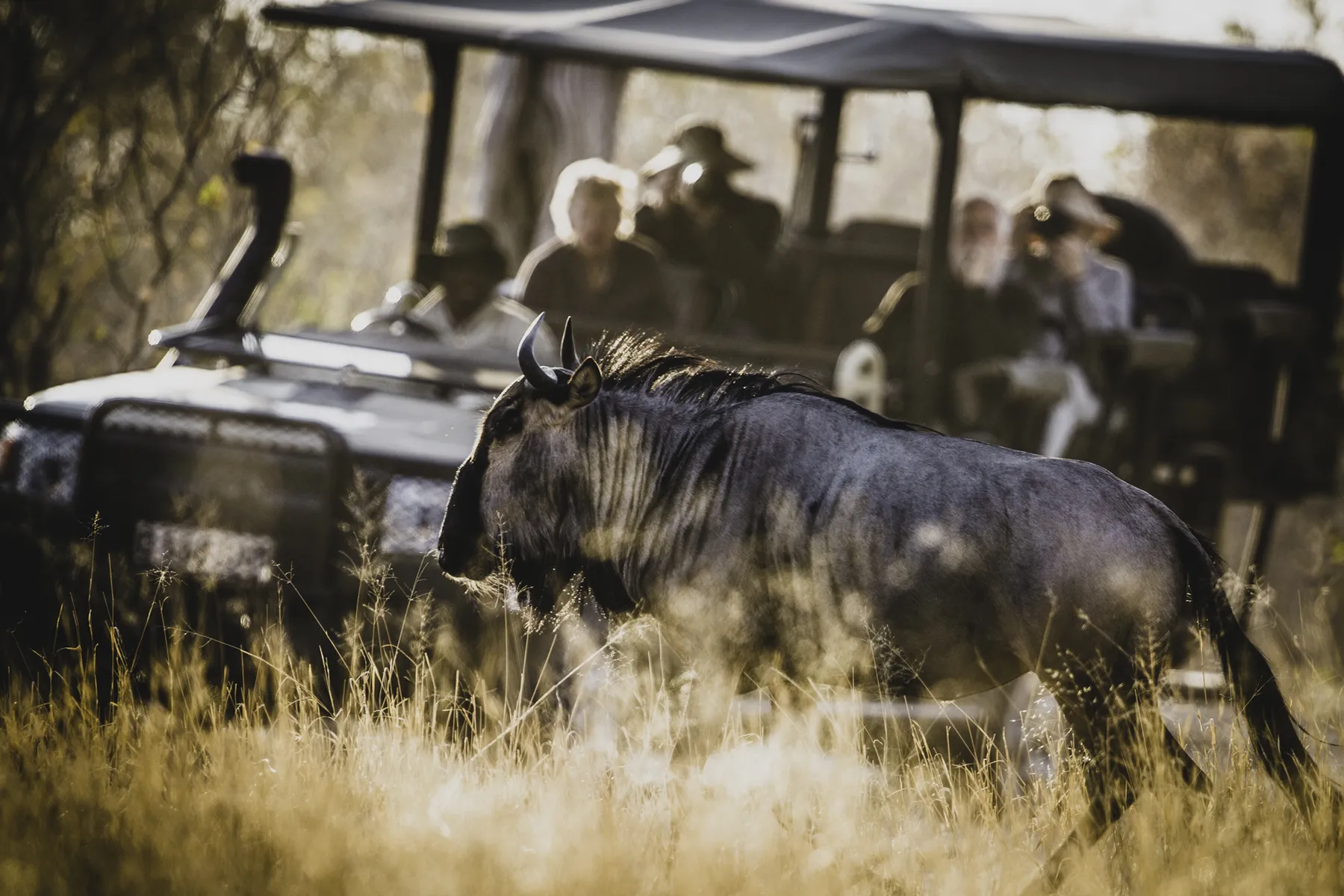
You can, within three limits. First, most camps set a minimum age of six to eight for game drives in a shared vehicle, so a toddler means a private vehicle and guide, which most camps allow at their discretion. Second, the classic East African parks are malaria-risk destinations, so for a child under five the choice is between South Africa’s malaria-free reserves and a conversation with a travel-health clinician about prophylaxis. Third, a handful of camps do not accept young children at all; the answer there is a family lodge, a private villa, or taking a small camp exclusively, where the house plays by your rules.
What we will not do is pretend the trip is the same as one with a ten-year-old. A toddler will not remember it. The parents will, and a well-planned version has slower mornings, a pool every afternoon and far fewer hours in a vehicle than most adult safaris.
Minimum ages for safari activities
Rules are set by each property, park and operator rather than by country, so these are the usual thresholds we work from. We confirm the exact rule for every camp in your proposal before anything is booked.
| Activity | Usual minimum age | Notes |
|---|---|---|
| Game drives in a shared camp vehicle | Often 6 to 8 | Camp-specific; some camps welcome younger children on family-only drives. |
| Game drives in a private vehicle | Usually any age | At the camp’s discretion; the best option for toddlers. |
| Walking safaris | 12 to 16 | Varies by country, park and camp; short nature walks near camp are often open to younger children. |
| Gorilla trekking | 15 | Uganda and Rwanda; strictly enforced by the wildlife authorities. |
| Chimpanzee trekking | 12 to 15 | 15 in Rwanda’s Nyungwe; generally 12 in Uganda’s Kibale. |
| Canoeing (Mana Pools, Lower Zambezi) | Usually 16 | Operator-specific. |
| Hot-air balloon flights | Operator-specific | Height and age rules differ by operator; we check before booking. |
For the full picture across all ages, read our family safari with kids guide. The short version for toddlers: private vehicle, private activities, and camps chosen for the child rather than the other way around.
Malaria-free safaris with toddlers
For families who want to avoid malaria medication altogether, the clearest options are South Africa’s Madikwe Game Reserve and selected Eastern Cape reserves such as Kwandwe, Kariega and Amakhala, all of which offer malaria-free Big Five viewing. Tswalu in the Kalahari is also malaria-free. Cape Town, the Winelands and the Garden Route combine naturally with any of them, which is why most of the toddler safaris we plan go to South Africa.
The Serengeti, the Maasai Mara, Zanzibar, the Greater Kruger, the Okavango Delta and South Luangwa should all be planned as malaria-risk destinations, in dry months as well as wet. We do not describe the whole of the Waterberg, Laikipia or the Ngorongoro highlands as malaria-free, because risk varies by location, elevation and the rest of the itinerary.
NndeeAfrika does not give medical advice. What we do is hand you the exact camps, route and elevations so that a travel-health clinician can advise on your child, including yellow fever rules, which carry age exemptions that differ by country.
Where to go on safari with a toddler
South Africa: the easiest first safari with a toddler
Short flights from Johannesburg or Cape Town, malaria-free reserves, family lodges with fenced pools and genuine family suites, excellent medical care in the cities, a favorable exchange rate, and a city-and-beach finale without another border. For a child under five this is where we start the conversation. See our South Africa guide.
Kenya: private houses in the conservancies
Kenya’s private conservancies allow off-road game viewing, flexible timing and private family houses where everyone stays under one roof with their own vehicle and guide. It is a malaria-risk destination, so it depends on your clinician’s advice. Our Kenya family safari itinerary is the starting point we rebuild around your children’s ages.
Tanzania: short flights, Zanzibar after
Light aircraft keep road time small, the Ngorongoro Crater is done in a single morning, and Zanzibar is an hour away for the beach days. Many of the best Serengeti camps prefer children of six and up on shared drives, so a toddler safari here means private vehicles or a family camp, and the same malaria conversation as Kenya. Read our Tanzania safari guide.
Botswana, Zambia and Zimbabwe are better kept for older children: mokoro, boat and walking safaris have age limits of their own, and the camps are deliberately remote. Our guide to the best country for a first safari sets the options side by side.
What a safari day looks like with a toddler
- Short drives. Ninety minutes to two hours at a time, in a private vehicle so you can turn back the moment attention runs out, rather than the standard three to four hours.
- The nap window protected. Game drives at first light and in the late afternoon are when wildlife is most active anyway; the middle of the day is for the pool and sleep.
- A pool at every camp. We choose family camps with fenced pools and real family suites, not two rooms down a path from each other.
- Child-minding by arrangement. Many family lodges offer it; age limits and availability differ by property, so we confirm them in writing before booking rather than assuming.
- Early dinners, or dinner at home. In an exclusive-use villa with a private chef the evening runs on your schedule, and no other guest is counting bedtime.
Fewer camps, longer stays. With a toddler we plan two or three bases of three to four nights each rather than a new camp every two days. Unpacking once matters more than one extra ecosystem.
The practical questions
Flights
From the United States it is two long flights with one connection, and most families break the journey with a night in Johannesburg, Cape Town, Nairobi or Arusha before any safari day begins. Bassinet rows must be requested early. The time difference from California is ten to eleven hours, so we allow two gentle days for a small body clock to catch up before the first dawn drive. Our guide to flying from the USA covers the routings.
Car seats
Safari vehicles rarely carry child seats, and many are open-sided. A lightweight seat brought from home and fitted to a lap belt is the usual answer; we confirm belt fittings with each camp before booking. On light aircraft, children under two typically travel on a parent’s lap.
Luggage
Most light aircraft limit baggage to around 15 kg (33 lb) per person in soft bags, which is tight with a toddler’s kit. We plan the diapers, formula and medicines against that limit; cities have good supermarkets and pharmacies, remote camps do not. See what to pack for a safari.
Insurance and health
We require comprehensive travel and medical insurance for every guest, children included, and every East African safari we plan includes AMREF Flying Doctors evacuation membership. Read how we look after guests on the ground.
How we plan a safari with toddlers
Every journey is designed privately. We prioritize dedicated vehicles and guides; where a lodge normally runs shared activities, any private-use arrangement is confirmed in the proposal before booking. Exclusive-use villas and small camps taken privately are the simplest way to bring children younger than a camp’s published minimum age, and they suit three-generation trips where grandparents keep their own rhythm. Our private, tailor-made journeys begin at approximately $12,000 per person, excluding international flights; a family with a toddler is quoted as one itemized proposal, so you can see exactly what the private vehicle and the villa add.
If the honest answer for your family is to wait a few years, we will say so on the first call. Plenty of our favorite family safaris start when the youngest is six. But if you want to go now, it can be done well.
Safari with toddlers: questions parents ask
Can I take a 2-year-old on an African safari?
Yes. The usual conditions are a private vehicle and guide, because shared camp vehicles typically start at six to eight; a malaria-free route such as South Africa’s Madikwe or Eastern Cape reserves, or travel-health advice if you choose East Africa; and camps or villas that accept young children. We confirm each camp’s rule before booking.
What is the minimum age for an African safari?
There is no single minimum. Most camps set six to eight for game drives in a shared vehicle; private vehicles are usually open to any age at the camp’s discretion; walking safaris are 12 to 16; gorilla trekking is 15. Rules are set by each property, park and operator rather than by country.
Which safari destinations are malaria-free for young children?
Madikwe and selected Eastern Cape reserves such as Kwandwe, Kariega and Amakhala in South Africa, plus Tswalu in the Kalahari, offer malaria-free Big Five viewing. The Serengeti, Maasai Mara, Zanzibar, Greater Kruger and Okavango are malaria-risk destinations and need advice from a travel-health clinician.
Is a safari worth it with a toddler?
For the parents, yes, if it is planned around the child: short private drives, a pool at every camp, two or three bases rather than six, and a villa or family lodge. The child will not remember it, which is why many families wait until six to eight. We will tell you honestly which we would do for your family.
Written and reviewed by Evance & Jennifer · Published 5 October 2026