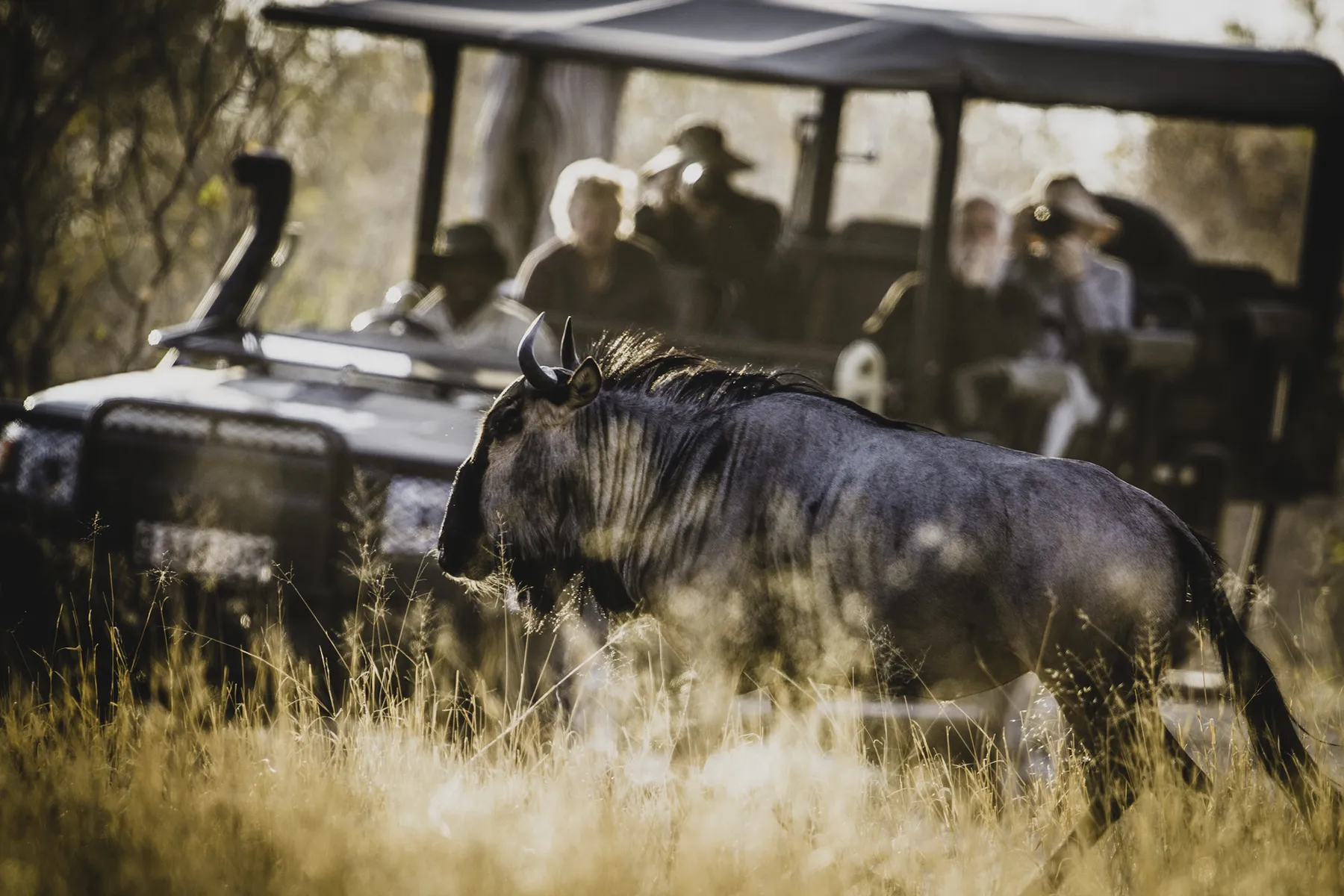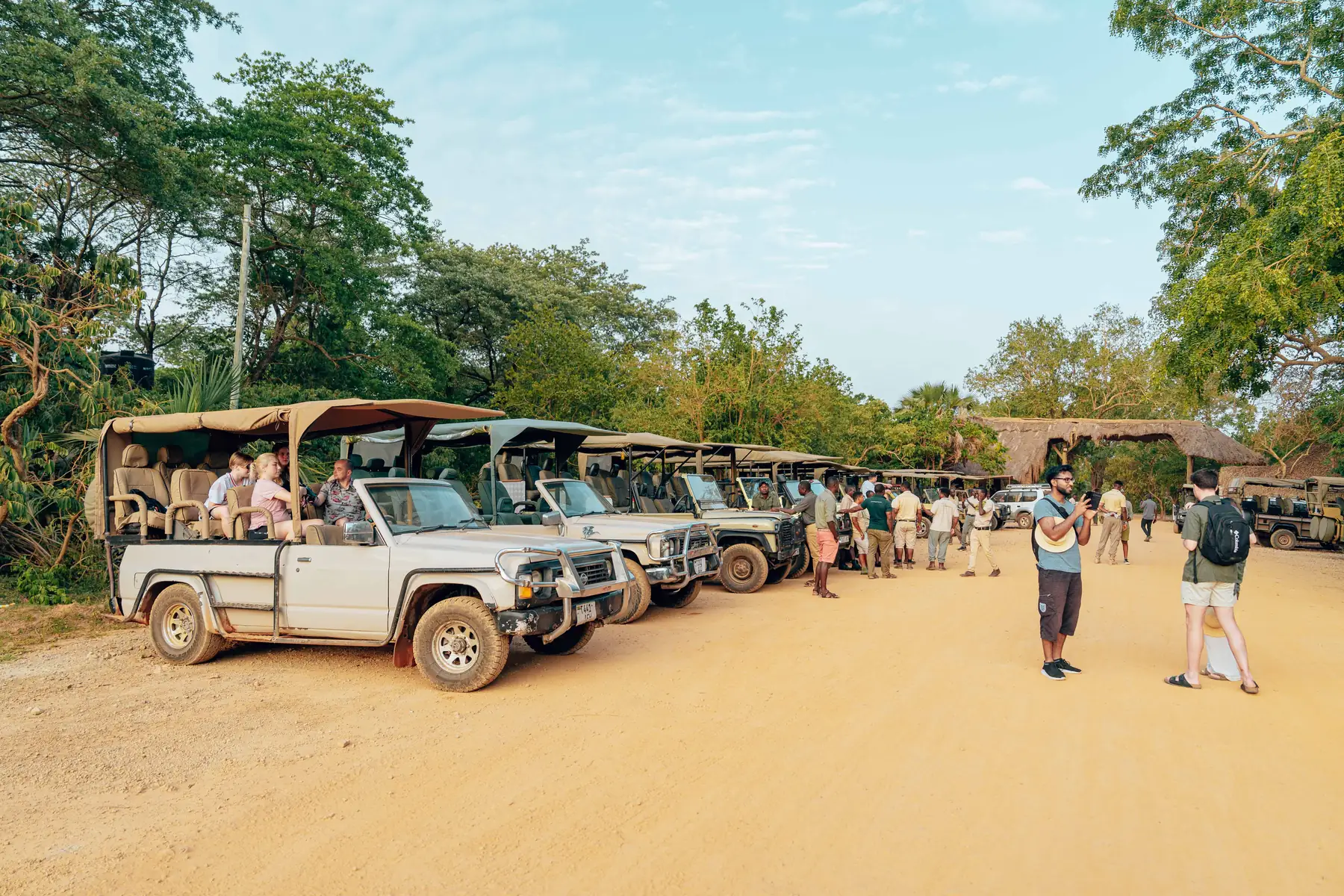
A wheelchair accessible safari is possible, and we have planned them, but the honest version of this guide is about three transfers rather than about wildlife. Once you are in the vehicle a game drive is the same seated experience for everyone; the elephants do not know who is in the seat. What needs measuring is the step into the vehicle, the steps into a light aircraft and the path from the vehicle to your bed. This page sets out what works, what does not, and the questions we put to every camp before anything is booked.
The short answer
South Africa is the easiest country for an accessible safari: paved roads between reserves, cities with good accessible infrastructure, private lodges with purpose-built step-free suites, and an official park authority that publishes accessibility profiles. East Africa works well with a private vehicle, more preparation and realistic expectations about canvas camps. Botswana’s remotest camps and anything built around walking or canoeing are the hardest. We say which is which in your proposal rather than letting you discover it on arrival.
Safari vehicles
A standard safari vehicle is a modified Land Cruiser or Land Rover with a high floor and a step or two up from the ground. Guides and camp staff are practiced at lifting guests in, and a folding wheelchair travels strapped to the back. For travelers who need more than that, a small number of adapted vehicles with hydraulic lifts or swivel seats exist in South Africa, Kenya and Tanzania; they are few, so they are the first thing we reserve, and they shape which camps you can reach. A private vehicle and guide, which is our standard, matters more here than anywhere else: the drive runs at your pace, with stops when you need them and no one else to consider.
Light aircraft
Most camps are reached by light aircraft such as the Cessna Caravan. Boarding is by a short set of fold-down steps with no lift or jet bridge; crews assist and will lift a passenger when asked in advance. A manual folding wheelchair travels in the hold within the soft-bag luggage limits, which are typically around 15 kg (33 lb) per person, so we declare the chair when booking the seats. Powered chairs are more complicated because of battery rules and weight, and we check each airline’s policy for your route. Where the geography allows, a road transfer in a comfortable vehicle can replace a flight.
Camps and lodges
The word “accessible” on a lodge website means very little on its own. Tented camps are raised on decks joined by sandy paths or wooden walkways; many have a step at every doorway and a shower tray with a lip. Permanent lodges are more likely to have a ground-level suite with a ramp, a roll-in shower and a door wide enough for a chair. We ask every property the same questions before booking: the width of the room and bathroom doors, the threshold height of the shower, whether the path from the main area is paved, boardwalk or sand, how far it is, whether a golf cart runs it, and whether the dining area and the vehicle loading point are step-free. We ask for photographs and measurements in centimeters, and we put the answers in your proposal.
South Africa’s national park authority sets the standard for openness: SANParks publishes camp-by-camp accessibility profiles for Kruger National Park, covering gates, hides, picnic sites and the rest camps, and lists tour operators with accessible transport. We use it as a baseline when we compare private lodges in the Greater Kruger and the malaria-free reserves described on our South Africa page.
Where an accessible safari works best
South Africa
Cape Town, the Winelands and the Garden Route are the most accessible part of the continent for a wheelchair user, and the private reserves of the Greater Kruger, Madikwe and the Eastern Cape have the highest number of step-free suites. Flights are short, roads are paved, and medical care is close. For most of our guests with mobility needs, this is where we start.
Kenya and Tanzania
East Africa adds the Great Migration and the classic open plains. It works with a private vehicle, a lodge chosen for ground-level rooms rather than a tented camp on stilts, and short flights booked with the chair declared. The Ngorongoro Crater is seen entirely from the vehicle, which makes it one of the most rewarding days for a seated traveler. Our Tanzania guide and Kenya guide cover the geography.
Rwanda and Uganda
Gorilla trekking is possible with a sedan chair carried by a team of local porters in both Volcanoes National Park and Bwindi, arranged in advance for a fee set locally. The permit is the same and the hour with the gorillas is unchanged; the parks also try to allocate the nearest family. See our gorilla trekking guide for permits and seasons.
Activities, honestly rated
| Activity | Wheelchair user | Limited mobility, can walk short distances |
|---|---|---|
| Game drives | Yes, with help into the vehicle or an adapted vehicle | Yes |
| Light-aircraft transfers | Yes, with crew assistance up the steps; chair travels in the hold | Yes |
| Boat safaris (Chobe, Okavango channels) | Often yes on larger boats; not mokoro canoes | Yes |
| Walking safaris | No | Short, flat nature walks only |
| Gorilla trekking | Yes, by sedan chair with porters | Yes, with porters and the nearest family |
| Hot-air balloon | Usually not | Ask the operator; must climb in and brace |
| Beach finale (Zanzibar, Cape coast) | Yes, with a step-free room checked in advance | Yes |
The balloon rule is the one that disappoints most often. Baskets are chest-high with no door, passengers climb in over the side, and everyone must crouch and hold on for a landing that can be bumpy; the operators publish height and weight limits for the same reason. We would rather say so here than at the launch field. Our balloon safari guide has the operators’ own rules.
How we plan an accessible safari
- Tell us precisely. Manual or powered chair, transfers with or without help, distance you can walk, bathroom needs, and any medical equipment. We plan around the facts rather than apologize later; it is the same approach as our guide for older travelers.
- Fewer camps, longer stays. Two or three bases of three to four nights, so each transfer is done once and done well.
- Measured, not described. Every lodge and vehicle in your proposal comes with the answers to the questions above, and we tell you where a camp is a compromise.
- Insurance and evacuation. We require comprehensive travel and medical insurance for every guest, and every East African safari we plan includes AMREF Flying Doctors membership; see how we look after guests on the ground.
- One itemized proposal. Adapted vehicles, extra porters and private transfers are shown as their own lines. Our private, tailor-made journeys begin at approximately $12,000 per person, excluding international flights.
Accessible safari questions
Can you go on safari in a wheelchair?
Yes. Game drives are seated, so once you are in the vehicle the experience is the same for everyone. The planning concentrates on three transfers: into the vehicle, into light aircraft, and into your room. South Africa offers the most step-free lodges and the best infrastructure; East Africa works with more preparation and a private vehicle.
Which African country is best for an accessible safari?
South Africa. Cape Town and Johannesburg have good accessible infrastructure, the drives between reserves are on paved roads, several private lodges have purpose-built step-free suites, and SANParks publishes camp-by-camp accessibility profiles for Kruger National Park. Malaria-free reserves add peace of mind for travelers with medical considerations.
Can a wheelchair user do gorilla trekking?
In Rwanda’s Volcanoes National Park and Uganda’s Bwindi, sedan chairs carried by teams of local porters are used to bring travelers with limited mobility to the gorillas. The chair, porters and timing are arranged in advance for a fee set locally, the permit is the same, and the hour with the gorillas is unchanged.
Can you take a hot air balloon safari in a wheelchair?
Usually not. Baskets are chest-high with no door, passengers climb in over the side and must crouch and hold on for landing, and operators set height and weight rules. Ask the specific operator; we would rather say no in advance than at the launch field.
Written and reviewed by Evance & Jennifer · Published 5 October 2026