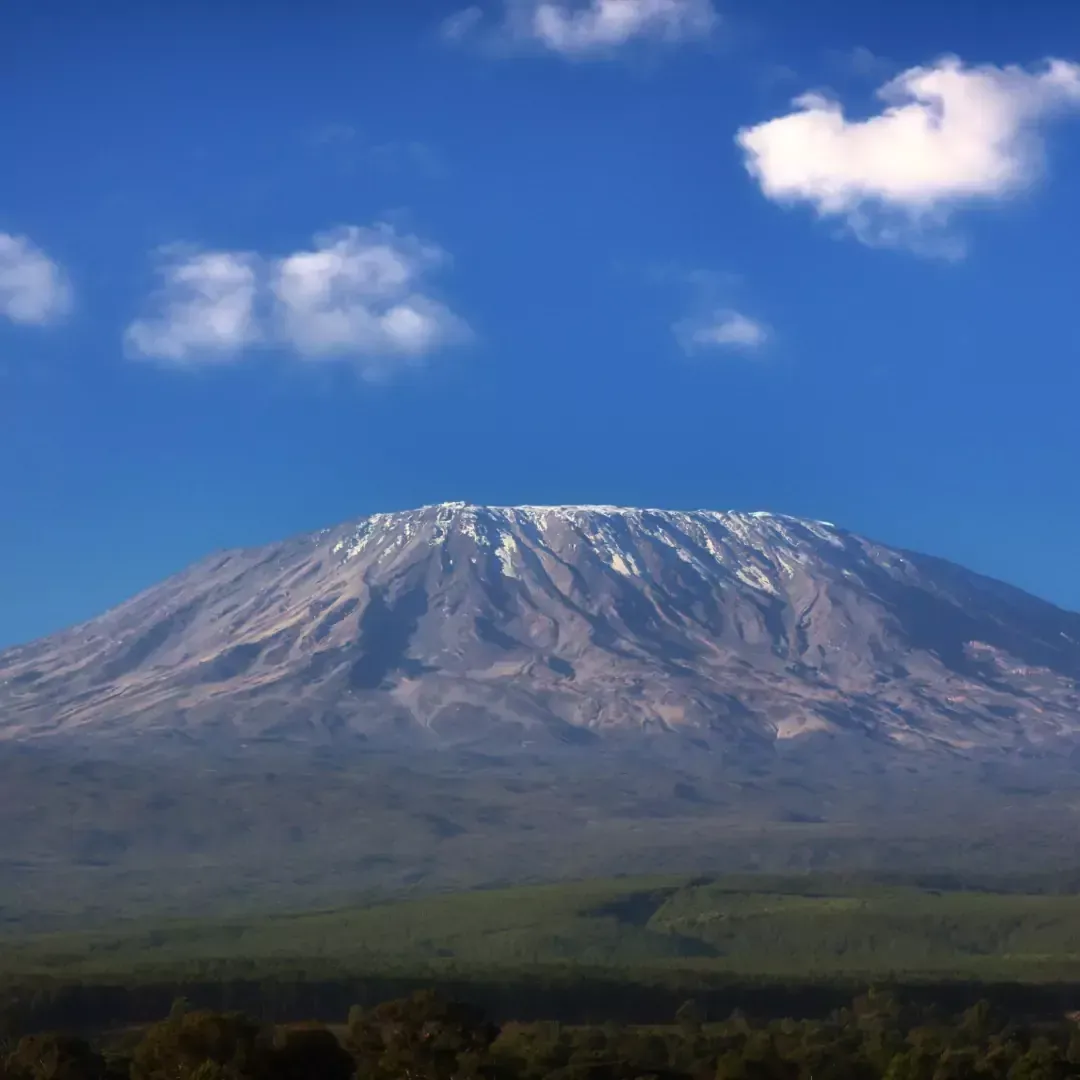
The Lemosho route itinerary, day by day
The Kilimanjaro Lemosho route itinerary our guides rate above all others: eight days up the mountain’s quiet western flank, engineered for acclimatization, comfort and a genuine shot at the summit.
Still, you can change anything here. In fact, this is the route we plan most often. So tell us what to keep, lengthen or swap, and we’ll send you your own version, fully priced.
January–March (quieter, colder summit nights) and June–October (driest trails); we avoid the April–May rains.
US travelers: check current entry requirements for each country on travel.state.gov (we also walk you through visas at booking).
Arusha
Arrive Kilimanjaro (JRO); private transfer to a garden lodge for gear checks and a full briefing with your head guide.
Londorossi Gate → Mti Mkubwa (2,750 m)
First, drive to the western gate at 2,100 m and walk three unhurried hours through montane forest (colobus monkeys overhead) to Big Tree Camp.
The Shira Plateau (3,505–3,850 m)
Climb out of the forest onto one of the world’s highest plateaus: Shira 1, then Shira 2, with an afternoon acclimatization walk and Kibo filling the horizon.
Lava Tower → Barranco (3,976 m)
The day that makes summits: lunch at Lava Tower (4,630 m), then descend to the giant groundsels of Barranco. Climb high, sleep low: the principle the whole Lemosho route is built on.
Barranco Wall → Karanga (3,995 m)
The Great Barranco Wall, a hands-on scramble that looks harder than it is, and then rolling valleys to Karanga Camp.
Barafu (4,673 m)
A short morning to base camp; early dinner and sleep by nightfall. Then the summit push begins around midnight.
Uhuru Peak (5,895 m) → Mweka (3,068 m)
By headlamp to Stella Point for the crater rim at dawn, then the roof of Africa, and a long, glorious descent to Mweka Camp.
Mweka Gate → Arusha
Final forest hours to the gate, certificates and tips ceremony, then back to Arusha for the best shower of your life and a celebration dinner.
Rest, then home
A slow garden-lodge day to let your legs remember, or fly straight to Zanzibar or the Serengeti. Most Lemosho climbers add one or the other.
Hotel nights in Arusha before and after the climb; mountain tents and all meals on the climb.
Licensed mountain guides, porters and a cook for your party.
Kilimanjaro park, camping and rescue fees, and transfers before and after the climb.
Priced to your budget, your camps and the season. No set packages.
11 days · 8 days on the mountain
January – March and June – October
Trekkers and milestone celebrations
The summit by the quiet Lemosho route
Every itinerary is priced individually, to your budget.
Based on two guests sharing. Final pricing depends on season, camps, private guiding, internal flights and itinerary length. International flights are excluded.
Every camp named night by night · internal flights and transfers · park and conservancy fees · meals and game activities per each lodge’s terms · airport meet & greet · a founder’s direct line while you travel.
In short, this itinerary is a starting shape, not a package. Every journey is fully tailor-made around your dates, pace and interests. Design this journey privately →
Questions about this journey
Make this journey yours.
Tell us when you’d like to go and what you’d change. After that, we’ll send back your own fully priced version within a few days.
This Lemosho route itinerary is a proven shape, and the number of nights can shift with your acclimatization.
Plan your safari