It is the most common question first-time travelers ask, and the honest answer is reassuring: a well-run luxury safari has an excellent safety record. No one can promise the absence of risk anywhere, but the risks on safari are well understood and well managed. Millions of visitors travel to Africa’s safari regions each year without incident. The key is traveling with an experienced operator, professional guides and sensible precautions. Here is a clear-eyed look at the things people worry about most.
The short answer, and where to check
The safari regions themselves are remote, professionally run and far from the urban and border areas that generate most travel advisories. Your exposure to cities is limited to airport transfers, which we arrange privately. Before you book, and again before you fly, read the current US State Department advisory for each country on your route and the CDC health page; we do the same for every itinerary we send.
| Country | Official advisory | What it usually means for a safari |
|---|---|---|
| Kenya | State Department: Kenya | Advisories concern specific border and coastal counties, not the Mara, Laikipia or Amboseli. |
| Tanzania | State Department: Tanzania | The northern circuit and Zanzibar are the usual routes; advisories rarely concern them. |
| Rwanda | State Department: Rwanda | Kigali and Volcanoes National Park are routine; border areas with the DRC are the exception. |
| Uganda | State Department: Uganda | Bwindi and Kibale are visited daily; check the advisory for the wider country. |
| South Africa | State Department: South Africa | City precautions apply in Johannesburg and Cape Town; private reserves are self-contained. |
| Botswana | State Department: Botswana | Among the most stable safari countries; camps are reached by light aircraft. |
Health notices by country are on CDC Travelers’ Health. Our own guidance on vaccinations and health and how we support you while you travel covers the rest. Planning for an older traveler? See our African safari for seniors guide.
Wildlife safety
You will be remarkably close to wild animals, and yet serious incidents are extremely rare. Professional guides are trained to read animal behavior and keep a safe distance, and game vehicles are not seen as a threat by most wildlife. The rules are simple and effective: stay in the vehicle unless your guide says otherwise, keep your voice down, never stand up or hang out of the vehicle, and follow camp guidance about walking after dark — many camps escort you to your tent at night.
Health & malaria
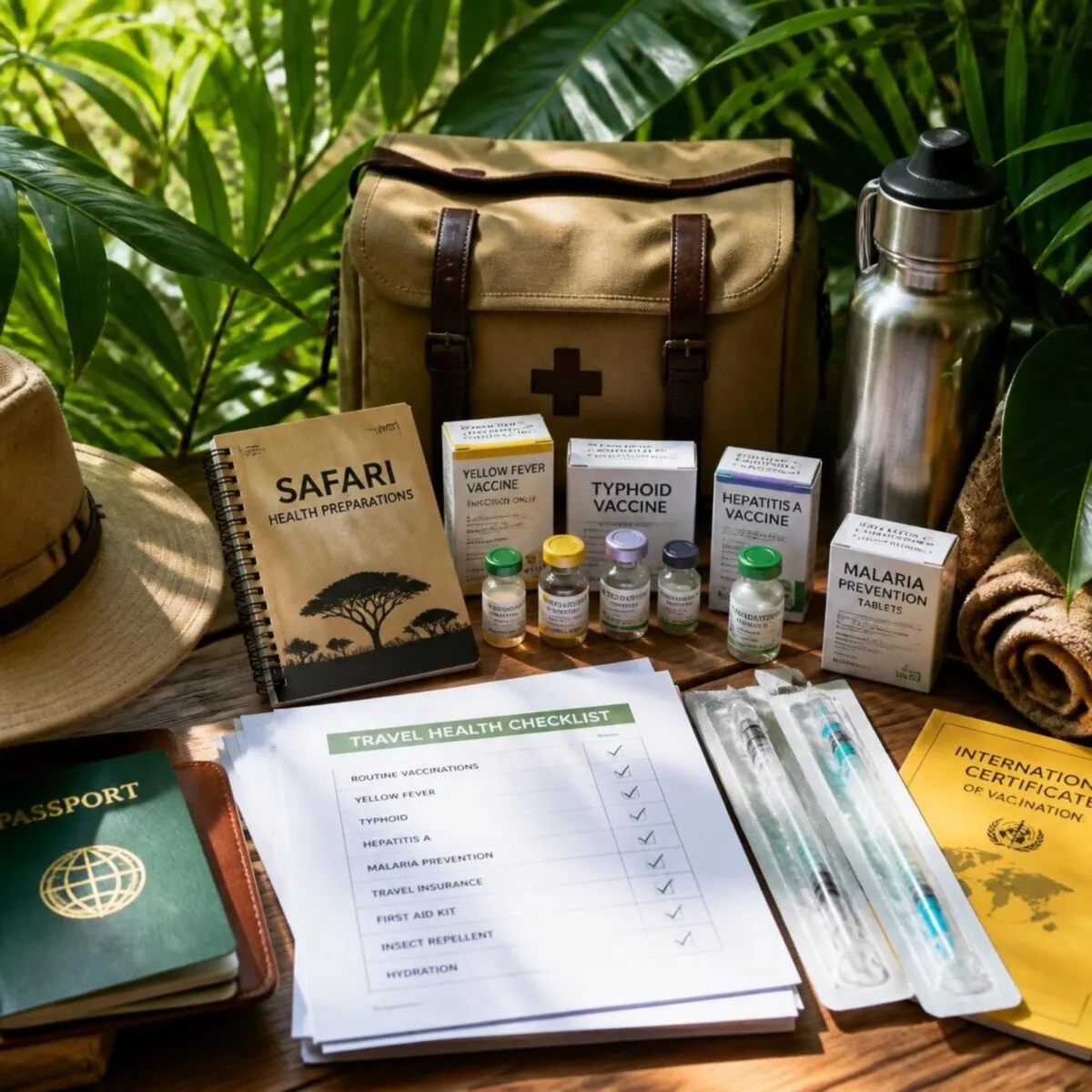
Much of the safari region is a malaria area, so antimalarial medication, insect repellent and covering up at dusk are the main precautions — straightforward and highly effective. Some South African reserves are malaria-free, which is reassuring for families with young children. Tap water is best avoided in favor of bottled or filtered water, which every camp provides. We confirm the exact health requirements for your itinerary before you travel.
Travel & personal safety
Safari destinations are geared around tourism and are generally welcoming and secure, particularly the private concessions and lodges where you will spend your time. As anywhere, you use normal common sense in towns and cities: keep valuables discreet, use arranged transfers, and follow local advice. Because we handle your transfers, internal flights and lodges end to end, you are looked after at every step.
Is Kenya safe? Is Tanzania safe?
These are the two questions we are asked most, and they deserve a more useful answer than yes. Both countries have long-established safari industries and welcome large numbers of American visitors every year. The safari areas themselves — the Maasai Mara, the Serengeti, Ngorongoro, Amboseli, Tarangire — are not usually where a US travel advisory’s concerns sit.
Advisories are issued country-wide, but the detail inside them is regional. A country can carry an elevated overall rating because of a specific border area, a coastal strip or a particular city, while the national parks a safari actually visits are hundreds of miles away and are not what the warning refers to. Reading only the headline number, without the regional detail underneath, gives a distorted picture in both directions.
How to read a US travel advisory properly
The State Department publishes four levels: Level 1 exercise normal precautions, Level 2 exercise increased caution, Level 3 reconsider travel, and Level 4 do not travel. Each advisory also carries risk indicator codes explaining why — C for crime, T for terrorism, U for civil unrest, K for kidnapping, H for health, D for wrongful detention, N for natural disaster and O for other. Every advisory shows the date it was issued, which tells you how current the assessment is.
We deliberately do not publish current advisory levels on this page, because they change and a fixed number here would eventually be wrong. Read the live advisory for your destinations before you travel: travel.state.gov travel advisories. We will also point you to the ones relevant to your specific route while we are planning.
It is worth enrolling in STEP, the free Smart Traveler Enrollment Program. It registers your trip with the nearest US embassy and means you receive their updates directly while you are away.
Crime, and where it actually applies
Where advisories flag crime in safari countries, it usually concerns specific urban areas — parts of a capital city after dark, certain districts, some transport hubs. That is a different environment from the one a safari takes place in. On a private, tailor-made trip you are met at the airport, driven or flown directly onward, and stay in camps and lodges on private land or inside national parks, most with staffed security and escorted walks after dark.
The practical precautions are the ordinary ones for any international travel: avoid unfamiliar city streets at night, use the safe in your room, keep valuables out of sight in transit, and carry a copy of your passport separately from the original. The safari itself is one of the more controlled travel environments you will experience.
Solo women travelers
Safari suits solo women travelers better than most long-haul trips, because so little of it is unstructured. You are collected on arrival, accompanied by a guide through the day, and camps are small, staffed and attentive — most escort guests to their tents after dark as standard, and staff quickly know who is where. Many of our solo guests have told us they felt more looked after on safari than on trips much closer to home.
If you are traveling alone, tell us. It changes which camps we choose — smaller, owner-run properties where you will be included at the table rather than large lodges where a solo traveler can feel invisible.
Safaris with children
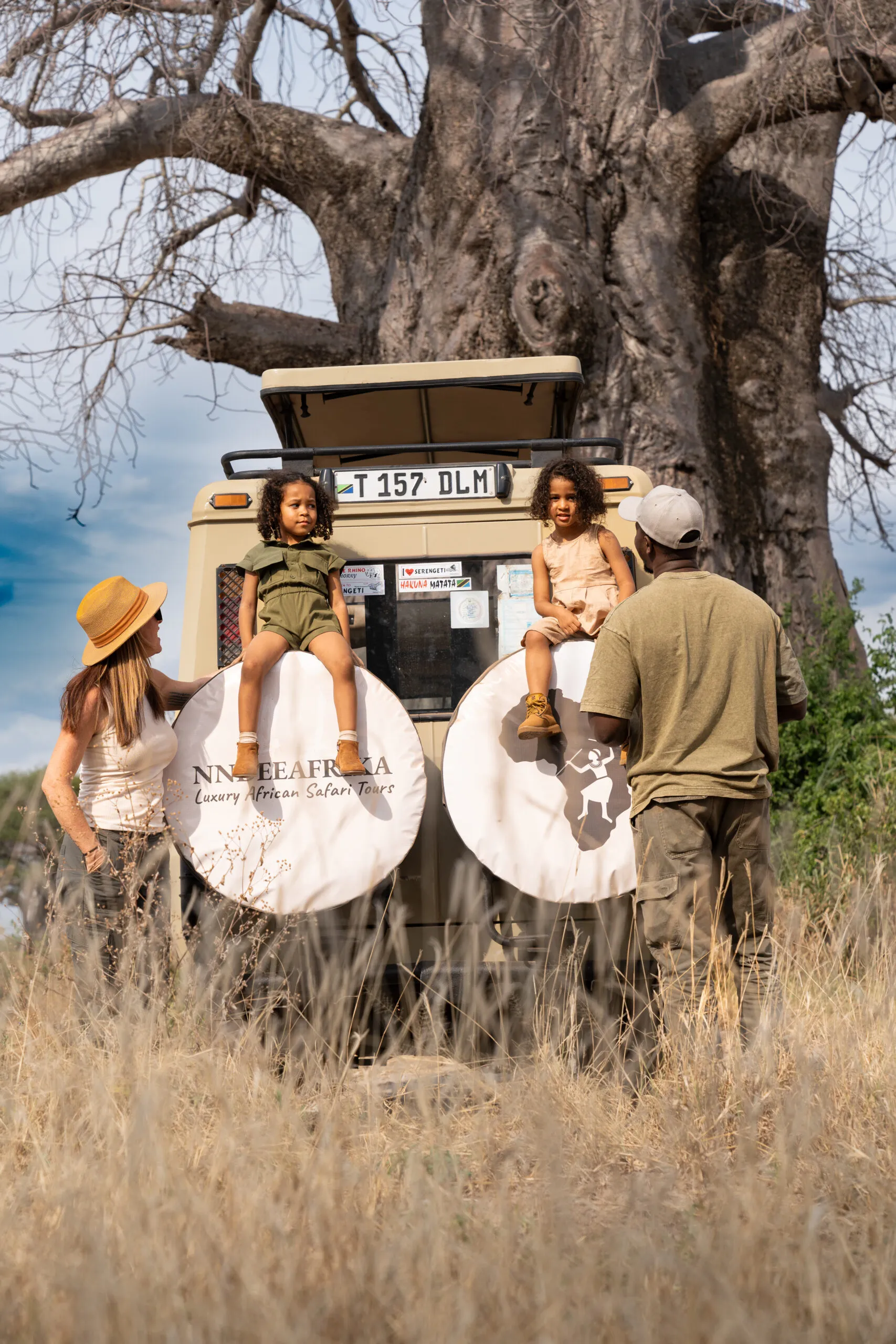
Camps set their own minimum ages, and they vary widely — some accept any age with a private vehicle, while others set a minimum of six, eight or twelve for shared activities such as walking safaris or canoeing. This is one of the main reasons a family safari has to be designed rather than booked off a page: the age of your youngest child changes which properties are open to you.
Malaria is the other consideration for families. Some regions — parts of South Africa in particular — offer malaria-free reserves, which is why we often suggest them for young children. We will tell you plainly which of your options are malaria-free and which are not.
If something does go wrong
Serious incidents are rare, but remote camps are genuinely remote, and that is the risk worth planning for rather than the animals. Most reputable camps hold medical evacuation cover for guests, and air ambulance services operate across the main safari regions. We confirm what is in place for the specific camps on your itinerary rather than assuming.
We ask every guest to travel with insurance that includes medical evacuation and repatriation, not only trip cancellation. It is the single most important thing you will buy for the trip and hopefully never use. Check current vaccination and health guidance for your route with the CDC travel health pages and your own doctor — requirements depend on your route, including any countries you only transit.
Choosing a safe operator
The single biggest factor in a safe trip is who you travel with. A reputable operator uses licensed guides, well-maintained vehicles and vetted camps, carries proper insurance, and has the contacts to respond quickly if plans change. We also strongly recommend comprehensive travel insurance that includes medical evacuation — a standard, sensible safeguard for remote travel.