What is a safari actually like, day to day? First-time guests are often surprised that a safari has a rhythm as old as the bush itself — built around the hours when animals move and the midday heat when everything, wisely, sleeps.
Here is a typical day at a luxury camp, hour by hour.
5:30am — wake-up with the light
A gentle “good morning” at your tent with coffee or tea. The bush is already awake — you will hear it. Dress in layers; mornings are genuinely cold, even in Africa.
6:00–10:00am — the morning game drive
The best hours of the day. Lions are often still moving, leopards finishing the night shift, light spectacular for photography. Your guide reads tracks and radio chatter, and the drive unfolds like a story. Mid-morning you stop somewhere beautiful for a full bush breakfast.
11:00am–3:30pm — the languid middle
Back in camp: a swim, a massage, lunch under the trees, a siesta on your private deck watching elephants at the waterhole. This is not wasted time — it is the luxury half of a luxury safari, and the animals are asleep anyway.
4:00–7:00pm — afternoon drive & sundowners
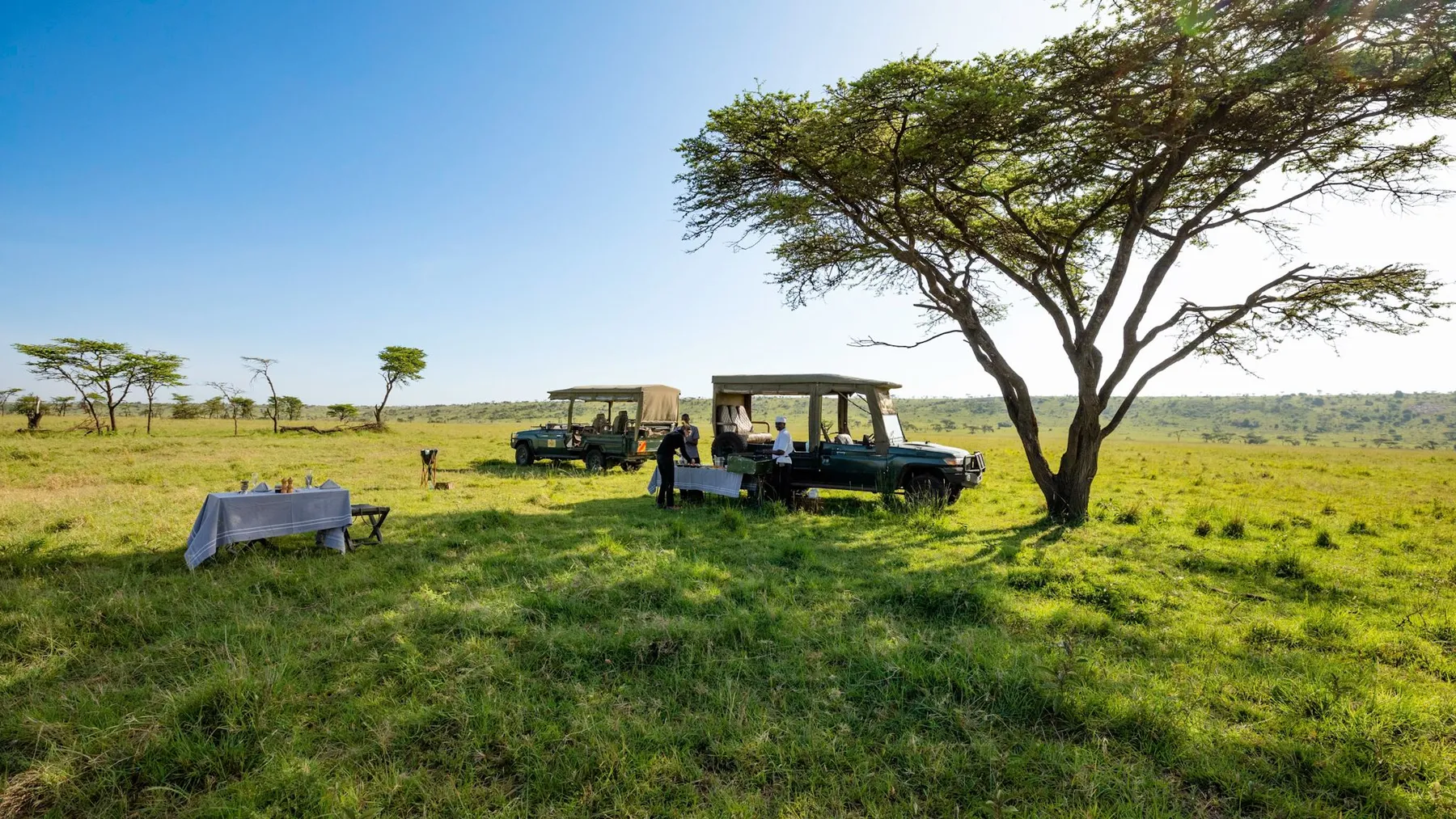
Out again as the heat breaks and the bush stirs. As the sun drops, your guide finds a view, unfolds a table, and pours the gin and tonic — the sundowner, safari’s finest institution. In private conservancies, the drive can continue after dark with a spotlight for the nocturnal shift.
7:30pm — dinner and firelight
Dinner might be plated fine dining, a candlelit table in the riverbed, or a boma feast under the stars. Then stories by the fire and an escorted walk back to your tent — falling asleep to lion calls somewhere out in the dark is something you will never forget.
How the day changes with season and place
Close to the equator, in Kenya and Tanzania, sunrise and sunset barely move through the year, so this rhythm hardly changes from month to month. Further south, in Botswana, Zambia and South Africa, the seasons reshape the day. Winter mornings from June to August start later and can be close to freezing in an open vehicle, so camps hand out blankets and often hot-water bottles. In the hot months before the rains, the midday break grows longer and the afternoon drive leaves later.
Park rules shape the day too. In most national parks, vehicles must be back in camp around sunset. In private conservancies and reserves, the afternoon drive can carry on after dark with a spotlight, and guides can leave the road to follow a sighting.
Other ways to spend a day
- On foot. A morning walking safari with a guide, and an armed ranger where park rules require one, for tracks, birds and the small things a vehicle drives past.
- On the water. A mokoro through the channels of the Okavango Delta, or a boat on the Chobe River, where elephants swim across in front of you.
- In the air. Up before dawn for about an hour aloft over the Serengeti or the Maasai Mara, with breakfast on landing; our balloon safari guide has the details.
- A full day out. In the Serengeti during the migration, a full-day drive with a picnic lunch lets you follow the herds further from camp.
- People and culture. A morning with a Maasai or Hadzabe community, arranged respectfully and never as a show; see people and culture.
What a private vehicle changes
On a shared camp vehicle, the timetable belongs to the camp: everyone leaves and returns together, and a sighting lasts as long as the group agrees. With a private vehicle and guide, the day is yours. You can leave before first light, stay with a leopard for an hour, take a full-day drive, or come back early with tired children.
At fly-in camps, game drives may be shared unless a private vehicle is reserved, so we show which days are private in your proposal. Our private and exclusive-use safaris are built that way from the start, and our fly-in safari guide explains how flying between camps shapes the days.
Questions about a day on safari
What time do safari game drives start?
Usually at first light, around 6:00 to 6:30am, with a wake-up call about half an hour earlier. Afternoon drives leave at around 4:00pm and return near sunset, or after dark in private reserves that allow night drives. Exact times vary with the camp, the season and the park’s rules.
How many hours a day are you on game drives?
Typically six to seven hours: three to four in the morning and around three in the afternoon. Full-day drives with a picnic lunch are possible in many areas, especially with a private vehicle.
Is a safari tiring?
The early starts and bumpy tracks can be, which is why the middle of the day is for rest. Staying three nights or more in each camp, and flying between parks rather than driving, keeps the pace gentle.
What do you do between game drives?
Rest, mostly: lunch, a swim, a massage at camps that offer one, or watching the waterhole from your deck. Some camps also offer short guided walks, a visit to a local community, or time in a photographic hide.