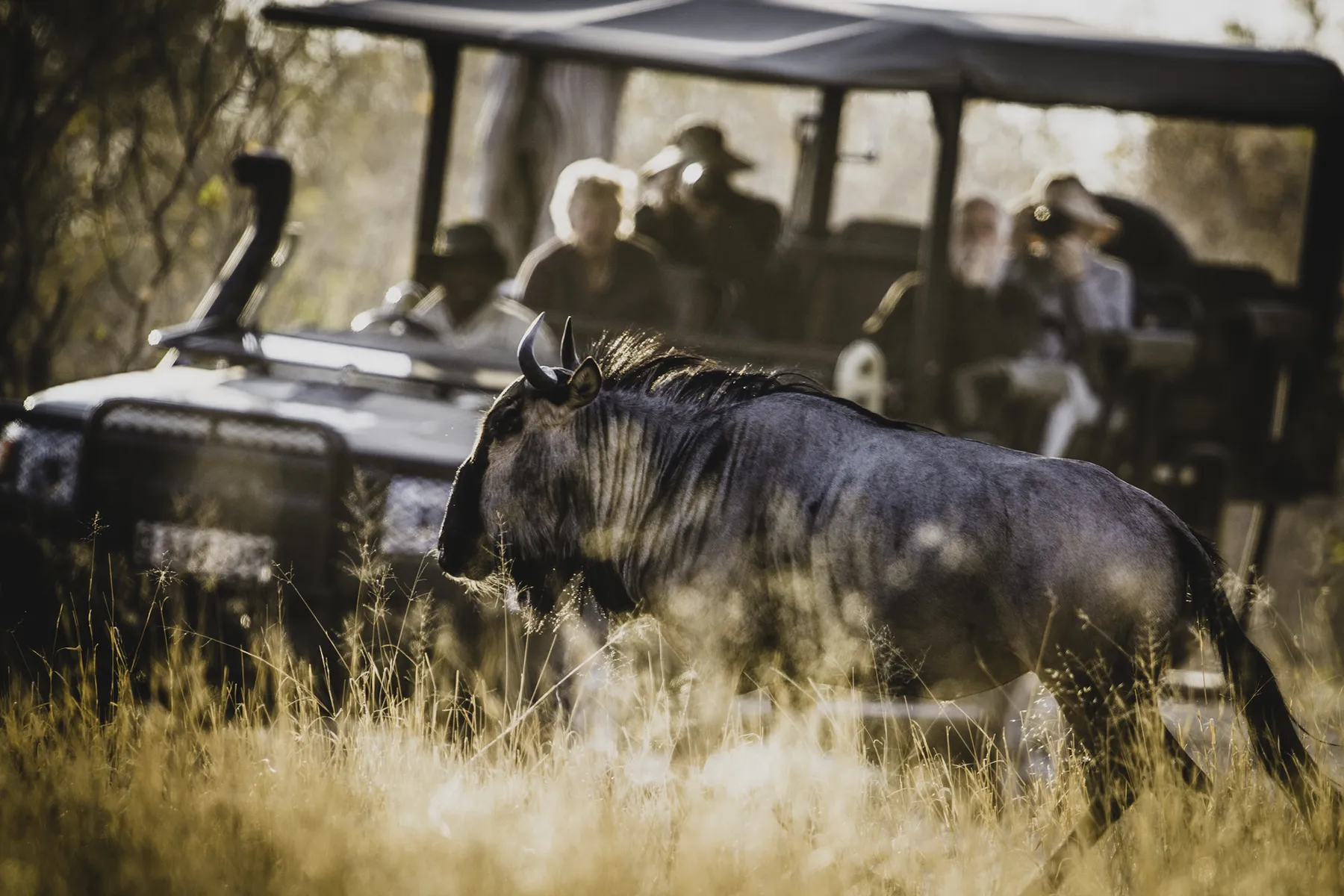
There is no single best time for an African safari — it depends entirely on the region you visit and what you most want to experience. Broadly, the dry season delivers the easiest game viewing across the continent: vegetation thins, animals gather at water, and the wildlife is simply easier to find. For exact timing by destination, open the month-by-month safari planner.
That said, the green season has its own rewards — newborn animals, dramatic skies, superb birding and far fewer vehicles, often at lower rates. Here is how the year breaks down, region by region.
East Africa — Kenya & Tanzania
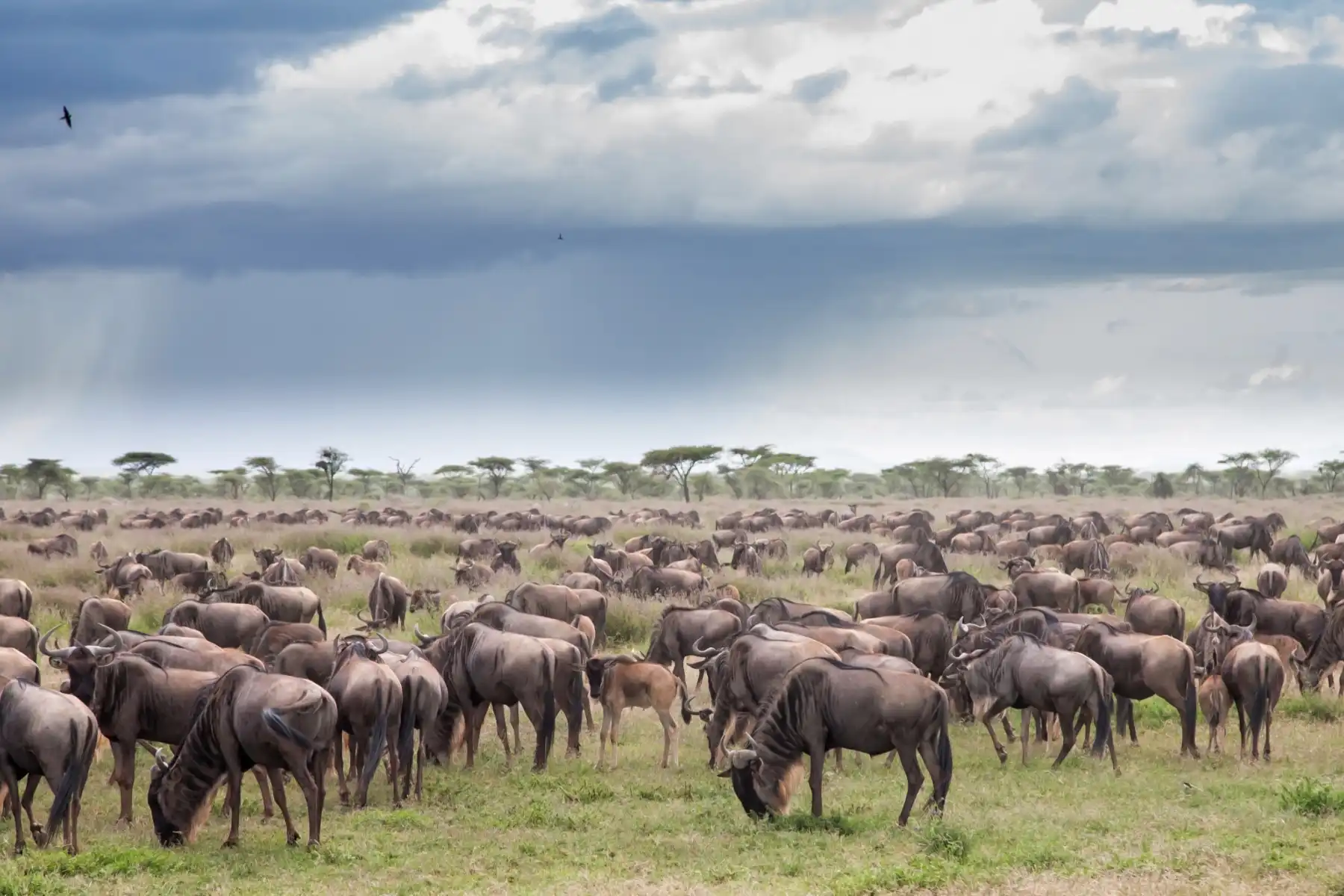
The classic safari window is June to October, the long dry season, when general game viewing is at its best across the Serengeti, Maasai Mara, Ngorongoro and beyond. This is also when the Great Migration reaches the northern Serengeti and the Maasai Mara, and the dramatic Mara River crossings unfold — typically July through October.
For a completely different spectacle, January and February bring the calving season to the southern Serengeti, when hundreds of thousands of wildebeest give birth on the short-grass plains and predators follow. The green season (November to May, with long rains around April–May) offers lush landscapes, excellent birding and lower prices.
- —June–October: peak dry season, best general game viewing
- —July–October: Mara River crossings in the northern Serengeti & Maasai Mara
- —January–February: calving season, southern Serengeti
- —November–May: green season — birding, fewer crowds, better value
Southern Africa — Botswana, Zambia, Namibia & South Africa
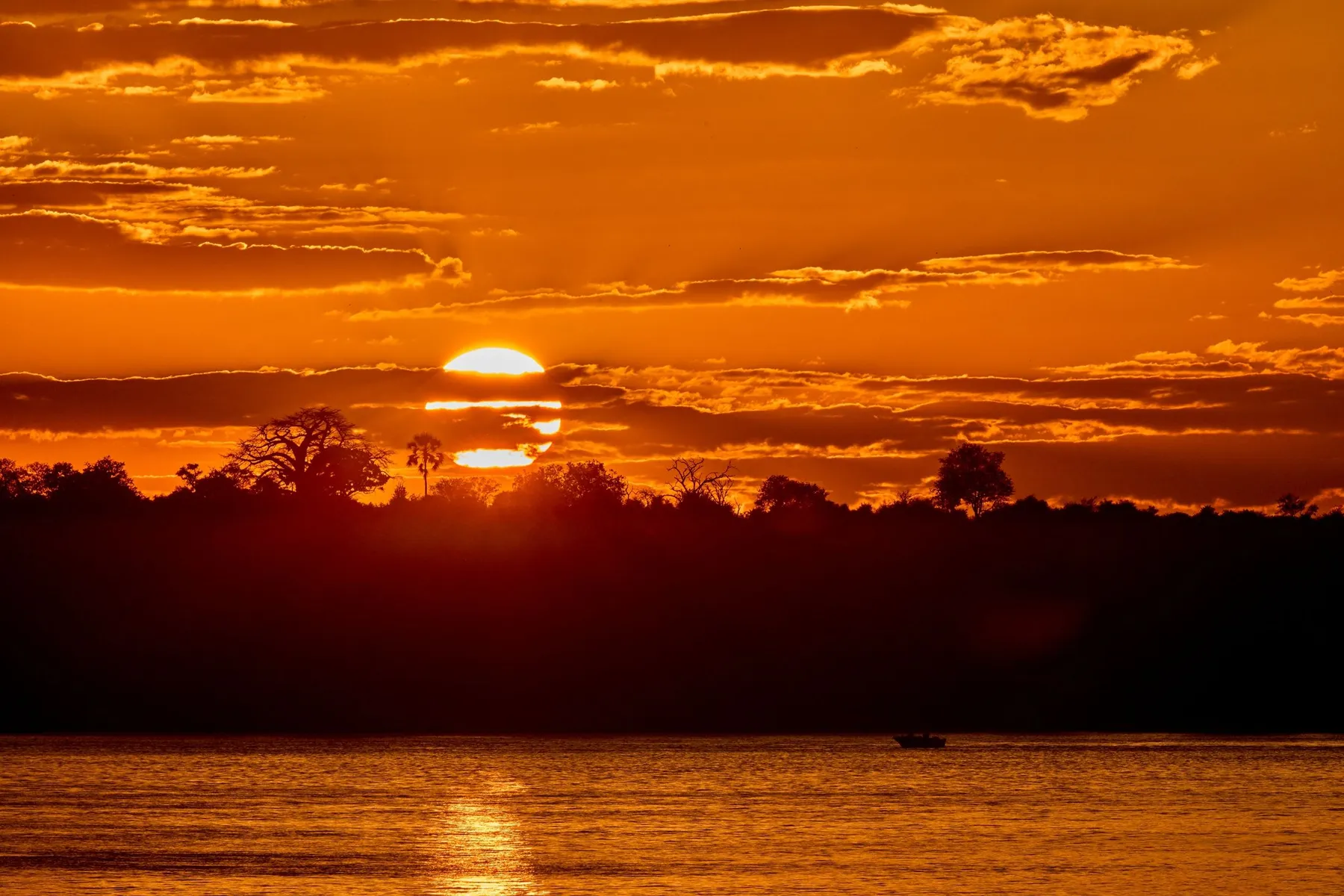
The dry winter months of May to October are the prime safari window across Southern Africa, when wildlife concentrates around shrinking water sources. In the Okavango Delta, the annual floodwaters peak around June to August — a magical time for mokoro (dugout canoe) safaris.
The green summer season (November to April) brings the rains, baby animals and spectacular thunderstorms; it is quieter and more affordable, though some camps in remote areas close.
Gorilla trekking — Rwanda & Uganda
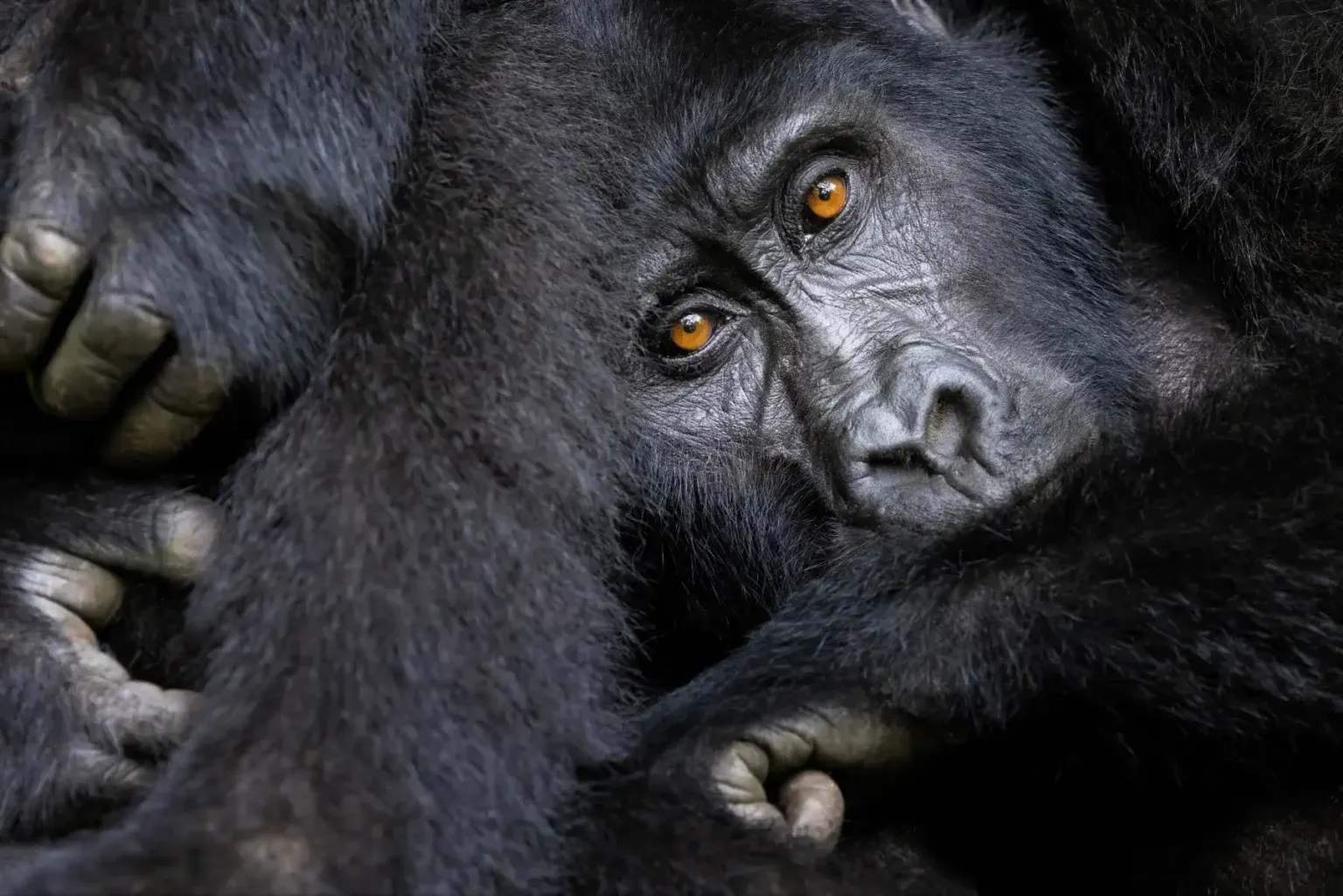
Mountain gorillas can be tracked year-round, but the drier months — roughly June to September and December to February — make for easier, less muddy hiking on the steep forest slopes. Permits are limited and in high demand in these windows, so book well ahead.
The beach — Zanzibar, Seychelles & Mauritius
For a bush-and-beach finale, the Indian Ocean islands are at their best from June to October and December to March, with warm, dry, sunny days. In Zanzibar, avoid the long rains of April and May. The Seychelles and Mauritius are year-round destinations, with subtle seasonal shifts in wind and rainfall.