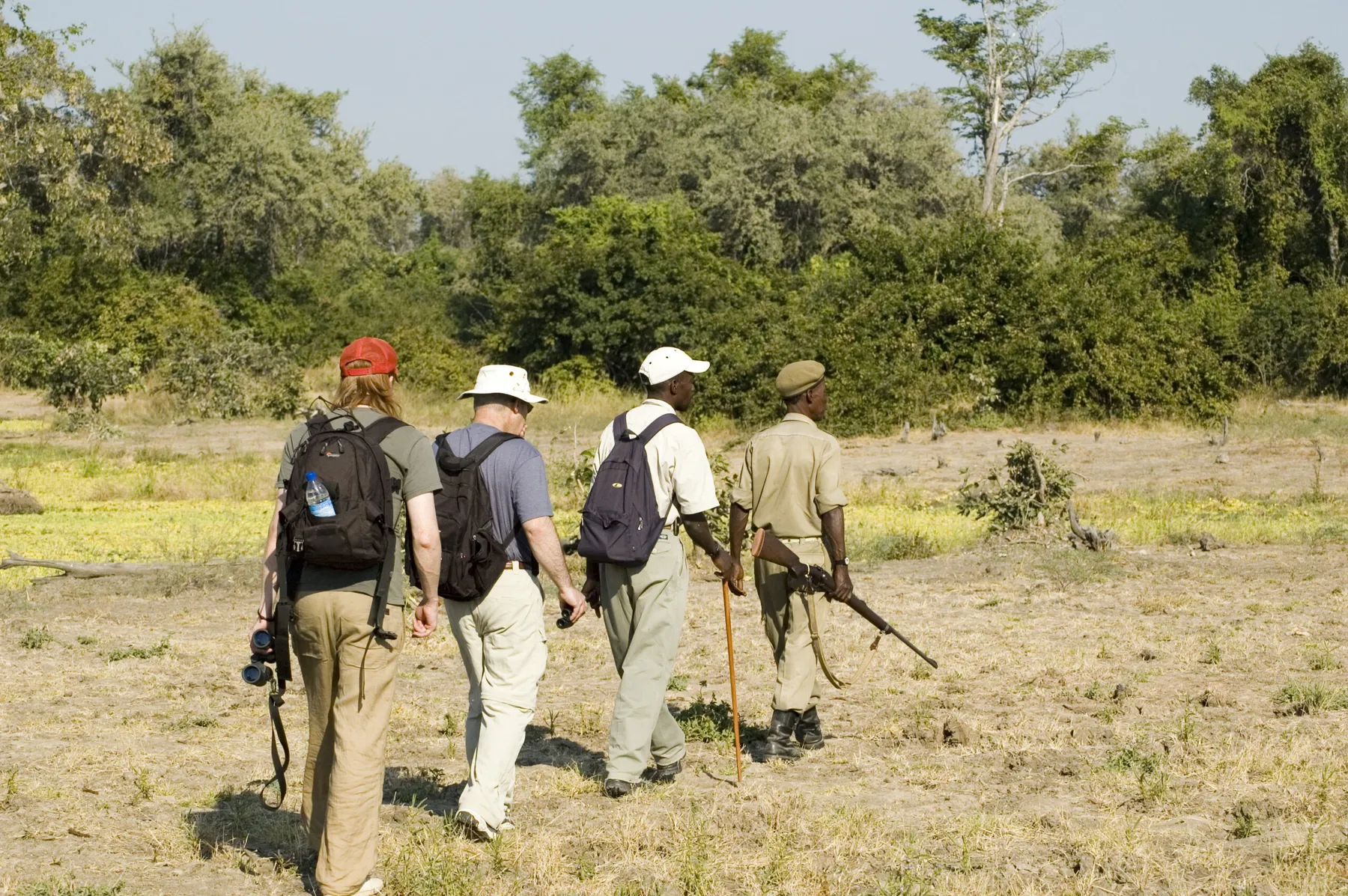
A walking safari strips the experience back to its purest form — no engine, no vehicle, just you, an expert armed guide and the sounds and scents of the wild. It is the most intimate way to connect with the bush.
Pioneered in Zambia’s South Luangwa, walking safaris are now offered across Africa, focusing on tracks, smaller creatures, birds and the thrill of approaching game on foot.
Highlights of Walking Safari
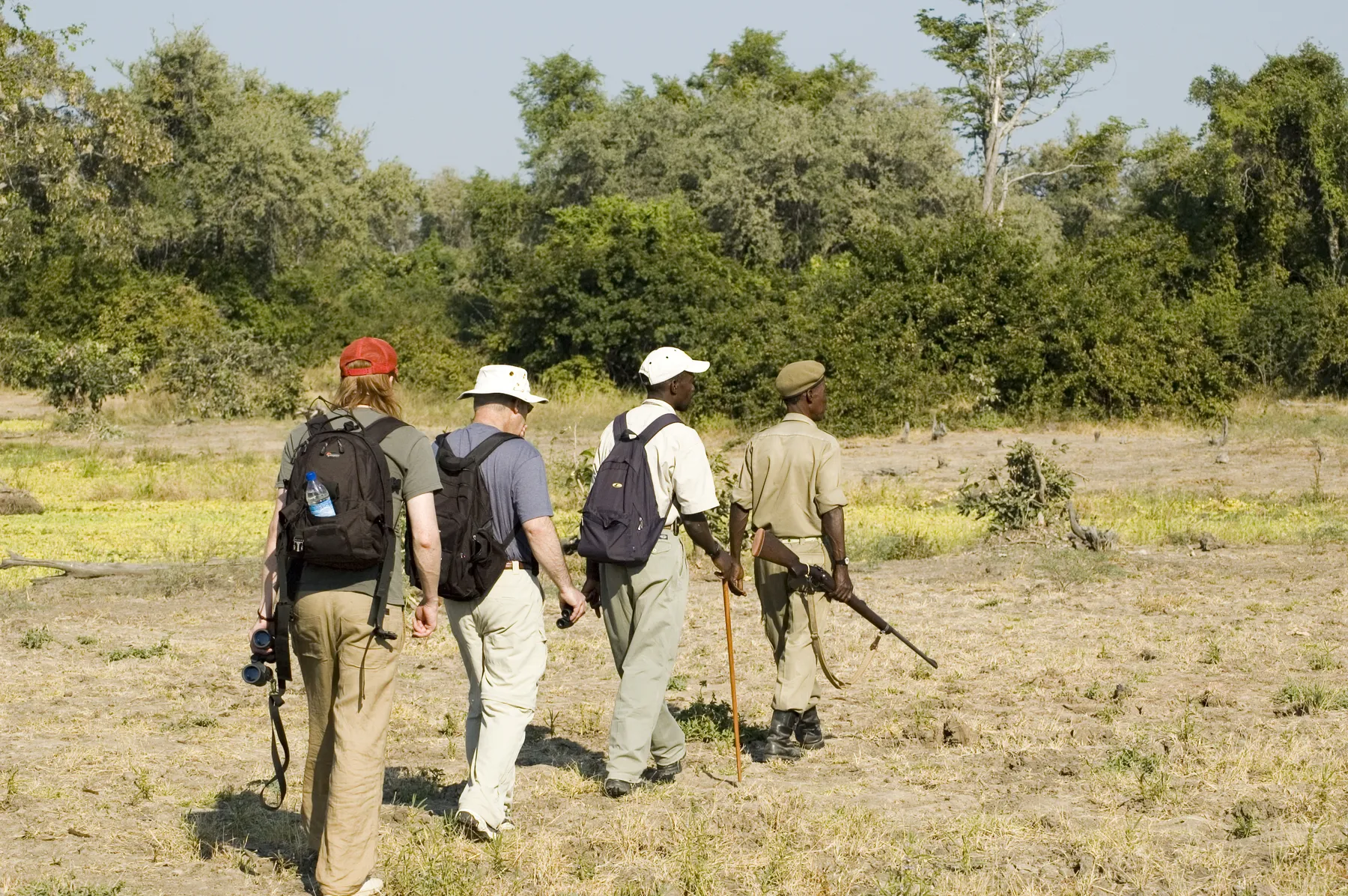
Mana Pools, Zimbabwe
Renowned guides and on-foot encounters along the Zambezi.
Explore Mana Pools, Zimbabwe →Expert armed guides
Safety, fieldcraft and an unmatched depth of bush knowledge.
The small details
Tracks, birds, plants and the stories the bush tells on foot.
Best countries for a walking safari
Walking safaris are about the small details and the thrill of being on foot, and a few countries do them better than anywhere. Here is where to go, and why.
Zambia
The birthplace of the walking safari. South Luangwa's expert guides and remote bush camps set the global standard.
Explore Zambia → Southern AfricaZimbabwe
Home to Africa's most rigorously trained guides. Mana Pools is legendary for walking among elephant and wild dog.
Explore Zimbabwe → Southern AfricaBotswana
Wilderness walks in private Okavango concessions, paired with water and 4x4 safaris for real variety.
Explore Botswana → Eastern AfricaTanzania
Walk the wild Nyerere (Selous) and Ruaha in the south, far from the vehicles of the northern circuit.
Explore Tanzania →Know before you go
The practical details we handle for you — flights, entry, health and money — summarized here so nothing surprises you. Requirements can change, so we confirm everything when you book.
South Luangwa is reached via Johannesburg or Nairobi to Lusaka, then a short hop to Mfuwe. Mana Pools connects through Harare or Victoria Falls. We arrange every leg.
Zambia is visa-free for US citizens; the $50 KAZA UniVisa is only needed if combining with the Zimbabwean side of Victoria Falls. Zimbabwe visa on arrival (~$30) for Mana Pools.
Both valleys are malaria areas — prophylaxis advised. Walking is gentle-paced (3–4 hours in the cool morning) and suits any reasonably fit traveler; minimum ages apply, usually 12–16.
Camps are fully inclusive. Tipping is at your discretion — around $20–25 per guest per day for your walking guide, plus $10–15 for camp staff in the tip box.
Best time for a walking safari
Dry season — the prime, and often only, walking-safari window.
Shoulder months with green scenery and fewer travelers.
In the green months rates ease at many of these camps, the plains empty of vehicles and the light turns dramatic. What each season gives, and what it trades, is set out in our Safari Planning Guide.
Planning & cost
Fully tailor-made — priced privately to your camps, season and travel style. No fixed packages.
Every journey is privately designed, with private guides and vehicles arranged where specified, the finest lodges, and a specialist on call throughout. At fly-in camps, game drives may be shared unless a private vehicle is reserved.
Practical details,
in one place
Money, health, connectivity and packing work the same way on every safari we plan, so they live in one place rather than on every page.
Continue exploring
Zambia
A Zambia safari means the home of the walking safari — and the Zambian side of Victoria Falls.
Explore → Southern AfricaZimbabwe
A Zimbabwe safari runs from Victoria Falls to Hwange’s elephants and the wild canoeing of Mana Pools.
Explore → ExperienceBig Five Safari
A Big Five safari — lion, leopard, elephant, buffalo and rhino, Africa’s most sought-after sightings.
Explore →Walking Safari FAQs
Are you ready to walk? The honest checklist
Let's design your Walking Safari journey.
A walking safari changes the scale of everything, and suits travelers who have already done the drives.
Tell us how you like to travel and start with a complimentary consultation. When you are ready, a $500 USD planning fee covers your personalized itinerary and revisions, and is deducted from your booking deposit when you book.
Inquire now