Serengeti National Park: The Ultimate Guide to Tanzania’s Legendary Safari.
Table of contents
- Serengeti National Park: The Ultimate Guide to Tanzania’s Legendary Safari
- Quick Facts: Serengeti National Park
- Where Is Serengeti National Park Located?
- Why Serengeti National Park Is World Famous
- The Great Migration: A Year-Round Cycle
- Best Time to Visit Serengeti National Park
- Top Things to Do in Serengeti National Park
- Where to Stay: Serengeti Accommodation Guide
- How to Get to Serengeti National Park
- Frequently Asked Questions (FAQ)
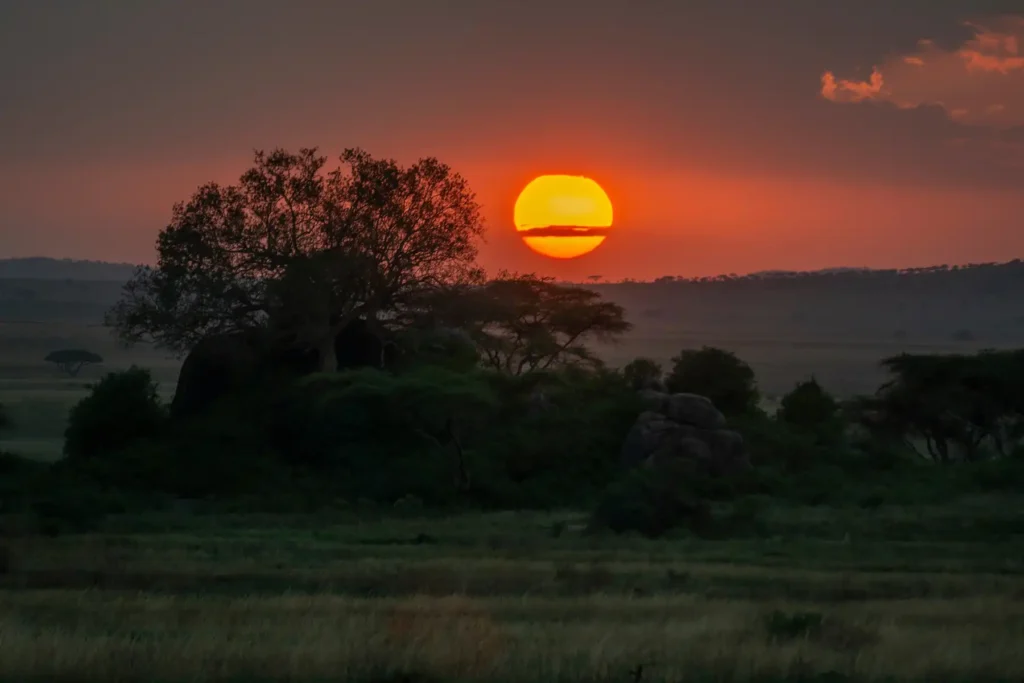
Serengeti National Park is widely regarded as the crown jewel of African wildlife sanctuaries. Located in northern Tanzania, this vast ecosystem is synonymous with the wild, offering visitors a front-row seat to the most dramatic scenes in nature.Your Tanzania Safaris awaits.
Renowned for its endless open plains, massive predator populations, and the awe-inspiring Great Wildebeest Migration, the park is more than just a destination—it is a UNESCO World Heritage Site and one of the Seven Natural Wonders of Africa. Whether you are tracking lions in the tall grass or watching a million wildebeest thunder across a river, a safari here is a life-changing experience.
Quick Facts: Serengeti National Park
| Feature | Details |
| Location | Northern Tanzania (bordering Kenya’s Maasai Mara) |
| Size | Approx. 14,750 sq km (5,700 sq miles) |
| Best For | The Great Migration, Big Five, Big Cats |
| Best Time | June–October (Dry Season) & Jan–Feb (Calving) |
| Closest Airport | Kilimanjaro Intl (JRO) or Arusha (ARK) |
Export to Sheets
Where Is Serengeti National Park Located?
Serengeti National Park dominates northern Tanzania and is the centerpiece of the greater Serengeti ecosystem. It stretches north to the Kenyan border (merging with the Maasai Mara National Reserve) and west toward Lake Victoria.
The park covers approximately 14,750 square kilometers, making it one of the largest and most protected wilderness areas on the continent. Its name is derived from the Maasai word Siringet, which translates to “the place where the land runs on forever”—a fitting description for the golden savannahs that stretch as far as the eye can see.
Why Serengeti National Park Is World Famous
While many parks offer game viewing, the Serengeti is in a league of its own. It is globally recognized for hosting the Great Wildebeest Migration, the largest terrestrial mammal migration on Earth.
Every year, over two million wildebeest, alongside hundreds of thousands of zebras and gazelles, traverse the ecosystem in a constant cycle of life and death, chasing fresh grazing and water.
Beyond the migration, the park is famous for:
-
- The Big Five: Home to healthy populations of Lions, Leopards, Elephants, Buffalo, and the elusive Black Rhino.
-
- Predator Density: It has one of the highest concentrations of lions and cheetahs in Africa, offering exceptional opportunities for witnessing hunts.
-
- Biodiversity: Over 500 species of birds, making it a birder’s paradise.
The Great Migration: A Year Round Cycle
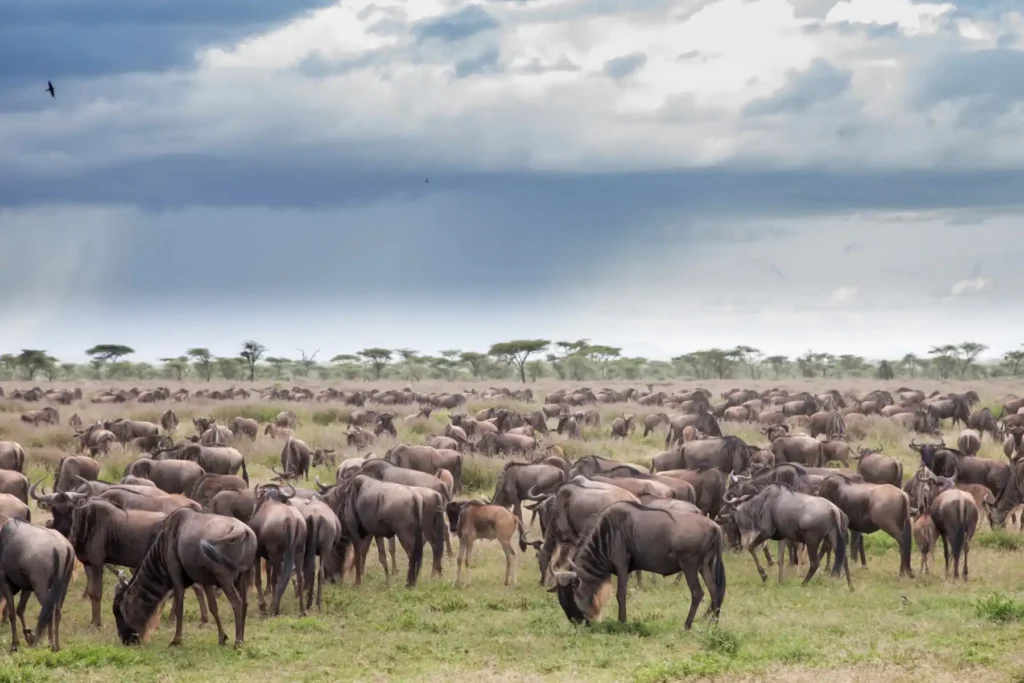
Understanding the migration is key to planning your trip to Serengeti National Park. The animals are constantly on the move, so “where to go” depends entirely on “when you go.”
1. Calving Season January to March
During these months, the herds congregate in the Southern Serengeti and Ndutu Conservation Area. The nutrient-rich grass supports the birth of thousands of calves daily. This abundance of vulnerable prey attracts legions of predators, resulting in high-action game viewing.
2. The Trek North April to June
As the south dries up, the herds begin their trek west and north. This is “The Rut” (breeding season), where males battle for dominance. The columns of animals can stretch for miles, often moving through the Western Corridor.
3. River Crossings July to October
This is the most dramatic phase. The herds reach the Northern Serengeti, where they must face the treacherous Mara River. Watching thousands of animals plunge into crocodile-infested waters is arguably the most thrilling wildlife spectacle on the planet.
Best Time to Visit Serengeti National Park
While Serengeti National Park offers incredible wildlife viewing year-round, the best time depends on your specific interests. When to Visit Serengeti National Park.
- Dry Season (June to October):
Why go: Easier to spot wildlife as vegetation is thin and animals gather around waterholes. This is prime time for the river crossings in the north.
Conditions: Sunny days, cool nights, and virtually no rain. - Green Season (November to May):
Why go: The landscape is lush and green, creating stunning photography backdrops. It is the best time for birdwatching and seeing newborn animals (calving season).
Bonus: Fewer crowds and often lower accommodation rates (except during the Christmas/New Year holiday).
Top Things to Do in Serengeti National Park
A safari here is diverse. While driving is the standard, there are other ways to experience the wild.
Game Drives
The classic safari experience. Morning and afternoon drives in 4×4 vehicles allow you to cover ground and get up close to lions, elephants, and leopards safely. Guides are experts at tracking animals and positioning vehicles for the perfect photo.
Hot Air Balloon Safaris
For a bucket-list experience, take to the skies. A sunrise balloon safari floats you silently over the plains, offering a unique perspective of the vastness of the Serengeti. Most flights conclude with a champagne breakfast in the bush.
Guided Walking Safaris
In designated zones, you can leave the vehicle behind. Guided by armed rangers, walking safaris focus on the smaller details—animal tracks, insects, and plants—that you might miss from a car.
Wildlife Photography
With its distinct “Kopjes” (granite rock formations) and golden light, the park is a photographer’s dream. The open terrain allows for unobstructed shots of cheetah chases and lion prides.
Where to Stay: Serengeti Accommodation Guide
Serengeti National Park is vast, so choosing the right location is critical to minimizing travel time.
-
- Central Serengeti (Seronera): The most popular area with the highest density of lodges and year-round wildlife. Great for first-timers.
-
- Northern Serengeti (Kogatende): The place to be from July to October for the migration river crossings.
-
- Southern Serengeti: Ideal for the calving season (Jan–March).
Accommodation Styles:
-
- Luxury Lodges: Permanent structures with pools, spas, and 5-star amenities.
-
- Tented Camps: Canvas walls that let you hear the sounds of the night while offering luxury comfort.
-
- Mobile Camps: These eco-friendly camps move seasonally to follow the migration, ensuring you are always close to the action.
How to Get to Serengeti National Park
-
- By Air (Recommended): The fastest route is to fly from Arusha or Kilimanjaro International Airport to one of the park’s airstrips (Seronera, Kogatende, Grumeti, or Sasakwa).
-
- By Road: For the adventurous, you can drive from Arusha via the Ngorongoro Conservation Area. The drive is scenic but long (approx. 8 hours), offering a chance to see the countryside.
Frequently Asked Questions FAQ
How many days do you need in Serengeti National Park?
ost experts recommend spending at least 3 to 4 days in the Serengeti. This allows enough time to explore different regions (like Central and Northern) without feeling rushed.
Is Serengeti National Park safe for tourists
Yes, it is generally very safe. Safaris are conducted by professional guides who are trained to handle wildlife encounters. Visitors stay in secure lodges or camps. Always follow your guide’s instructions and never walk alone at night.
How much does a Serengeti safari cost? Costs vary widely depending on luxury level.
Mid-Range: $600- $900 per person/day (tented camps)
Luxury: $1,50+ per person/day (high-end lodges, fly-in safaris)
Note: Park entrance fees are mandatory and usually included in package quotes.
Can you self-drive in Serengeti National Park
While technically allowed, it is not recommended for first-timers. The park is massive, signage is sparse, and road conditions can be difficult. A professional driver-guide adds immense value by spotting wildlife you would likely miss.
Serengeti National Park is not just a travel destination; it is a pilgrimage for nature lovers. It is one of the few places left on Earth where the ancient rhythms of nature play out exactly as they have for millennia.
Whether you are looking for the thrill of the hunt, the serenity of a sunrise balloon ride, or simply the magic of the African sunset, the Serengeti delivers an unforgettable journey. Book Your luxury African safaris.