The guide to the Great migration

The guide to the Great Migration safari
Great Wildebeest Migration

Discover the ultimate guide to the Great Migration in Africa. Learn about the 1.5 million+ wildebeest and zebra herds, best times to visit, river crossings, calving season, migration route, and expert safari tips for 2026 in the Serengeti-Mara ecosystem.

 Introduction to the Great Migration

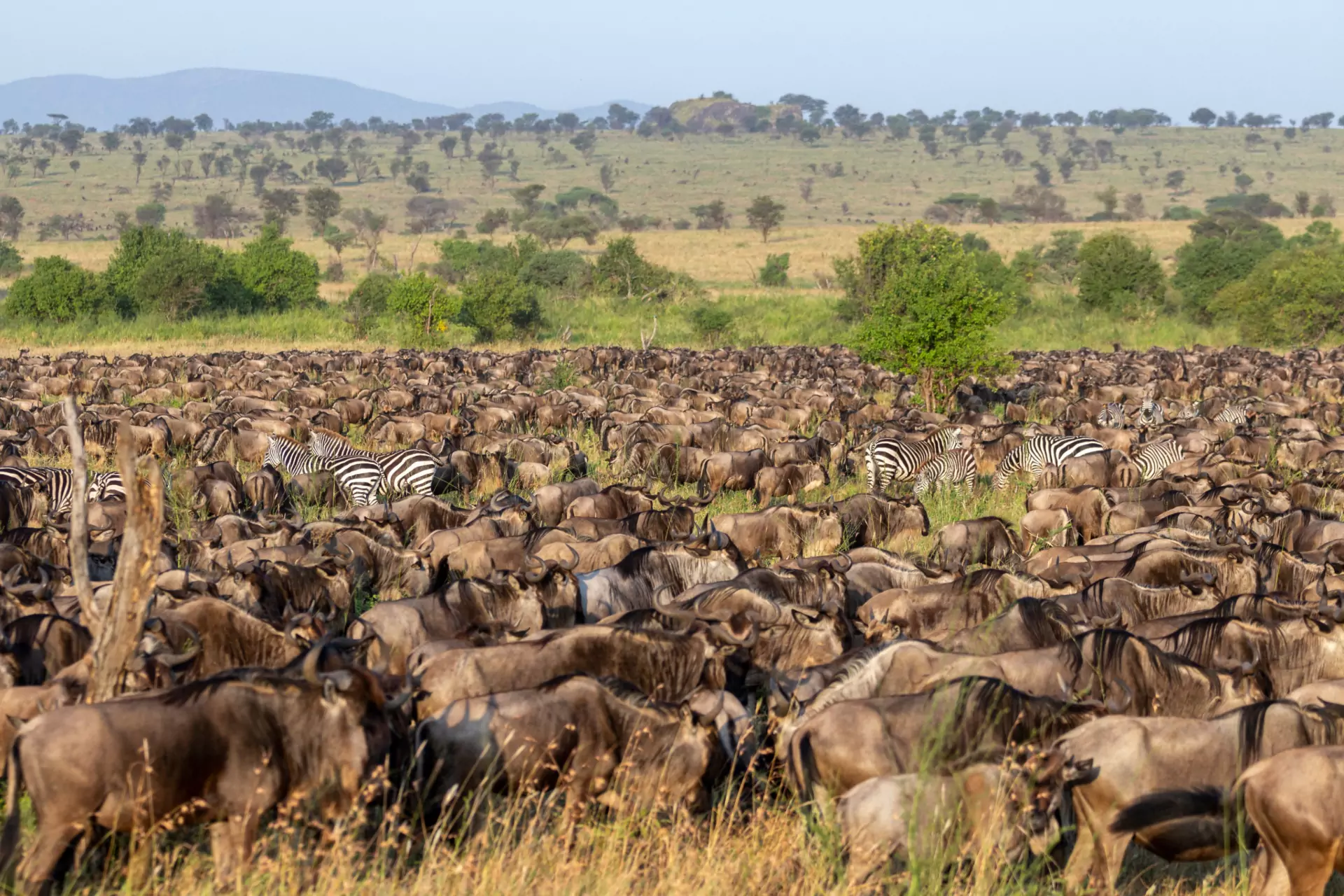
The Great Migration is one of the most spectacular wildlife events on Earth-often called “the greatest show on Earth.” Over 1.2 million wildebeest, 300,000 zebra, and thousands of Thomson’s gazelles and other antelopes move in a continuous clockwise cycle across the vast Serengeti-Mara ecosystem in Tanzania and Kenya. This epic journey covers upto 1,000 km per animal, driven by the search for fresh grass and water.
It’s a dramatic story of survival: births replenish the herds while predators, rivers, and exhaustion claim thousands. Whether you’re planning your first safari or dreaming of witnessing the chaos of a river crossing, this guide to the Great Migration has everything you need.

What Is the Great Wildebeest Migration? 

The Great Wildebeest Migration is the world’s largest overland animal migration. It involves more than 1.5 million animals moving in search of nutritious grazing and water across the plains of the Serengeti National Park (Tanzania) and Maasai Mara National Reserve (Kenya).
This is not a one-time event -it’s a year-round, circular journey. Predators like lions, leopards, cheetahs, hyenas, wild dogs, and crocodiles ensure only the strongest survive. Thousands perish, but calving seasons bring new life, sustaining the cycle.

The Animals and Their Roles

The migration features a unique grazing succession that maintains ecological balance:
• Zebras arrive first and crop the tallest, coarser grasses.
• Wildebeest follow, feeding on the shorter, fresher shoots.
• Thomson’s gazelles finish last, nibbling the tender grasses and herbs close to the ground.
This sequence keeps species mostly separate while traveling together.

The Migration Route Explained 

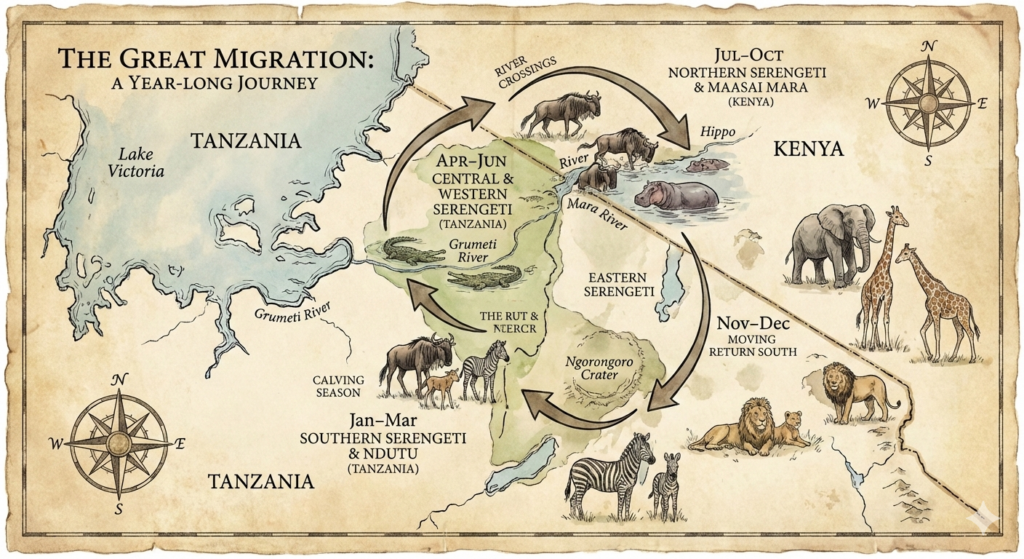
The herds follow an ancient clockwise path:
1. Start in southern Serengeti (near Ngorongoro Conservation Area)-calving grounds.
2. Move north through the Serengeti.
3. Cross into Kenya’s Maasai Mara.
4. Loop back south to the Serengeti.
The route is never exact — rains dictate the pace.

What Causes the Great Migration? 

Instinct and weather drive the movement. Herds follow rainfall patterns and new grass growth. Wildebeest may detect distant rain through lightning or thunderstorms, though this isn’t fully proven scientifically. Survival instincts guide them along age-old routes.

When Is the Best Time to See the Great Migration? 

The migration is year-round but unpredictable due to changing rain patterns. Two highlights stand out:
• Calving season (late December–mid-March): Southern Serengeti -thousands of calves born, high predator action.
• Mara River crossings (late July–early September): Northern Serengeti/Maasai Mara- iconic, dramatic spectacles.
Plan longer safaris for flexibility.

Month by Month Guide to the Great Migration

Explore the ultimate guide to the Great Migration Map in Africa. Discover the route, best times, river crossing, calving season, and expert tips.


• January–March: Southern Serengeti (Ndutu area) — peak calving season with up to 8,000 births daily.
• April–May: Herds move west and north through central Serengeti.
• June: Western Serengeti — Grumeti River crossings begin.
• July: Northern Serengeti — first Mara River attempts.
• August–September: Peak Mara River crossings — high drama in Maasai Mara.
• October–November: Herds start southbound through Serengeti.
• December: Return to southern Serengeti for calving.
Rains can shift timing, so monitor conditions.

Calving Season and River Crossings

Calving Season of the Great migration safari
Calving Season


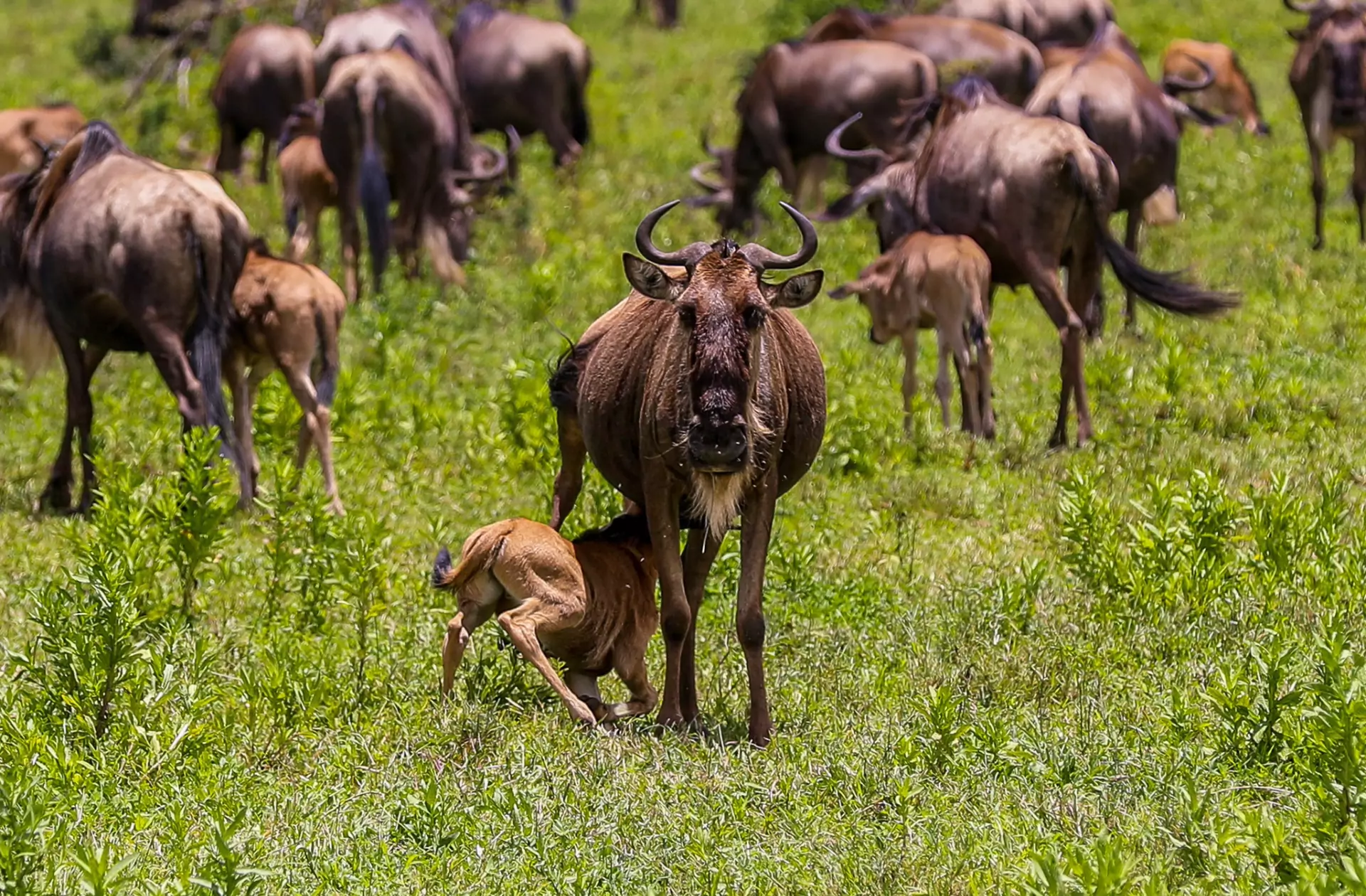
• Calving Season — Late December to mid-March in southern Serengeti. Thousands of vulnerable calves attract predators, creating intense predator-prey action.
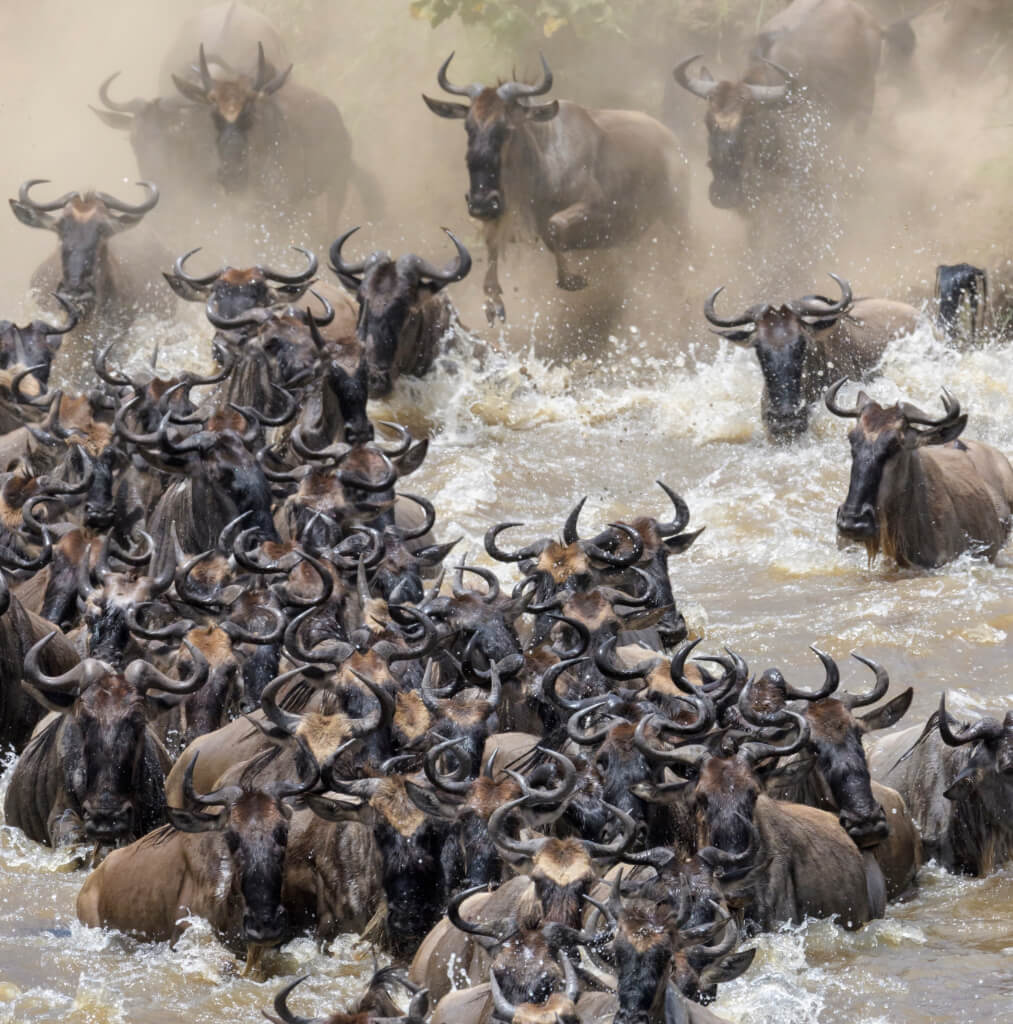
• River Crossings — Especially the Mara River (July–September). Herds plunge down steep banks into crocodile-infested waters, with chaos, drownings, and predator ambushes.
• Calving Season — Late December to mid-March in southern Serengeti. Thousands of vulnerable calves attract predators, creating intense predator-prey action.
• River Crossings — Especially the Mara River (July–September). Herds plunge down steep banks into crocodile-infested waters, with chaos, drownings, and predator ambushes.

The Great Migration River Crossing

Best Places to Witness the Migration 

 Southern Serengeti — Calving action (Ndutu region).
• Central Serengeti — Year-round game viewing.
• Northern Serengeti — Mara River crossings.
• Maasai Mara — Dense herds and crossings.

Mobile camps that follow the herds offer the best chances.

Songa migrational camp, safari camp, Singita mara river camp, Serengeti bushtops, Serengeti migration camp, Nyasi migrational camp, Roving Bishops Camp.

What to Expect on a Great Migration Safari

Expect early starts, thrilling game drives, and moments of awe. You may see horizon-to-horizon herds, dusk river crossings, or a leopard stalking. Sightings aren’t guaranteed — nature rules — but expert guides maximize opportunities. It’s unpredictable, emotional, and unforgettable.

Tips for an Unforgettable Experience

Book 7–10+ days for flexibility.
• Choose mobile or strategically located camps.
• Visit during shoulder seasons for fewer crowds.
• Pack binoculars, camera gear, and layers.
• Respect wildlife — maintain distance.
• Combine with Ngorongoro Crater, Zanzibar, or gorilla trekking.
Combining the Migration with Other Adventures

Pair it with:
• Gorilla trekking in Uganda.
• Beach relaxation in Zanzibar.
• Ngorongoro Crater exploration.
• Cultural visits to Maasai communities.
These create a well-rounded East Africa itinerary.

The Great Migration is raw nature at its most powerful — a must-see for wildlife lovers. Whether chasing river crossings or witnessing new life during calving, this guide to the Great Migration equips you for an epic safari in 2026. Start planning your journey today — the herds are always moving!

Home » The Guide to the great migration