Great Wildebeest Migration

Everything you need to know bout the Great Wildebeest Migration in Tanzania & Kenya. Discover the best time to visit, month by month route and top safari camps.

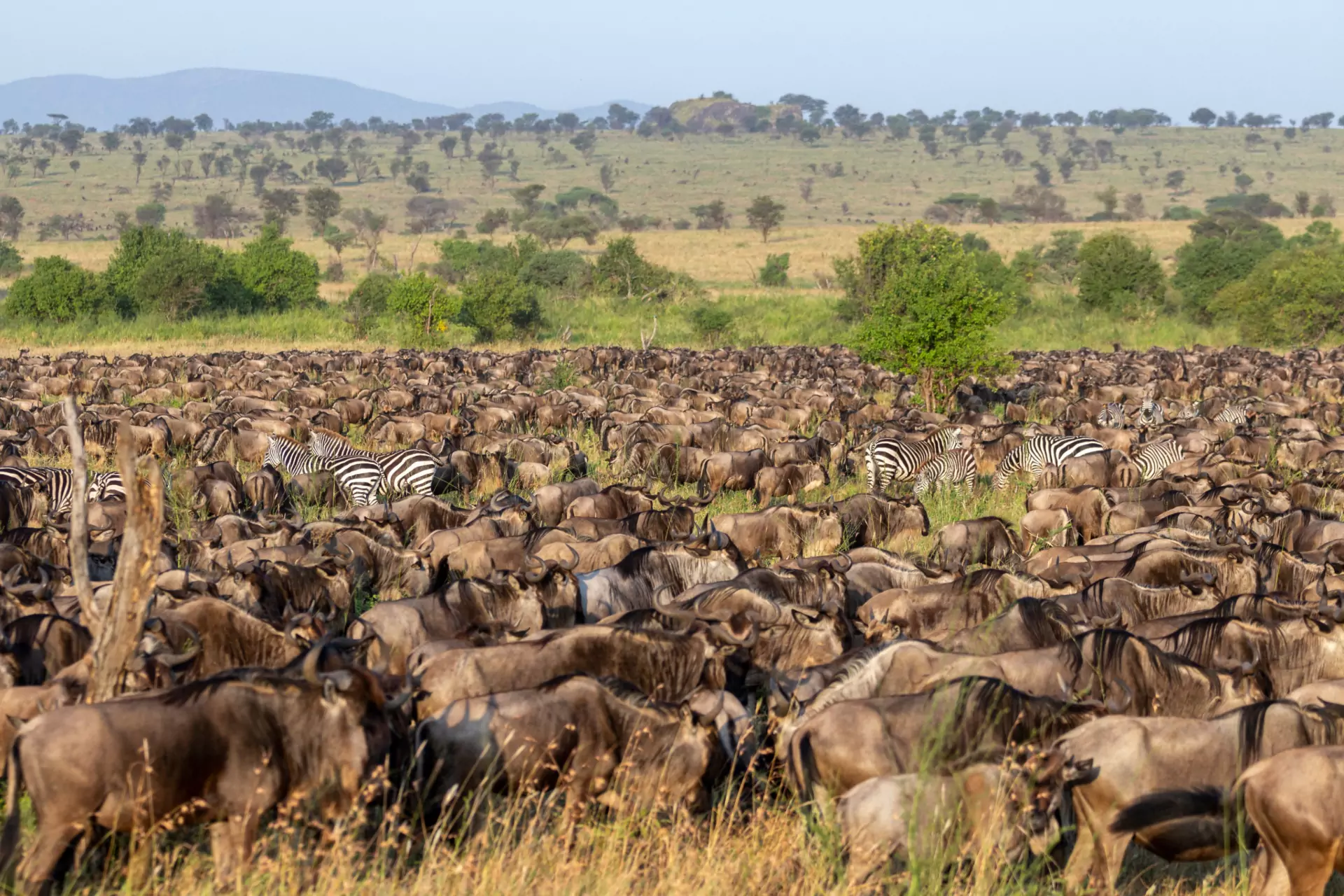
The Great Migration is one of the most spectacular wildlife events on Earth-often called “The Greatest Show on Earth.” Over 1.5 million wildebeest, 300,000 zebra, and thousands of gazelles move in a continuous, ancient cycle across the vast [Internal Link: Serengeti-Mara ecosystem] in Tanzania and Kenya.

This epic journey covers up to 1,000 km per animal, driven by the search for fresh grass and water. It is a dramatic story of survival: births replenish the herds while predators, river currents, and exhaustion claim thousands. Whether you are planning your first : Tanzania Safari or dreaming of witnessing the chaos of a river crossing, this guide covers everything you need to know for 2026 and beyond.

The guide to the Great Migration safari

Quick Facts: The Great Migration at a Glance

What is it?
Where?
Key Event?
Main Animals

The continuous circular movement of over 2 million animals.

Serengeti National Park (Tanzania) & Masai Mara (Kenya)

July-October (River Crossings) & Jan - March (Calving Season)

Wildebeest, Zebra, Thomson's Gazelle, Eland.

The Migration Route: Month by Month Guide

Explore the ultimate guide to the Great Wildebeest Migration Map in Africa. Discover the route, best times, river crossing, calving season, and expert tips.

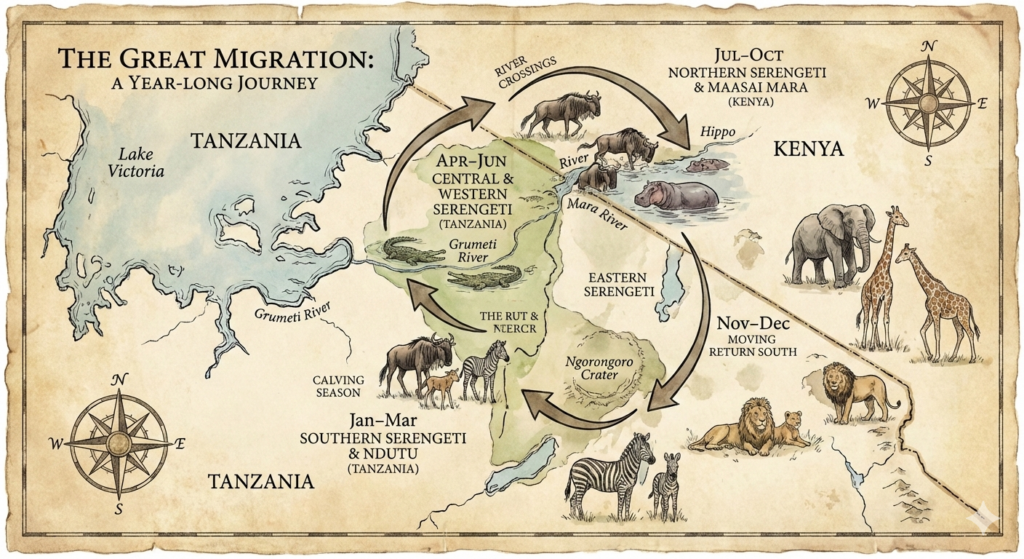
The herds follow an ancient clockwise path, though timing varies based on the rains. Use this schedule to plan your  African Safari.

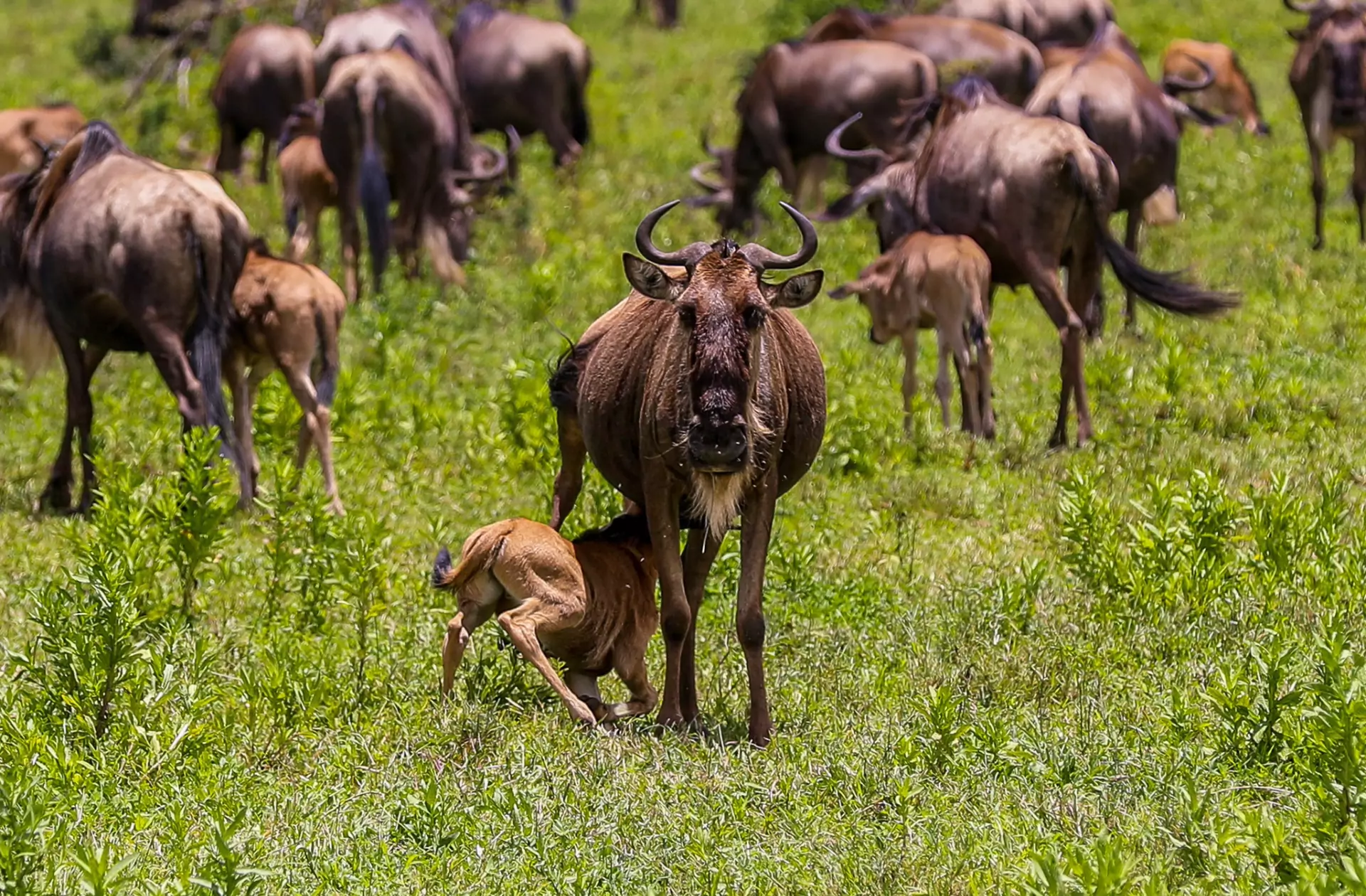
Calving Season of the Great migration safari• Location: Southern Serengeti: Ngorongoro Conservation Area] (Ndutu Region).
• What to expect: The herds congregate on the nutrient-rich short grass plains. This is the peak birthing season, with up to 8,000 calves born daily. It is arguably the best time for predator action, as big cats target vulnerable newborns.

• Location: Central & Western Serengeti.
• What to expect: As the long rains begin, the herds start moving west and north. This is the "rut" (mating season). The columns of wildebeest can stretch for miles. This is a quieter "Green Season" perfect for those wanting fewer crowds.

•Location: Western Serengeti (Grumeti Reserve).
• What to expect: The herds face their first major obstacle: the Grumeti River. While not as famous as the Mara River, these crossings are spectacular and feature massive Nile crocodile.
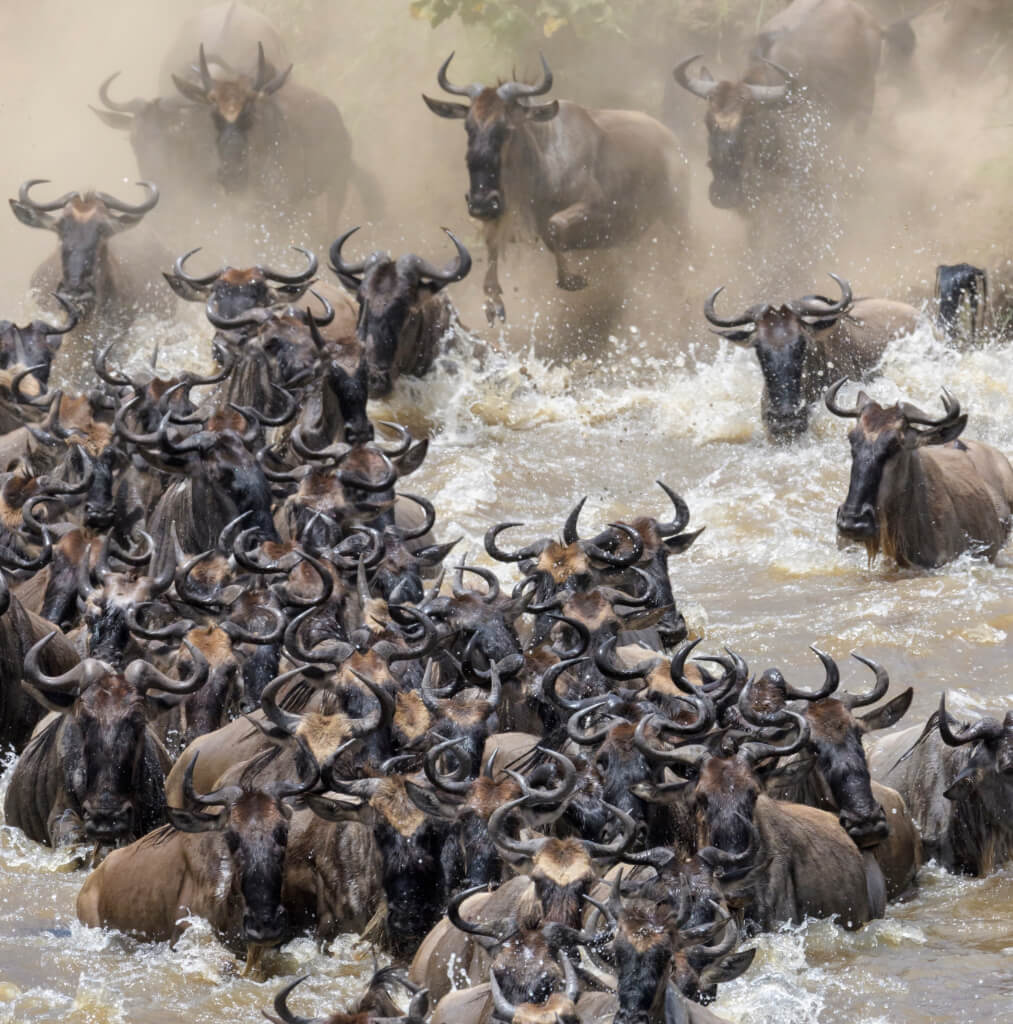
The Great Wildebeest Migration River Crossing•Location: Western Serengeti (Grumeti Reserve).
• What to expect: The herds face their first major obstacle: the Grumeti River. While not as famous as the Mara River, these crossings are spectacular and feature massive Nile crocodile.

•Location: Eastern Serengeti to Southern Serengeti.
• What to expect: As the short rains begin in the south, the herds leave the Mara and trek back down the eastern border of the Serengeti, completing the loop just in time for calving season to begin again.

What is the Great Wildebeest Migration

The Great Wildebeest Migration is the world’s largest overland animal migration. It involves more than 1.5 million animals moving in search of nutritious grazing and water.

This is not a one-time event-it is a year-round, circular journey. Predators like lions, leopards, cheetahs, hyenas, wild dogs, and crocodiles ensure only the strongest survive. While thousands perish, the calving season brings new life, sustaining the cycle.

The animals and Their Roles

The migration features a unique grazing succession that maintains ecological balance:
• Zebras arrive first to crop the tallest, coarser grasses.
• Wildebeest follow, feeding on the shorter, fresher shoots.
• Thomson’s gazelles finish last, nibbling the tender grasses and herbs close to the ground.

Best Places to stay for the Migration

To see the migration, location is everything. We recommend a mix of permanent luxury lodges and mobile tented camps that move with the herds.

Serengeti Bushtops: A world-class luxury camp offering front-row seats to the action in the Northern Serengeti.
Singita Mara River Camp: Famous for its sustainable luxury and proximity to the river crossings.
Songa Migration Camp: A semi-permanent mobile camp that positions you right in the heart of the herd, whether in Ndutu or Kogatende.
Roving Bushtops: A luxury mobile unit that moves between the Central and Southern Serengeti to follow the migration flow.


Tips for an Unforgettable Migration Safari

1. Book in Advance: The best camps for the River Crossings (July–Sept) often sell out 12 months in advance.
2. Go Private: A private safari vehicle gives you the flexibility to wait for hours by the riverbank to witness a crossing without being rushed.
3. Pack Right: Bring high-quality binoculars and a camera with a good zoom lens. Mornings can be cold, so dress in layers.
4. Combine Destinations: Enhance your trip by adding a beach holiday in Zanzibar or Gorilla Trekking in Rwanda/Uganda] after your safari.

Frequently Asked Questions FAQ

The best time depends on what you want to see. Go in July–September for the dramatic river crossings in the Northern Serengeti/Masai Mara. Go in January–March to see the baby animals (calving season) in the Southern Serengeti.

It takes place in both! Approximately 80% of the migration loop happens in Tanzania: Serengeti and about 20% happens in Kenya (Maasai Mara]) during the dry season (August–October).

We recommend a minimum of 4 to 6 days in the Serengeti or Masai Mara to maximize your chances of seeing a major crossing or vast herds, as animal movement is unpredictable.

The Great Migration is raw nature at its most powerful. Whether chasing river crossings or witnessing new life during calving, Nndee Afrika is here to craft your perfect journey.