Lion
Facts
Characteristics
Discover the ultimate guide to the Lion (Panthera leo). Explore essential lion facts, physical characteristics, pride dynamics, hunting behaviors, and the urgent conservation efforts to save this iconic apex predator.
The Lion King of Beasts
The lion (Panthera leo) has captured the human imagination for millennia. Universally recognized as the “King of Beasts,” this magnificent big cat symbolizes strength, courage, and raw power. From the golden savannas of Africa to the protected forests of India, lions remain one of the planet’s most revered animals.
However, behind their majestic appearance lies a complex story of social bonds, brutal survival, and urgent conservation challenges. Whether you are researching lion facts, their unique social structure, or their hunting prowess, this guide covers everything you need to know about the world’s most social feline.
Where to see Lions in Africa: top safari destinations
While lions have vanished from much of their historic range, several protected areas in Africa offer spectacular sightings. The best destinations provide open terrain or unique lion behaviors that you cannot see anywhere else.
Masai Mara in Kenya , Serenget in Tanzania
These ecosystems host the highest density of lions in Africa. They are best visited during the Great Migration (July–October), where prides line up to ambush river-crossing wildebeest.
Queen Elizabeth National Park in Uganda
Famous for the rare tree-climbing lions of the Ishasha sector. Unlike most lions, these prides spend their days resting in fig trees to escape heat and tsetse flies.
Okavango Delta in Botswana
Home to the largest lions on record. In the Duba Plains area, lions have adapted to swim through channels and hunt buffalo in the water-a behavior seen nowhere else.
Kruger National Park in South Africa
Offers the most accessible sightings with excellent road networks. The adjacent Timbavati reserve is also the only place in the world to see wild white lions (a genetic rarity, not albinos).
South Luangwa in Zambia
Known as the birthplace of the walking safari, this is one of the few places where you can safely track lions on foot with expert guides for a thrilling, ground-level perspective.
Namib Desert in Namibia
Along the Skeleton Coast, rare desert-adapted lions have learned to survive without drinking standing water, obtaining moisture solely from prey like seal colonies and ostriches.
Lion Facts
For a quick overview of lion characteristics, refer to the below:
Scientific Name: Panthera leo
Conservation Status: Vulnerable (IUCN Red List)
Top Speed: 80 km/h (50 mph) in short bursts
Weight (Male): 190 kg (420 lbs) average
Weight (Female): 130 kg (290 lbs) average
Lifespan: 10–14 years (Wild); up to 20+ years (Captivity)
Diet: Carnivore (Wildebeest, Zebra, Buffalo)
Physical Characteristics: What Makes a Lion Unique?
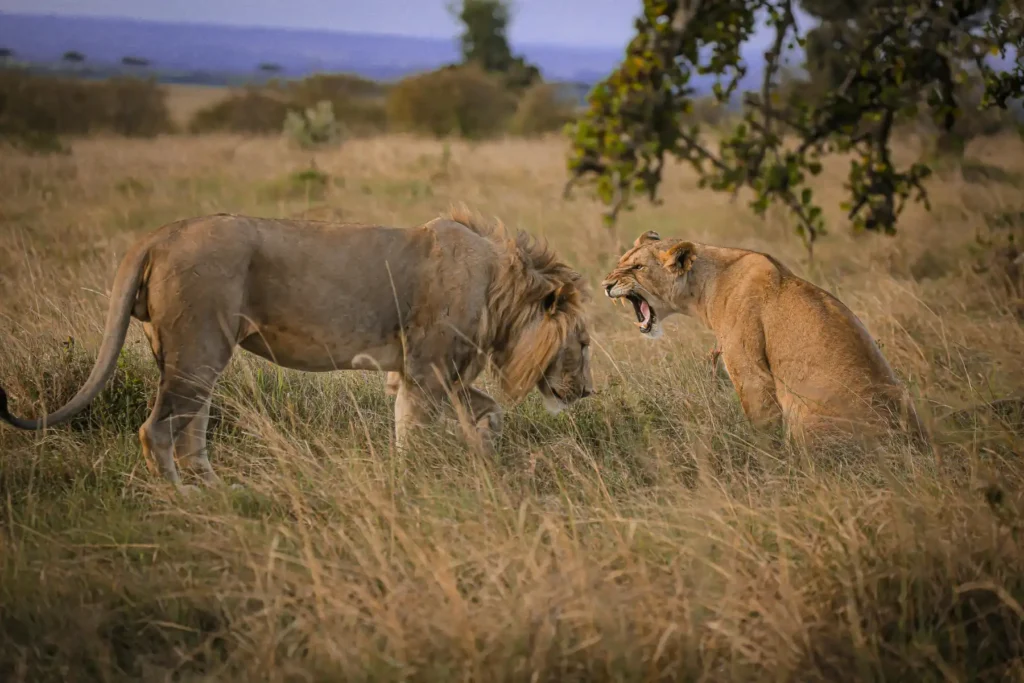
Lions are the second-largest cats on Earth, surpassed in size only by tigers. They are built for power rather than stamina, possessing muscular bodies, short legs, and heavy shoulders designed to wrestle down large prey.
Size and Weight
• Males: Adult males are massive, typically weighing between 170–230 kg (370–500 lbs).
• Females: Lionesses are smaller and more agile, weighing between 120–180 kg.
• Build: Their anatomy is specialized for short, explosive bursts of speed and raw takedown power.
The Mane
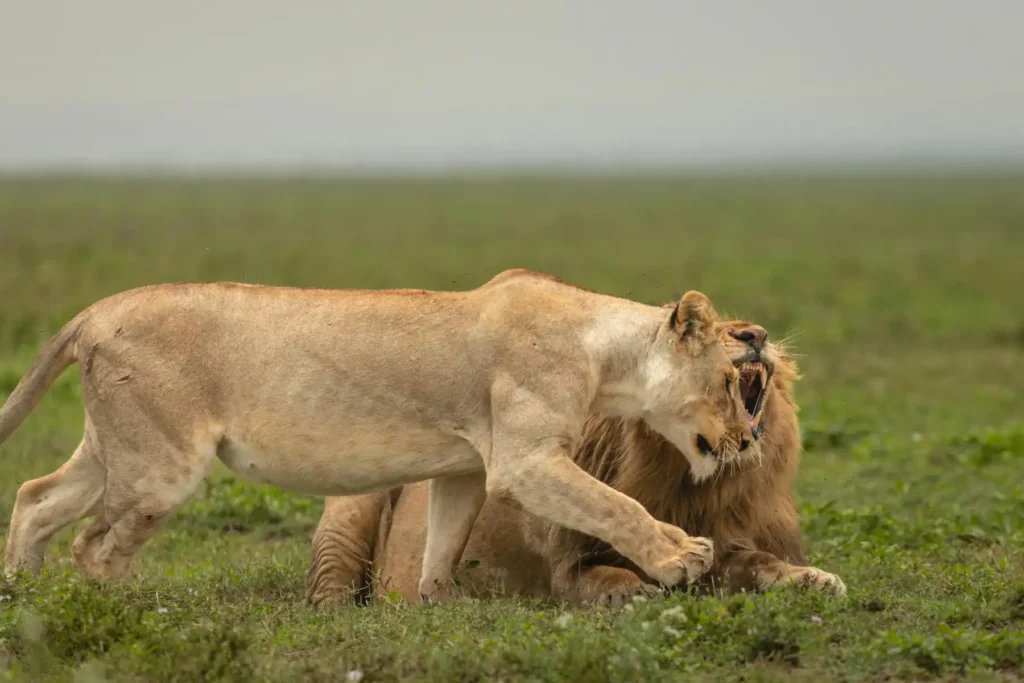
The most distinguishing feature of the male lion is his mane. This thick fringe of hair protects the neck during fights and signals dominance.
• Color Variation: Manes range from light blond to nearly black. Darker manes generally indicate higher testosterone levels and better health, making those males more attractive to females.
• Adaptation: In hotter regions, such as Kenya’s Tsavo National Park, some males remain “maneless” or have very thin manes to avoid heat stress.
The Roar
A lion’s roar is one of nature’s most powerful sounds. It is used to mark territory and communicate with the pride. Under the right conditions, a roar can be heard from 5 miles (8 km) away.
Habitat and Distribution: Where Do Lions Live?
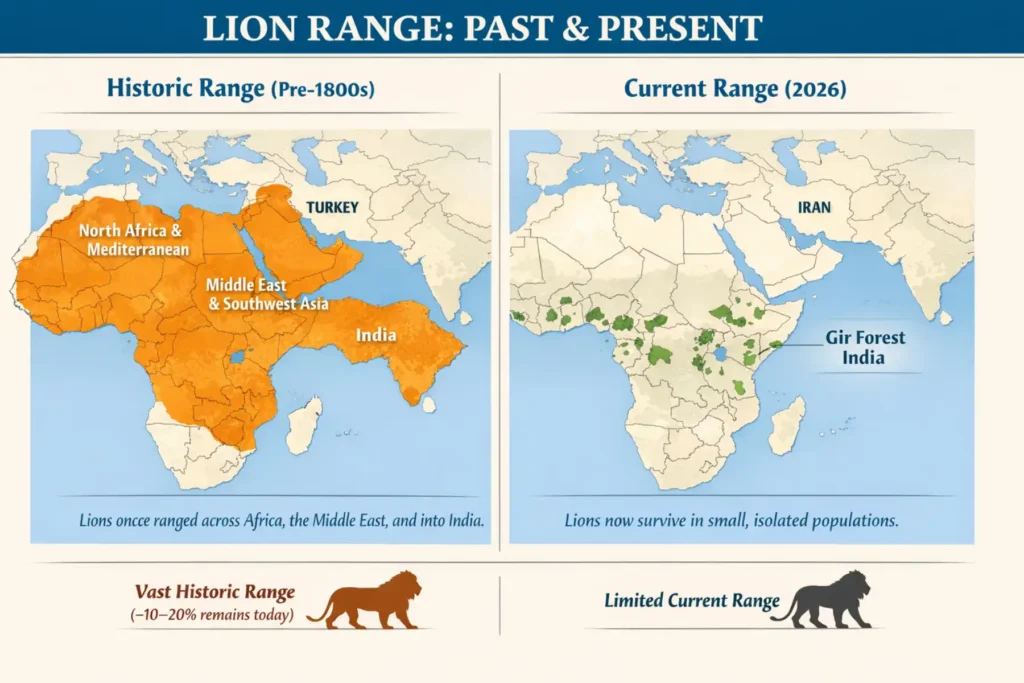
Historically, lions roamed across most of Europe, Africa, and Asia. Today, their range has shrunk drastically, and they are extinct in African countries.
African Lions
The vast majority of wild lions live in sub-Saharan Africa. They favor:
•Open grasslands and savannas.
• Dense scrub and woodlands.
• Note: They generally avoid dense tropical rainforests and the interior of the Sahara Desert.
Asiatic Lions
A small, isolated population of the subspecies Panthera leo persica exists solely in India’s Gir Forest National Park. This population includes roughly 500 to 700 individuals and is the subject of strict conservation efforts.
Social Structure: The Pride Dynamics
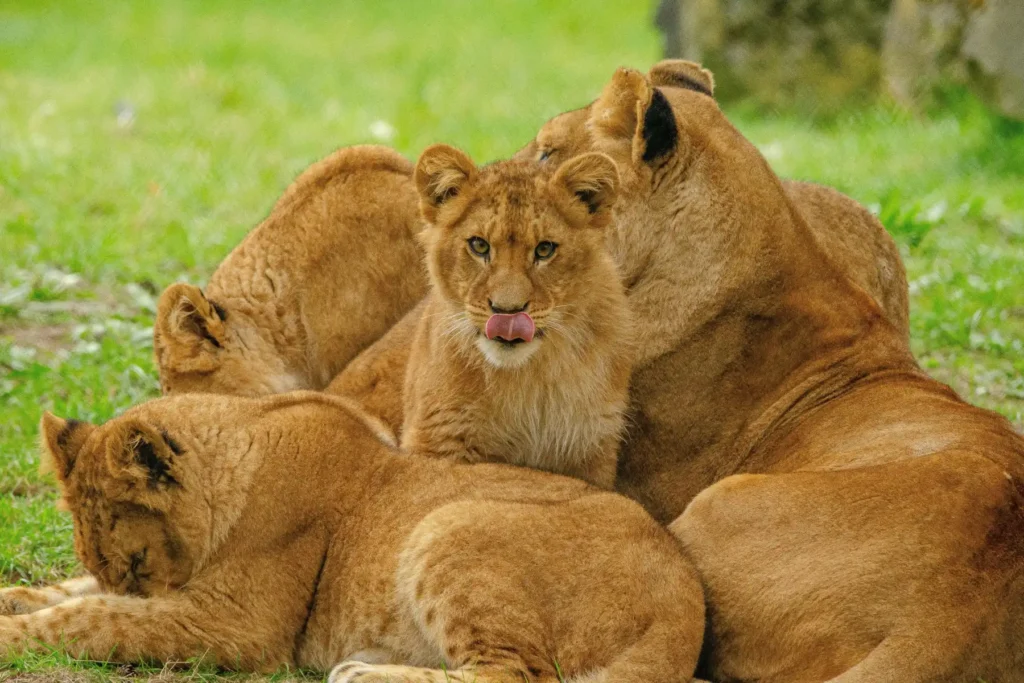
Unlike tigers or leopards, which are solitary, lions are the only truly social big cats. They live in family groups called “prides.
•The Core: The pride is matriarchal, consisting of related lionesses, their cubs, and a coalition of 1 to 4 adult males.
• Size: Prides can range from 4 to 40 members, though the average is around 15.
• Roles:- Females: Do the majority of the hunting and raise the cubs communally.
• Males: Patrol the territory, mark boundaries with urine, and protect the pride from intruder males.
Did You Know? Lionesses will nurse any cub in the pride, not just their own. This communal care increases the survival rate of the young.
Lions are opportunistic carnivores. While they are apex predators, they are also expert scavengers, frequently stealing kills from hyenas, cheetahs, and leopards.
Hunting and Diet: How Apex Predators Eat

Hunting Strategy
Lions lack the stamina for long chases. Instead, they rely on teamwork and stealth:
.Stalking: They approach mostly at night or during storms to mask their sound and scent.
.Ambush: Females often fan out to flank prey, driving the herd toward other lionesses waiting in ambush.
.The Kill: A short sprint is followed by a leap and a powerful neck bite or strangulation.
Primary Prey
heir diet centers on medium-to-large hoofed animals, including:
• Wildebeest
• Zebra
• Buffalo
• Antelope
• Occasionally Giraffe or young Elephants
Conservation: Why Are Lion Populations Declining?
Despite being an iconic species, the lion is classified as Vulnerable. In the last few decades, populations have plummeted by approximately 43%.
Major Threats
• Habitat Loss: Expansion of agriculture and human settlements has reduced their historical range by over 90%.
• Human-Wildlife Conflict: Farmers often kill lions in retaliation for lost livestock.
• Loss of Prey: The bushmeat trade has decimated populations of the lion’s natural prey.
• Poaching: There is a growing illegal trade in lion bones, often used as a substitute for tiger bone in traditional medicine.
Hope for the Future
Conservation organizations like the WWF and National Geographic are working to secure a future for lions.
• Community Conservancies: In East Africa, programs that allow locals to benefit from wildlife tourism have reduced conflict.
• Reintroduction: Projects like the translocation of lions to Mozambique’s Zambezi Delta have shown that populations can bounce back when protected. Plan your now
Frequently Asked Questions FAQ
Lions are currently classified as "Vulnerable," not Endangered, though their numbers are declining rapidly. The Asiatic lion is considered Endangered due to its small population size.
A male lion can eat up to 40 kg (approx. 90 lbs) of meat in a single sitting—roughly a quarter of his body weight. After such a meal, he may rest for several days.
Yes. While females do the majority of cooperative hunting, males are capable hunters. They often hunt alone in dense woodlands or help take down very large prey, such as buffalo, that females cannot manage alone.
